
8 min read
Vitamins, Minerals and Nutrients for Athletes
Vitamins, minerals, antioxidants and electrolytes at a glance, with a table and guidance on when targeted supplementation can make sense.

Besides protein, carbohydrates and fat, vitamins, minerals and other nutrients play an important role in health and athletic performance. They are needed only in small amounts, but are indispensable for numerous metabolic processes.
This page gives a factual overview of macronutrients, vitamins, minerals, antioxidants, fatty acids, and fluids and electrolytes, and puts into context when targeted supplementation can make sense at all. You will also find links to all the detailed guides and glossary entries on the topic.
01
Macronutrients in brief
Protein, carbohydrates and fat are called macronutrients because the body needs them in comparatively large amounts. Protein supplies the building blocks for muscle, enzymes and hormones, and you can find more in the guide Protein requirement. Carbohydrates are the preferred quick source of energy, especially during intense physical effort. Fats supply concentrated energy, are a component of cell membranes and carry fat-soluble vitamins.
Vitamins and minerals, by contrast, are micronutrients. The body needs them only in small, sometimes very small amounts, but without them many metabolic processes do not work properly. A deficiency therefore often does not show up immediately, but only after a longer time.
Even though micronutrients work in very small amounts, their interplay is complex. Many vitamins and minerals work closely together in metabolism, for example when vitamin C improves the absorption of plant-based iron from the gut, or when magnesium plays a supporting role in activating vitamin D in the body. A one-sided, very high-dose intake of individual substances can disrupt this interplay rather than improve it, which is why a balanced overall diet is usually the more sensible approach than picking out individual nutrients.
 Matching productMagnesium CitrateAmazon →
02
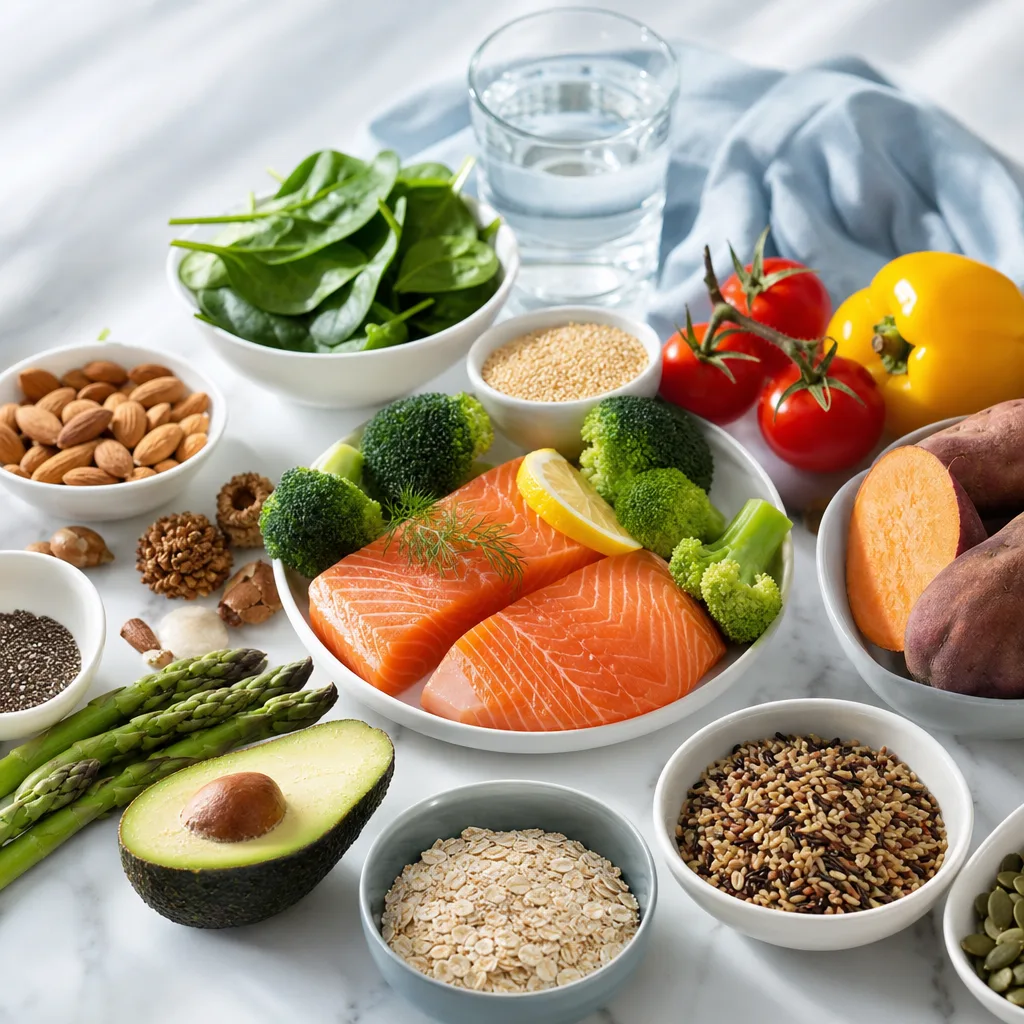
Vitamins and minerals at a glance
The following table shows a selection of important vitamins and minerals with their main function, typical food sources and their particular relevance for athletes.
| Nutrient | Function | Sources | Relevance for athletes |
|---|---|---|---|
| Vitamin D | calcium and phosphate metabolism, bone building | made by the body from sunlight, oily fish, egg yolk | levels are often low in the winter months |
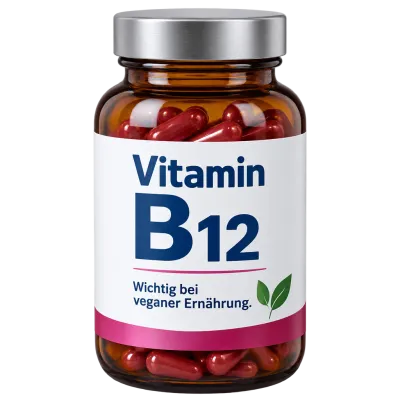
| Vitamin B12 | blood formation, nerve function | mainly animal foods such as meat, fish, dairy products | usually needs supplementing on a vegan diet |
| Vitamin C | connective tissue, iron absorption, cell protection | fruit and vegetables, especially citrus fruit and peppers | role in cell metabolism under stress |
| Folic acid | cell division, blood formation | green leafy vegetables, legumes | particularly relevant in pregnancy |
| Zinc | immune system, wound healing, metabolism | meat, cheese, wholegrain products, legumes | losses through sweat possible with intense training |
| Iron | oxygen transport in the blood | red meat, legumes, wholegrain products | increased requirement with intense endurance training, especially in women |
| Magnesium | muscle and nerve function, energy metabolism | wholegrain products, nuts, legumes | losses through sweat, often associated with muscle cramps |
| Calcium | bone and tooth structure, muscle contraction | dairy products, green vegetables, calcium-rich mineral water | important for bone health with regular training load |
This selection is not exhaustive, but it covers the nutrients most often discussed in connection with sport and fitness. You can find a more detailed overview of further vitamins in the guide Vitamins, and of further minerals in the guide Minerals.
 Matching productPea ProteinAmazon →

03
Antioxidants
Antioxidants are a group of substances that can neutralise so-called free radicals in the body. Free radicals arise, among other things, as a by-product of normal metabolism and in greater numbers during intense physical effort. The best-known antioxidants include vitamin C, vitamin E, beta-carotene and the sulphur-containing compound alpha-lipoic acid. You can find a more detailed assessment in the guide Antioxidants.
A balanced diet with plenty of fruit and vegetables generally provides a good supply of antioxidants. A very high-dose, isolated intake of individual antioxidants through supplements is viewed critically in parts of sports science, as some studies suggest that excessive amounts of certain antioxidants could even weaken positive training adaptations. A blanket recommendation for high-dose supplements cannot be derived from this.
For athletes it is also interesting that moderate exercise itself is credited with adapting the body's own antioxidant defences. In response to regular training, the body strengthens its own protective mechanisms against free radicals, among other things. This is another reason why a permanently very high-dose intake of isolated antioxidants through supplements is judged rather cautiously in sports science instead of being recommended uncritically.
 Matching productSoy Protein IsolateAmazon →
04
Fatty acids
With fatty acids, a distinction is often made between saturated and unsaturated forms. Particular attention goes to the polyunsaturated omega-3 fatty acids, which the body cannot produce itself in sufficient amounts. They are found mainly in oily sea fish such as salmon or mackerel, and in smaller amounts in linseed oil, walnuts and rapeseed oil. You can find more details in the glossary entry Omega-3 fatty acids.
In sports nutrition, omega-3 fatty acids are often discussed in connection with cell membranes and general metabolic processes. A balanced diet with regular fish consumption or plant-based alternatives generally covers the requirement adequately for most people.
 Matching productL-CarnitineAmazon →

05
Fluids and electrolytes
Sufficient fluid is a basic requirement for practically every bodily function, and it becomes especially important during physical effort because of sweat loss. Along with water, sweat also loses electrolytes such as sodium, potassium, magnesium and chloride, which the body needs to maintain fluid balance and muscle function.
For short or moderate efforts, normal water is generally enough to make up the loss. For long, intense efforts, especially in the heat, isotonic sports drinks with electrolytes and carbohydrates can make sense to replace both fluid and electrolyte losses.
A simple guide to adequate fluid intake in everyday life is the colour of your urine: if it is pale to straw-coloured, intake is usually sufficient, whereas very dark urine can be a sign of too little fluid. Exact fluid requirements depend on body weight, ambient temperature, activity level and individual sweat rate, and therefore cannot be given as a single blanket figure for everyone.

06
When supplementing can make sense
Targeted supplementation with vitamins or minerals makes sense mainly when there is an actual deficiency or an increased risk of one. Some situations come up particularly often in practice:
- Vitamin D in the winter months, when the body's own production from sunlight is limited.
- Vitamin B12 on a vegan diet, as this vitamin occurs almost exclusively in animal foods.
- Iron when a deficiency has been shown by blood tests, especially in women with heavy periods or with intense endurance training.
- Folic acid in pregnancy on medical recommendation.
Outside such specific situations, blanket high-dose supplementation with vitamins and minerals is usually not necessary for healthy adults with a balanced diet. Dietary supplements are not a substitute for a balanced diet, but can complement it in a targeted way in individual cases. Have a suspected deficiency checked by a blood test where possible, and discuss taking supplements, especially at higher doses, with a medical or nutrition professional.
 Matching productVitamin B12Amazon →

07
What the research says
It is also interesting to note that simply taking a nutrient as a tablet does not always have the same effect as getting it from food. In natural foods, vitamins and minerals usually occur together with other accompanying substances such as fibre or secondary plant compounds, which are not found in isolated supplements. This is a further reason to regard a balanced diet as the foundation and to use supplements in a targeted way where there is a specific need.
For a deficiency in individual vitamins or minerals, the benefit of targeted supplementation is scientifically well supported, and the body clearly benefits from correcting the deficit. The picture is different for blanket, high-dose supplementation without a proven deficiency: here the research mostly shows no additional benefit for health or performance, and for individual vitamins such as vitamin E or beta-carotene there are even indications of possible unwanted effects at high doses.
For everyday practice this means: a varied diet with plenty of vegetables, fruit, wholegrain products and, depending on your diet, animal foods remains the foundation of nutrient supply. Targeted supplementation of individual nutrients makes sense when a deficiency has been shown or is clearly evident from your way of eating, not as a blanket precaution.
 Matching productPowder Storage ContainerAmazon →
08
Frequently asked questions
Do athletes need more vitamins than non-athletes?
For individual nutrients such as B vitamins or antioxidants, a somewhat higher requirement is discussed, but a markedly higher requirement across all vitamins cannot be derived from this. A balanced diet with enough calories usually covers the requirement well.
How do I recognise a nutrient deficiency?
Typical signs can be tiredness, reduced performance or increased susceptibility to infections, but these are non-specific. Only a blood test by a medical professional ultimately gives certainty.
Is a vitamin D deficiency in winter normal?
Lower levels in winter are common in Germany because of reduced sunlight. Whether supplementing makes sense is best clarified with a blood test.
Do vegans always have to supplement B12?
Since vitamin B12 occurs almost exclusively in animal foods, targeted supplementation is generally recommended on a vegan diet, ideally after consulting a medical or nutrition professional.
Can an overdose of vitamins be harmful?
With water-soluble vitamins, an excess is mostly excreted in the urine, whereas with fat-soluble vitamins such as A, D, E and K a permanently very high intake can accumulate in the body. Stick to the amounts stated on the packaging and discuss high doses with a doctor.
Are sports drinks enough for daily fluid intake?
For everyday life and moderate efforts, normal water is generally enough. Sports drinks with electrolytes are a useful addition mainly for long, intense or particularly sweaty efforts.
 Matching productProtein DrinkAmazon →
09
Guides and glossary on vitamins and nutrients
- Vitamins: overview of fat-soluble and water-soluble vitamins and their functions.
- Minerals: important minerals and their significance for the body at a glance.
- Magnesium: role in muscle and nerve function and in energy metabolism.
- Calcium: significance for bones, teeth and muscle contraction.
- Calciferol: vitamin D explained under its chemical name.
- Ascorbic acid: vitamin C and its role in connective tissue and cell protection.
- Beta-carotene: precursor of vitamin A with an antioxidant effect.
- Antioxidants: how this group of substances neutralises free radicals in the body.
- Alpha-lipoic acid: substance made by the body with antioxidant properties.
- Fatty acids: saturated and unsaturated fats compared.
- Carbohydrates: the number one energy source during physical effort.
- Sports drinks: electrolytes and carbohydrates for longer efforts.
- Superfood: assessment of a term shaped mainly by marketing.
- High-protein foods: which foods supply particularly high amounts of protein.
- Protein requirement: how to estimate your personal protein requirement.
- Vitamin D: glossary entry on formation, function and supply.
- Vitamin B12: glossary entry on function and supply on a plant-based diet.
- Zinc: glossary entry on function in the immune system and metabolism.
- Iron: glossary entry on oxygen transport and requirements in endurance sport.
- Omega-3 fatty acids: glossary entry on occurrence and function.
- Electrolytes: glossary entry on sodium, potassium and other minerals in fluid balance.
 Matching productVitamin D3 DropsAmazon →
Explore
Read next
 Protein types at a glance: whey, casein, plant-based and moreAn overview of all common protein types from whey to collagen, with a comparison table and links to detailed guides.
 Amino Acids: The Building Blocks of ProteinStructure, classification and functions of amino acids at a glance, with a table of all 20 proteinogenic amino acids and links to all guide…
 Supplements for Sport and Fitness: A Factual OverviewAll supplement categories at a glance, with the evidence rated from good to thin, plus safety and buying tips.