
6 min read
Calculating Protein Requirements: Formula, Examples and Limits
Roughly estimate your own protein requirements with a simple formula and worked examples, including distribution over the day and the limits of the formula.

How much protein per day makes sense can be roughly estimated with a simple rule of thumb. This guide shows the common calculation, works through examples and explains how the requirement can be spread over the day.
Important to note first: all values mentioned are reference values from nutrition and sports science, not an individual recommendation. If you have an existing medical condition, always seek medical advice before changing your protein intake significantly.
The question of the right protein requirement concerns many people, whether the focus is general health, athletic goals or a diet phase. A simple formula at least provides a rough starting point, which you can then refine according to your personal situation.
01
The Basic Formula
The DGE (German Nutrition Society) gives a reference value for healthy adults of about 0.8 g protein intake per kilogram of body weight per day. From about the age of 65, a somewhat higher value of around 1.0 g per kilogram is often cited, as the body tends to handle protein less efficiently with age. The basic formula is therefore:
Protein requirement in grams = body weight in kilograms × factor
In sports science, higher factors of about 1.2 to 2.0 g per kilogram are often discussed for strength training and diet phases. This is a range cited in the specialist literature, not a blanket recommendation from this site, and the level that actually makes sense depends on training status, goals and individual health.
These figures come from the general specialist literature on nutrition and sport and are not to be understood as individual instructions. If you are unsure which part of the range suits you personally, you can start with the lower value and adjust your intake step by step as needed, rather than aiming straight for the upper end.
This range is explained, among other things, by the fact that strength training promotes muscle growth and the maintenance of muscle mass, for which the body needs additional building blocks. In a diet phase with reduced calorie intake, a somewhat higher share of protein is also often discussed to help preserve muscle mass despite an energy deficit.
02
Worked Examples
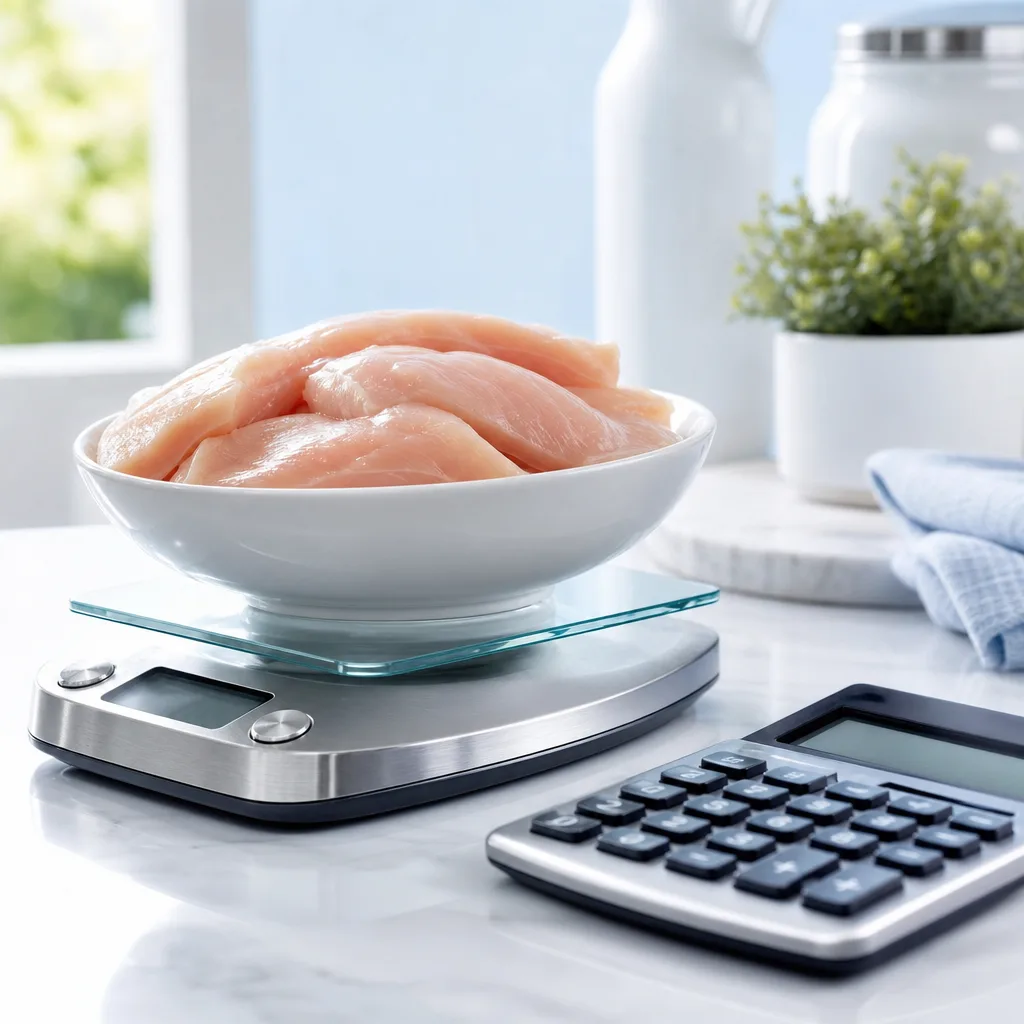
The following examples show how the formula can be applied in practice, each rounded to whole grams.
| Situation | Body weight | Factor | Result |
|---|---|---|---|
| Adult, DGE reference value | 70 kg | 0.8 g/kg | about 56 g per day |
| Person aged 65 or over, DGE reference value | 70 kg | 1.0 g/kg | about 70 g per day |
| Strength training, lower end of the range | 80 kg | 1.2 g/kg | about 96 g per day |
| Strength training or diet phase, upper end | 80 kg | 2.0 g/kg | about 160 g per day |
These examples serve to illustrate the calculation, not as a fixed target for any particular person. The factor that actually suits you within the stated ranges depends on individual factors that a general formula cannot capture.
For people who are considerably overweight, the specialist literature sometimes recommends using an adjusted weight for the calculation instead of actual body weight, since body fat alone creates hardly any additional protein requirement. Such adjustments are individual, however, and when in doubt should be discussed with medical or nutrition professionals rather than made on your own.
03
Distribution Over the Day
Besides the total amount per day, sports science also considers the distribution across several meals. It is often recommended to spread protein intake over three to four meals rather than taking the entire daily amount in a single meal. How you can time protein intake around training is explained in more detail in the guide Protein Timing.
A protein-rich breakfast can help create a good base early in the day, and you will find ideas in the guide High-Protein Breakfast.
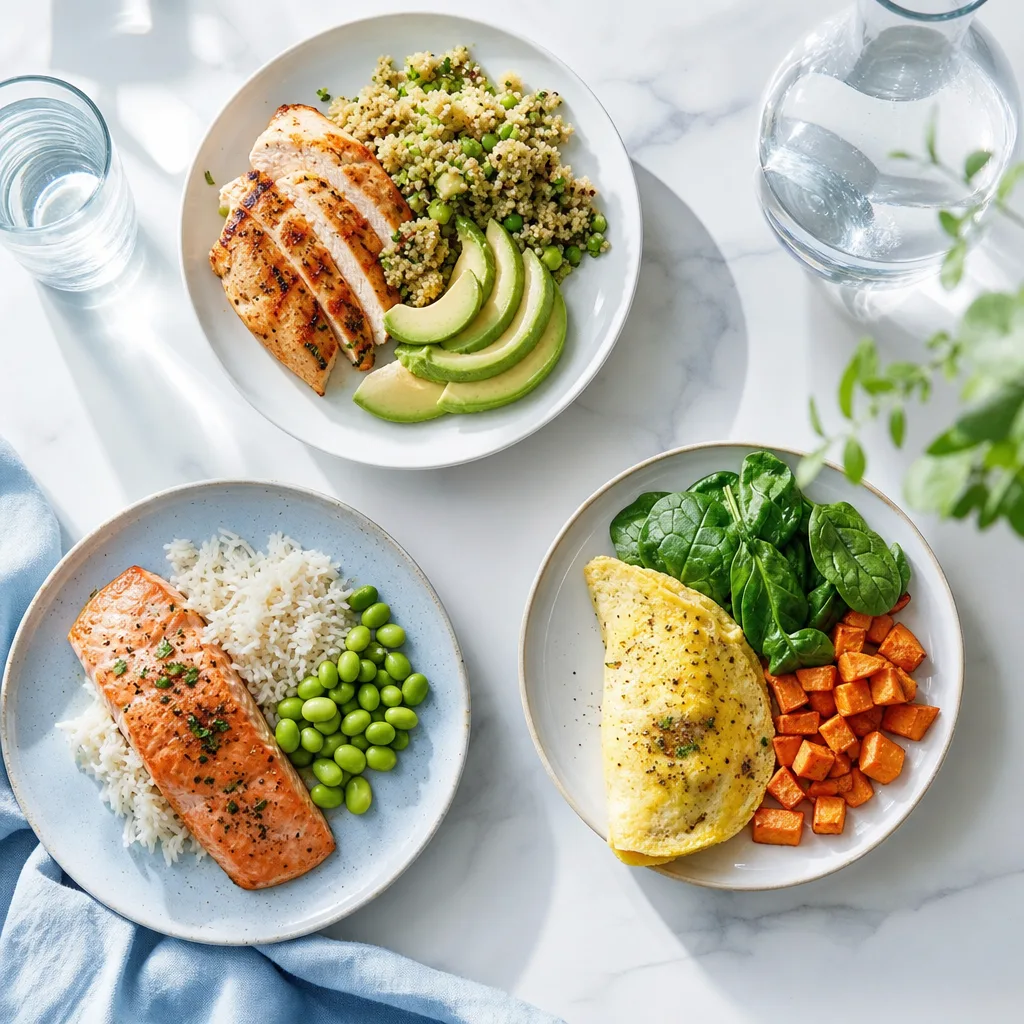
In everyday life, the distribution can often be aligned quite practically with the meals you already have, such as breakfast, lunch, dinner and possibly a snack in between. An exact split down to the minute or the gram is not necessary. What matters more is that no single meal carries the majority of the daily amount on its own.
04
How Much Protein Typical Foods Provide
To put the calculated gram values in context, it helps to look at typical protein amounts in foods. Low-fat quark provides about 12 g of protein per 100 g, chicken breast about 22 g, cooked lentils about 9 g, tofu about 12 to 16 g and eggs about 13 g per 100 g. A more detailed overview can be found under High-Protein Foods.
With these guide values, the calculated daily requirement can be roughly translated into concrete portions. For the example calculation of about 96 g of protein per day, one portion of chicken breast, one portion of low-fat quark and one portion of lentils together would already cover a considerable part of the target amount, and the rest can be topped up with other protein-containing foods during the day.
05
Limits of the Formula
A simple formula based on body weight and a factor cannot capture many individual aspects, such as body composition, training volume, total energy intake or special life stages. At very high or very low body weight, a pure weight formula can also give less accurate results than for an average build. The calculated values should therefore be understood as a rough guide, not as an exact individual target.

06
Medical Advice for Health Conditions
People with kidney disease or other relevant pre-existing conditions should not increase their protein intake on their own according to a general formula, but should agree the appropriate amount with medical professionals. For other health restrictions too, for example related to metabolism, the same applies: when in doubt, seek medical advice before making fundamental changes to your diet.
07
Frequently Asked Questions
How do I roughly calculate my own protein requirement?
Multiply your body weight in kilograms by a factor between about 0.8 and 2.0, depending on age, activity and goals. For most healthy adults without intensive training, the lower end of the range is a common starting point.
How exact does the calculation need to be?
For everyday life, a rough estimate is entirely sufficient, and calculating to the exact gram is not necessary. More important than absolute precision is staying roughly in the right range over several days and weeks.
Do I need any special tools for the calculation?
No, a simple multiplication of body weight and factor is enough. A kitchen scale can additionally help you estimate more realistically the protein amounts you actually take in from individual foods.
Does protein from drinks also count towards the daily amount?
Yes, protein from shakes, milk or plant-based drinks counts towards the total just like protein from solid foods. For the calculation, the source of protein is fundamentally secondary.
Is more protein automatically better?
No, above a certain requirement additional protein generally brings no extra benefit and may displace other important nutrients from the diet. A balanced overall diet remains decisive.
Does the formula also apply to children and teenagers?
The values mentioned refer to healthy adults, and requirements during growth phases differ. For questions about the nutrition of children and teenagers, advice from medical or nutrition professionals is sensible.
Do I have to cover my protein requirement with protein powder?
No, the calculated requirement can in principle be met entirely through normal foods. Protein powder is merely a practical supplement, not a necessary one.
What happens if I permanently eat too little protein?
A permanently low protein intake can affect, among other things, the maintenance of muscle mass and the general feeling of fullness. If you are unsure whether your diet provides enough protein, you can roughly keep a record of your intake for a few days and compare it with the guide values given here.
Is there an upper limit for protein intake?
There is no generally accepted fixed upper limit for healthy adults in this form, although very high amounts over a longer period are discussed critically. If you are unsure or have a very high intake, consulting medical professionals is sensible.
Does protein requirement change when losing weight?
In sports science, a somewhat higher share of protein within the stated range is often discussed in diet phases, to help preserve muscle mass despite reduced calorie intake. You can read more in the guide Protein for Weight Loss.
 Matching productVitamin C PowderAmazon →
Explore
Read next
 Protein types at a glance: whey, casein, plant-based and moreAn overview of all common protein types from whey to collagen, with a comparison table and links to detailed guides.
 Amino Acids: The Building Blocks of ProteinStructure, classification and functions of amino acids at a glance, with a table of all 20 proteinogenic amino acids and links to all guide…
 Supplements for Sport and Fitness: A Factual OverviewAll supplement categories at a glance, with the evidence rated from good to thin, plus safety and buying tips.