
5 min read
Minerals in Sport: Requirements, Deficiency and Supply
Which minerals are especially relevant for athletes, how a deficiency arises and how to sensibly cover your needs.

If you train regularly and intensively, you lose not only water through sweat but also minerals. A balanced diet covers the needs of most athletes well, but in certain situations it is worth taking a closer look at your supply.
In this guide you will learn which minerals are particularly relevant in sport, how a deficiency arises, how to recognise possible signs and when targeted supplementation can make sense.
01
What minerals do in the body
Minerals are inorganic substances that the body cannot produce itself and therefore has to take in through food. A distinction is made between bulk elements such as sodium, potassium, calcium and magnesium, which are needed in larger amounts, and trace elements such as iron, zinc and iodine, which the body needs in only very small amounts but needs just the same.
Minerals are involved in a wide range of processes, such as muscle and nerve function, fluid balance, bone metabolism and oxygen transport in the blood. A lasting deficit can therefore show itself in very different ways depending on the mineral affected. Unlike vitamins, which are organic compounds, minerals are inorganic chemical elements that cannot be destroyed by heat or light during food preparation, as can be the case with some vitamins.
02
The most important minerals for athletes at a glance
| Mineral | Role in sport | Good sources |
|---|---|---|
| Sodium | Fluid balance, nerve function | Table salt, bread, cheese |
| Potassium | Muscle and nerve function | Vegetables, potatoes, bananas |
| Calcium | Bones, muscle contraction | Dairy products, green vegetables |
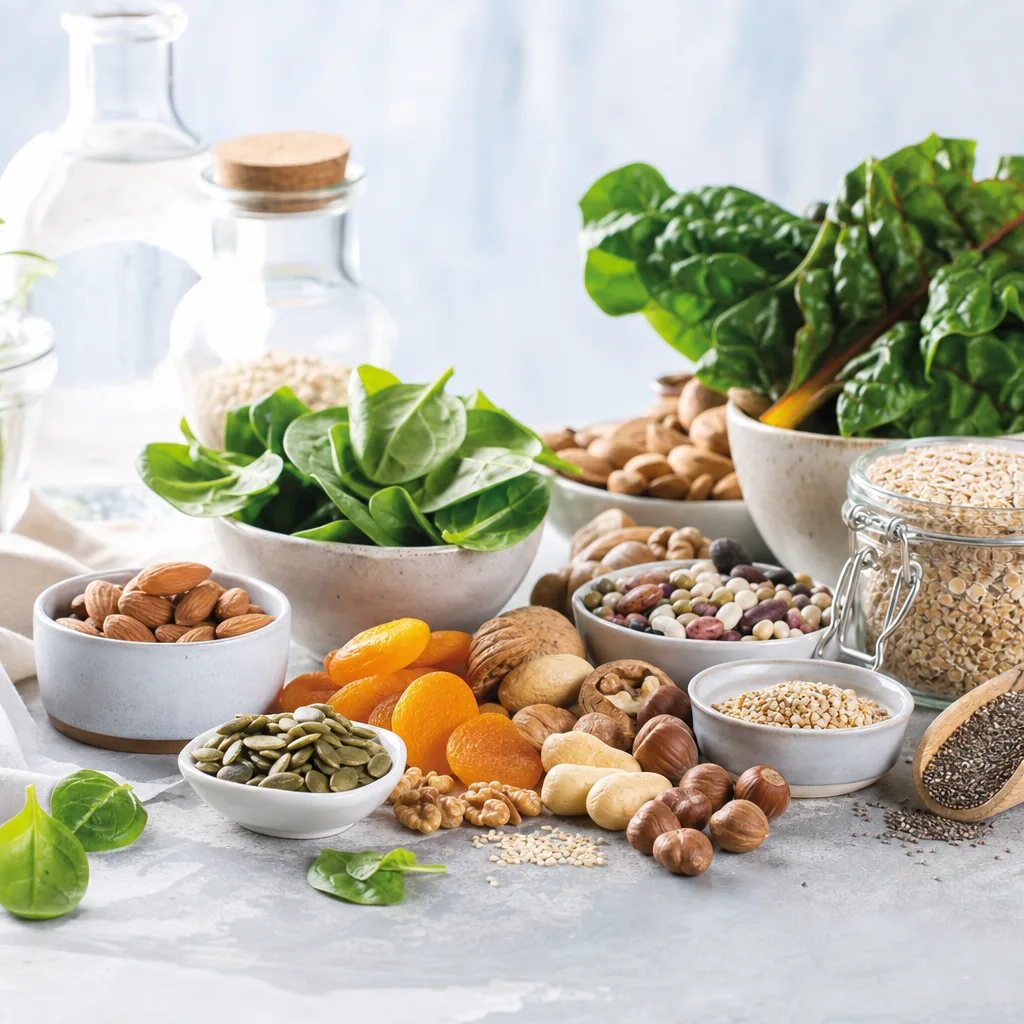
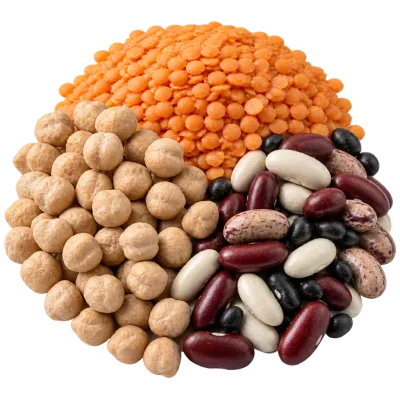
| Magnesium | Muscle relaxation, energy metabolism | Nuts, wholegrain, legumes |
| Zinc | Immune system, protein metabolism | Meat, cheese, legumes |
| Iron | Oxygen transport in the blood | Meat, legumes, wholegrain |
 Matching productLegume SetAmazon →
03
How a mineral deficiency arises
With intense training and heavy sweating, mainly sodium and chloride are lost in sweat, and to a lesser extent potassium and magnesium. A one-sided or very low-calorie diet, for example during a strict dieting phase, can also reduce the intake of individual minerals. In women of childbearing age, iron requirements are additionally increased by menstruation.
A genuine, clinically relevant deficiency is nevertheless rather rare with an overall balanced diet and clearly differs from a temporary, short-term loss after training, which is generally made up again with the next meal. People who follow very strict, one-sided diets over a long period or consistently avoid entire food groups, for example because of intolerances or a heavily restricted diet, have a higher risk of actual undersupply than someone with an overall varied diet.

04
Possible signs of undersupply
Symptoms of a mineral deficiency are mostly non-specific and can have many causes, so they should not be attributed hastily to a single nutrient.
- Persistent tiredness or reduced performance despite enough sleep.
- Frequent muscle cramps, especially after training or at night.
- Difficulty concentrating or unusual irritability.
- With iron deficiency, additionally paleness and quick exhaustion even under light exertion.
Since these complaints can also have other causes, such as lack of sleep, stress or illness, medical clarification with a blood count is more sensible than self-diagnosis and indiscriminate supplementation when symptoms persist. Especially for endurance athletes with a high training volume, people on a vegan or vegetarian diet, or women with heavy periods, a regular check of iron status through your family doctor is a sensible precaution instead of relying solely on your own perception.
 Matching productPea ProteinAmazon →
05
Supply through diet and supplements
For most healthy athletes, a varied diet with enough vegetables, wholegrain products, legumes, dairy products or alternatives and protein-rich foods already covers mineral needs well. A dietary supplement with minerals is not a replacement for a balanced diet but at most a targeted addition when an undersupply is actually proven or very likely.
With heavy, prolonged sweating, a drink with electrolytes can make sense, see the guide sports drinks for more. For individual minerals such as iron or zinc, overdosing without a proven deficiency is best avoided, as high amounts can interfere with the absorption of other nutrients or have undesirable effects themselves.
When choosing a combination product, it is also worth checking whether individual minerals hinder each other's absorption. Calcium and iron, for example, compete for the same absorption pathways in the gut when taken together in high amounts, which is why some manufacturers recommend taking such products at different times. Such details are usually found on the package leaflet or can be asked about at the pharmacy if you are unsure.
 Matching productProtein DrinkAmazon →

06
What the research says
The evidence shows fairly clearly that undersupply of certain minerals, such as iron or magnesium, can actually impair athletic performance. It is equally well documented, however, that additional supplementation brings no further performance gain when supply is already sufficient. In this case, more does not automatically help more.
For blanket, non-specific mineral combinations without a concrete reason, the scientific benefit is therefore limited. It makes more sense, when undersupply is specifically suspected, to proceed in a targeted way and ideally after medical clarification, instead of taking a combination product on the off chance.
On magnesium for muscle cramps there is also a broad but inconsistent body of research. In people with an actual magnesium deficiency, positive effects on cramp tendency are seen more often, whereas in people who are already adequately supplied, the additional benefit of higher magnesium intake is limited. Cramps can also have many other causes, such as muscular fatigue, insufficient warm-up or an unusually high training load, so magnesium alone is rarely the only solution.
07
Covering minerals practically in everyday life
A simple way to cover the most important minerals through diet is a colourful, varied mixed diet with several servings of vegetables and fruit every day, regular wholegrain products and legumes, and enough dairy products or calcium-rich alternatives. If you also reach for nuts and seeds as a snack, you often already cover a good part of your magnesium and zinc needs without having to think about it specifically.
A dietary supplement with minerals should always be understood as an addition and not a replacement for this foundation, particularly because, besides individual minerals, many foods also supply fibre and other accompanying substances that an isolated product cannot replace.
 Matching productWhey IsolateAmazon →
08
Frequently asked questions
Do athletes generally need more minerals than non-athletes?
Needs tend to be somewhat higher because of sweat loss and higher energy expenditure, but for most recreational athletes this is easily compensated for with a somewhat larger amount of balanced food.
How can I reliably recognise a mineral deficiency?
Only a blood count from a doctor gives reliable information here, as symptoms alone do not allow a certain attribution to a particular mineral.
Is it possible to overdose on minerals?
Yes, especially with fat-soluble vitamins and individual minerals such as iron, a permanently excessive intake through supplements can have undesirable effects, so stick to the recommended amount on the packaging.
Is a normal diet really enough with intense training?
For most recreational and amateur athletes yes, provided the diet is balanced overall and contains enough calories. With a very high training volume or strict diets, individual advice can make sense.
Do minerals help against muscle soreness?
A direct link between mineral intake and muscle soreness is not clearly proven scientifically. Muscle soreness arises from small irritations in muscle tissue after unaccustomed exertion and can be influenced mainly by adapted training and sufficient recovery.
Explore
Read next
 Protein types at a glance: whey, casein, plant-based and moreAn overview of all common protein types from whey to collagen, with a comparison table and links to detailed guides.
 Amino Acids: The Building Blocks of ProteinStructure, classification and functions of amino acids at a glance, with a table of all 20 proteinogenic amino acids and links to all guide…
 Supplements for Sport and Fitness: A Factual OverviewAll supplement categories at a glance, with the evidence rated from good to thin, plus safety and buying tips.