
6 min read
Sports Drinks: Using Electrolytes and Carbohydrates Properly
How sports drinks differ from water and protein shakes, when they make sense and what to look for in the ingredients.

Sports drinks are drinks consumed during or around physical exertion that, besides fluid, usually supply carbohydrates and electrolytes. This clearly sets them apart from a protein shake, which mainly serves protein supply, and from plain water, which contains no additional nutrients.
In this guide you will learn what types of sports drinks exist, what the terms isotonic, hypotonic and hypertonic mean, which ingredients are typical and for which training situations a sports drink makes sense at all, so that you do not automatically reach for a sweetened drink at every session when water would be enough.
01
What sets a sports drink apart from water
Plain water replaces fluid losses but supplies no energy and no electrolytes. For short, low-intensity sessions, water is generally perfectly sufficient. A sports drink usually also contains carbohydrates in the form of dextrose, maltodextrin or other sugars, as well as minerals such as sodium, potassium, magnesium and chloride, which are lost through sweat.
The point of a sports drink is to provide fluid, energy and electrolytes at the same time during prolonged or very intense exertion, instead of combining several separate products.
Another difference from water is taste. A lightly sweetened, flavoured drink is often drunk more willingly and in larger amounts than plain water during long exertion, which can matter in practice, especially in endurance sessions lasting several hours, because sufficient fluid intake is otherwise easily neglected.
 Matching productMagnesium CitrateAmazon →
02
Isotonic, hypotonic and hypertonic
These three terms describe the concentration of dissolved particles in the drink compared with blood plasma, known as osmolality. It influences how quickly the fluid is absorbed from the stomach into the body.
| Type | Concentration compared with blood | Typical use |
|---|---|---|
| Hypotonic | lower | fast fluid absorption during moderate exertion |
| Isotonic | similar | endurance exertion lasting more than about 60 minutes, fluid and energy at the same time |
| Hypertonic | higher | pure energy supply after training, fluid absorption rather slower |
Isotonic drinks are considered a good compromise between fast fluid absorption and energy supply and are therefore most often promoted for endurance sport. Hypotonic versions contain fewer dissolved particles and are absorbed slightly faster, but also supply less energy. Hypertonic drinks are used more after training, when quickly refilling energy stores is the priority and fluid intake takes place over the following hours.
03
Typical ingredients and their role
The carbohydrates in sports drinks supply energy during exertion and help maintain performance in longer sessions. Sodium is the most important electrolyte in sweat and additionally supports the absorption of water and carbohydrates in the gut. Potassium and magnesium play a role in muscle and nerve function, among other things, and chloride is closely linked to sodium balance.
Some products also contain B vitamins, which are involved in energy metabolism, or small amounts of caffeine. In sufficient amounts these additives can contribute to metabolism, but they do not replace a fundamentally balanced diet with enough vitamins and minerals from normal food.
 Matching productMultivitaminAmazon →
04
When a sports drink makes sense
For short training sessions of under about an hour at moderate intensity, water is enough in most cases, especially if a normal meal follows. Sports drinks become relevant mainly in the following situations.
- Endurance exertion of about 60 to 90 minutes or more, for example running, cycling or high-intensity team sport.
- Training in heat or with a high sweat rate, when electrolyte losses are correspondingly greater.
- Multiple bouts on the same day, for example at tournaments, when there is little time for normal meals between sessions.
For pure strength training in the gym, a sports drink is usually not necessary; the focus here is more on protein supply around training. In shorter but very intense sessions such as high-intensity interval training, a small amount of carbohydrate during exertion can still be helpful, but a full sports drink is generally not necessary for that.
05
Electrolytes outside training too
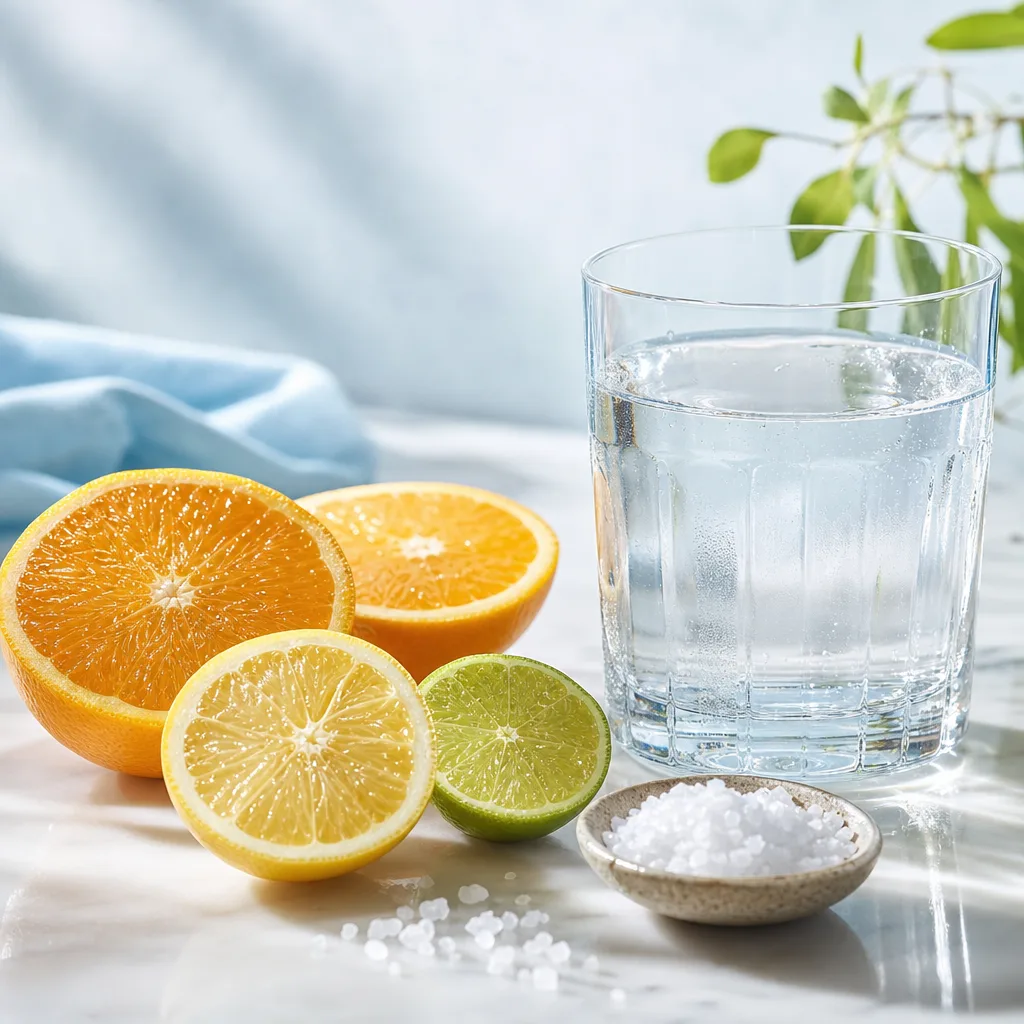
Increased electrolyte needs arise not only during sport but also with heavy sweating in everyday life, for example in summer heat or physically demanding work. Here too, a combination of sufficient fluid and a small amount of sodium can make sense, for example through a pinch of salt in water or through sodium-rich foods.
People with high blood pressure, kidney disease or other pre-existing conditions should discuss additional electrolyte intake through drinks or dietary supplements with a doctor beforehand, as increased sodium intake is not generally advisable in such cases.
06
Ready-made sports drink or homemade
With a little practice, an isotonic drink can also be made yourself, for example from water, a small amount of fruit or grape juice and a pinch of salt. Ready-made sports drinks have the advantage of a consistent, precisely declared composition, while a homemade version can be adjusted flexibly and is usually easier to keep lower in sugar.
A dietary supplement or sports drink should always be understood as an addition, not a replacement for an overall balanced diet with sufficient fluid outside training as well.
07
What the research says
For endurance exertion lasting about an hour or more, the combination of carbohydrates and sodium in drinks is well studied and shows advantages over plain water in studies for fluid absorption and performance. For shorter or low-intensity sessions, the benefit hardly matters, and the additional sugar intake without a relevant advantage tends to outweigh it.
For individual additives, such as certain amino acids or plant extracts in some sports drinks, the evidence is considerably weaker and often cannot be clearly translated into better performance. A differentiated look at the actual training situation therefore makes more sense than a blanket recommendation for or against sports drinks.
Individual sweat loss also differs greatly from person to person and depends on temperature, humidity, training status and genetic predisposition. Fixed drinking amounts that apply to everyone therefore cannot be derived from research; it is more helpful to use thirst, body weight before and after training and the colour of your urine as rough guides.
08
Frequently asked questions
Can I lose weight with sports drinks?
Sports drinks generally contain carbohydrates and therefore calories, and they are not a weight-loss product. If your goal is weight reduction and your sessions are short, water is usually the better choice, see also protein for weight loss.
How much should I drink during training?
This depends heavily on sweat rate, temperature and duration of exertion, and no blanket amount can be reliably given. As a rough guide, drink regularly in small sips instead of large amounts at once.
Are sports drinks suitable for children or older people?
In principle possible during intense, long-lasting exertion, but for children, older people or those with pre-existing conditions such as high blood pressure, medical advice is advisable because of the salt and sugar content.
Are there low-sugar sports drinks?
Yes, some products use sweeteners instead of sugar and thus mainly supply electrolytes with fewer calories. For very long endurance exertion, a certain amount of carbohydrate still makes sense to ensure energy supply during exertion.
What is the difference from a protein shake?
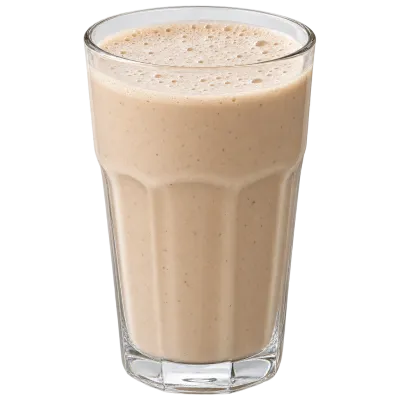
A sports drink mainly supplies fluid, carbohydrates and electrolytes for use during exertion, while a protein shake serves protein supply after training for recovery, see protein timing.
Can too much sports drink be harmful?
In usual amounts, serious side effects are rare. Very large amounts of sugar or electrolytes at once can, however, burden the stomach or in rare cases lead to loose stools, which is why steady intake over the training period is recommended.
Is water with a pinch of salt enough as a substitute?
For many recreational athletes, a simple homemade version of water, a little juice and a pinch of salt is a practical and usually sufficient alternative to a ready-made product, as long as training duration and intensity stay moderate.
 Matching productMeal Replacement ShakeAmazon →
Explore
Read next
 Protein types at a glance: whey, casein, plant-based and moreAn overview of all common protein types from whey to collagen, with a comparison table and links to detailed guides.
 Amino Acids: The Building Blocks of ProteinStructure, classification and functions of amino acids at a glance, with a table of all 20 proteinogenic amino acids and links to all guide…
 Supplements for Sport and Fitness: A Factual OverviewAll supplement categories at a glance, with the evidence rated from good to thin, plus safety and buying tips.