
6 min read
Vitamins for Athletes: Functions, Requirements and Sources
Which vitamins exist, what they are needed for and whether athletes really need more of them: find out in this overview.

Alongside minerals and trace elements, vitamins are among the micronutrients that the body needs in small amounts, but continuously. They are involved in almost every metabolic process, from energy metabolism and the building of connective tissue to the function of the immune system.
In this overview you will learn which vitamins exist, how fat-soluble and water-soluble vitamins differ, what functions the individual vitamins perform, how high the requirement is in different stages of life and when targeted supplementation can actually make sense for athletes.
01
Fat-soluble and water-soluble vitamins
Vitamins are fundamentally divided into two groups. The fat-soluble vitamins A, D, E and K are absorbed together with dietary fat and can be stored in the body for a certain time, mainly in the liver and fatty tissue. Because they are stored, a permanently excessive intake, for example through heavily overdosed products, can have undesirable effects.
The water-soluble vitamins, which include vitamin C and the B vitamins, are by contrast hardly stored and have to be supplied more regularly. An overdose through food is considerably less likely here, since excess amounts are mostly excreted in the urine.
02
The most important vitamins at a glance
| Vitamin | Type | Important function |
|---|---|---|
| Vitamin A | fat-soluble | Vision, building of skin and mucous membranes |
| Vitamin D | fat-soluble | Calcium and bone metabolism, immune system |
| Vitamin E | fat-soluble | Protection of cell membranes from oxidative stress |
| Vitamin K | fat-soluble | Blood clotting, bone metabolism |
| Vitamin C (ascorbic acid) | water-soluble | Connective tissue, iron absorption, antioxidant |
| Vitamin B1, B2, B6 | water-soluble | Energy and protein metabolism, nerve function |
| Vitamin B12 | water-soluble | Blood formation, nerve function |
| Folic acid | water-soluble | Cell division, blood formation |
This overview shows only a selection of the thirteen vitamins in total that are considered essential for humans. All of these vitamins have to be taken in regularly through food, with the exception of vitamin D, which the body can produce itself in the skin given sufficient sunlight, and vitamin K, which is partly also produced by bacteria in the gut. An interplay of several vitamins and minerals is often more important than looking at a single nutrient in isolation, as many metabolic processes need several micronutrients at the same time.
 Matching productHyaluronic Acid CapsulesAmazon →
03
Why athletes should pay attention to their vitamin balance
Intensive training increases the turnover of some vitamins, such as the B vitamins, which are involved in energy metabolism, as well as vitamins C and E, which as antioxidants play a role in neutralising free radicals, produced in greater amounts by physical exertion. That does not automatically mean that everyone who exercises has to take in more vitamins through supplements.
Anyone who eats a balanced and varied diet, with enough fruit, vegetables, wholegrain products, dairy products and fish and meat or plant-based alternatives, will as a rule cover their vitamin needs well through normal food. An exception is vitamin D, which in our latitudes, especially in the darker months, is often not sufficiently covered by the body's own production in the skin because of limited sunlight.
Even with a strongly reduced calorie intake during a diet or with a very high training volume, for example in endurance sport, the vitamin supply from food can become tight, simply because less is eaten overall or the diet is very one-sided. In such phases it is worth taking a more conscious look at a broad selection of foods, so that enough micronutrients are still taken in despite the smaller total amount. For endurance athletes with a high training volume, an increased need for iron and B vitamins can also become relevant, more on this under Endurance and fitness.

04
What the research says
For healthy people with a balanced diet, the evidence on the effect of additional vitamins on athletic performance is, overall, rather sobering. With an already good supply, additional doses of individual vitamins mostly show no relevant effects on strength, endurance or muscle building. If, on the other hand, there is a proven deficiency, for example of vitamin D, targeted correction can make sense and can have a positive effect on bone health and the immune system, among other things.
For many of the antioxidant vitamins C and E, it also applies that very high, long-term supplementation could under certain circumstances even blunt some training adaptations, because the body partly uses the oxidative stimulus triggered by training for its own adaptation processes. The data on this are not conclusive, but they make clear that more is not automatically better. Dietary supplements are no substitute for a balanced diet, but at best a targeted addition when there is an actual need. Reputable assessments therefore speak more of a basic supply that should be ensured than of a direct performance boost from individual vitamins.
05
When supplementing can make sense
Targeted vitamin intake through supplements can make sense in certain situations, for example with a proven deficiency, with a very one-sided diet, with a vegan diet in the case of vitamin B12, in certain stages of life such as pregnancy, or with strongly reduced calorie intake during a diet. A blood test at the doctor can clarify whether there really is a deficiency before you start permanently taking high doses on your own.
If you have existing conditions, are pregnant or breastfeeding, or take medication, you should have vitamin supplements checked by a doctor beforehand, as some vitamins, such as vitamin K, can interact with medication.
06
Vitamin-rich foods in everyday life
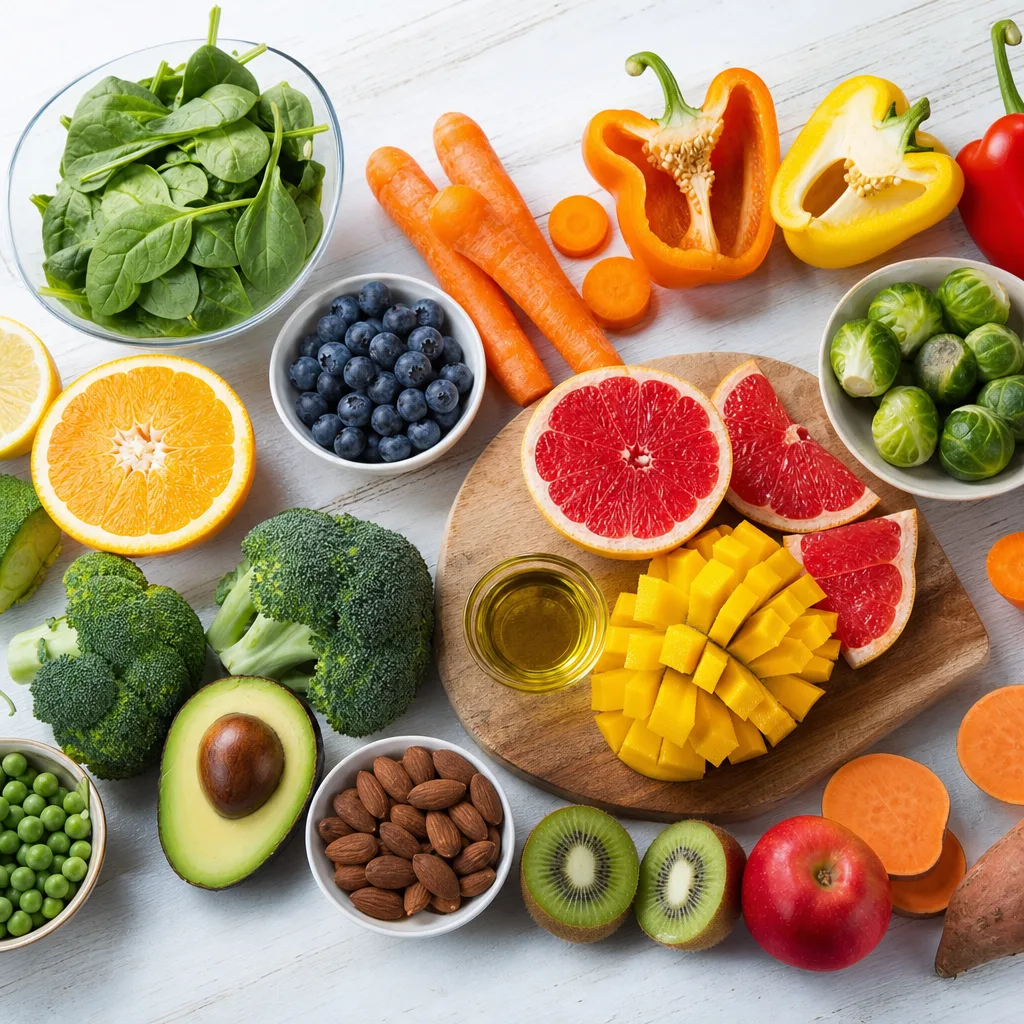
For a good basic supply, it is worth looking at your daily diet rather than at a single product. Colourful vegetables and fruit provide a broad mix of vitamins and secondary plant compounds, oily fish and eggs provide vitamin D, wholegrain products and legumes provide B vitamins, and nuts and plant oils provide vitamin E. You can find more on individual nutrients under Vitamins and nutrients and Minerals.
Anyone following a vegan or vegetarian diet should keep a particular eye on vitamin B12, which occurs in notable amounts practically only in animal foods. Vitamin D can also hardly be taken in from plant foods in sufficient amounts, so depending on sun exposure, targeted supplementation can make sense here. In both cases, a blood test at the doctor can provide clarity about the actual requirement.
 Matching productVitamin D3 DropsAmazon →
07
Vitamin requirements in different stages of life
The vitamin requirement is not the same throughout life. During pregnancy and breastfeeding, the need for several vitamins, especially folic acid, rises noticeably, which is why medical supervision is particularly important. In older age, the body's ability to absorb certain vitamins, such as vitamin B12, from food declines, which is part of the reason why older people more often have an increased requirement. With a strongly calorie-reduced diet, too, the amount of vitamins taken in from food automatically falls, even if the diet is otherwise balanced.

08
Frequently asked questions
Do I generally need more vitamins as an athlete?
Not automatically. The need for some vitamins is slightly increased with intensive training, but is usually adequately covered with a balanced diet. A generally higher requirement does not justify uncontrolled high dosing.
Which vitamin is most often lacking?
In Central Europe, an insufficient vitamin D level is widespread, especially in the winter months, because the body's own production via the sun is then limited. A blood test at the doctor will tell you.
Can I take in too many vitamins?
With the fat-soluble vitamins A, D, E and K, a lasting, clear overdose is more likely through high-dose supplements than through normal food. Follow the packaging information and, if you plan to take a high dose, have a doctor check beforehand whether it makes sense for you.
Do vitamin supplements replace a healthy diet?
No. Dietary supplements are intended as an addition and are no substitute for a balanced, varied diet with enough fruit, vegetables and other vitamin-rich foods.
How do I know whether I actually have a deficiency?
This can only be established reliably through a blood test at the doctor. Signs such as persistent tiredness, frequent infections or concentration problems can point to a deficiency, but also have many other possible causes.
 Matching productPowder Storage ContainerAmazon →
Explore
Read next
 Protein types at a glance: whey, casein, plant-based and moreAn overview of all common protein types from whey to collagen, with a comparison table and links to detailed guides.
 Amino Acids: The Building Blocks of ProteinStructure, classification and functions of amino acids at a glance, with a table of all 20 proteinogenic amino acids and links to all guide…
 Supplements for Sport and Fitness: A Factual OverviewAll supplement categories at a glance, with the evidence rated from good to thin, plus safety and buying tips.