
9 min read
Amino Acids: The Building Blocks of Protein
Structure, classification and functions of amino acids at a glance, with a table of all 20 proteinogenic amino acids and links to all guides.

Amino acids are the building blocks from which all protein in the body is made, from muscle to enzymes, antibodies and hormones. Without these basic components there would be no functioning metabolic process, no growth and no recovery.
On this page you get a factual overview of the structure, classification, functions and requirements of amino acids. You will also find an overview of the proteinogenic amino acids with their classification as essential, semi-essential and non-essential, as well as links to all the detailed guides on individual amino acids and their uses.
01
Structure of amino acids
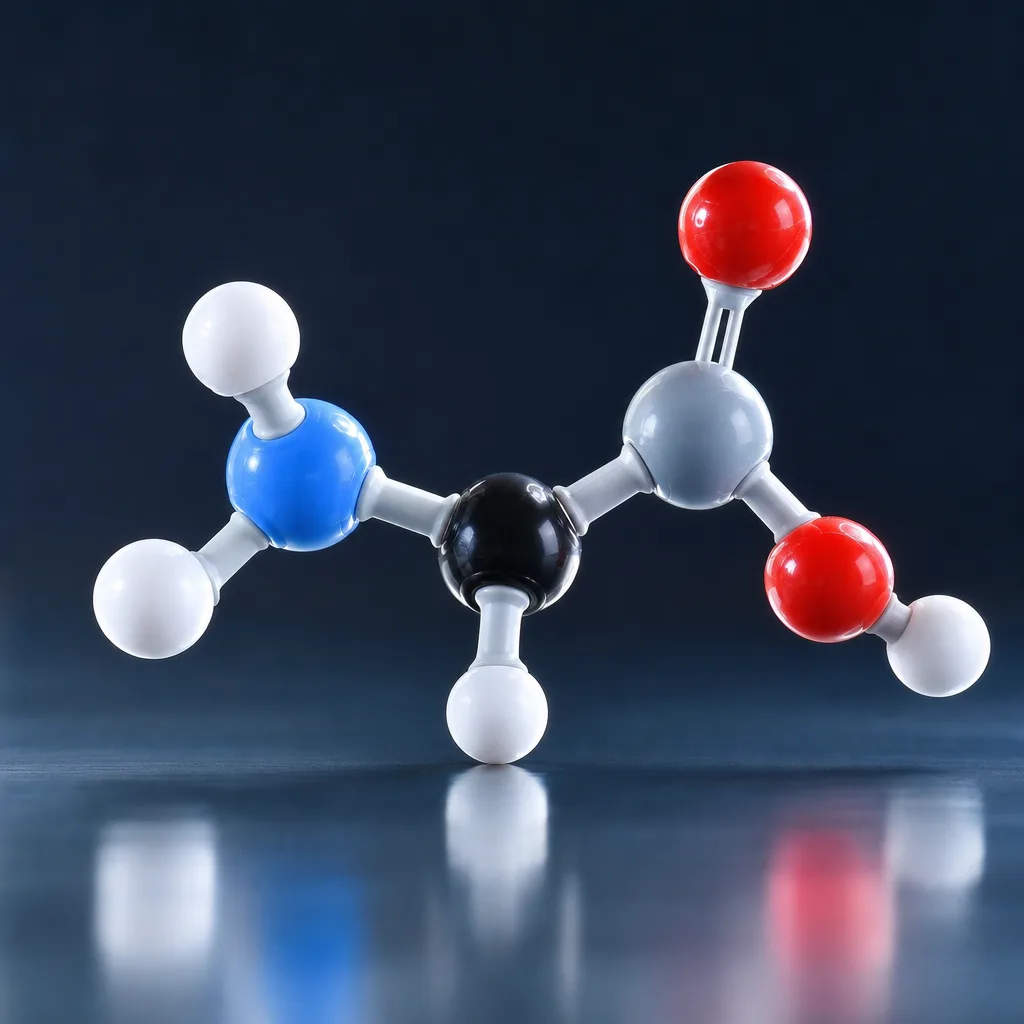
Chemically, an amino acid is a small molecule with a central carbon atom to which four groups are attached: a hydrogen atom, a carboxyl group, the amino group that gives it its name, and a so-called side chain. This side chain differs from one amino acid to the next and determines the special properties of an amino acid, for example whether it is acidic, basic, water-soluble or more fat-soluble.
When two or more amino acids join through a so-called peptide bond, a peptide is formed. When many amino acids line up in a row, the result is a protein. The order of the amino acids in this chain, the so-called sequence, decides which structure and which function the resulting protein takes on in the body.
Amino acids from which human protein is built are called proteinogenic. In total, 20 amino acids belong to this group. They can be classified by whether the body can produce them itself or whether they have to be taken in through food.
02
Essential, semi-essential, non-essential
The following table shows all 20 proteinogenic amino acids with their usual classification. Essential amino acids cannot be made by the body itself and must be taken in regularly with food. Semi-essential amino acids, also called conditionally essential, can in principle be produced by the body, but in phases of growth, stress or illness its own production is sometimes not enough. Non-essential amino acids can be synthesised by the healthy body in sufficient amounts.
| Amino acid | Classification | Short note |
|---|---|---|
| Isoleucine | essential | branched-chain, part of the BCAA |
| Leucine | essential | branched-chain, important for muscle protein synthesis |
| Valine | essential | branched-chain, part of the BCAA |
| Lysine | essential | important for connective tissue and the immune system |
| Methionine | essential | sulphur-containing, starting material for other amino acids |
| Phenylalanine | essential | precursor of tyrosine |
| Threonine | essential | building block of connective tissue and mucous membranes |
| Tryptophan | essential | precursor of serotonin |
| Histidine | essential | building block of tissue proteins, sometimes classed as semi-essential in the specialist literature |
| Arginine | semi-essential | with high demand, for example during growth, own production is often not enough |
| Cysteine | semi-essential | sulphur-containing, building block of keratin |
| Glutamine | semi-essential | most abundant amino acid in the blood, important for the gut and immune system |
| Glycine | semi-essential | simplest amino acid, building block of collagen |
| Proline | semi-essential | important building block of collagen |
| Tyrosine | semi-essential | precursor of messenger substances, formed from phenylalanine |
| Alanine | non-essential | role in energy metabolism |
| Asparagine | non-essential | building block of numerous proteins |
| Aspartic acid | non-essential | role in the metabolism of nitrogen compounds |
| Glutamic acid | non-essential | precursor of glutamine, role as a messenger in the nervous system |
| Serine | non-essential | building block of membrane components and enzymes |
The assignment of individual amino acids to the semi-essential group is not always handled consistently in the specialist literature, as actual requirements depend heavily on age, health status and stress. For practical nutrition, what matters most is that a varied diet with different protein sources supplies all 20 amino acids in sufficient amounts.
 Matching productBCAA PowderAmazon →
03
Functions of amino acids in the body
In the body, amino acids do far more than serve as building material for muscle. They are a component of practically every tissue in the body, from skin to tendons and ligaments to internal organs. As structural proteins such as collagen, elastin and keratin, they give skin, hair and connective tissue their strength and elasticity.
Metabolism itself would also not function without amino acids, since practically all enzymes, the tools of metabolism, are proteins themselves. The same applies to many hormones and messenger substances: insulin, growth hormone and numerous neurotransmitters consist of amino acids or are formed from them. In the immune system, amino acids are involved in producing antibodies, which the body needs to defend against pathogens.
In addition, amino acids serve as transport molecules, for example for oxygen in the blood, and can also be used as an energy source when needed, if carbohydrate and fat reserves are not sufficient. This versatility explains why an adequate supply of all essential amino acids is relevant to practically every area of health, not only to muscle building and sport.
 Matching productHyaluronic Acid CapsulesAmazon →
04
Requirements and supply through diet
For healthy adults there is no blanket daily requirement for individual amino acids in the form of a simple number, as it depends heavily on the individual's overall protein requirement. As a rough guide, the DGE (German Nutrition Society) gives about 0.8 g of protein per kilogram of body weight per day for healthy adults, and from around the age of 65 a somewhat higher value of about 1.0 g is usually given. In strength training and during diets, sports science often discusses values of around 1.2 to 2.0 g per kilogram of body weight as a range.
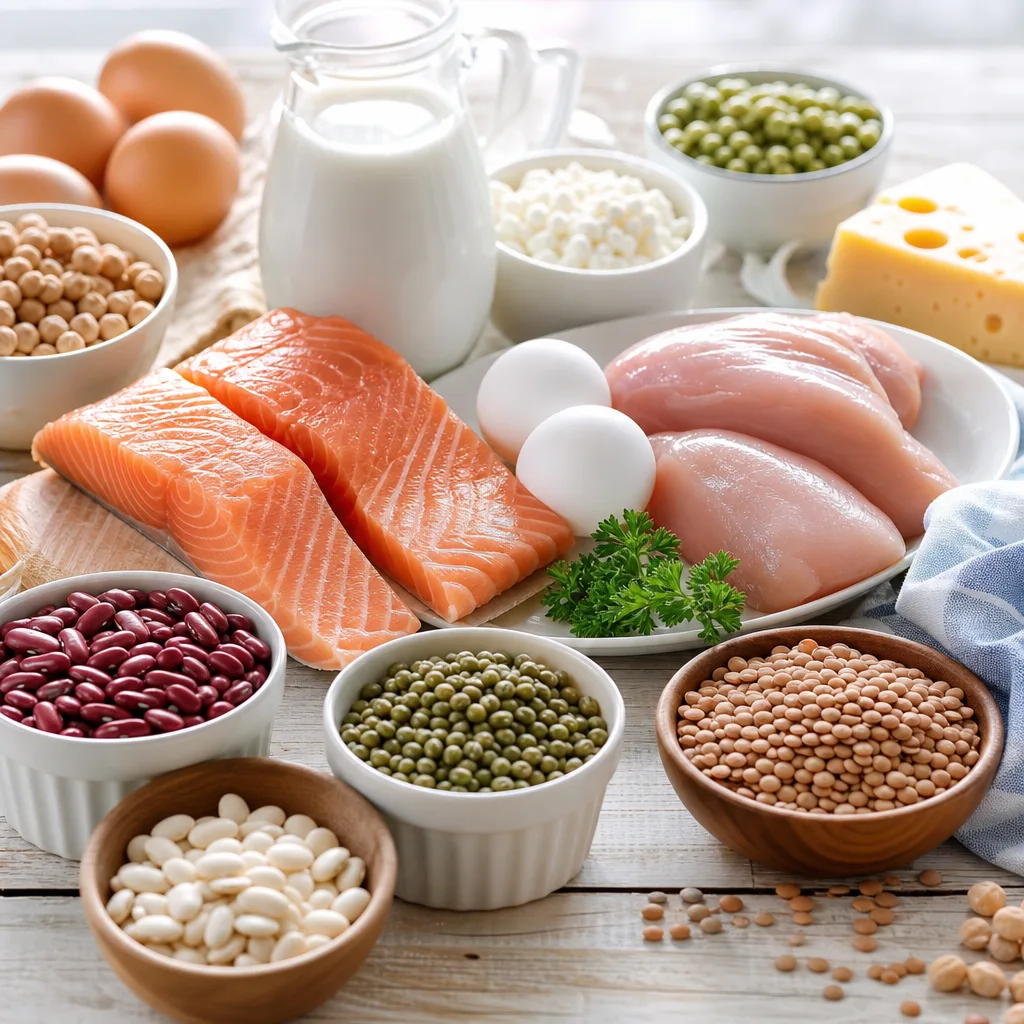
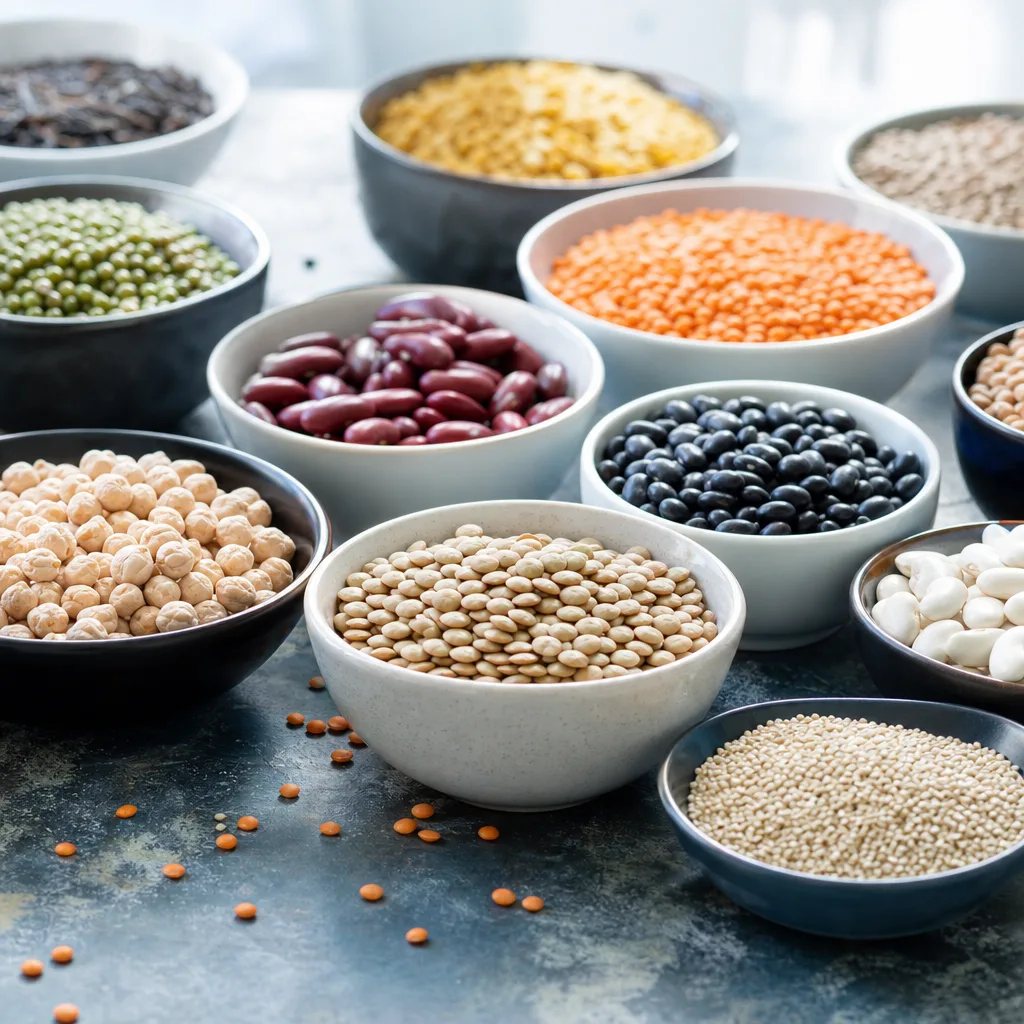
Anyone who meets their protein requirement through a varied diet will normally also automatically take in enough of all the essential amino acids. Animal foods such as meat, fish, eggs and dairy products usually provide a particularly complete amino acid profile. Plant protein sources such as legumes, grains, nuts and seeds are often somewhat weaker in individual amino acids, but they complement each other when different plant foods are combined over the day.
An actual deficiency of individual amino acids is rare with a balanced diet in Germany. The risk is higher with a very one-sided diet, with a sharply restricted calorie intake during a diet or with certain diseases of the digestive tract. In these cases it is worth consulting a doctor or a nutrition professional rather than taking high doses on your own.
 Matching productQuinoaAmazon →
05
Amino acids as dietary supplements
Besides foods, shops also offer amino acids in free, isolated form, for example as powders, capsules or tablets. Well-known examples are BCAA, consisting of leucine, isoleucine and valine, and EAA products, which contain all nine essential amino acids in free form. The advantage of free amino acids lies mainly in their fast availability, since unlike dietary protein they do not first have to be broken down in the digestive tract.
For most healthy adults with a balanced diet, such products are not a necessity but a practical addition, for example when there is little time for a proper meal or when individual amino acids such as citrulline or taurine are the specific focus. Dietary supplements do not replace a balanced diet, but can complement it sensibly in individual cases.
Typical amounts stated on packaging vary widely depending on the product and purpose, and serve as a rough guide, not as fixed instructions. Follow the information on the respective packaging, and if you have an existing condition, are pregnant or take medication, talk to a medical professional first before using amino acid products regularly.
 Matching productL-Citrulline MalateAmazon →

06
What the research says
The fundamental importance of amino acids for building body protein, for enzymes, hormones and the immune system is scientifically well established and undisputed. The role of individual amino acids such as leucine in stimulating muscle protein synthesis after training is also considered comparatively well supported.
For many specific additional claims around free amino acid products, for example on fat loss, mood or anti-ageing effects, the evidence is mixed to thin. Positive findings often come from small studies, from studies in particular groups of people or from animal experiments, which cannot simply be transferred to healthy, adequately nourished adults. If you already get enough protein from food, you should therefore treat specific advertising claims for individual products with some caution, without questioning the fundamental importance of amino acids for the body.
 Matching productL-LeucineAmazon →
07
Frequently asked questions
How many amino acids are there?
In total, 20 amino acids are proteinogenic, that is, the ones from which human protein is built. Nine of these are considered essential, and others are classed as semi-essential depending on circumstances.
Can you take in too many amino acids?
With a balanced diet within the usual protein requirement ranges, this is generally unproblematic for healthy people. With kidney disease or very high additional intake through supplements, medical advice beforehand is recommended.
Is a normal diet enough to cover all amino acids?
With a varied diet containing enough protein from different sources, the supply of all essential amino acids is generally covered. One-sided diets or a very low calorie intake can increase the risk of an insufficient supply.
Are plant protein sources at a disadvantage when it comes to amino acids?
Individual plant foods are often weaker in certain amino acids than animal sources, but this can be balanced out well by combining different plant foods over the day.
What do the abbreviations BCAA and EAA stand for?
BCAA stands for branched-chain amino acids, meaning leucine, isoleucine and valine. EAA stands for all nine essential amino acids together. You can find more in the guides to BCAA and EAA.
Are free amino acids better than protein from food?
Not better in general, but mainly available faster, since they do not first have to be digested. For your total daily supply, the overall amount of protein you take in matters more than the form of the amino acids.
 Matching productL-LysineAmazon →
08
Guides to individual amino acids
- Isoleucine: branched-chain amino acid and part of the BCAA, with a role in the energy metabolism of muscle.
- Valine: the third BCAA amino acid, important for muscle tissue and nitrogen balance.
- Methionine: sulphur-containing essential amino acid and starting material for other compounds made by the body.
- Threonine: essential amino acid important for connective tissue and mucous membranes.
- Tryptophan: essential amino acid and precursor of serotonin.
- Phenylalanine: essential amino acid and precursor of tyrosine.
- Histidine: essential amino acid important for tissue proteins.
- Glycine: simplest amino acid and an important building block of collagen.
- Lysine: essential amino acid important for connective tissue and the immune system.
- Leucine: branched-chain amino acid with a special role in muscle protein synthesis.
- EAA: an overview of combination products with all nine essential amino acids.
- BCAA: an assessment of the branched-chain amino acids leucine, isoleucine and valine.
- L-arginine: semi-essential amino acid with a role in nitrogen balance and blood flow.
- L-citrulline: amino acid from which the body can form arginine, among other things.
- Glutamine: most abundant amino acid in the blood, important for the gut and immune system.
- Taurine: sulphur-containing compound often found in sports drinks.
- Tyrosine: precursor of important messenger substances, formed from phenylalanine.
- Beta-alanine: amino acid from which the body forms carnosine.
- Carnosine: compound of beta-alanine and histidine with a role in muscle metabolism.
- Aspartic acid: non-essential amino acid with a role in nitrogen metabolism.
- GABA: compound formed from glutamic acid with a role in the nervous system.
 Matching productL-ArginineAmazon →
09
Magazine: Amino acids in everyday life and sport
- Amino acids for muscle building: what role amino acids realistically play in training progress.
- Amino acids and recovery: how amino acids can support recovery after training.
- Amino acids and the immune system: links between amino acid supply and the body's defences.
- Amino acids for weight loss: a factual assessment of what contribution amino acids can make in a diet.
- Amino acids as natural fat burners: putting such advertising claims in context using the evidence.
- Amino acids against wrinkles: which amino acids are associated with collagen formation and skin structure.
- Healthy hair through amino acids: the importance of amino acids for hair structure and hair growth.
- Amino acids for people with diabetes: what people with diabetes should watch for with amino acid products.
- Amino acids for boosting potency: an honest assessment of such claims around arginine and others.
- Sensible supplementation with amino acids: when amino acid products can be a useful addition.
- The most important amino acids for effective training: an overview of amino acids relevant to training.
- Colostrum as a natural source of amino acids: an assessment of colostrum as a dietary supplement.
 Matching productL-GlutamineAmazon →
Explore
Read next
 Protein types at a glance: whey, casein, plant-based and moreAn overview of all common protein types from whey to collagen, with a comparison table and links to detailed guides.
 Supplements for Sport and Fitness: A Factual OverviewAll supplement categories at a glance, with the evidence rated from good to thin, plus safety and buying tips.
 Training Plans: The Right Plan for Your GoalHow to use frequency, volume and progressive overload properly, and which training plan fits your goal and time budget.