
6 min read
Calcium: Function, Daily Requirement and the Best Food Sources
What the body needs calcium for, how high the usual daily amount is and which foods provide particularly large amounts of it.

Calcium is the most abundant mineral in the human body by quantity. By far the largest part of it is found in bones and teeth, while a small but important share is involved in numerous processes in the blood and in cells.
This guide explains what calcium is needed for in the body, how high the usual daily intake is according to reference values, which foods are particularly good sources and when a supplement can play a role at all.
01
What the body needs calcium for
Calcium is the most important building block for the strength of bones and teeth. It also plays a role in muscle contraction, including the contraction of the heart muscle, in signal transmission between nerve cells and in blood clotting. So that these functions run reliably, the body keeps the calcium concentration in the blood constant within a very narrow range and draws on the stores in the bones when needed.
This is exactly why a permanently too low intake mainly affects the bones: if the calcium from food is not enough, the missing amount is mobilised from bone in the long term, which can weaken bone density over the years.
Calcium is also relevant for athletes, because a stable bone structure is the basis for a skeleton that can withstand training stimuli. With very low energy intake over a longer period, as can occur in some endurance sports, the risk of an inadequate calcium and bone supply is increased, and in pronounced cases this should be checked by a doctor.
02
Daily requirement at a glance
The German Nutrition Society (DGE) gives different reference values for different age groups. The following table shows the commonly cited orders of magnitude as a guide.
| Group | Reference value per day |
|---|---|
| Adults | about 1000 mg |
| Adolescents (13 to 18 years) | about 1200 mg |
| Pregnant and breastfeeding women | about 1000 mg, to be clarified individually with a doctor |
| From about 65 years | about 1000 mg, in some cases set higher |
These values are general guide values, not an individual substitute for a medical or nutritional assessment. If you train very intensively on a regular basis, sweat losses give you a slightly higher need for various minerals, which in practice can usually be balanced well through an overall sufficient and varied diet.
03
Calcium and sport
Besides its role for the bones, calcium is also important for muscle contraction, including the heart muscle and the striated skeletal muscle responsible for movement and force production. During intense, prolonged exertion, the body loses small amounts of calcium through sweat in addition to sodium and magnesium, which can slightly raise the overall requirement of athletes without automatically creating a need for additional supplements.

04
Good food sources
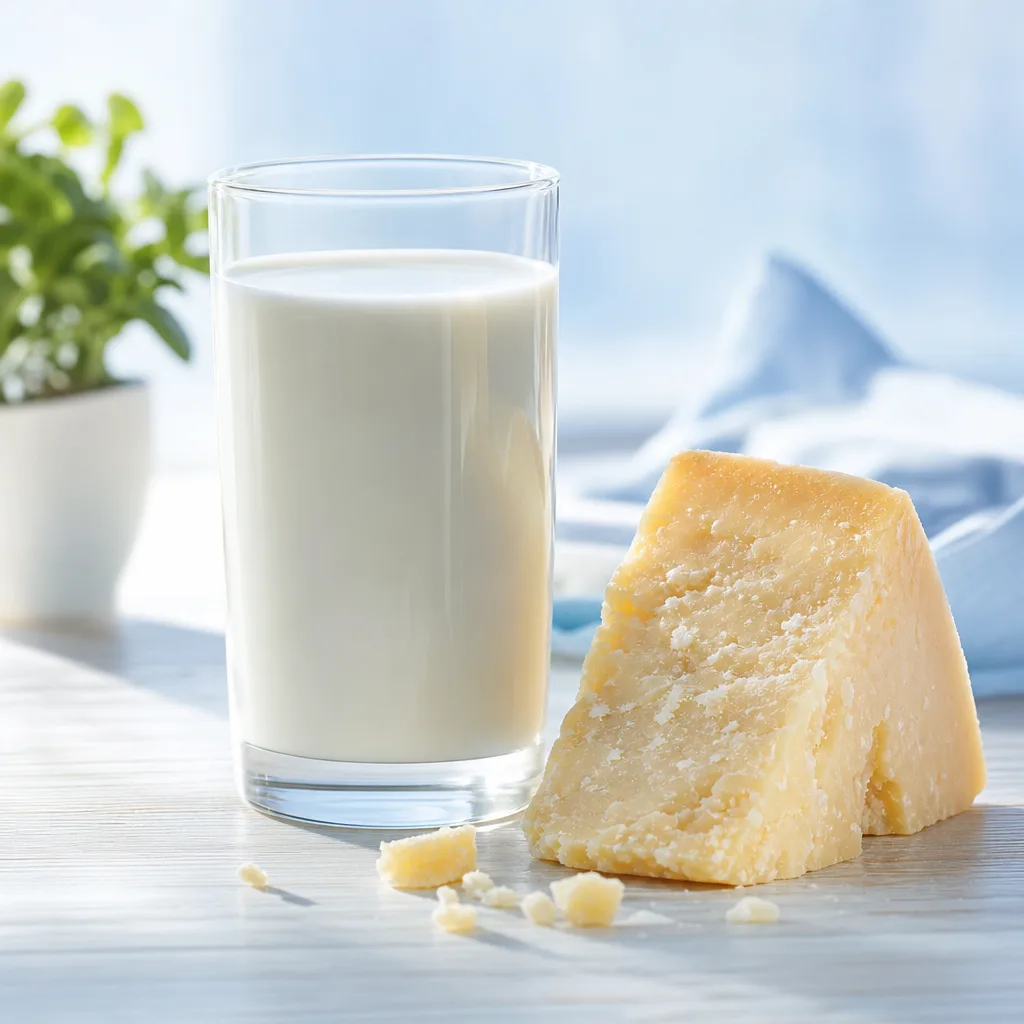
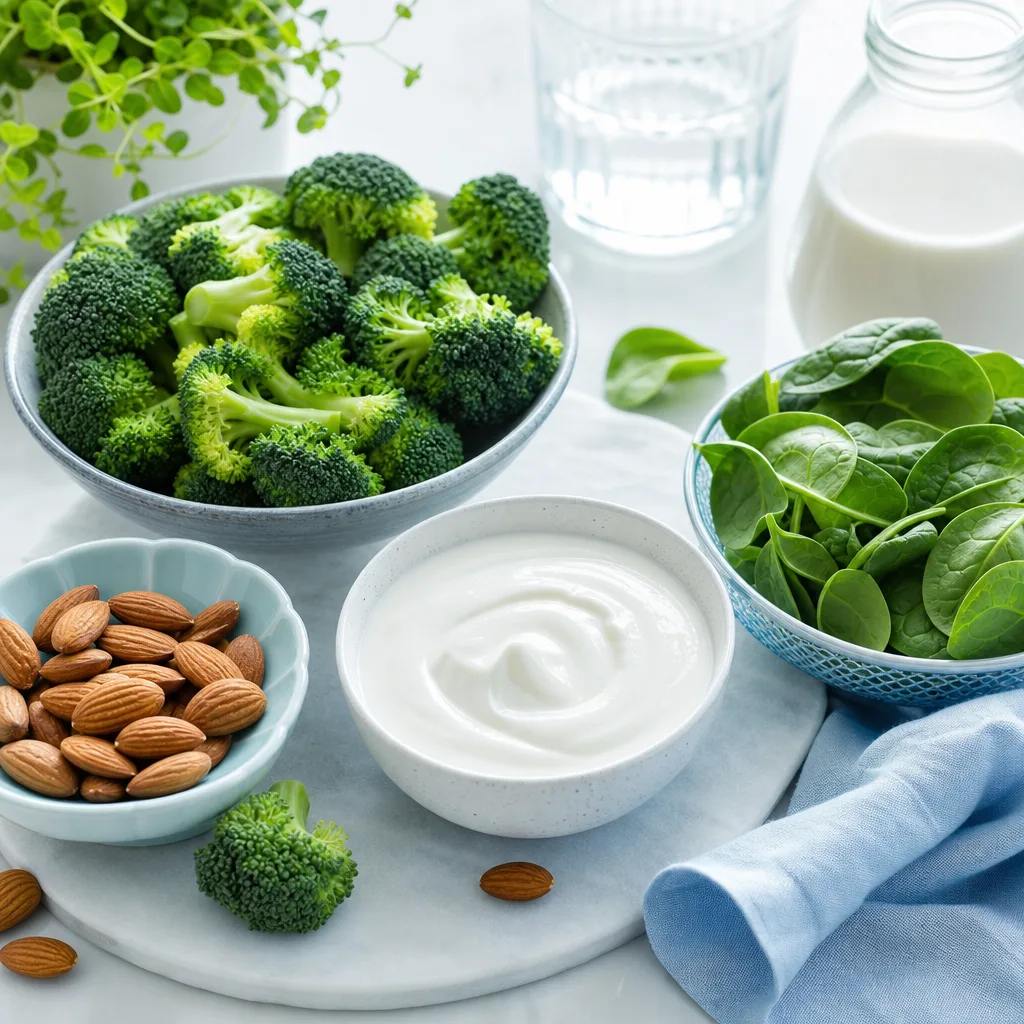
Milk and dairy products are the best-known sources of calcium, but by far not the only ones. Certain vegetables, pulses and calcium-rich mineral water also contribute to supply.
| Food | Calcium content (typical order of magnitude) |
|---|---|
| Hard cheese such as Emmental or mountain cheese | very high per 100 g |
| Yoghurt, kefir, buttermilk | high per serving |
| Kale, broccoli, rocket | medium to high per 100 g |
| Sesame and almonds | high, but usually eaten in small portions |
| Calcium-rich mineral water | high per litre, stated on the label |
If you eat little or no dairy, for example on a vegan diet or with lactose intolerance, you can still achieve a good intake through green leafy vegetables, fortified plant drinks and calcium-rich mineral water. You can find details on plant protein sources and their nutrient profile in the guide to vegan protein.
05
Calcium, bone density and osteoporosis
A particularly relevant topic around calcium is maintaining bone density in the long term. Until about the age of 30 the body builds bone mass, after which loss slowly predominates and can accelerate with increasing age, especially in women after the menopause. An adequate calcium intake throughout life is considered one of several building blocks for counteracting this loss, alongside regular exercise, especially strength training, and an adequate vitamin D supply.
A realistic perspective matters here: calcium alone does not prevent osteoporosis, it is one building block among several. Smoking, little exercise, certain medications and genetic factors also play a role. If you are worried about your bone health, you should have it checked by a doctor instead of relying on a higher calcium intake alone.
06
Calcium and vitamin D as a team
Calcium alone is not enough for the body to absorb it well and build it into the bones. Vitamin D, technically also called calciferol, plays a central role here because it regulates the absorption of calcium in the gut. Without enough vitamin D, even an intake that is good in itself remains less effective. You can read more in the guide to calciferol.
07
Supplements: when they make sense
For most people with a varied diet, the calcium requirement can be met well through food. A supplement can make sense in certain situations, such as a very restricted diet, a deficiency diagnosed by a doctor or in certain life stages such as pregnancy, but always in consultation with a doctor. Dietary supplements are no substitute for a balanced diet, but at most a targeted addition in justified cases.
If you are thinking about a supplement, the pack gives the usual daily amount, which serves as a guide and should not be exceeded. Calcium supplements are best taken spread across the day rather than all at once, since the body absorbs larger single amounts less efficiently. You can also find details on how to assess your overall nutrient supply in our guide to minerals.
08
Calcium in interplay with other minerals
Calcium does not stand alone in the body but works together with other minerals such as magnesium and phosphorus, which are also involved in bone metabolism. A one-sidedly very high calcium intake from supplements can in theory influence the absorption of other minerals, which is why a balanced ratio across the whole diet makes more sense than an isolated, very high intake of a single nutrient. You can read more about the interplay of minerals in sport in the guide Minerals.
 Matching productMultivitaminAmazon →
09
What the research says
That calcium is important for bone metabolism is considered well established, as is its role in muscle contraction and nerve signal conduction. The evidence is less clear on whether additional calcium beyond the usual requirement brings an added benefit in people who are already sufficiently supplied, for example for bone density in older age. Some studies point to a limited added benefit here, while others show no measurable difference. Possible links between very high-dose calcium intake from supplements and the cardiovascular system are also discussed in research, without a blanket warning being derivable for the usual intake within the reference values. In sum: intake through food is well studied and unproblematic, whereas a high-dose supplement should be justified and, if in doubt, agreed with a doctor.
 Matching productPowder Storage ContainerAmazon →
10
Frequently asked questions
How high is the daily calcium requirement?
For most adults an intake of about 1000 mg per day is given as a reference value, with slightly higher values for adolescents. You can find exact figures for dietary supplements on the respective pack.
Do athletes need more calcium?
Sweat losses can raise the requirement slightly, but for most people this can be balanced well through an overall sufficient, calcium-rich diet.
Which symptoms can a calcium deficiency cause?
A long-term deficiency can show itself, among other things, in weakened bone density and muscle cramps. If you suspect a deficiency, a medical check is sensible rather than taking high doses on your own.
Can you take in too much calcium?
Oversupply through food is rare. Caution is advisable with high-dose supplements over a longer period, and talking to a doctor is sensible here, especially with kidney disease.
Which foods inhibit calcium absorption?
Certain substances such as oxalates in spinach or rhubarb and phytates in some grain products can slightly reduce the absorption of calcium from the same meal. With an overall balanced diet, this usually plays a minor role in practice for healthy people.
Is vegan calcium as good as calcium from dairy?
Yes, plant sources such as green leafy vegetables or fortified plant drinks also provide well usable calcium, provided enough of them is eaten overall.
Explore
Read next
 Protein types at a glance: whey, casein, plant-based and moreAn overview of all common protein types from whey to collagen, with a comparison table and links to detailed guides.
 Amino Acids: The Building Blocks of ProteinStructure, classification and functions of amino acids at a glance, with a table of all 20 proteinogenic amino acids and links to all guide…
 Supplements for Sport and Fitness: A Factual OverviewAll supplement categories at a glance, with the evidence rated from good to thin, plus safety and buying tips.