
6 min read
Superfood: What the Term Really Means
What superfood actually means, which foods are often called that and how to put marketing claims into realistic perspective.

The term superfood appears constantly in magazines, on packaging and on social media. It usually refers to foods or plant extracts said to contain particularly high levels of nutrients or secondary plant compounds. Superfood is not an official or legally protected term, however, and any manufacturer can use it freely.
In this guide you will learn what lies behind the term, which foods are often described as superfoods and how to put the sometimes very large claims into realistic perspective without giving up on sensible foods. Especially in sport and fitness, the term often appears in connection with performance gains, fat burning or recovery, areas where a sober assessment is particularly important.
01
What does superfood actually mean?
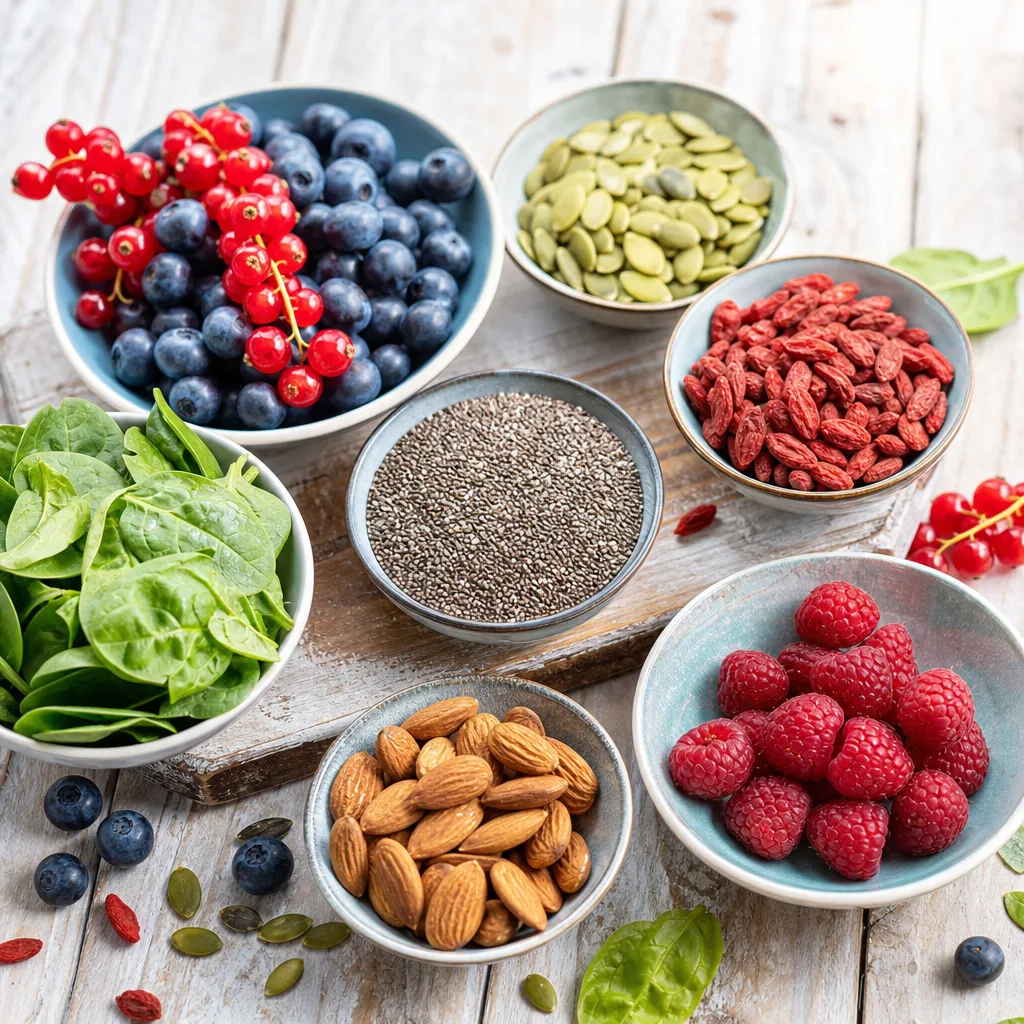
Superfood is primarily a marketing term. It is used for foods that contain comparatively large amounts of vitamins, minerals, fibre or antioxidants relative to their calorie content, or for plants with a long tradition in the folk medicine of particular regions. Examples include berries, algae, roots or seeds from South America and Asia, which have also been marketed in Europe for some years.
From a scientific point of view, dividing foods into normal foods and superfoods makes little sense. Local foods such as kale, flaxseed, oats or legumes also supply many nutrients per calorie, but they are rarely advertised as superfoods because they lack an exotic origin.
The term often originated in food industry marketing and was only backed up afterwards with individual studies on specific ingredients. That does not mean the foods in question are worthless, it only means that the label itself says nothing reliable about the actual effect. In the EU, health claims on foods may only be used if they have been officially authorised, and the promotional term superfood does not fall under this.
02
Nutrient density instead of miracle cures
A useful criterion when assessing such foods is nutrient density, meaning the ratio of nutrient content to energy content. Foods with high nutrient density can be a sensible addition to a balanced diet. This applies to exotic berries just as much as to regional vegetables, nuts or wholegrain products.
It becomes problematic when a single food is credited with an effect it cannot achieve on its own, for example in weight loss, disease prevention or improving athletic performance. A single food or powder does not fundamentally change your health; what matters is how your whole diet works together over weeks and months.
For athletes, the combination of sufficient protein, complex carbohydrates and a good supply of vitamins and minerals is what matters most. Individual nutrient-rich foods can usefully complement this foundation, but they cannot replace it. If you train regularly, you benefit more from a well-thought-out overall meal plan than from individual ingredients marketed as superfoods.
 Matching productExercise MatAmazon →
03
Well-known examples and what they stand for
The umbrella term superfood covers very different foods and plant extracts. The following table shows some well-known examples and what they are usually promoted for. You will find detailed, put-in-context information on individual substances in the guides linked for each one.
| Example | Often promoted for | Category |
|---|---|---|
| Oats, Avena sativa | Relaxation, general vitality | Plant extract |
| Maca root | Energy, endurance | Root powder |
| Tribulus terrestris | Strength, testosterone level | Plant extract |
| Goji and acai berries | Antioxidants | Dried fruit, powder |
| Chia seeds, flaxseed | Fibre, omega 3 | Seeds |
| Kale, broccoli | Vitamins, secondary plant compounds | Local vegetables |
| Guarana | Alertness, source of caffeine | Seed extract |
It is striking that this list places very different categories side by side, from simple foods through dried fruit to highly concentrated plant extracts. For assessing them, the label superfood is therefore less decisive than the actual composition and the research behind each individual substance.
 Matching productCaffeine TabletsAmazon →
04
Superfood as a supplement: capsules, powders, tablets
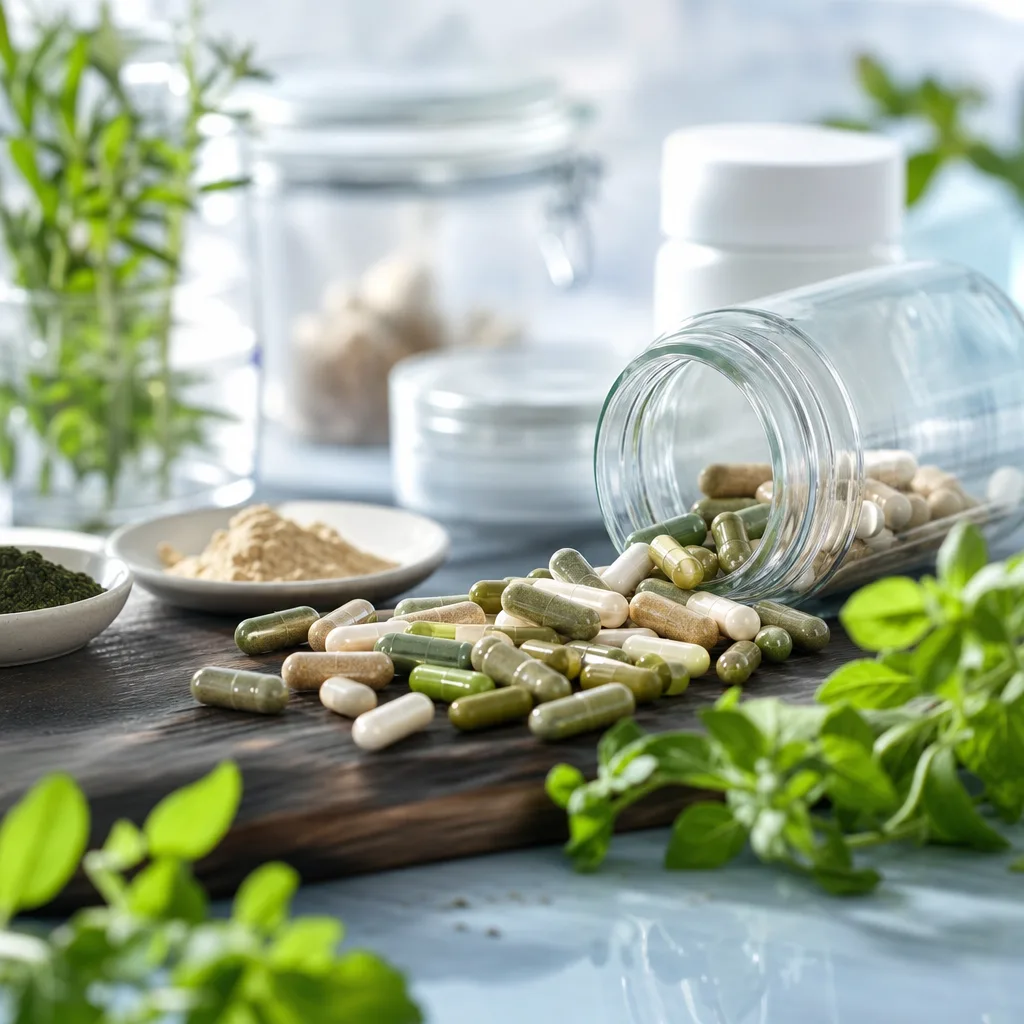
Many of the plants mentioned are offered not only as foods but also as concentrated dietary supplements in capsule or powder form. The advantage is simple, portioned intake; the disadvantage is that many of these extracts are dosed considerably higher than in a normal diet and that the evidence on individual active substances is often thin or inconsistent.
If you would like to try such a product, follow the amount stated on the packaging, start with a rather low dose and observe how you tolerate it before increasing the amount. A dietary supplement does not replace a balanced diet; at most it can complement one if individual nutrients are genuinely lacking in your food.
With extracts from roots or herbs in particular, such as fenugreek or stinging nettle root, the concentration of individual plant compounds varies greatly depending on the manufacturer and the extraction method. A look at the declared amount of the active substance per capsule is therefore often more informative than the plant name on the packaging.
 Matching productVitamin C PowderAmazon →
05
What to look out for when choosing and taking them
A few practical points help you assess superfoods realistically instead of falling for pure advertising claims.
- Read the ingredients list and the recommended serving on the packaging instead of relying solely on advertising copy.
- Be especially cautious with claims about weight loss, potency or hormone balance, as the evidence for many plant extracts is thin or contradictory here.
- Start new products with small amounts to see how your body reacts.
- If you have an existing medical condition, are pregnant or take medication, it is best to discuss regular use with a doctor beforehand, as some plant compounds can interact with medication.
- Regional, seasonal foods with high nutrient density are often just as good an alternative to exotic imports.
- Store capsules and powders in a cool, dry place so that the plant compounds they contain remain stable throughout the stated shelf life.
06
What the research says
For individual components of many superfoods, such as certain antioxidants or fibre, there is solid data on their basic role in metabolism. The evidence is considerably weaker for many of the specific claims around individual extracts such as maca, Tribulus terrestris or bitter melon. Here the findings are often mixed, based on small studies with few participants, or have so far been investigated mainly in cell and animal experiments, whose results cannot simply be transferred to humans. Reputable sources therefore speak of possible effects rather than proven effects.
For general health and athletic performance, your overall diet over a longer period is far more important than any single product promoted as a superfood. A varied diet with plenty of vegetables, fruit, wholegrain products, legumes and sufficient protein already supplies most of the nutrients mentioned in sensible amounts.
The body's capacity to absorb nutrients also plays a role, known as bioavailability. Some plant compounds are absorbed better from a whole food than from an isolated extract, while for others it is the other way round. Blanket statements that an extract always works more strongly than the original food should therefore be treated with caution and are usually more advertising claim than established knowledge.
 Matching productWhey IsolateAmazon →
07
Frequently asked questions
Are superfoods automatically healthier than other foods?
Not automatically. Many foods promoted as superfoods do supply many nutrients per calorie, but the same is true of many local and cheaper foods such as kale, flaxseed or legumes.
Can a superfood help with weight loss?
A single food or powder does not directly change body weight. What remains decisive is the calorie balance across your whole diet, see also protein for weight loss.
How do I recognise reliable information about an extract?
Look for restrained wording such as possible or investigated effects instead of promises of a cure, and check whether an amount and an ingredients list are given.
Can I take several superfood products at the same time?
In principle yes, but watch for overlapping ingredients and the total amount, and seek medical advice if you are unsure, especially if you have a pre-existing condition or take medication.
Are local alternatives as good as exotic superfoods?
In many cases yes. Regional foods such as berries, brassica vegetables or flaxseed often supply nutrients similar to those in exotic varieties and are easier to include regularly and fresh in your meal plan.
Explore
Read next
 Protein types at a glance: whey, casein, plant-based and moreAn overview of all common protein types from whey to collagen, with a comparison table and links to detailed guides.
 Amino Acids: The Building Blocks of ProteinStructure, classification and functions of amino acids at a glance, with a table of all 20 proteinogenic amino acids and links to all guide…
 Supplements for Sport and Fitness: A Factual OverviewAll supplement categories at a glance, with the evidence rated from good to thin, plus safety and buying tips.