
6 min read
Casein protein: slow absorption, evening shake and consistency
How casein protein works, why it suits an evening shake and what distinguishes micellar casein from other forms.

Alongside whey, casein is the second major protein fraction of cow's milk. While whey is known above all for its fast availability, casein is often said to be the opposite: a slow, long-lasting release of amino acids.
This guide explains how casein protein works, why it is popular as an evening shake, what distinguishes micellar casein from other forms, how the consistency shows up in the shaker and who casein suits particularly well.
01
What is casein protein
Casein makes up the predominant part of milk protein, considerably more than the share of whey. In cheese making, casein is exactly the component that becomes solid during curdling and forms the curd, while whey remains as liquid. As a supplement, casein is isolated, dried and processed into powder, which is mixed with liquid in a similar way to whey protein.
Historically, casein was used long before modern sports nutrition, for example in the food industry as a binder or for making milk protein products. Only with growing demand for protein powders was casein deliberately isolated as a supplement in its own right and offered in shaker form.
Outside powder products, too, casein is found in perfectly ordinary dairy products. Cheese consists to a large extent of casein, and quark, yoghurt and milk itself also contain substantial amounts of it. Anyone who regularly eats dairy products therefore already takes in casein, and the isolated powder is merely a more concentrated and more practical form of it.
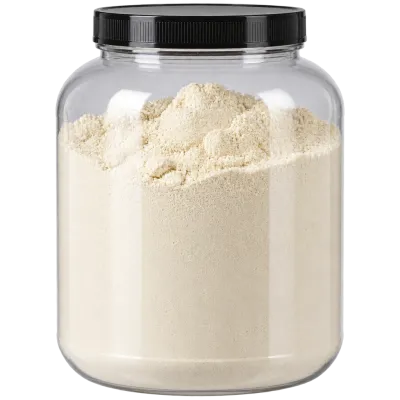 Matching productWhey IsolateAmazon →

02
Slow absorption in the body
The best-known difference between casein and whey is probably the speed at which the body absorbs the protein. Whey is digested comparatively quickly, whereas casein forms a gel-like structure in the acidic environment of the stomach, which dissolves only slowly. As a result the amino acids it contains are released into the blood spread over several hours, rather than all at once in a short time.
In sports science, this property is often linked with a longer-lasting supply of amino acids to the body, for example overnight when no meals follow. Scientific statements on this are to be understood as a general classification, not as an individual promise of a particular effect.
Compared with whey, which releases its amino acids largely within a short time, the release with casein is stretched over a considerably longer period. For everyday life this mainly means a difference in the timing of intake, not necessarily a difference in the total amount of protein taken in across the day.
 Matching productEAA PowderAmazon →
03
Casein as an evening shake
From the slow digestion, the practice has developed of drinking casein shakes preferably in the evening or shortly before going to bed. The idea behind it: during night rest, when no food is taken for many hours, the body should continue to be supplied with amino acids. Some people also prepare the shake as a filling pudding that feels like a small dessert.
When to distribute which protein source sensibly across the day is explained in more detail in the guide on protein timing.
No firm proof that an evening shake makes a measurable difference to muscle building can be derived from individual studies, as individual results vary greatly. Even so, many people report that they value a casein shake in the evening mainly for the feeling of fullness, less for a noticeable athletic effect.
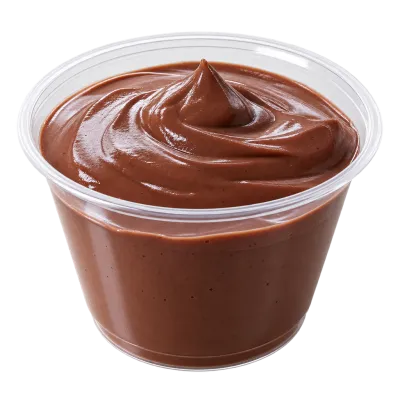 Matching productProtein PuddingAmazon →
04
Micellar casein and other forms
| Form | Property |
|---|---|
| Micellar casein | gently dried, protein structure largely preserved, particularly slow digestion |
| Caseinate, for example calcium caseinate | chemically altered more, dissolves more easily, digestion somewhat faster than micellar |
| Milk protein concentrate | mixture of casein and whey in the natural ratio of milk |
Among the forms mentioned, micellar casein is regarded as the least processed variant and is therefore often preferred when the longest possible release is wanted. Caseinates are technically easier to dissolve, but lose some of the gel-forming property in the process. Milk protein concentrate, in turn, contains both fractions and so lies functionally between a pure whey product and a pure casein product.
The exact form can usually be read from the ingredients list on the packaging, from terms such as milk protein, caseinate or micellar casein. If you specifically want the slowest release, it is best to look for the term micellar casein, as other forms are processed somewhat more.
 Matching productTaurineAmazon →
05
Consistency and preparation
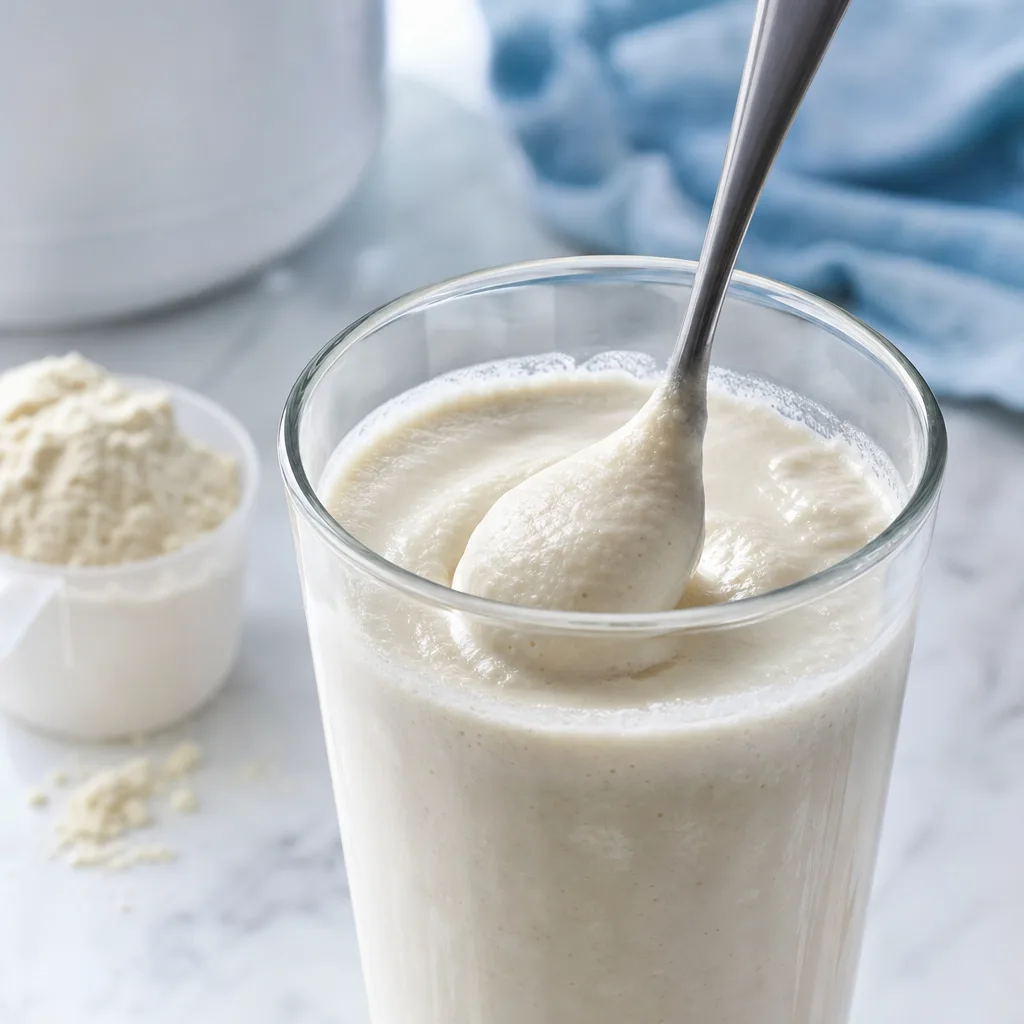
A clear difference from whey shows up already when mixing: in water or milk, casein forms a thicker, pudding-like consistency instead of a thin shake. If you prefer a classic, drinkable shake, you usually use a little more liquid or blend instead of stirring. For anyone who is generally unsure how best to mix a protein powder without clumping, the guide on mixing a protein shake properly helps.
 Matching productProtein DrinkAmazon →
06
Who casein suits
Casein is basically suitable for anyone who wants to supplement their protein intake across the day or specifically overnight and appreciates a creamy consistency. Casein is also gladly used as a filling snack in between, for example as a pudding, as the slowly digestible protein together with the thick consistency is perceived as pleasantly filling.
People who often tend towards sweet snacks in the evening also sometimes reach for a casein pudding as a more filling and higher-protein alternative. It remains important to see the shake as part of the overall diet and not to consume it indiscriminately on top of an already sufficient protein intake.
People with a milk protein allergy or marked lactose intolerance should avoid casein from cow's milk and instead take a look at our guide to vegan protein. In the case of existing kidney disease, as with all protein sources: have the level of intake checked by a doctor beforehand.
 Matching productPea ProteinAmazon →

07
Casein compared with other protein sources
Compared directly with plant protein sources, casein has the advantage of a very complete amino acid profile, but it lacks suitability for a vegan diet. Compared with egg protein, which is likewise animal-based but lactose-free, casein scores mainly with its particularly slow digestion and the pudding-like consistency, which suits some uses better than a thin shake. Anyone who wants to compare different protein types at a glance will find a broader classification in the guide to protein powder comparison.
08
Frequently asked questions
Is casein better than whey?
Neither; both are equivalent protein sources with different properties in digestion speed. Which one suits depends on the personal purpose, such as time of day and desired consistency.
How long does casein take to digest?
Exact times vary by person and study, but in general casein is digested considerably more slowly than whey, so that the amino acids are released spread over several hours rather than in a short time.
Can you combine casein and whey?
Yes, some people use whey after training for its fast availability and casein in the evening for its slow release. Multi-component products with both parts are also common.
Does casein contain lactose?
Casein powder from cow's milk usually still contains small amounts of lactose, similar to whey concentrate. If you want to avoid lactose, you will find further notes in our guide to lactose-free protein.
How do I store casein powder correctly?
Stored dry, tightly closed and protected from direct sunlight, casein powder generally stays stable for a longer period. Moisture should be avoided in principle, as it can impair consistency and shelf life.
Can you use casein in recipes instead of flour?
In small amounts, casein powder can be worked into baked goods to raise the protein content, but it should not be used as a complete flour replacement, as consistency and baking behaviour differ markedly.
Is casein suitable for building muscle?
Yes, with a sufficient total amount of protein across the day, casein contributes to maintaining and building muscle just as other high-quality protein sources do, regardless of digestion speed.
Why does casein sometimes get lumpy?
The gel-forming behaviour is a natural property of the protein and not a sign of poor quality. With enough liquid and vigorous blending instead of stirring, a more even consistency can be achieved.
Is casein also suitable for a quick shake after sport?
It is possible, but whey is usually the more common choice for that because of its faster absorption. Casein shows its strengths more in a longer-lasting supply, for example overnight.
 Matching productMulti-Component ProteinAmazon →
Explore
Read next
 Protein types at a glance: whey, casein, plant-based and moreAn overview of all common protein types from whey to collagen, with a comparison table and links to detailed guides.
 Amino Acids: The Building Blocks of ProteinStructure, classification and functions of amino acids at a glance, with a table of all 20 proteinogenic amino acids and links to all guide…
 Supplements for Sport and Fitness: A Factual OverviewAll supplement categories at a glance, with the evidence rated from good to thin, plus safety and buying tips.