
6 min read
Beta-Alanine: Effect on Carnosine, Tingling and Dosage
How beta-alanine buffers muscle via carnosine, why it causes tingling and which amounts are common in research.

Beta-alanine is a non-essential amino acid that the body combines with the amino acid histidine to form carnosine. Carnosine in turn acts in the muscles as a buffer against the drop in pH during intense exertion, which is why beta-alanine is one of the better-known supplements in strength and endurance sport.
In this guide you will learn how beta-alanine works, why it is often associated with a tingling sensation on the skin, which amounts are common in research and what is known about the evidence.
01
What is beta-alanine
Unlike most protein-building amino acids, beta-alanine is not used in the body to build muscle protein. Instead, it serves as the limiting building block for the formation of carnosine, a dipeptide made of beta-alanine and histidine that occurs mainly in skeletal muscle, but also in the brain.
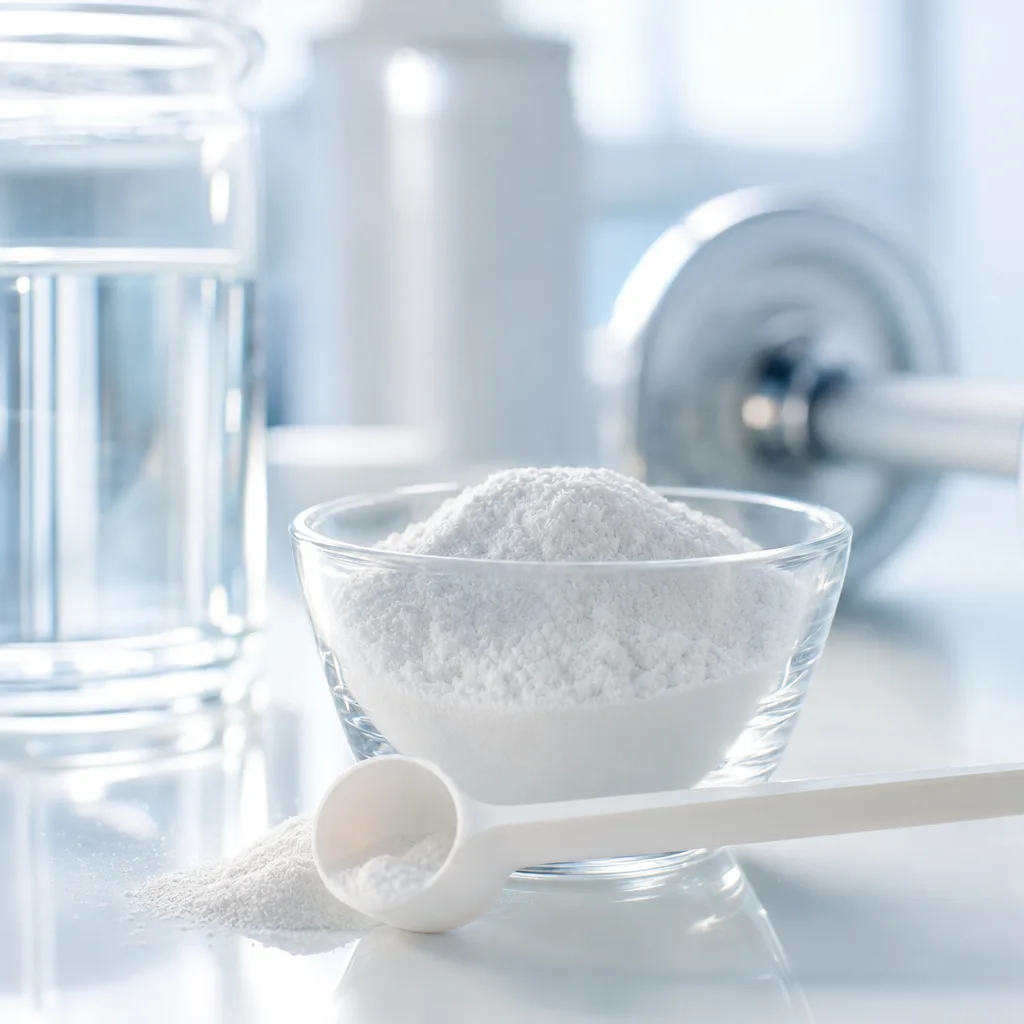
Beta-alanine is present in small amounts in meat, especially poultry, and in fish. As a dietary supplement it is usually offered as powder or capsules, and is often a component of pre-workout products.
If you follow a vegetarian or vegan diet, you take in practically no beta-alanine through food, because plant foods contain hardly any relevant amounts. This does not automatically mean a deficiency, since the body can also produce small amounts of beta-alanine itself, but in studies the carnosine content of muscle tends to be lower on a purely plant-based diet than in people who eat meat or fish regularly.
02
How it works: carnosine as a buffer
During intense exertion lasting a short to medium time, roughly in the range of one to several minutes, the pH in the working muscle falls as metabolic by-products accumulate. Carnosine can buffer this drop in pH and may thus help the muscle keep working at a high level a little longer before muscular fatigue sets in.
Because the formation of carnosine in the body is limited by the available amount of beta-alanine, regular intake over several weeks can gradually raise the carnosine content of the muscle. A single shake before training, by contrast, hardly changes carnosine levels; the effect builds up over time.
When beta-alanine intake is stopped, the built-up carnosine level does not fall straight back but only slowly, over several weeks. A short break, for example on holiday or in a phase with less training, therefore does not immediately undo the build-up achieved beforehand.
03
The well-known tingling (paraesthesia)
Many users report a tingling sensation on the skin shortly after taking higher single amounts, usually in the face, hands or forearms. This phenomenon is called paraesthesia and is considered a harmless, temporary side effect that can last from a few minutes to about an hour.
If you find this tingling unpleasant, you can spread the daily amount over several smaller portions through the day instead of taking it all at once. Sustained-release capsules, that is, slowly releasing ones, are meant to achieve the same aim in a different way.
The tingling itself is considered harmless in research and is not linked to any harmful effect. It is merely a sign that the active substance has been absorbed, and allows no conclusions about the later effect on carnosine levels.

04
Dosage as a guide
| Application | Typical order of magnitude in sports science |
|---|---|
| Total daily amount | about 3 to 6 g, usually spread over several portions |
| Time until a noticeable build-up of carnosine | several weeks of regular intake |
| Single dose to avoid tingling | rather smaller portions, several times a day |
These figures are general reference values from sports science, not individual intake instructions. Also follow the packaging instructions of the respective product.

05
Who beta-alanine may suit
Beta-alanine is aimed primarily at people who train at high intensity on a regular basis, for example in strength training with many repetitions, in martial arts or in interval training. For occasional, moderate training or classic endurance training at lower intensity, the expected benefit is smaller, because other metabolic pathways matter more there.
If you are new to strength training, you will usually benefit much more at first from a structured training plan and an adequate protein intake than from additional supplements such as beta-alanine. Supplements usually deliver their greatest benefit only once training and diet already form a solid foundation. Dietary supplements are no substitute for a balanced diet and regular training.
Age also plays a role in putting this into perspective: while younger, well-trained athletes in some studies benefit from beta-alanine, the data for older adults or recreational athletes with a lower training volume are much thinner. If you are unsure whether the supplement is worthwhile for your own training situation, you can first train for a few weeks without beta-alanine and use your own perceived exertion as a starting point.
In team sports with repeated short sprints, such as ball sports, beta-alanine is also occasionally used, because similar load patterns occur there as in classic interval training. Here too, the principle applies that a well-thought-out training plan is the basis and a supplement can at best complement it sensibly, but not replace it. If you are unsure whether your own sport benefits from this load pattern, you can look at the duration and intensity of individual peaks of exertion in training.
06
Combination with other supplements
Beta-alanine is often used together with creatine, because the two substances act at different points in the energy metabolism of the muscle and can complement each other in their effect. Beta-alanine is also a common ingredient in many pre-workout boosters. The amino acid responsible for this, histidine, must likewise be obtained by the body from food so that enough carnosine can be formed.
 Matching productPre-Workout BoosterAmazon →
07
What the research says
For the effect of beta-alanine on the carnosine content of muscle, the evidence is considered comparatively well established. The data are less consistent when it comes to the actual effect on athletic performance: for high-intensity efforts lasting roughly one to several minutes, several studies report a slight benefit, while for very short or very long efforts the effect in studies is often smaller or unclear. Individual differences between athletes are considerable. Dietary supplements such as beta-alanine do not replace systematic training or a balanced diet.
08
Frequently asked questions
Is the tingling after taking it dangerous?
No, so-called paraesthesia is considered a harmless, temporary side effect. If you want to avoid it, spread the daily amount over several smaller portions.
How long does it take for beta-alanine to work?
Unlike caffeine, for example, beta-alanine does not act acutely. The carnosine content of the muscle builds up over several weeks of regular intake.
Which sports is beta-alanine particularly relevant for?
A benefit is most often discussed for high-intensity efforts lasting roughly one to several minutes, for example in certain strength or interval workloads. You can find details on endurance sport in the guide Endurance and fitness.
Can I take beta-alanine long term?
At usual amounts, beta-alanine is rated as well tolerated in studies lasting several weeks. If you have pre-existing conditions or are unsure, it is advisable to talk to medical professionals beforehand.
Is beta-alanine the same as BCAA?
No, these are different amino acids with different functions. You can learn more about branched-chain amino acids in the BCAA guide.
Do normal foods contain enough beta-alanine?
Meat and fish supply certain amounts, whereas plant foods supply hardly any. Anyone aiming for a higher intake therefore usually turns to a suitable supplement, although a balanced diet overall remains the foundation.
Can I take beta-alanine and caffeine together?
In principle yes, the two substances act through different mechanisms and are often used together in pre-workout products. If you are sensitive to caffeine, you should keep an eye on its amount independently of beta-alanine.
Does beta-alanine change body weight?
A direct influence on body weight is not to be expected, because beta-alanine neither supplies notable calories nor directly changes metabolism in that sense. It is primarily about the buffering capacity of the muscle during intense exertion.
 Matching productEAA PowderAmazon →
Explore
Read next
 Protein types at a glance: whey, casein, plant-based and moreAn overview of all common protein types from whey to collagen, with a comparison table and links to detailed guides.
 Amino Acids: The Building Blocks of ProteinStructure, classification and functions of amino acids at a glance, with a table of all 20 proteinogenic amino acids and links to all guide…
 Supplements for Sport and Fitness: A Factual OverviewAll supplement categories at a glance, with the evidence rated from good to thin, plus safety and buying tips.