
6 min read
Soy Protein: Production, Quality and the Testosterone Myth
How soy protein is made, how it compares with whey and what is behind the concern about testosterone levels.

Soy protein is one of the best-known plant-based protein powders and is especially popular with vegan and vegetarian diets. It comes from the soybean and is one of the few plant protein sources that supplies all nine essential amino acids in meaningful amounts.
In this guide you will learn how soy protein is made, how it compares with animal proteins in terms of biological value and digestibility, what is behind the frequently heard concern about testosterone levels and who soy protein suits.
01
Production and forms of soy protein
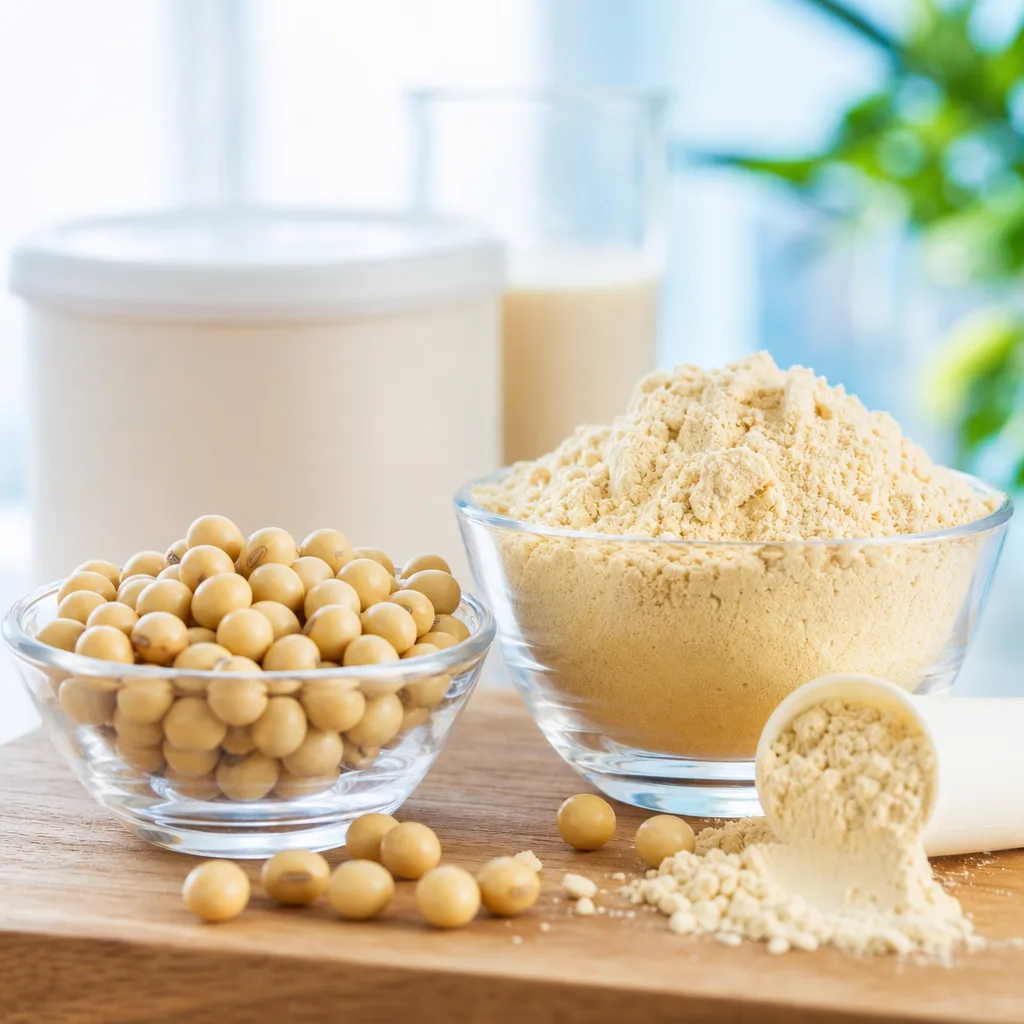
Soy protein is obtained from defatted soybeans. Depending on the degree of processing, the main forms are soy flour, soy protein concentrate and soy protein isolate. In the concentrate the protein content is moderate, while in the isolate additional filtration achieves a considerably higher protein content and at the same time removes a large part of the carbohydrates and some plant-typical accompanying substances.
Soy protein isolate is mostly used for commercial protein powders because it tastes more neutral and mixes better into water or milk alternatives than plain soy flour.
 Matching productWhey IsolateAmazon →
02
Amino acid profile and biological value
Compared with many other plant protein sources, soy protein provides a relatively complete amino acid profile, including a good share of lysine, which is often present only in limited amounts in cereals. In terms of biological value and modern scoring methods such as DIAAS, soy protein performs well but in most studies ranks slightly below whey protein and egg. Besides the amino acid profile, one reason is digestibility, which is good for isolated soy proteins but on average somewhat lower than for casein or whey. In practice this difference can easily be offset by sufficient protein overall across the day.
| Protein source | Origin | Special feature |
|---|---|---|
| Soy protein isolate | plant-based | complete amino acid profile, lactose-free |
| Whey protein | animal, whey | fast digestion, high leucine content |
| Casein | animal, milk | slow, delayed digestion, more in the casein guide |
| Pea protein | plant-based | often used in combination with rice protein |
 Matching productGlycineAmazon →
03
Isoflavones and the testosterone myth
In many forums and older guides, the concern persists that soy protein markedly lowers testosterone levels in men because of the isoflavones it contains, known as phytoestrogens. This concern largely stems from individual older studies and is often exaggerated in practice.
Pooled analyses of several studies on this topic show no relevant effect on testosterone levels in healthy men at usual intakes of soy protein or soy products, even when consumed regularly. The evidence here is considerably clearer than the widespread concern suggests, even though some questions about very high long-term intake have not been conclusively resolved.
04
Benefits for vegan and vegetarian athletes
For people who avoid animal products, soy protein is one of the few plant-based options with such a complete amino acid profile from a single source. It naturally contains no lactose and is therefore also well suited to lactose intolerance, see the guide lactose-free protein for more.
Soy protein is also often combined with other plant sources such as pea or rice protein to improve the amino acid profile further, see the guide vegan protein for more. Another practical advantage is that soy protein naturally contains hardly any fat and little sugar, which makes it a comparatively low-calorie protein source that fits well into a controlled calorie balance.
Soy protein is generally suitable for most healthy adults, regardless of whether they eat vegan, vegetarian or omnivorous. It is particularly relevant for the following groups.
- People who want to avoid animal protein sources completely or partly.
- People with lactose intolerance who do not tolerate whey or casein well.
- Athletes who want to vary their protein sources deliberately instead of relying permanently on a single product.
With a known soy allergy, soy protein is of course unsuitable, and other plant protein sources such as pea or rice protein are an alternative. If you are sensitive to strongly gas-forming legumes, an isolated soy protein powder can sometimes be tolerated better than whole soybeans, since a large part of the hard-to-digest fibre is removed during isolation.
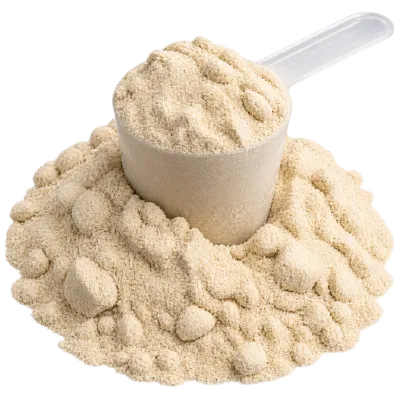 Matching productVegan Protein BlendAmazon →
05
Dosage and intake
As with other protein powders, it is best to base your intake on your total daily protein requirement and not just on a fixed amount of powder. For general needs, the DGE (German Nutrition Society) gives about 0.8 g protein per kilogram of body weight per day, while in strength sport or when dieting, sports science often cites a range of 1.2 to 2.0 g per kilogram. A protein powder helps to reach this amount in everyday life but does not replace a balanced diet with varied protein sources. One to two servings of soy protein powder per day, usually about 25 to 30 g of powder mixed with liquid, is the guideline given by most manufacturers, and the exact amount on the respective packaging is what counts.
 Matching productVitamin C PowderAmazon →
06
What the research says
For muscle protein synthesis after training, studies show that soy protein is effective in principle but tends to perform slightly worse than whey protein in direct comparisons at the same protein amount. One reason suggested is its somewhat lower leucine concentration and comparatively slower digestion. For general muscle building over a longer training period, however, this difference is small in most studies and can largely be offset by sufficient protein intake overall.
On testosterone levels there is now a comparatively good body of research showing no relevant reduction at normal intake. As with many nutrition topics, though, very one-sided, extreme diets built on a single protein source should be avoided, whether that is soy or any other food.
For other, partly older concerns about soy products, such as thyroid function or water retention, the current evidence is overall reassuring for healthy adults with a normal, varied diet. With existing thyroid conditions, it is sometimes recommended to separate the timing of thyroid medication and larger soy consumption somewhat, and the treating doctor can advise on this individually.
 Matching productL-LeucineAmazon →
07
Combining soy protein in everyday life
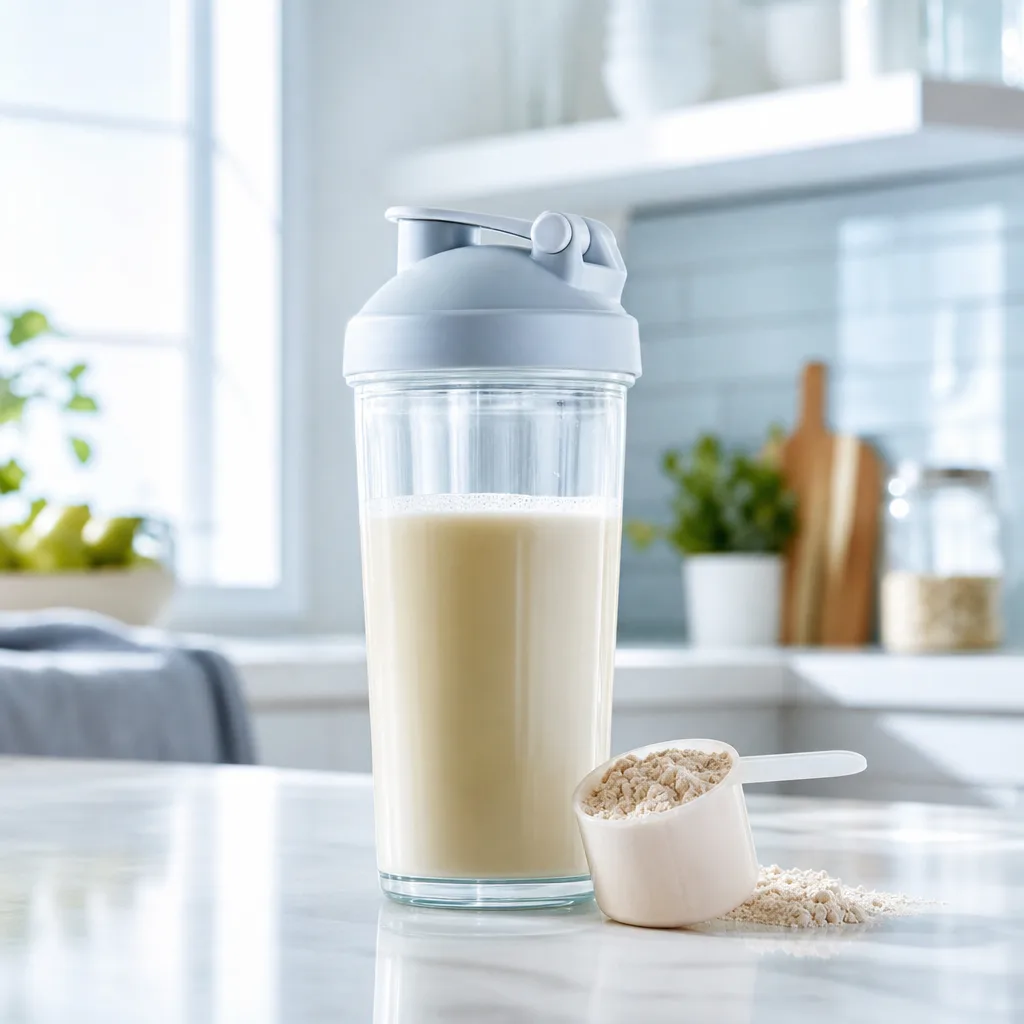
Like other protein powders, soy protein powder is easy to mix with water, plant-based drink or in a smoothie with fruit. Because of its rather mild, slightly beany flavour, many people like to combine it with cocoa, berries or bananas. Soy protein powder can also be worked into savoury recipes such as pancakes or porridge if you are looking for an alternative to shakes, and you will find more ideas in the recipe section.
For on the go, soy protein bars are also a practical alternative to the shaker, and an overview of different bars can be found in the guide on protein bars.
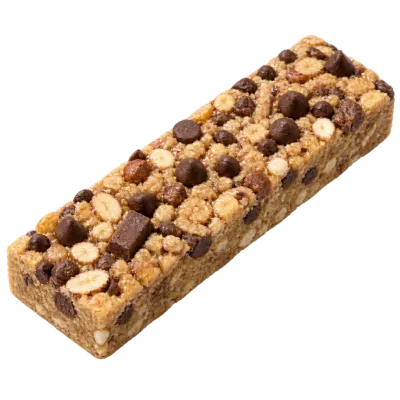 Matching productProtein BarsAmazon →
08
Frequently asked questions
Does soy protein really lower testosterone levels?
At usual intakes, the current evidence shows no relevant effect in healthy men. The widespread concern largely stems from older, often over-interpreted individual studies.
Is soy protein safe for women?
For healthy women, soy protein is considered safe in usual amounts. With hormone-dependent conditions, during pregnancy or while breastfeeding, it makes sense to check with a doctor.
How well suited is soy protein for building muscle?
Soy protein supports muscle building well in principle, but in direct comparisons it often performs slightly worse than whey protein, which can largely be offset by sufficient protein intake overall.
Is soy protein gluten-free?
Soybeans naturally contain no gluten. With coeliac disease or gluten intolerance, it is still worth checking the ingredients list, as traces from processing cannot always be ruled out.
Explore
Read next
 Protein types at a glance: whey, casein, plant-based and moreAn overview of all common protein types from whey to collagen, with a comparison table and links to detailed guides.
 Amino Acids: The Building Blocks of ProteinStructure, classification and functions of amino acids at a glance, with a table of all 20 proteinogenic amino acids and links to all guide…
 Supplements for Sport and Fitness: A Factual OverviewAll supplement categories at a glance, with the evidence rated from good to thin, plus safety and buying tips.