
7 min read
Whey protein: production, forms and dosage at a glance
How whey protein is made from whey, what distinguishes concentrate, isolate and hydrolysate, and how to assess a dosage as a guide.

Whey protein is one of the best-known protein types of all. It arises as a by-product of cheese making and has been processed into powder for decades, which is easily mixed with water or milk to make a shake.
In this guide you will learn how whey protein is produced, how concentrate, isolate and hydrolysate differ, what the amino acid profile looks like, what whey protein has to do with lactose and how you can assess a dosage as a rough guideline.
Hardly any other protein source is as widespread as whey, both in strength training and in everyday use as a practical protein source. The reason lies mainly in the simple processing, the good solubility and the wide range of flavours.
01
Production: from curd to powder
In cheese making, milk is made to curdle with rennet or acid. The solid curd separates from a liquid, yellowish residual liquid, the whey. Alongside milk sugar and minerals, this whey also contains a small share of protein, the so-called whey protein.
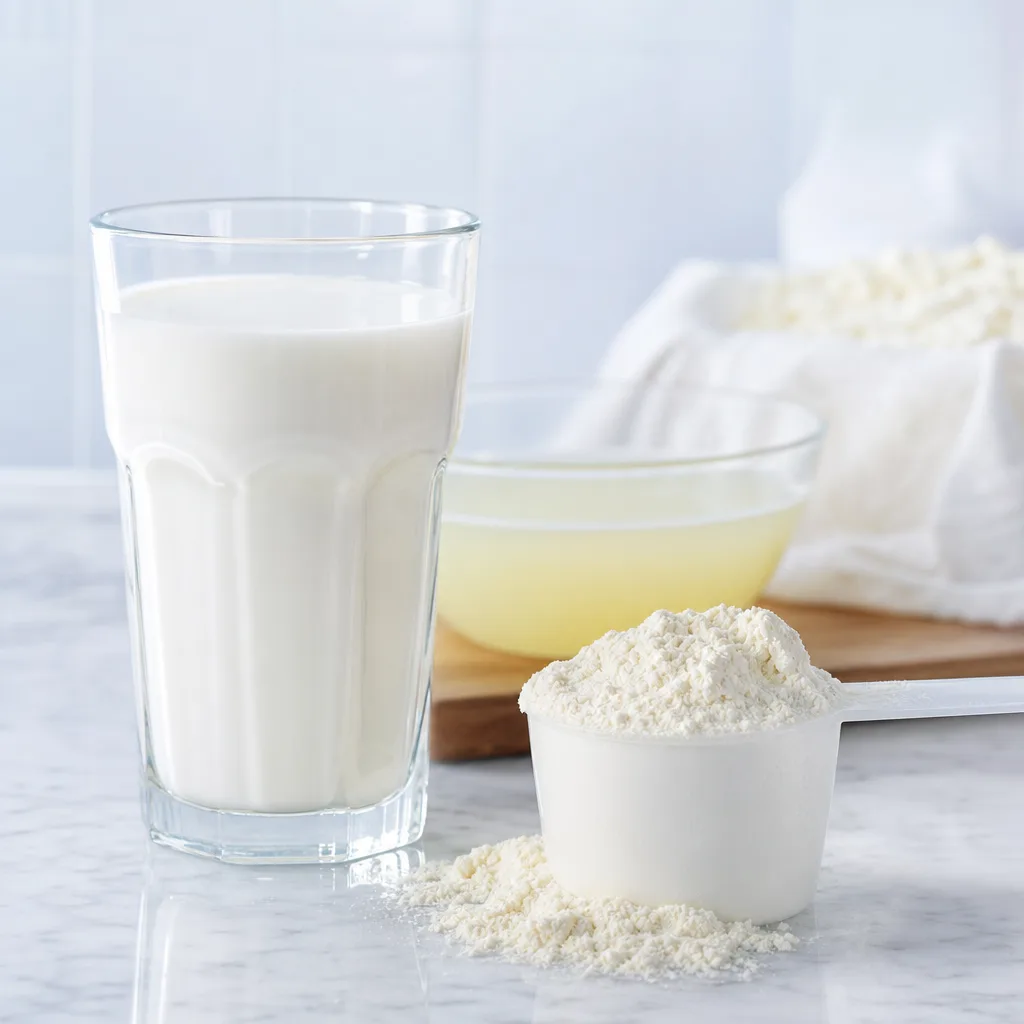
To turn the thin whey into a powder with a high protein content, it is processed in several steps. First the whey is filtered to separate fat and part of the milk sugar. The protein-rich fraction is then dried, usually by spray drying, so that a fine powder results in the end. Depending on how finely and how often it is filtered, different whey types with different protein contents are produced.
In the past, whey was often hardly used further in the cheese industry as a by-product. Today it is regarded as a valuable raw material from which, besides protein powder, other products such as whey sugar are also obtained. Processing into a protein powder thus turns a by-product of the dairy industry into an ingredient in its own right with a high protein share, which can be stored for a long time and is easy to dose.
 Matching productVitamin C PowderAmazon →
02
Concentrate, isolate and hydrolysate compared
The three common forms of whey protein differ mainly in the degree of filtration and therefore in protein, fat and carbohydrate content. The following table shows the typical differences as rough guide values.
| Form | Protein content per 100 g | Special feature |
|---|---|---|
| Whey concentrate | about 70 to 80 g | still contains some lactose and fat, creamy taste |
| Whey isolate | about 85 to 90 g | filtered more heavily, little lactose and fat |
| Whey hydrolysate | about 80 to 90 g | protein already pre-split into smaller building blocks |
Whey concentrate is the least processed form and tastes the most pleasant to many people because it still contains some milk fat. Whey isolate goes through additional filtration steps, which raises the protein share and lowers the share of milk sugar and fat. Whey hydrolysate, finally, is pre-treated with enzymes, so that the protein chains are already broken down into smaller peptides before they are even drunk. This can speed up absorption in the body, but often makes the powder more bitter in taste.
Which form suits best is ultimately a question of budget, tolerance and personal taste. If you have no problems with lactose and value a creamy mouthfeel, a concentrate is usually a good fit. If you are looking for the highest possible protein share with little fat and carbohydrate, or react sensitively to milk sugar, you are more likely to choose an isolate. Hydrolysate, in turn, is mainly of interest to people for whom particularly fast availability of amino acids matters, although the more bitter taste often has to be accepted.
 Matching productWhey HydrolysateAmazon →
03
Amino acid profile of whey
Whey protein is considered one of the protein sources with a particularly complete amino acid profile. It contains all nine essential amino acids in a ratio that the human body can use well. Particularly noteworthy are the high share of branched-chain amino acids, the so-called BCAAs, and a comparatively high leucine content. Leucine plays a role in sports science when it comes to stimulating muscle protein synthesis.
On measures such as biological value or modern rating systems such as DIAAS, whey protein generally scores well. That does not mean other protein sources are inferior, but merely that, in terms of amino acid composition, whey can be used efficiently by the body.
The important point here is context: a good biological value says something about the composition of a single food, not about the quality of the whole diet. Anyone who eats a varied diet overall benefits from combining different protein sources, animal as well as plant-based, and does not depend on a single source with a particularly high amino acid score.
Leucine content is also often considered separately in sports science, as this amino acid has a signalling function for muscle building. Whey contains comparatively a lot of it, which is one of the reasons it is often preferred around training, even though other protein sources also make a relevant contribution if the total amount is sufficient.
 Matching productGlycineAmazon →
04
Whey protein and lactose
Since whey comes from cow's milk, classic whey concentrate still contains residues of milk sugar, that is, lactose. For people who tolerate lactose well, this makes no difference. Those who react sensitively often choose whey isolate, as the lactose share is considerably reduced by the stronger filtration. If you want or need to avoid lactose completely, our guide to lactose-free protein gives a more detailed assessment of which forms are an option.
People with a known milk protein allergy should avoid whey protein altogether, as this is not a question of the amount of lactose but a reaction to the protein itself. In such cases it is worth looking at plant-based protein powders.
There is an important difference between lactose intolerance and milk protein allergy: with intolerance, only the enzyme that breaks down milk sugar is missing, and the body tolerates the protein itself without any problem. With an allergy, by contrast, the immune system reacts to the milk protein, regardless of the lactose content. This distinction is important for choosing the right whey variant or an alternative.

05
Use in everyday life
Whey protein is usually drunk as a shake, but can also be worked into foods such as porridge, quark desserts or homemade protein bars. Many people use it to have a practical protein source to hand after sport, while others use it to reach sufficient protein intake more easily across the day, for example when there is little time for a full meal.
How to mix a shake properly so that it neither clumps nor turns out too thin or too thick is explained in detail in the guide on mixing a protein shake properly. For the right time to take it, for example before or after training, you will find further information under protein timing.
Whey protein can also be used sensibly outside sport. In the cold season some people stir a spoonful of powder into warm porridge or a homemade pudding to make a meal higher in protein without much effort. In baked goods such as pancakes or waffles, part of the flour can also be replaced by whey powder, although the consistency then usually turns out somewhat denser.
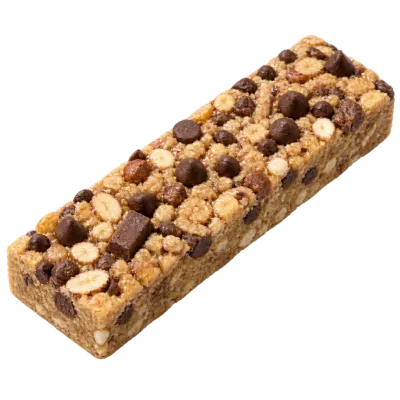 Matching productProtein BarsAmazon →
06
Dosage as a guide
There is no blanket dosage recommendation for whey protein, as individual requirement depends on body weight, activity and the rest of the diet. As a rough guide, a serving of about 20 to 30 g of powder per shake is often cited, which corresponds to roughly one heaped scoop. How much protein per day makes sense in total depends on your personal protein requirement, which you can estimate approximately with our guide calculating protein requirement.
People with kidney disease or other health restrictions should discuss taking whey protein and the level of dosage with medical professionals beforehand, as an increased protein intake has to be assessed individually in such cases.

07
Frequently asked questions
Is whey protein suitable for everyone?
For most healthy adults, whey protein as a supplement to a normal diet is considered safe. People with a milk protein allergy, marked lactose intolerance or kidney disease should seek medical advice beforehand.
Does whey protein make a difference compared with normal foods?
Whey protein is above all practical, because it can be prepared quickly and has little volume. High-protein foods such as quark, poultry or legumes provide protein of similar quality, together with further nutrients.
Can you take whey protein long term?
With a balanced diet overall and in usual serving sizes, whey protein is often used over longer periods. If in doubt, a conversation with medical or nutrition professionals helps.
What is the difference from clear whey?
Clear whey is a particularly heavily filtered form of whey isolate or hydrolysate that contains hardly any fat or cloudy components and therefore tastes fruity rather than milky and can be mixed with water instead of milk.
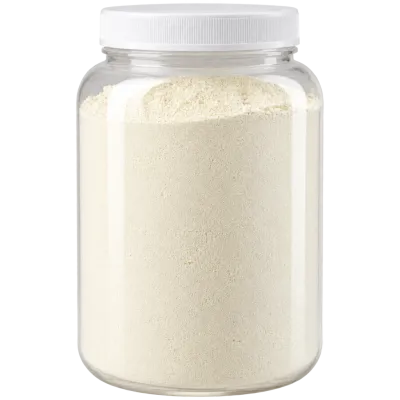 Matching productClear WheyAmazon →
Explore
Read next
 Protein types at a glance: whey, casein, plant-based and moreAn overview of all common protein types from whey to collagen, with a comparison table and links to detailed guides.
 Amino Acids: The Building Blocks of ProteinStructure, classification and functions of amino acids at a glance, with a table of all 20 proteinogenic amino acids and links to all guide…
 Supplements for Sport and Fitness: A Factual OverviewAll supplement categories at a glance, with the evidence rated from good to thin, plus safety and buying tips.