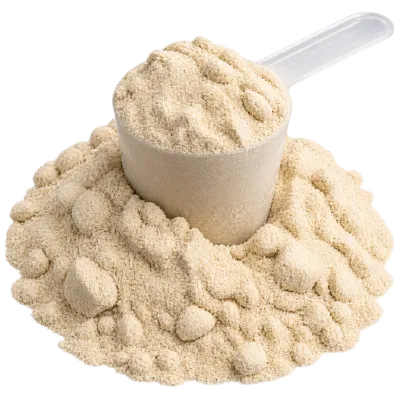
Biological value is a measure commonly used in Germany of how well a dietary protein can be converted by the body into its own protein. It is based on comparing the amino acid pattern of a food with what the human body needs. Hen’s egg has traditionally often been used as a reference value with high quality.
In practice, the concept mainly shows that protein sources can be combined sensibly. If, for example, plant proteins of different origins are eaten together, such as cereals and pulses, the combined value can improve compared with the individual sources, because strengths and weaknesses in the amino acid pattern balance out. Animal and plant proteins should in principle be regarded as equivalent, differing only in their amino acid pattern.
Internationally, the methods DIAAS and PDCAAS are now more commonly used. How plant sources can be combined in practice is explained in the guide Combining plant protein sources.