
7 min read
Training With a Pull-Up Bar: Exercises and Plan for Home
How to train your back and arms at home with a pull-up bar, from the first assisted pull-up to a training plan.

A pull-up bar is one of the most efficient purchases for training at home, because it trains the back, arms and core with just one piece of equipment. Pull-ups are considered one of the most demanding exercises with your own body weight.
Many people at first underestimate how much strength a clean pull-up requires, especially compared with exercises such as push-ups or squats. With a structured approach and suitable assistance exercises, however, this strength can be built specifically and in a manageable time.
In this guide you will learn which pull-up bars there are, how to get from your first pull-up to clean repetitions and what a training plan with the pull-up bar can look like.
01
What you need
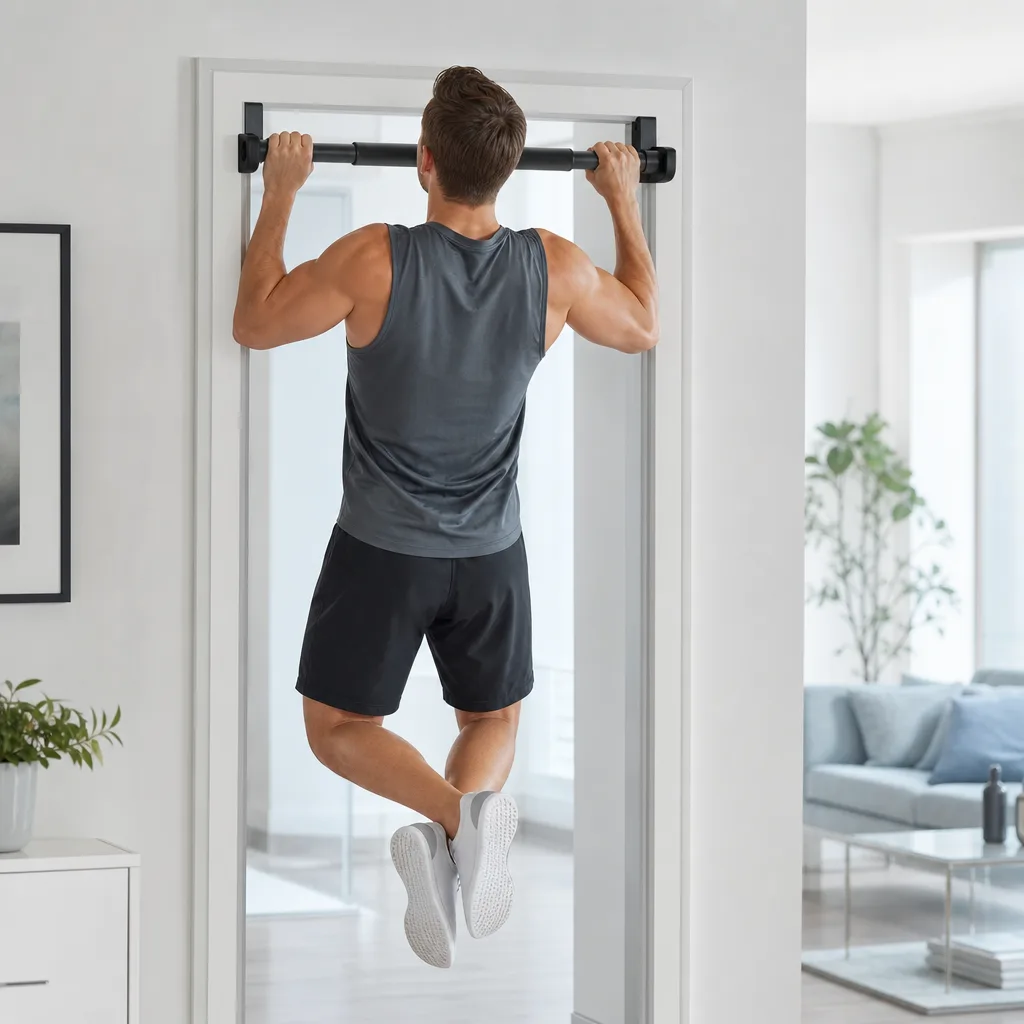
For training at home, a doorway pull-up bar that hooks into the door frame is particularly suitable, as it is mounted without drilling and can be flexibly taken down again. If you want a permanent, fixed solution, you can choose a bar screwed to the wall or ceiling, which generally allows a higher load capacity. For beginners, elastic fitness bands are also helpful, supporting the pull-up by taking over part of your body weight. A training mat protects when jumping off or during supplementary floor exercises. Training gloves or chalk can improve grip in longer sessions. A stable surface or a small step nearby also makes it easier to get onto and off the bar safely, especially with a fixed bar at greater height.
02
Grip variations and muscles worked
In the overhand pull-up, with palms facing forward, it is mainly the latissimus dorsi that works, with the arms and shoulders also involved. In the underhand pull-up, also called a chin-up, with palms facing back, the biceps takes over a larger share of the work, which makes the exercise somewhat easier for many people. A neutral grip with the hands parallel to each other often lies in between and is frequently easier on the shoulders. A wider grip emphasises the width of the back more, a narrower grip rather the middle of the back and the arms. For variety in training, it is worth switching between the grip variations over the weeks. In addition, pull-ups in every grip variation heavily involve the forearm and grip muscles, as your own body weight has to be held on the bar throughout the exercise. For beginners who cannot yet hold a firm grip for several seconds, targeted grip training is therefore a sensible addition to the actual pull-up training.
03
From the first pull-up to a clean repetition
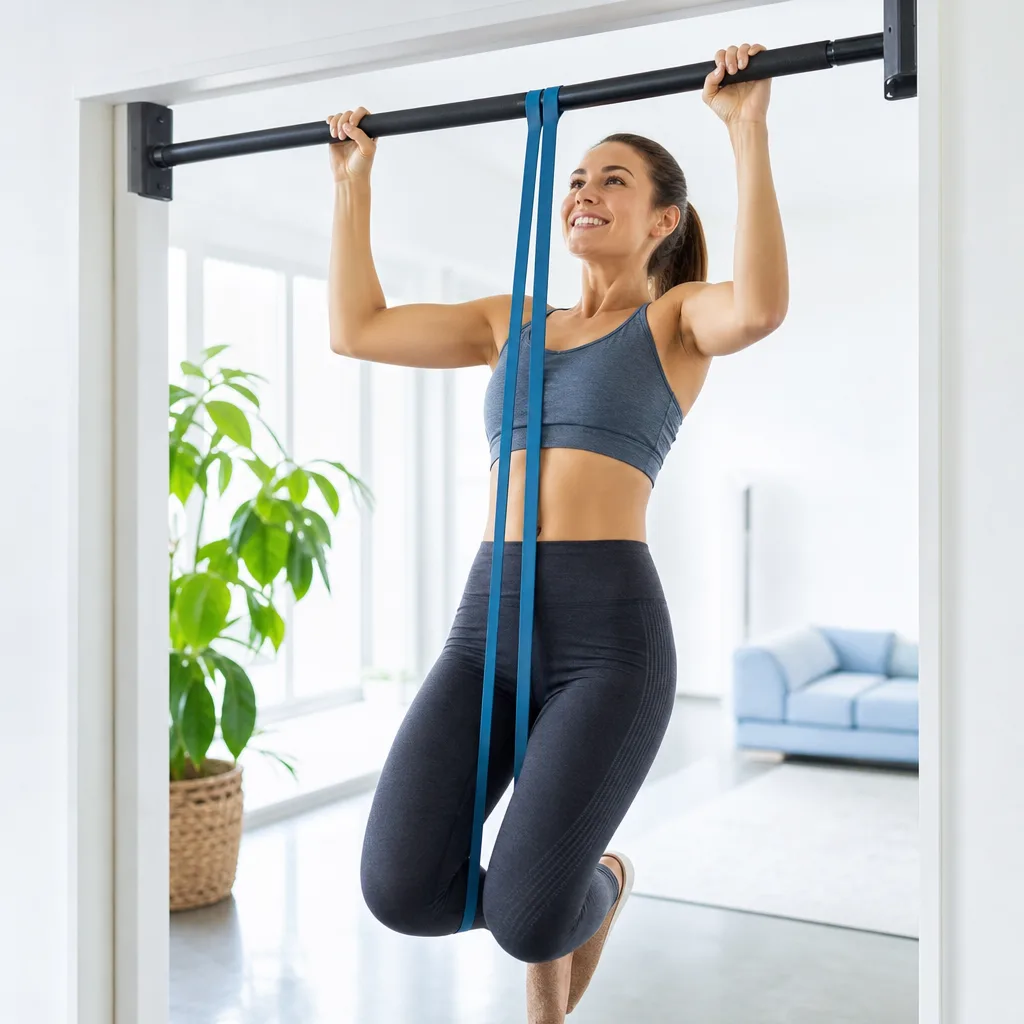
If you cannot yet do a full pull-up, you should not work directly on the full repetition but start with assistance exercises. Negative repetitions, in which you get to the top with a jump or a raised platform and then lower yourself as slowly as possible, build strength specifically in the decisive direction of movement. A resistance band placed around the bar and under a knee or foot takes over part of the body weight and makes the exercise easier without changing the movement itself. Active hanging from the bar additionally strengthens the grip and shoulders and prepares you well for later pull-ups. As strength increases, the support from the band can be reduced step by step until the first full pull-up succeeds. Another option is assisted pull-up training with a partner who supports lightly at the legs, or with a stable raised surface from which the upper part of the movement can be practised in isolation. It is important to dose the support so that the last one to two repetitions of a set remain noticeably hard, as only then is a sufficient training stimulus created.
 Matching productSports BraAmazon →
04
Avoiding common mistakes
A common mistake is swinging the body strongly to get up with momentum, instead of performing the movement in a controlled way from the back muscles. This not only reduces the training effect but also increases the load on the shoulders. Equally widespread is too small a range of motion, in which the arms are not fully bent at the top or not fully extended at the bottom, so that the muscle is not worked through its whole length. The grip also plays a role: a grip that is too tight or tense tires the forearms faster than the actual target muscles require. Anyone who concentrates at the start on a few but clean repetitions builds strength more reliably in the long run than with many sloppy attempts.

05
Your training plan with the pull-up bar
The following plan suits twice per week with enough rest in between, as pull-ups place heavy demands on the muscles.
| Exercise | Sets | Repetitions | Rest |
|---|---|---|---|
| Pull-up or negative pull-up | 4 | as many as possible with clean form | about 90 seconds |
| Active hang | 3 | 20 to 30 seconds | about 60 seconds |
| Underhand pull-up with band | 3 | 6 to 10 | about 90 seconds |
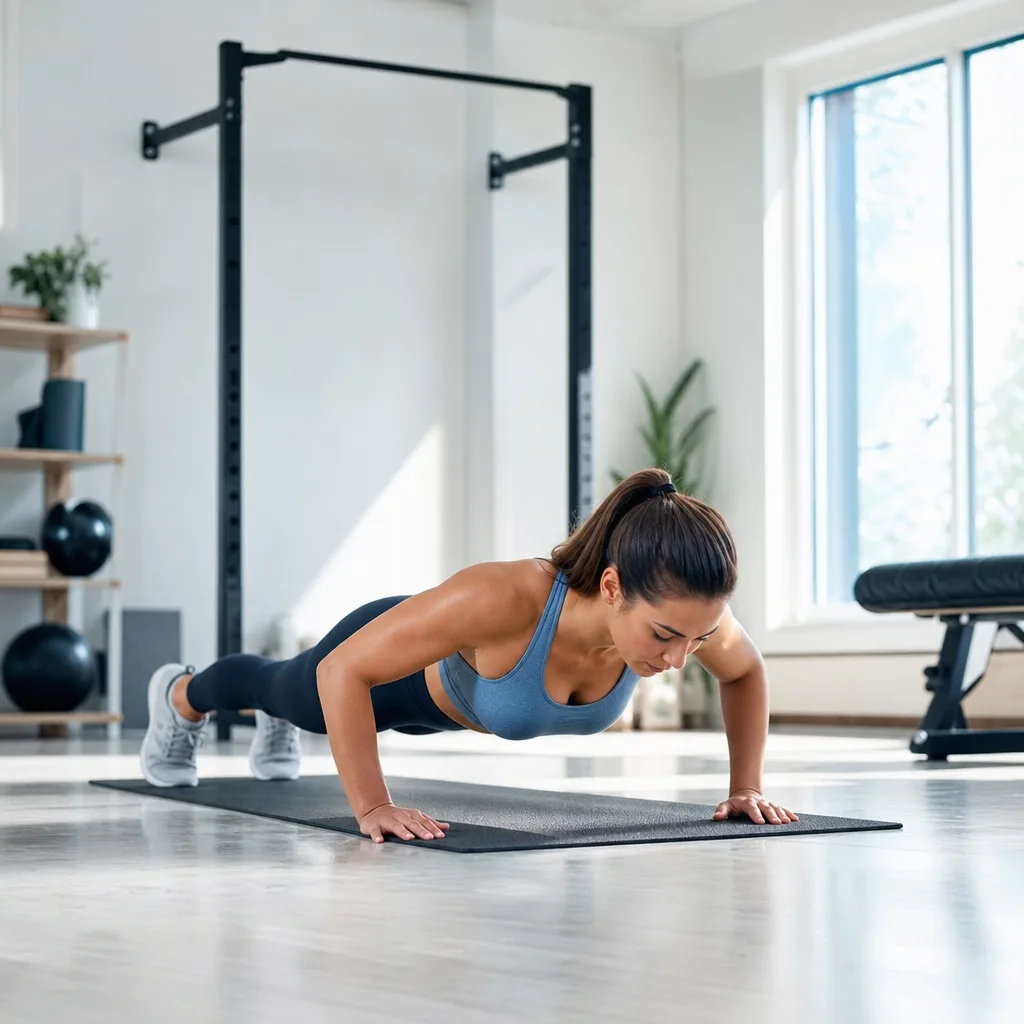
| Push-up | 3 | 10 to 15 | about 60 seconds |
Do the pull-ups at the start of the session, while the muscles are still fresh. The exact number of repetitions is less important than a clean, controlled movement without strong swinging. A short warm-up of the shoulders and back, for example with loose arm circles, makes sense before hanging from the bar. If you suffer from shoulder or elbow complaints or pre-existing conditions, or are returning after a longer break from training, you should have your training checked by a doctor beforehand and generally put technique before number of repetitions. No responsible promises can be made about fixed timeframes until the first pull-up, as starting strength varies greatly from person to person.
06
Nutrition to go with it
Pull-ups are among the most demanding exercises for the back muscles, so muscle building benefits from sufficient protein intake, as described in the guide Protein for muscle building. You will find a rough estimate of your personal requirement in the guide Protein requirement. If you also want to reduce body fat, you will find suitable advice under Protein for weight loss. Dietary supplements such as protein powder can make daily life easier but are no substitute for a balanced diet with proper meals.
 Matching productAll-in-One Muscle BuilderAmazon →
07
What the research says
Pull-ups and their assisted variations are considered a well-supported method in training science for building strength in the back and arm muscles. The evidence on resistance bands as an aid shows that they make the training stimulus sensibly adjustable, even though the exact degree of relief varies with the band and starting position. Important for progress is progressive overload: the support from the band is reduced step by step over the weeks, instead of staying at the same level of help. Simply stagnating at one load level brings only little additional strength gain in the long run. Studies on different grips also suggest that overhand and underhand grips differ mainly in the ratio of biceps to back muscles, while the effect on the back muscles as a whole is broadly comparable in both variations with regular training.
08
Frequently asked questions
How long does it take to get the first pull-up?
This varies greatly from person to person and depends on starting strength; with regular training over several weeks to months, a first clean pull-up is realistic for most people.
Which pull-up bar suits rented homes?
A doorway bar without drilling can be mounted and removed flexibly and is therefore particularly suitable for rented homes.
How often should I train on the bar?
Two sessions per week with sufficient recovery are enough to start with, as the worked muscles need time to recover.
What should I do about shoulder pain?
If you have pain, you should pause the exercise, check your technique and grip and, if symptoms persist, seek medical advice before you continue training.
Can I also do other exercises with the pull-up bar?
Yes, many bars are also suitable for active hanging, hanging leg raises or as a supplement to a home workout with dumbbells.
How much load capacity should a doorway bar have?
Pay attention to the manufacturer's stated maximum load capacity and to a secure, gap-free fit in the door frame, especially for more intensive training with many repetitions.
What is the difference between a pull-up and a chin-up?
Pull-up usually refers to the overhand version with a focus on the latissimus dorsi, while the chin-up is done with an underhand grip and involves the arm muscles more. Both variations can be built into training alternately.
How often should I change the assisting band?
As soon as a set feels clearly easier than at the start, it is time for a thinner band with less support, until the exercise eventually works without a band entirely.
Can I also train pull-ups away from home?
Yes, many parks offer public pull-up bars or exercise equipment on which the same exercises can be done well, provided the construction is stable and designed for your weight.
 Matching productDumbbell SetAmazon →
Explore
Read next
 Protein types at a glance: whey, casein, plant-based and moreAn overview of all common protein types from whey to collagen, with a comparison table and links to detailed guides.
 Amino Acids: The Building Blocks of ProteinStructure, classification and functions of amino acids at a glance, with a table of all 20 proteinogenic amino acids and links to all guide…
 Supplements for Sport and Fitness: A Factual OverviewAll supplement categories at a glance, with the evidence rated from good to thin, plus safety and buying tips.