
7 min read
Home Workout With Dumbbells: A Training Plan for Home
A full-body plan with dumbbells for home, including weight selection, technique tips and suitable equipment.

Dumbbells are among the most versatile pieces of training equipment for home. They are compact, fit into many homes and allow strength training that goes beyond what pure bodyweight training can do. They let you target muscle groups that are harder to reach without added weight, such as the shoulders, biceps or upper back.
In this guide you will find a complete full-body plan with dumbbells, advice on choosing the right weight and technique, and an assessment of what research says about training with dumbbells.
01
Why dumbbells are a sensible investment
Compared with a barbell or a cable machine, dumbbells are much more space-saving and cheaper to buy, yet still offer a wide range of exercises for practically all the major muscle groups. Because each side works independently, strength differences between left and right are also evened out better than with a barbell.
Working both arms independently also brings an additional benefit for coordination: with every repetition the body has to actively establish balance between both sides and stability in the core and shoulders, which is largely absent with guided machines. From a functional point of view, this effect makes dumbbell training particularly relevant to daily life, since similar stabilisation demands arise when carrying shopping or lifting uneven loads.
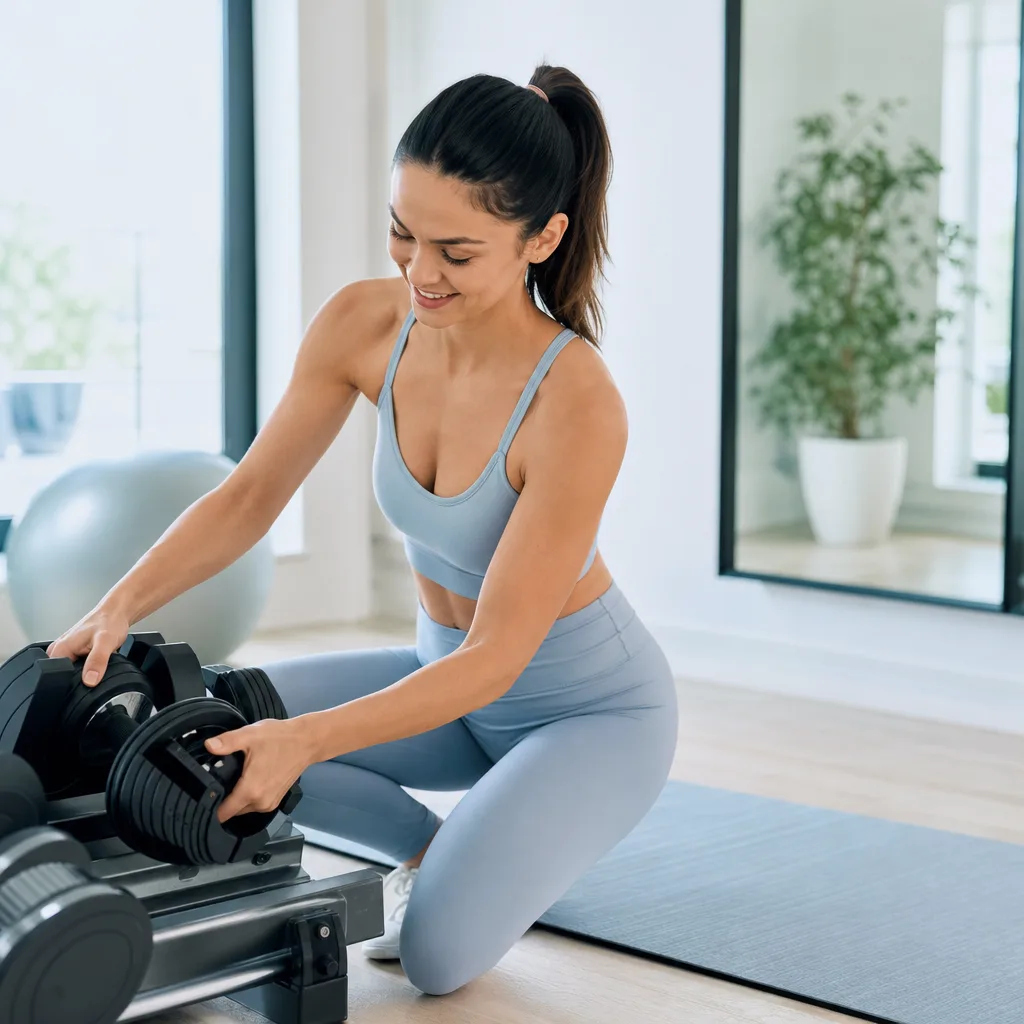
Adjustable dumbbell systems with changeable weight plates are particularly practical because they grow with your training progress, without you needing a separate pair for every weight. For getting started, two to three weight levels are often enough, and you can extend them as you get stronger.
Compared with pure bodyweight training, the resistance can also be dosed very finely with dumbbells: even one extra kilogram per side changes the load noticeably, which makes targeted, gradual progression much easier than with many bodyweight exercises, where the next level of difficulty often means a bigger jump.
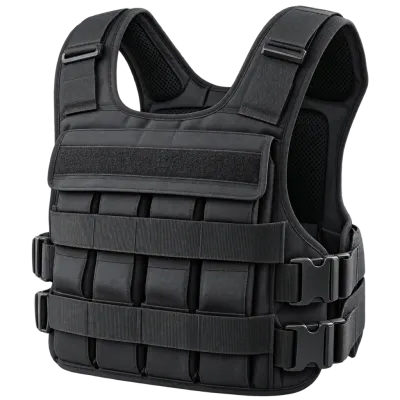 Matching productWeighted VestAmazon →
02
The training plan
The following plan covers all the major muscle groups and suits two to three sessions per week. Choose a weight with which the last one to two repetitions of each set are hard but achievable with clean technique.
| Exercise | Sets | Repetitions | Rest |
|---|---|---|---|
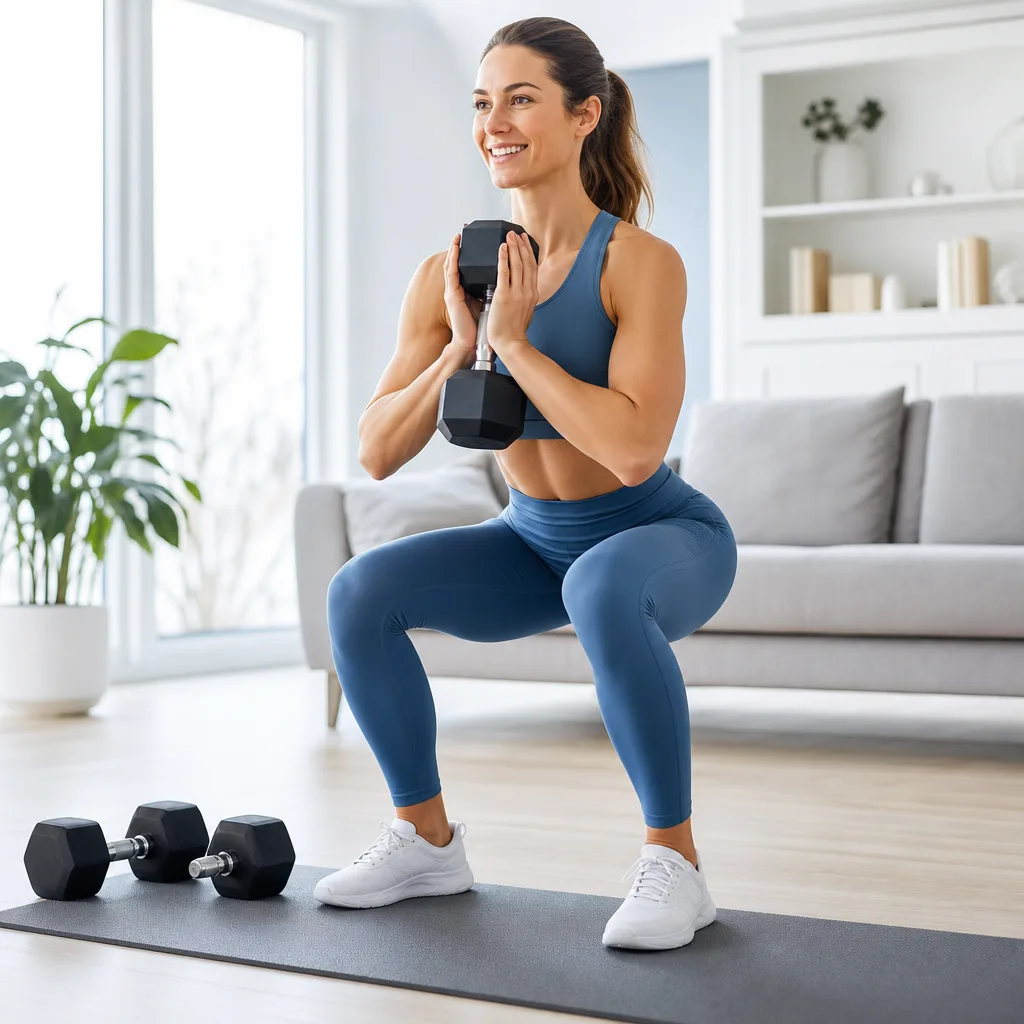
| Goblet squat with one dumbbell | 3 | 10-12 | 75 sec. |
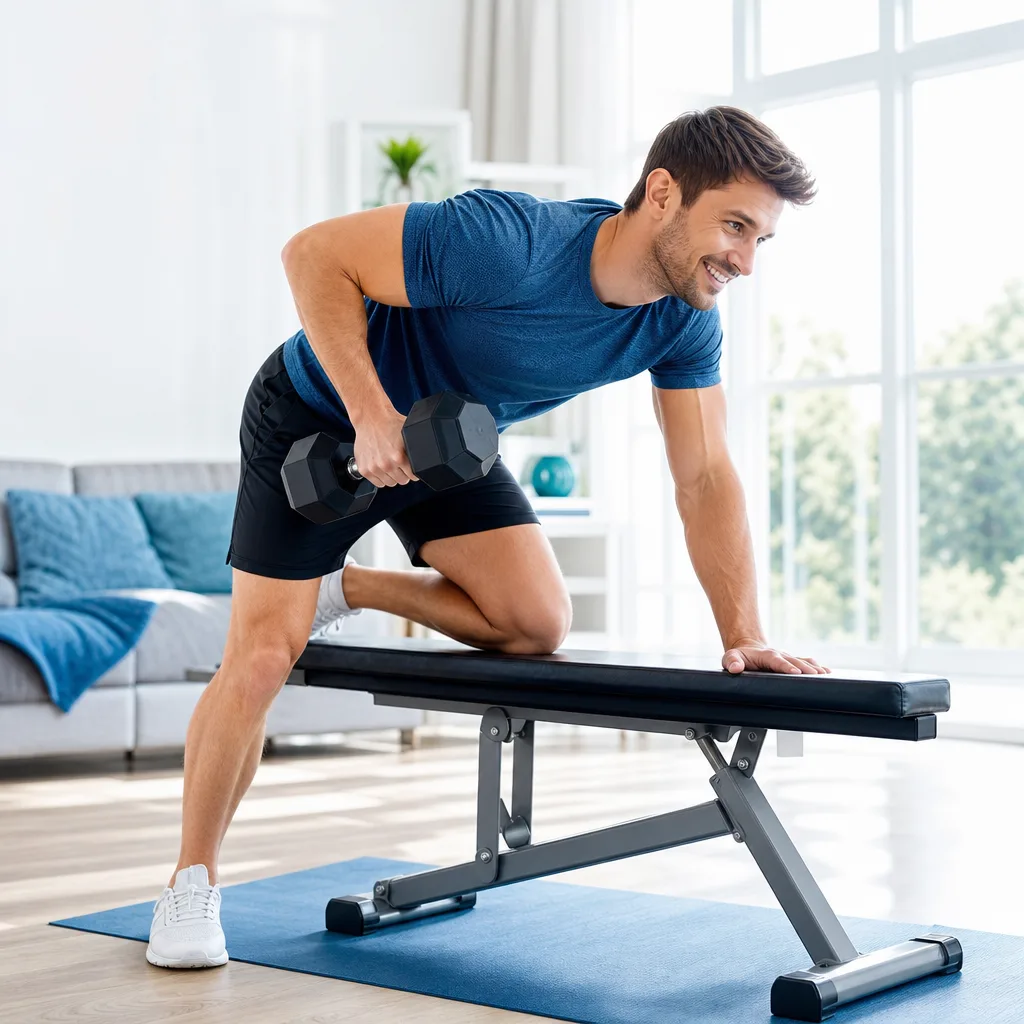
| Bent-over dumbbell row | 3 | 10-12 | 75 sec. |
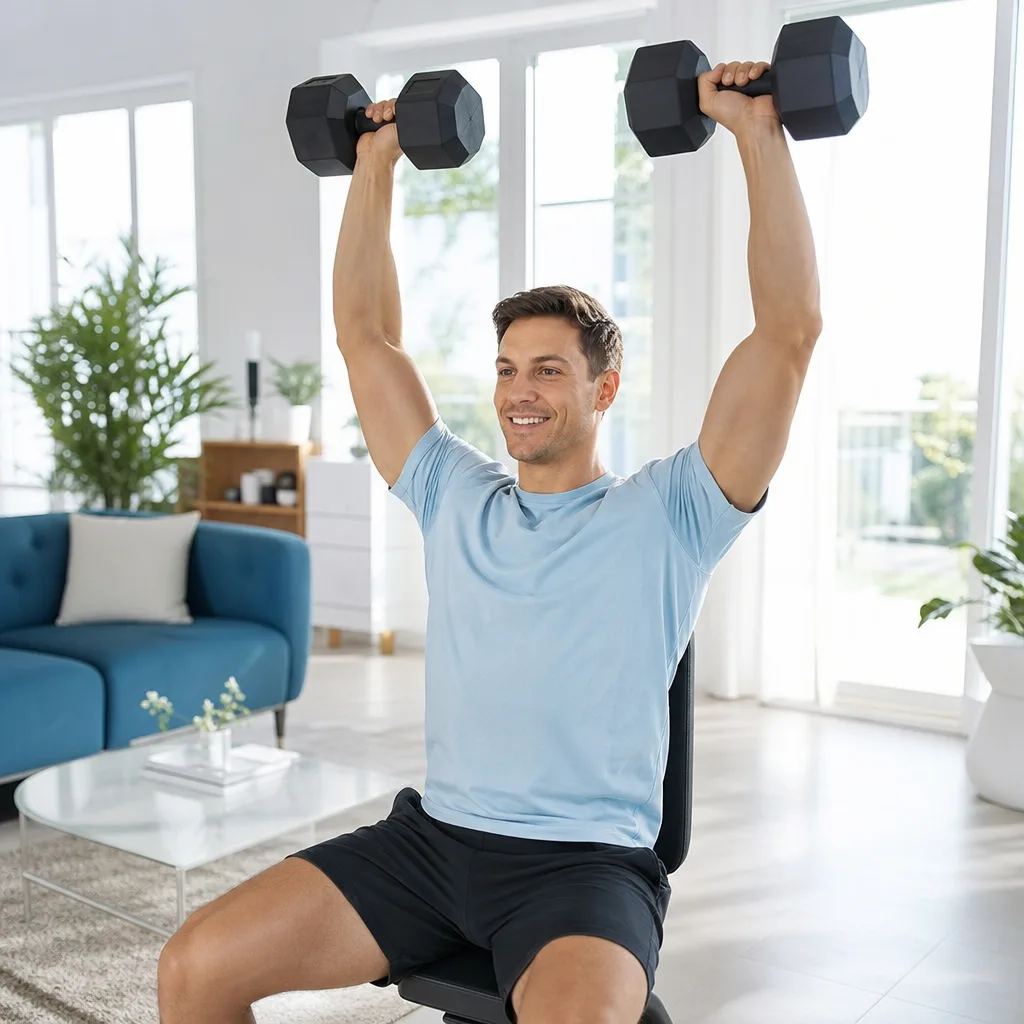
| Seated shoulder press | 3 | 8-10 | 75 sec. |
| Lunges with dumbbells | 3 | 10 per side | 60 sec. |
| Biceps curls | 2 | 10-12 | 45 sec. |
| Romanian deadlift with dumbbells | 3 | 10-12 | 75 sec. |
Warm up briefly before training and mobilise your shoulders and hips; you will find tips on this in the guide Warming up and mobility. Then progress according to the principle of progressive overload, first through more repetitions, later through a heavier weight.
For exercises that challenge one side independently, such as lunges or one-arm rows, it is worth paying particular attention to an even load on both sides of the body. Small strength differences between left and right are normal but should not grow over time; if necessary, it helps to work the weaker side deliberately with an additional set.
03
What you need
For this programme a pair of dumbbells is enough, ideally an adjustable system with which you can adapt the weight to the exercise. A training mat gives you a non-slip footing and protects the floor from dumbbells being put down. Sturdy training shoes give support in the goblet squat and in lunges, while breathable sportswear leaves freedom of movement for the overhead exercises.
Having a water bottle within reach helps you drink enough during the session. Anyone who trains regularly at home with dumbbells also benefits from a stable bench or a sturdy stool for seated exercises such as the shoulder press, as well as a non-slip surface that stops the dumbbells rolling away when you put them down.
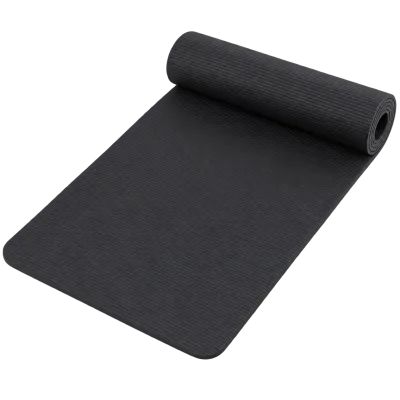 Matching productExercise MatAmazon →
04
Technique and choosing weight
With every new exercise, start with a rather light weight to learn the movement cleanly before you increase. In the row and in the Romanian deadlift, the back stays straight and the movement comes from the hips or the shoulder blades, not from a rounded back. In the shoulder press, the wrists should stay straight above the elbows, and an arched lower back should be avoided.
A proven rule of thumb for choosing weight is the last repetition: if a set could be continued with clearly more than the prescribed number of repetitions, the weight is probably too light. If, on the other hand, technique breaks down noticeably before the target number of repetitions, it was too heavy. With a little practice you develop a feel for which weight suits which exercise and can fine-tune your choice from session to session. At first it is best to note down which weight you used for which exercise, as this makes targeted progression over the weeks much easier.
A weight that is too heavy usually leads first to compensating movements and raises the risk of injury before it even offers the muscles an additional stimulus. Technique therefore always comes before weight. If you have complaints, pre-existing conditions, are pregnant or have had a long break from training, you should seek medical advice beforehand.
05
Combining with other training
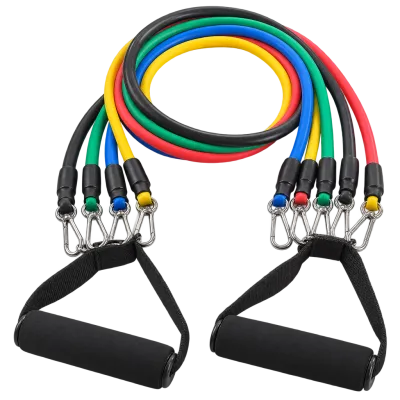
Dumbbells combine very well with exercises from the home workout without equipment, for example by doing squats with added weight once your own body weight is no longer challenging enough. A combination with resistance bands is also possible, for example for additional exercises on non-training days or when travelling. If you want to train your abs and core in particular, you can add suitable exercises to the programme accordingly.
If after several months of regular dumbbell training you reach your limits because the available weights are no longer enough, you can think about a somewhat larger training area with more equipment at home.
 Matching productResistance BandsAmazon →
06
Nutrition to go with it
For training to translate into more strength and muscle, the body needs enough protein and an overall balanced diet. The guide Protein requirement gives a rough guide to how much protein may suit you. If your focus is on muscle building, you will find further information in the guide Protein for muscle building. Dietary supplements can usefully complement a balanced diet, but they do not replace it.
Especially with more intensive strength training with added weight, it is also worth looking at your total energy intake: anyone training in a calorie deficit should pay particular attention to sufficient protein intake in order to preserve existing or newly built muscle as far as possible despite weight loss.
 Matching productAll-in-One Muscle BuilderAmazon →
07
What the research says
Studies on strength training show that progressively increased resistance, whether with dumbbells, barbells or machines, is one of the most important factors for gains in strength and muscle. In direct comparison with other forms of training, dumbbells generally perform similarly well, as long as training volume and intensity are comparable. One advantage frequently mentioned in research is the greater involvement of stabilising muscles with free weights compared with guided machines. For beginners the evidence on the optimal number of sets and repetitions is not entirely consistent, but a range of about 8 to 15 repetitions at moderate to high effort is generally considered practical.
On the question of how quickly strength gains become visible, studies also show that in the first weeks of a training programme it is mainly neural adaptations that make themselves felt, that is, better activation of the muscles, while visible muscle growth usually only becomes clearer after several months of regular training.
08
Frequently asked questions
What weight should I choose as a beginner?
A weight at which the last repetitions of a set are noticeably hard but can be performed with clean technique, usually between 2 and 8 kilograms per dumbbell for beginners, depending on the exercise and training level.
How often should I train with dumbbells?
Two to three sessions per week with enough recovery in between are a good starting point, so that the worked muscles can recover between sessions. More on this in the guide Recovery and sleep.
Is one pair of dumbbells enough for all exercises?
An adjustable pair covers most exercises. For very different loads between large and small muscle groups, a second, lighter pair can make sense, for example if biceps curls are done with much less weight than squats or rows.
When should I increase the weight?
If you can complete the prescribed number of repetitions in all sets cleanly and with a little in reserve, a small step up makes sense.
Are dumbbells as suitable for women as for men?
Yes, the training principles do not differ fundamentally; only the appropriate starting weight can vary individually.
Can I return to training with dumbbells after a break?
Yes. In that case it is advisable to start with lighter weights and fewer sets and slowly increase the load again, especially after longer breaks or in older age.
 Matching productL-GlutamineAmazon →
Explore
Read next
 Protein types at a glance: whey, casein, plant-based and moreAn overview of all common protein types from whey to collagen, with a comparison table and links to detailed guides.
 Amino Acids: The Building Blocks of ProteinStructure, classification and functions of amino acids at a glance, with a table of all 20 proteinogenic amino acids and links to all guide…
 Supplements for Sport and Fitness: A Factual OverviewAll supplement categories at a glance, with the evidence rated from good to thin, plus safety and buying tips.