
7 min read
Progressive Overload: Principle, Methods and Example Plan
What progressive overload means, which ways there are to increase the load, and an example of progression over several weeks.

If you train for months with the same weight, the same repetitions and the same choice of exercises, you will eventually stop making progress. Progressive overload is the basic principle that keeps strength training effective in the long term: the load is increased step by step over time, so that muscles, tendons and the nervous system keep having to adapt to new stimuli.
This guide explains what progressive overload means, which ways there are to increase the load, and shows what such an increase can look like in practice over several weeks. Whether you are just starting strength training or have been at it for a while and feel you are no longer moving forward, the principle of progressive overload is the common denominator behind almost every successful training plan.
01
What progressive overload means
The human body adapts to repeated load by handling it more efficiently. If the same load is repeated without increasing it, the body gets used to it, and the training stimulus is no longer enough to trigger further adaptations such as gains in strength or muscle. Progressive overload describes the deliberate, gradual increase of this load, so that the training stimulus stays effective over weeks and months.
The word gradual matters here: an increase that is too fast or too large raises the risk of injury and can worsen technique, whereas an increase that is too slow or missing leads to a plateau on which nothing changes for a long time. The right amount of progression differs from person to person and depends on training experience, recovery and the exercise in question. With big compound exercises such as the squat, larger and more frequent jumps are often possible than with smaller isolation exercises, where the muscle reaches its current capacity limit more quickly. Training status also plays a role: beginners can usually increase their load comparatively quickly for a longer period, while experienced trainees often take smaller and less frequent steps to keep progressing.
Progressive overload applies to nearly every training goal, whether maximal strength, muscle building or muscular endurance. You can read more about the differences between these training focuses in the guide Muscular endurance training.
The principle is familiar outside strength training too: anyone learning to run also increases distance or pace step by step instead of starting with a marathon. In strength training, the progression is just measurable in finer detail, as weight, repetitions and sets can be recorded precisely and compared over weeks.

02
Ways to increase the load
Adding more weight is the most obvious way, but by no means the only one. The following table shows common variables you can adjust to raise the load step by step.
| Variable | Example |
|---|---|
| More weight | roughly 2.5 to 5 per cent more weight at the same number of repetitions |
| More repetitions | one to two more repetitions per set at the same weight |
| More sets | one additional set per exercise |
| Shorter rests | gradually reduce rest time while keeping the same performance |
| Better technique or greater range of motion | a fuller movement at the same weight |
These variables can be used individually or combined. What matters is to change only one or a few factors at a time, to keep the load under control. Anyone who raises weight, repetitions and sets at once, for example, increases the total load sharply in one go, which can raise the risk of injury unnecessarily.
Which variable makes the most sense also depends on the training goal. Those working mainly on maximal strength often focus more on weight at a low number of repetitions, while for muscle building more repetitions, more sets or a greater range of motion can play a bigger role as well. For muscular endurance, shorter rests and more repetitions are often the more obvious variables. In practice, many trainees switch between the variables anyway, depending on which one can be increased most sensibly in a given training phase without compromising technique.

03
An example of progression over weeks
The following table shows, as an example, how an exercise such as the squat can be progressed over four weeks, starting from a weight that you can manage with clean technique for 3 sets of 10 repetitions in week 1.
| Week | Sets | Repetitions | Adjustment |
|---|---|---|---|
| Week 1 | 3 | 10 | starting weight, focus on technique |
| Week 2 | 3 | 10 to 12 | same weight, aim for more repetitions |
| Week 3 | 3 | 10 | increase weight by about 5 per cent |
| Week 4 | 4 | 10 | one additional set at the same weight |
After such a block, a somewhat lighter week often makes sense, in which weight or volume is deliberately reduced so that the body can recover fully before the next progression block begins. We explain more about how recovery affects training success in the guide Recovery and sleep. This example can be applied in the same way to other basic exercises such as rowing or the shoulder press. It is always important that technique stays clean with every increase and does not suffer in favour of more weight or more repetitions.
 Matching productL-GlutamineAmazon →

04
What you need
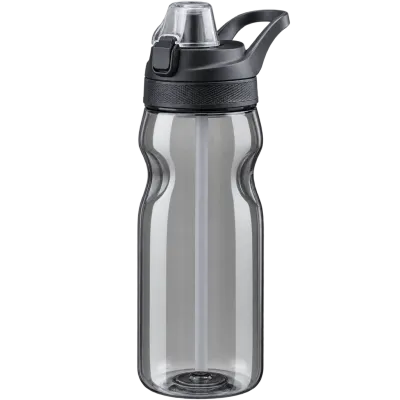
To apply progressive overload, you mainly need equipment that can be adjusted in small steps. Adjustable dumbbells or a set with several weight steps allow small weight jumps, and resistance bands of different strengths serve a similar function for exercises without dumbbells. A training log or a simple notes app helps you record weight, sets and repetitions of every session, and without this record a deliberate progression is hard to follow. Non-slip training shoes and a water bottle round off the basic equipment. If you want to keep progressing in the long term, you also benefit from a fixed training corner where dumbbells, bands and log are within reach, more on this in the guide Setting up a home gym.
 Matching productWater BottleAmazon →

05
Nutrition to go with it
For the body to respond to increased training stimuli with adaptation rather than overload, it needs enough building blocks, above all protein. How much of it can make sense for you is explained in the guide Protein requirement, and you will find further advice on targeted muscle building in the guide Protein for muscle building. An adequate overall calorie intake also supports strength gains, especially in more intensive training phases with frequent increases.
 Matching productAll-in-One Muscle BuilderAmazon →

06
What the research says
The principle of progressive overload is among the best established basic principles of exercise science and is described in numerous studies as a central factor for long-term gains in strength and muscle. The evidence is less uniform on which single variable, for example weight compared with number of repetitions, is most effective for which goal: different studies show different emphases depending on the group studied and the training method. There is agreement, however, that an increase without sufficient recovery between training stimuli loses its effect or can even lead to overtraining, which is why increases in load and recovery should always be considered together. The role of training logs is also often rated positively in research, as written documentation makes it easier to tell real progress from random fluctuations and to plan the next increase deliberately instead of relying on feel alone.
07
Frequently asked questions
How often should I increase the load?
This depends on training experience and individual ability to adapt. A small increase every one to two weeks is often the aim, as long as technique and recovery do not get worse.
What if I can no longer increase?
A temporary plateau is normal. A deliberately lighter training week or a variation of the exercise often helps before you continue increasing. If stagnation persists, it is worth looking at nutrition and sleep.
Do I have to increase in every session?
No, progression happens over weeks, not necessarily in every single session. What matters is the trend over a longer period, not each individual training session on its own.
Does progressive overload make sense for beginners too?
Yes, beginners in particular often make fast progress at first and benefit especially from increasing the load deliberately and in a structured way from the start, instead of training at random.
Can I progress with home workouts too?
Yes, even without fixed weights the load can be increased, for example through more repetitions, more demanding exercise variations or stronger resistance bands, more on this in the guide Home workout with dumbbells.
What should I do if my technique suffers as I increase the load?
That is a clear sign to go back a step and temporarily reduce weight or volume. Technique always takes priority over further progression, as faulty execution clearly raises the risk of injury.
How long should a progression block last?
Four to six weeks followed by a lighter week have proved worthwhile in practice for many people, but the exact duration depends on individual recovery capacity and training experience.
Does progressive overload also work at an older age?
Yes, the principle applies regardless of age, although progression steps are often somewhat smaller and recovery times somewhat longer as people get older.
 Matching productHMB CapsulesAmazon →
Explore
Read next
 Protein types at a glance: whey, casein, plant-based and moreAn overview of all common protein types from whey to collagen, with a comparison table and links to detailed guides.
 Amino Acids: The Building Blocks of ProteinStructure, classification and functions of amino acids at a glance, with a table of all 20 proteinogenic amino acids and links to all guide…
 Supplements for Sport and Fitness: A Factual OverviewAll supplement categories at a glance, with the evidence rated from good to thin, plus safety and buying tips.