
7 min read
Muscular Endurance Training: Method, Differences and Plan
What defines muscular endurance training, how it differs from max strength and hypertrophy training, and a plan to get started.

Muscular endurance training aims to keep muscles performing over a longer period, rather than moving the highest possible weights for a few repetitions. Typical features are high repetition counts, short rests and a noticeable burn in the muscles, which many know from circuit training or endurance sports.
This guide explains what defines muscular endurance training, how it differs from max strength and hypertrophy training, and shows a concrete plan with which you can work on your muscular endurance in a targeted way. Whether you are preparing for an endurance sport, want to become more resilient in everyday life or simply want to add variety to your training, muscular endurance training can be integrated into existing training plans comparatively easily.
01
What Defines Muscular Endurance Training
Muscular endurance describes the ability of the muscles to maintain a submaximal force over many repetitions or a longer period without tiring greatly. In training this usually means sets of about 15 to 25 repetitions or timed exercises of 30 to 60 seconds, combined with short rests of about 30 to 45 seconds between sets.
Typical forms of training are circuit training, in which several exercises are done one after another without long rests, as well as classic sets with a high repetition count at moderate weight. Supersets, in which two exercises are performed directly one after the other without rest, also count in the broader sense among the methods with which muscular endurance can be trained in a targeted way. Sports such as rowing, climbing or certain team sports also demand muscular endurance, since the muscles are repeatedly loaded over a longer time.
In everyday life, good muscular endurance shows, for example, when carrying shopping bags over a longer distance, when climbing stairs over several floors or in manual work that requires repeated movements over a longer period.
Solid muscular endurance is also an advantage for many leisure and recreational sports. Anyone who hikes, cycles or regularly works in the garden benefits from muscles that tolerate repeated loads over a longer time without tiring quickly. Unlike pure endurance training, which mainly challenges the cardiovascular system, muscular endurance is about the local fatigue resistance of individual muscle groups. Combining both areas, for example in the context of HIIT or circuit training, addresses the cardiovascular system and the muscles at the same time, which many find a particularly efficient use of training time.

02
Muscular Endurance Compared with Max Strength and Hypertrophy
Strength training can be roughly divided into three focuses, which differ in repetition count, weight and rest length. The following table shows the typical differences.
| Type of training | Repetitions | Rest | Focus |
|---|---|---|---|
| Max strength | about 1 to 5 | about 2 to 4 minutes | the highest possible force in one repetition |
| Hypertrophy (muscle building) | about 6 to 12 | about 60 to 120 seconds | muscle growth |
| Muscular endurance | about 15 to 25 | about 30 to 45 seconds | fatigue resistance of the muscles |
The transitions between the areas are fluid, and many training plans combine several focuses over the week or across different training phases. The weight used also differs accordingly: while in the max strength range training is often close to your own repetition maximum, in the muscular endurance range considerably less weight is used with correspondingly more repetitions. If you mainly want to build muscle, you will find suitable plans under Muscle Building Workout Plan; if you are aiming more at weight reduction, you will find what you need in the guide Weight Loss Workout Plan, since muscular endurance training often plays a role there too because of its high repetition count.
For many people who train, it makes sense not to choose only one form of training but to switch between the focuses over a longer period. A phase with a stronger focus on max strength can, for example, be followed by a phase with more muscular endurance work, in order to challenge the muscles in different ways and bring variety to training.
 Matching productAll-in-One Muscle BuilderAmazon →

03
A Muscular Endurance Plan
The following table shows an example of circuit training that can be done well at home or in the gym.
| Exercise | Sets | Repetitions or duration | Rest |
|---|---|---|---|
| Dumbbell squat | 3 | 18 to 22 | about 30 seconds |
| Push-ups | 3 | 15 to 20 | about 30 seconds |
| Alternating lunges | 3 | 40 seconds | about 30 seconds |
| Resistance band row | 3 | 18 to 22 | about 30 seconds |
| Plank | 3 | 40 to 60 seconds | about 30 seconds |
The exercises are done one after another as a circuit with a short rest; after a complete round comes a somewhat longer rest of about 90 seconds before the next round begins. How to increase the load sensibly over the weeks, for example through more repetitions or shorter rests, is explained in the guide Progressive Overload.

04
What You Need
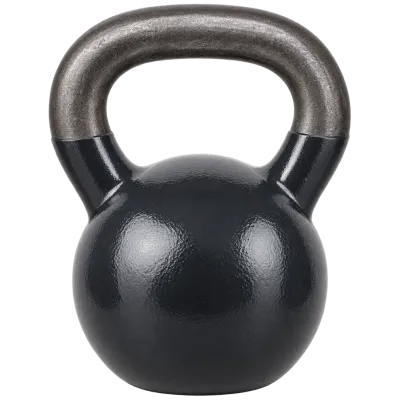
Light to moderate dumbbells are suitable for muscular endurance training, since with high repetition counts you work with lower weight than in the max strength range anyway. If you want extra variety, you can use a kettlebell, whose shape makes it particularly well suited to dynamic movements such as swings or alternating lunges. Resistance bands are especially practical, since they are easy to use for many repetitions and take up little space. A non-slip mat for floor and support exercises, as well as breathable sportswear that allows free movement, make training easier still, as with this form of training you usually sweat more than in slower strength training with long rests. Since muscular endurance sessions are often more sweat-inducing than classic strength training, a water bottle with enough water during training is particularly important. Having a towel within reach is also practical with this form of training, since the short rests and high repetition count usually lead to noticeable sweating.
 Matching productKettlebellAmazon →
05
Nutrition to Go with It
With muscular endurance training too, an adequate protein intake supports the recovery of the muscles worked, and how much makes sense for you is explained in the guide Protein Requirement. Since muscular endurance training is often also used as part of weight reduction programmes, it is also worth taking a look at the guide Protein for Weight Loss. Dietary supplements can sensibly complement a balanced diet, but they do not replace it. Since muscular endurance sessions often add up to a high overall training volume, many people also make sure they get enough fluid and electrolytes around training, especially on warm days or during longer sessions.

06
What the Research Says
Sports science studies show that training with high repetition counts and short rests can noticeably improve muscular endurance and also has positive effects on strength and muscle mass, although tending to a lesser extent than classic hypertrophy training with medium repetition counts. On the exact optimal repetition count and rest length for maximum muscular endurance effects, the evidence is not entirely consistent, but a range of about 15 to 25 repetitions with short rests is generally taken as a practical guide. The effects on cardiovascular fitness are also discussed, since muscular endurance training, through the short rests, can partly stimulate adaptations similar to endurance training without fully replacing it. When putting this into context, it remains important that individual results can vary greatly depending on training status, nutrition and recovery; fixed numerical promises about timeframe or extent of improvement cannot responsibly be given.
07
Frequently Asked Questions
Is muscular endurance training suitable for beginners?
Yes, because of the moderate weight the risk of injury is manageable, but clean technique in every repetition still matters, especially when the muscles tire towards the end of a set.
Do you build muscle with muscular endurance training?
To a certain extent yes, although the muscle-building stimulus overall is usually somewhat lower than with classic hypertrophy training with medium repetition counts and higher weight.
How often should I train muscular endurance?
Two to three sessions per week with enough recovery in between are a sensible framework for most people, depending on training goal and other load in everyday life.
Can I combine muscular endurance with classic strength training?
Yes, many training plans alternate between phases focused on max strength or hypertrophy and phases with a stronger muscular endurance share, in order to promote different adaptations.
What should I do about sore muscles after training?
Mild muscle soreness is normal and usually fades within a few days. Enough sleep, moderate movement and enough fluid can support recovery; if the pain is severe or unusual, medical advice helps.
Is muscular endurance training suitable for weight loss?
Through the high training volume and short rests, muscular endurance training can contribute to a higher overall calorie expenditure during the session, but what remains decisive for weight development is the calorie balance across the whole day and over longer periods.
How do I know whether the weight is chosen correctly?
If you manage the given repetition count with clean technique and the last repetitions are noticeably strenuous but still controlled, the weight is in a suitable range. If technique falls apart early, the weight has usually been chosen too high.
Do I need special exercises for muscular endurance?
No, most classic strength exercises can simply be adapted for muscular endurance training with more repetitions and shorter rests. What matters is controlling weight, repetition count and rest length, not a completely different choice of exercises.
 Matching productL-GlutamineAmazon →
Explore
Read next
 Protein types at a glance: whey, casein, plant-based and moreAn overview of all common protein types from whey to collagen, with a comparison table and links to detailed guides.
 Amino Acids: The Building Blocks of ProteinStructure, classification and functions of amino acids at a glance, with a table of all 20 proteinogenic amino acids and links to all guide…
 Supplements for Sport and Fitness: A Factual OverviewAll supplement categories at a glance, with the evidence rated from good to thin, plus safety and buying tips.