
7 min read
Resistance Band Training: A Plan for Home
A full-body plan with resistance bands for home, including band types, technique and practical equipment.

Resistance bands are light, inexpensive and fit into any bag. Even so, they can be used to build a serious strength training programme that covers many muscle groups, from legs and glutes through the back to shoulders and arms. Unlike with dumbbells, the resistance is maintained throughout the whole movement, which makes bands particularly gentle on the joints and versatile.
This guide gives you a complete training plan with resistance bands, explains the different band types, offers technique tips and puts into context what research says about training with elastic resistance.
01
How resistance bands train
Unlike a dumbbell, where the load arises mainly through gravity, a resistance band creates tension through stretching. The resistance therefore increases as the band is stretched further, which makes exercises particularly demanding in the end position. This provides continuous muscle tension, which with classic weights often drops off in certain parts of the movement.
This so-called accommodating resistance profile fundamentally distinguishes bands from weights with a constant load and makes them a useful training stimulus especially for the final phase of a movement, where leverage often becomes less favourable.
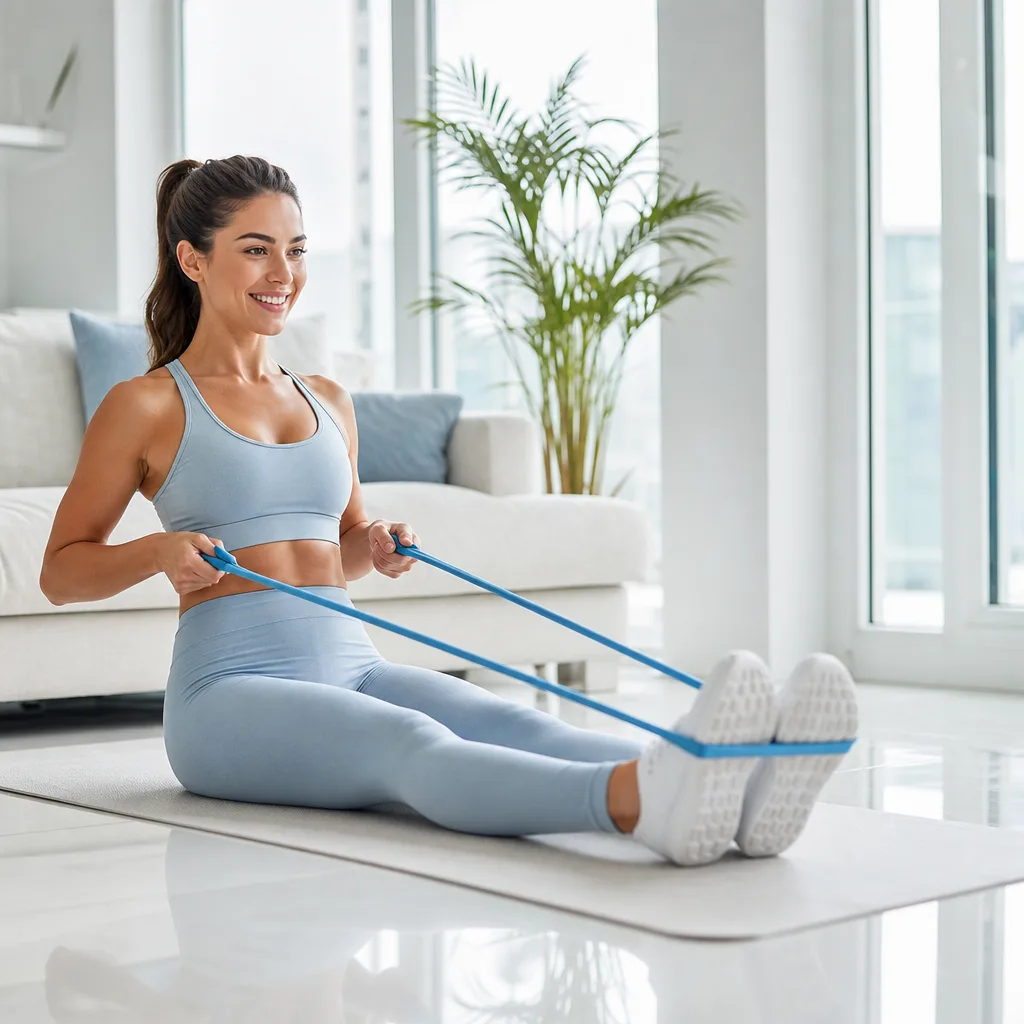
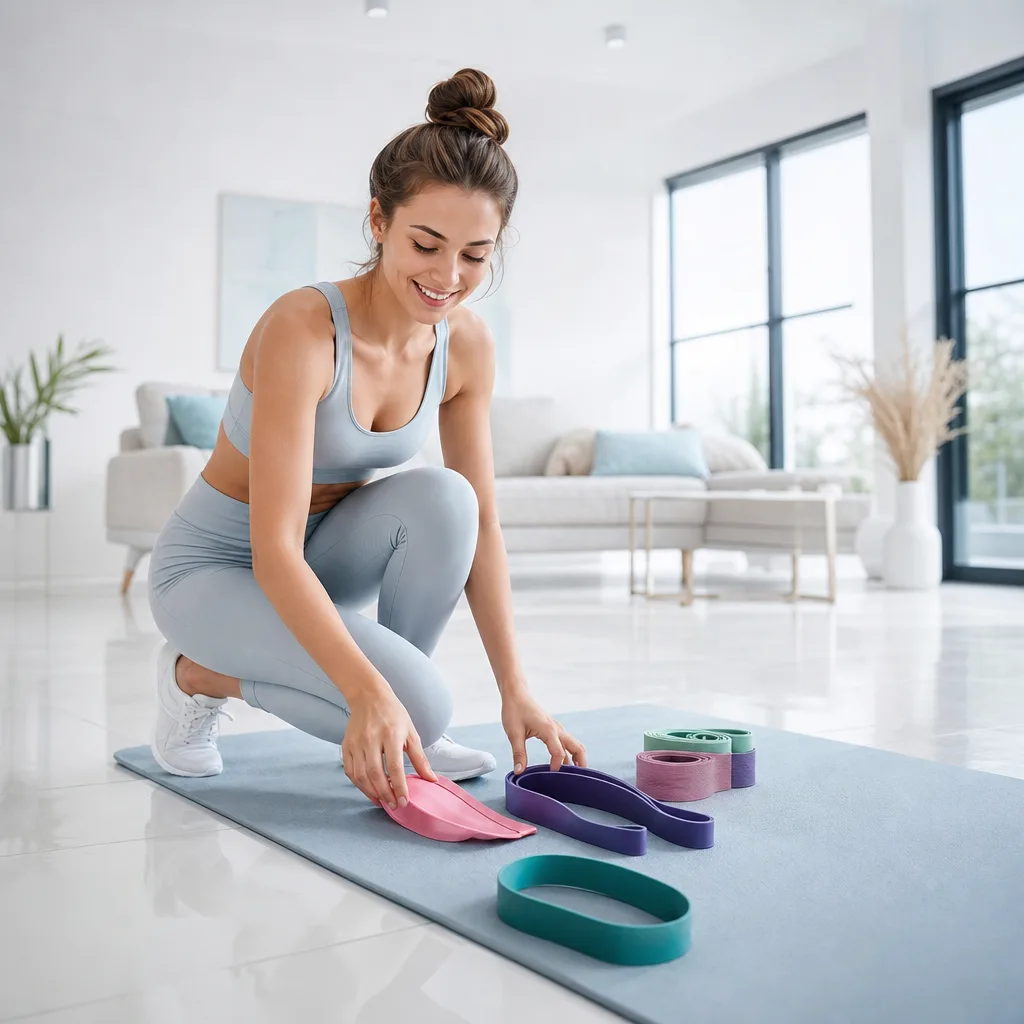
There are different types of band: long fitness bands without handles, short closed loop bands for legs and glutes, and tube bands with handles that resemble a classic cable station. For a complete full-body workout, a combination of one long band and one or two loop bands of different resistance levels makes sense.
Fitness bands are usually divided into different resistance levels by colour, although the exact assignment varies by manufacturer. Rely less on the colour itself than on the subjective feel during the respective exercise, and if in doubt try several strengths before deciding on a set.
Another plus is the ability to fine-tune the resistance within an exercise, for example by standing further or less far along the band or by doubling it up. In this way, one and the same band can cover a wider range of loads than it seems at first glance.
02
The training plan
The following plan trains the whole body and suits two to three sessions per week. Choose the resistance level of the band so that the last repetitions of each set are noticeably hard.
| Exercise | Sets | Repetitions | Rest |
|---|---|---|---|
| Band squat with loop band above the knees | 3 | 15-20 | 60 sec. |
| Seated row with band | 3 | 12-15 | 60 sec. |
| Shoulder press with band | 3 | 10-12 | 60 sec. |
| Lateral walk with loop band | 3 | 15 per side | 45 sec. |
| Biceps curls with band | 2 | 12-15 | 45 sec. |
| Glute bridge with loop band | 3 | 15-20 | 45 sec. |
A short warm-up before the session helps prepare joints and muscles for the load; more on this in the guide Warming up and mobility. Then increase the training stimulus over time, for example with a band of higher resistance or more repetitions, as described in the guide Progressive overload.
In all exercises, make sure you keep the band under tension throughout the whole movement, including in the starting position. Letting the band go slack briefly between repetitions reduces the training stimulus and should therefore be avoided where possible.
03
What you need
For this programme one long fitness band and one or two closed loop bands of different resistance levels are enough, so that you can vary depending on the exercise and muscle group. A training mat gives you grip for floor exercises such as the glute bridge. Non-slip training shoes help with lateral walking with the loop band, while close-fitting, breathable sportswear prevents the band from catching.
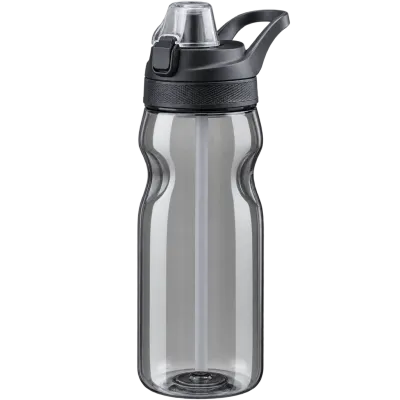
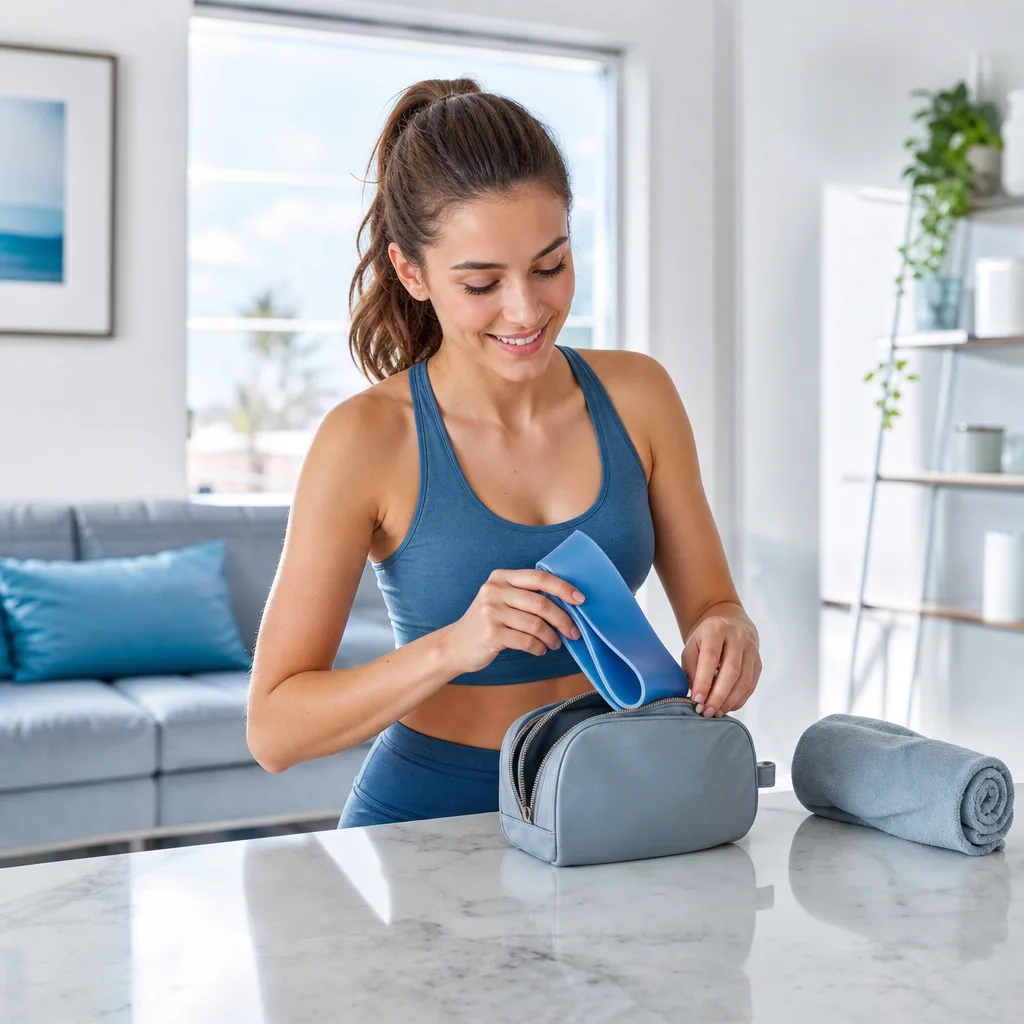
Having a water bottle within reach makes sense in this training too. A door anchor is also practical, as it allows many band exercises such as rows or presses to be varied further, as is a small bag or pouch to keep the different bands sorted and to hand.
 Matching productWater BottleAmazon →
04
Technique and safety
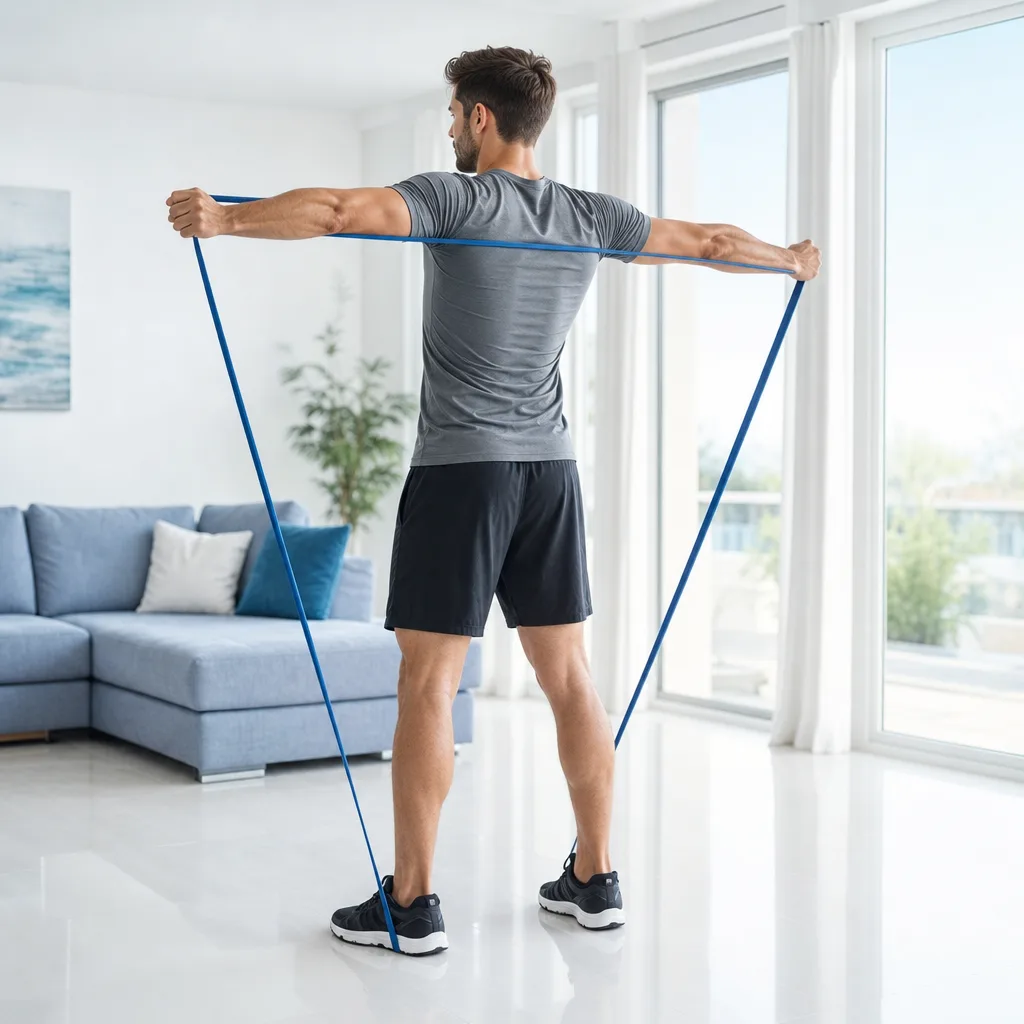
Make sure you attach the band to a stable point or secure it firmly under your feet so that it does not slip away during the exercise. Perform each movement in a controlled way, especially when returning against the band tension, as letting go too quickly can put unnecessary strain on the joints. Check bands regularly for fine cracks or wear, especially at the attachment points, and replace them if there is visible damage.
Especially with overhead exercises such as the shoulder press with a band, it is worth not positioning your face directly in the line of pull of the band, so that it cannot snap back if it slips off. This simple precaution significantly reduces the risk of injury and should be observed in every exercise with band tension near the head.
If you have complaints, pre-existing conditions, are pregnant or have had a longer break from training, you should have the load checked by a doctor beforehand and increase it slowly. Technique always takes priority over speed or number of repetitions.
05
Advantages over classic weights
Resistance bands are particularly practical on the go, on holiday or in small homes, as they need hardly any space and are easy to store. They are also a good complement to training with dumbbells or an alternative when no added weight is to hand. For a compact workout in a short time, the band plan can also be built into a short 20-minute workout.
In terms of price and required storage space too, resistance bands are one of the most accessible forms of training equipment there is. A complete set of several resistance levels weighs next to nothing and can easily be carried in a suitcase or backpack, which makes regular training easier when travelling.
06
Nutrition to go with it
With resistance band training too, the same applies: muscle needs enough protein and an overall balanced diet in order to be maintained or built. You will find an assessment of how much protein makes sense for you in the guide Protein requirement. If you specifically want to lose weight, you will find further information in the guide Protein for weight loss. Dietary supplements can usefully complement a balanced diet, but they do not replace it.
Because band training often takes place in shorter but regular sessions, an even protein distribution over the day is also worthwhile, so that the muscles have enough building material available for recovery after every session.
07
What the research says
Several studies have directly compared strength training with elastic resistance to classic machine training and found comparable gains in strength and muscle mass, as long as load and training volume are increased similarly. Resistance bands are considered a well-studied and joint-friendly option, especially for beginners, older people and in rehabilitation. One difference from free weights is mainly that the exact resistance is harder to state in kilograms, which makes precise training control somewhat harder. For general muscle and strength maintenance, however, this imprecision is usually not enough in practice to explain disadvantages compared with classic weights.
In the field of rehabilitation too, for example after injuries to the shoulder or knee, resistance bands are frequently used in studies, as the resistance can be dosed very finely and gently on the joints. For the healthy recreational athlete, this transferability counts as additional evidence that band training is a serious alternative to classic weights.
08
Frequently asked questions
Which resistance level should I choose?
As a beginner, a light to medium resistance is usually suitable, at which the last repetitions of a set are hard but can be performed with clean technique. Over time it is worth having several strengths to hand so you can vary appropriately for different exercises and muscle groups.
Does a band replace real strength training?
For many goals yes, as long as the resistance is high enough and is increased over time, for example with a stronger band or more repetitions.
How long do resistance bands last?
That depends heavily on material, use and care; regular checks for cracks and correct storage out of direct sunlight noticeably extend their lifespan.
Can I combine bands with other training?
Yes, bands combine well with exercises from the home workout without equipment or with dumbbells, for example as a supplement on non-training days.
Are resistance bands suitable for beginners?
Yes, precisely because of the finely adjustable load and low risk of injury, bands are considered a good introduction to strength training, even without prior experience.
How can I tell that a band should be replaced?
Visible cracks, porous spots or a noticeable loss of resistance at the same stretch are signs that a band should be replaced, especially before it could snap under full tension.
How do I store resistance bands correctly?
Keep them dry, out of direct sunlight and not permanently stretched; this protects the material and noticeably extends the lifespan of the bands.
Explore
Read next
 Protein types at a glance: whey, casein, plant-based and moreAn overview of all common protein types from whey to collagen, with a comparison table and links to detailed guides.
 Amino Acids: The Building Blocks of ProteinStructure, classification and functions of amino acids at a glance, with a table of all 20 proteinogenic amino acids and links to all guide…
 Supplements for Sport and Fitness: A Factual OverviewAll supplement categories at a glance, with the evidence rated from good to thin, plus safety and buying tips.