
7 min read
Setting Up a Home Gym: A Buying Guide With Order and Budget Levels
A buying guide for your home gym: space requirements, a sensible order of purchases and the benefit of each piece of equipment.

A home gym does not have to be big to be effective. With a few well-chosen pieces of equipment, you can build a full strength training set-up at home that can keep up with a classic gym in many respects.
Many people buy too much at once at the start, or exactly the wrong things, because it is unclear which piece of equipment brings which benefit. A well-thought-out order not only saves space but also ensures that every purchase is actually used regularly instead of standing unused in the corner.
This guide shows how much space you really need, in which order purchases are worthwhile and which equipment brings the greatest benefit even on a small budget.
01
How much space you really need
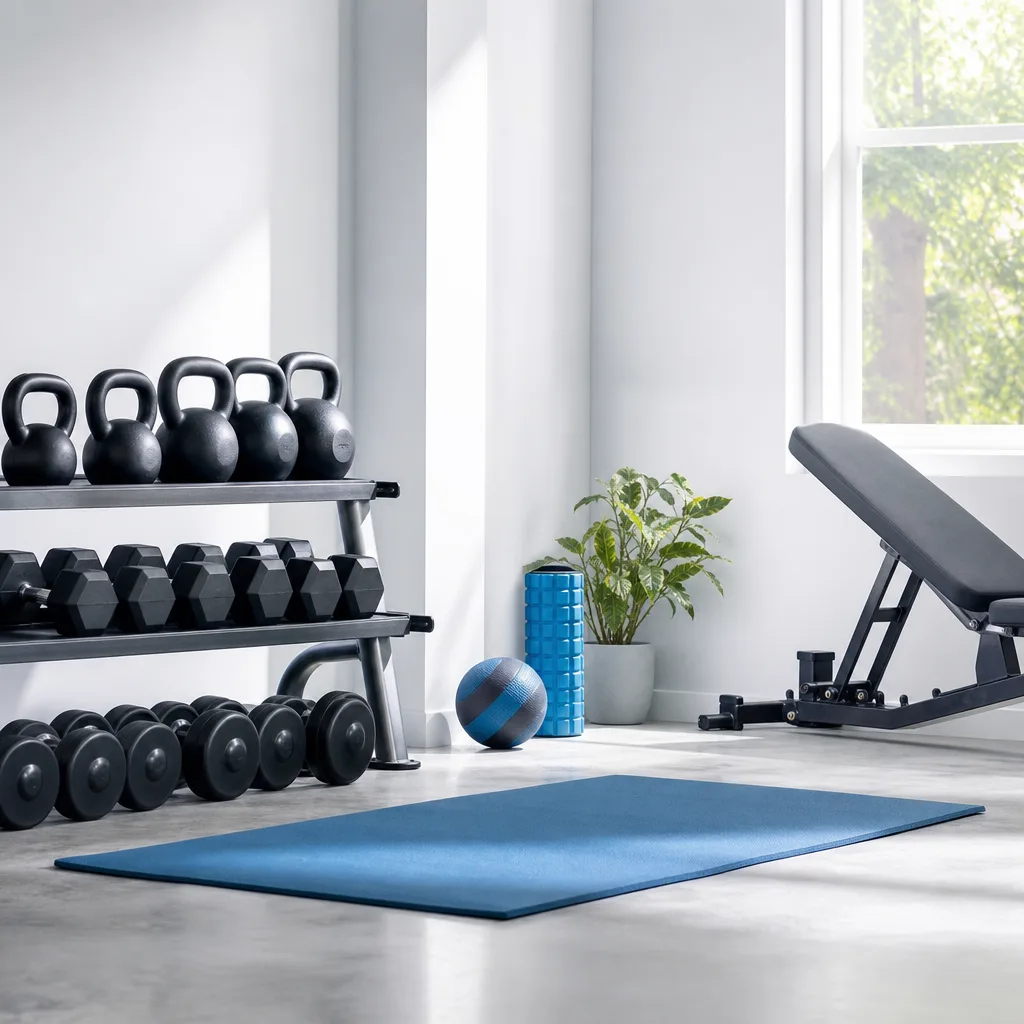
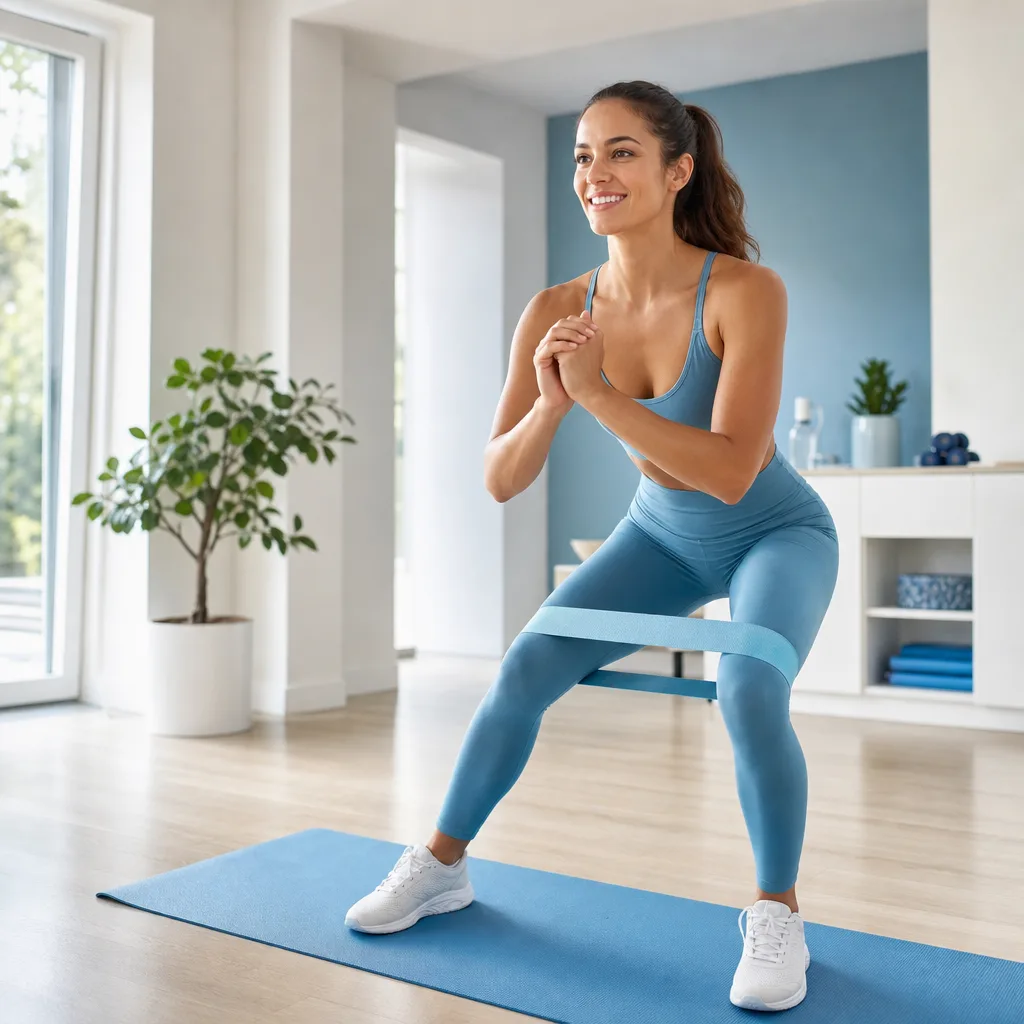
For a functional home gym, an area of around two by two metres is often enough, in which you can move freely for squats, lunges or push-ups. Sufficient ceiling height is important, especially if you later want to train with jumps or a pull-up bar. A non-slip floor or a large training mat protects both the surface and your joints. Equipment that is rarely used can be hung on the wall to save space or stored in a box, so that the room remains usable for other purposes between sessions. Anyone with very little space can do many exercises with small, easily stored equipment such as resistance bands.
02
What you need
The basis of a home gym is equipment that can be used in many ways and covers several forms of training. A good-quality training mat makes sense for almost every session, whether for floor exercises, stretching or as a non-slip surface. Dumbbells, ideally with adjustable weight, cover a large part of strength training, from arms and shoulders to legs. A kettlebell adds dynamic full-body exercises to the programme. Resistance bands are light, inexpensive and can be stored almost anywhere, while allowing a wide range of exercises. A pull-up bar brings an effective way of training the back into the home gym without taking up much space. Non-slip training shoes and a water bottle round off the basic equipment. For floor exercises, a second, smaller towel is also useful, keeping sweat off the mat and keeping the equipment hygienic for longer.
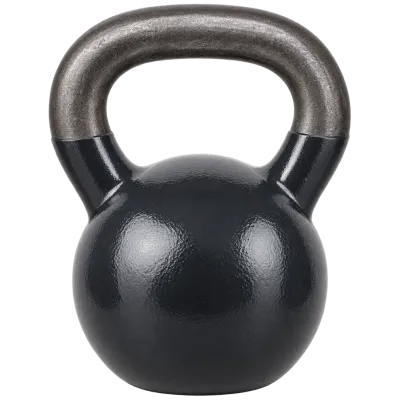 Matching productKettlebellAmazon →
03
In which order purchases are worthwhile
Not every piece of equipment is necessary from the start. The following table shows a sensible order by budget level, based on the benefit a piece of equipment brings relative to its space requirement and versatility, without naming specific prices.
| Budget level | Recommended order | Benefit |
|---|---|---|
| Starter | 1. Training mat, 2. Resistance bands | Covers mobility, abs and many full-body exercises, very space-saving |
| Basic equipment | 3. Adjustable dumbbells | Extends training to classic strength training for all muscle groups |
| Extension | 4. Pull-up bar | Enables effective back training that is hard to achieve with dumbbells alone |
| Expansion | 5. Kettlebell | Adds dynamic full-body exercises such as the swing, ideal for strength and endurance together |
| Comfort | 6. Adjustable weight bench | Considerably widens the choice of exercises for chest, shoulders and back |
This order is based on covering as many muscle groups as possible with as little equipment as possible before more specialised equipment is added. Anyone who already has clear training goals, for example mainly back training or targeted ab training, can adjust the order accordingly and bring the matching level forward, instead of following the general recommendation rigidly. In any case, it remains important to make each new purchase only once the previous equipment is being used regularly, instead of buying several pieces at the same time that are then only partly used.
04
Small equipment with a big benefit
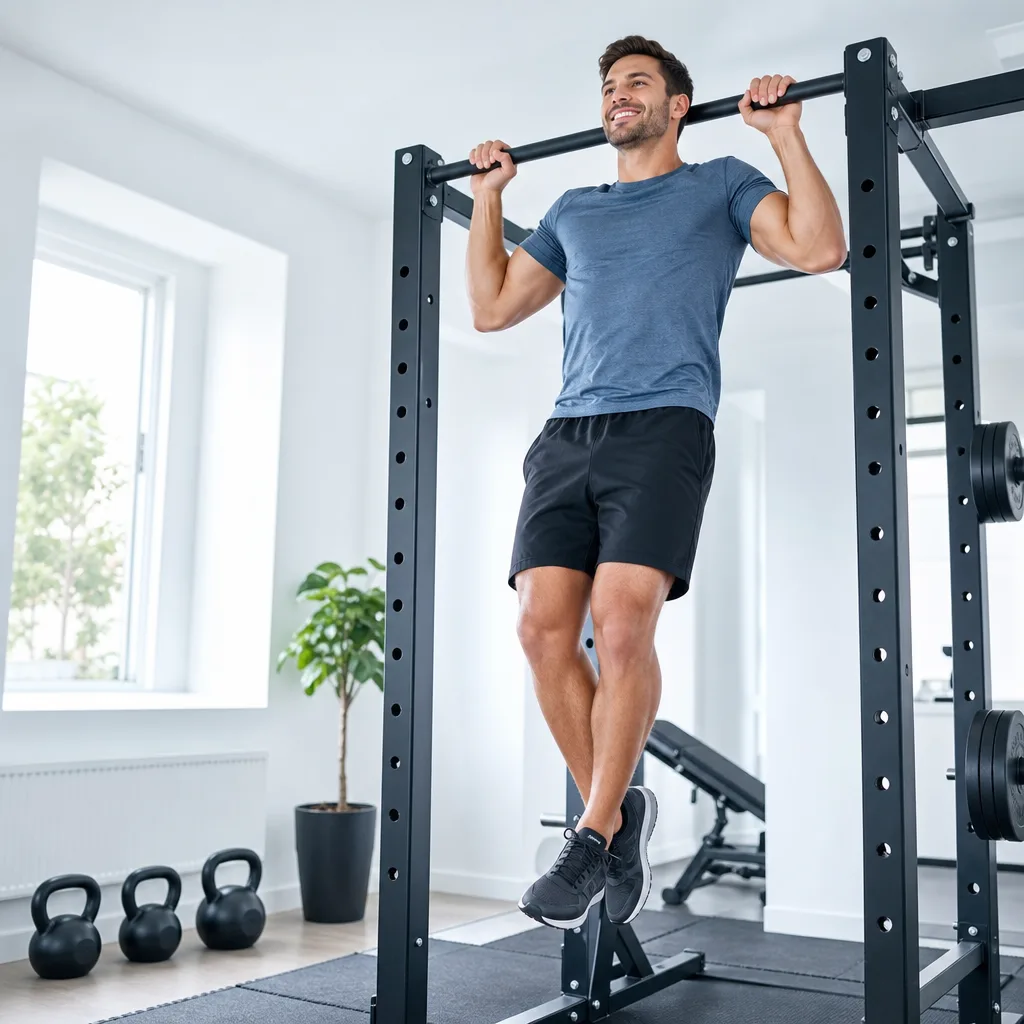
Small, space-saving equipment in particular is often especially worthwhile. Resistance bands weigh next to nothing, fit in any drawer and cover a surprisingly wide range of exercises, from the hips through the back to the arms. A doorway pull-up bar needs no fixed place and can be hooked in and removed again when needed. Adjustable dumbbells replace a whole set of fixed weights and therefore save considerable storage space. If you are unsure which piece of equipment makes sense next, ask yourself which muscle groups are still being neglected in your current training, and add equipment accordingly. A simple door frame for the pull-up bar, a free stretch of wall for an attached resistance band or a hook for the hung-up training mat also help to turn a small area into a working home gym without a separate room being needed.
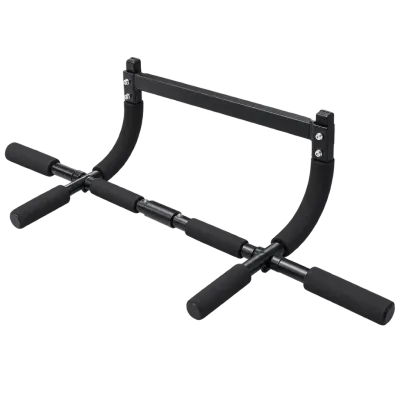 Matching productPull-Up BarAmazon →
05
Avoiding common mistakes when setting up
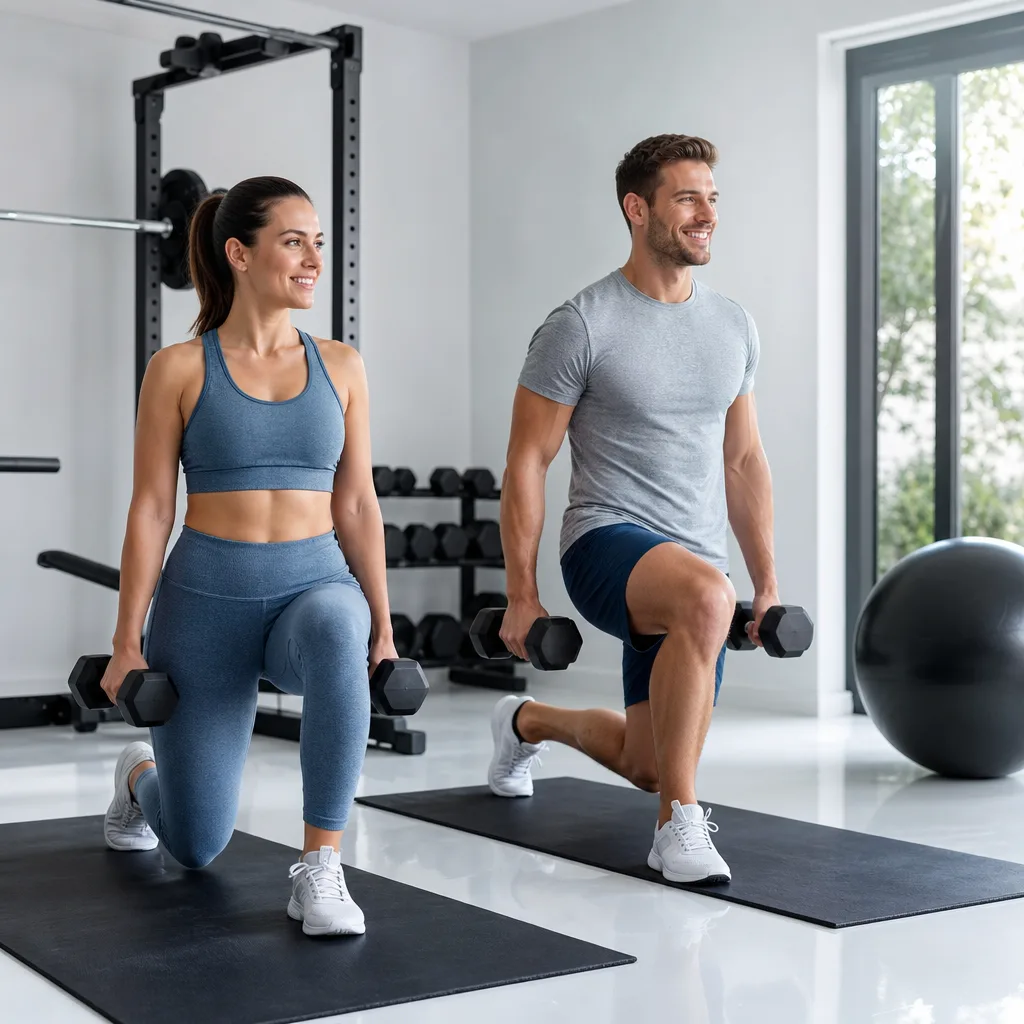
A widespread mistake is to invest a lot of money right at the start in a single specialised piece of equipment that covers only a few exercises, instead of first investing in versatile basic equipment. Storage is also often underestimated: without a fixed place for mat, bands and dumbbells, equipment quickly gets put away and forgotten. Realistic planning of the space requirement is equally important, because a home gym that is too cramped means exercises with a larger range of motion, such as lunges or squat jumps, can hardly be performed cleanly. Anyone who instead starts with a few versatile pieces of equipment, plans a fixed place for them and only expands the equipment when there is a genuine need uses their budget considerably more efficiently.
06
Nutrition to go with it
A home gym that is set up only brings progress if training and nutrition work together. For building muscle, sufficient protein intake is important, as described in the guide Protein for muscle building; the guide Protein requirement offers a rough estimate of your needs. If your main aim with the home gym is to lose weight, you will find suitable advice in the guide Protein for weight loss. Dietary supplements can make daily life easier but do not replace a balanced diet with plenty of vegetables, wholegrain products and protein sources from the normal kitchen. When starting with new equipment, regardless of the equipment, technique comes before weight, and if you have pre-existing conditions or complaints, or have had a longer break from training, medical advice is worthwhile before the load is increased.
07
What the research says
Studies on training with simple home gym equipment such as dumbbells, resistance bands and your own body weight show overall that strength and muscle mass can be built about as effectively with them as with larger equipment in a gym, as long as progressive overload is observed, that is, a step-by-step increase in weight, repetitions or exercise difficulty. More decisive than the amount of equipment in research is the regularity of training: anyone who trains consistently over months often achieves better results with a few basic pieces of equipment than someone with complete equipment who trains only irregularly. Comparisons between training with simple equipment and training on machines in a gym also show that free movements with dumbbells and body weight additionally challenge core stability and coordination, since, unlike on guided machines, no fixed movement path is prescribed.
08
Frequently asked questions
What is the first sensible purchase for a home gym?
A training mat combined with resistance bands already covers a wide range of exercises and needs hardly any space or budget.
Do I absolutely need a weight bench?
No, a weight bench is useful but not a basic requirement; many exercises can also be done standing or on a training mat.
How much space does a small home gym need at minimum?
For most basic exercises, a free area of around two by two metres with sufficient ceiling height is already enough.
Are adjustable dumbbells worth it?
Yes, adjustable dumbbells cover a wide range of weights and save considerable space compared with several fixed pairs of dumbbells.
How do I plan training with my home gym?
A good start is a full-body training plan for beginners, which can be done with little equipment and can be extended specifically later.
When is a larger purchase such as a weight bench worthwhile?
Once the basic equipment is being used regularly and certain exercises, such as the bench press or supported rows, are missing from your current equipment, it is a good time for a larger purchase such as an adjustable weight bench.
How do I keep the equipment in good condition?
Regularly wiping down the mat and grips, a dry storage place for bands and dumbbells and an occasional check for wear, for example at the seams of resistance bands, considerably extend the lifespan of the equipment.
What do I do if a piece of equipment is too demanding?
Almost any piece of equipment can be adjusted in load, for example with fewer repetitions, a lighter weight or an assisted exercise variation. It is important to simplify the exercise rather than sacrifice technique.
Is used equipment worthwhile for getting started?
Used dumbbells or a used kettlebell are usually unproblematic as long as there is no visible damage. For resistance bands, buying new is better because of material wear.
How do I sensibly expand my home gym later?
Keep basing your decisions on your actual training habits: add the equipment that enables currently missing exercises, instead of enlarging the equipment without a clear reason.
Explore
Read next
 Protein types at a glance: whey, casein, plant-based and moreAn overview of all common protein types from whey to collagen, with a comparison table and links to detailed guides.
 Amino Acids: The Building Blocks of ProteinStructure, classification and functions of amino acids at a glance, with a table of all 20 proteinogenic amino acids and links to all guide…
 Supplements for Sport and Fitness: A Factual OverviewAll supplement categories at a glance, with the evidence rated from good to thin, plus safety and buying tips.