
6 min read
Training Legs and Glutes at Home: Exercises and Plan Without Equipment
How to do squats, lunges and hip raises correctly at home, plus a training plan for strong legs and stable glutes.
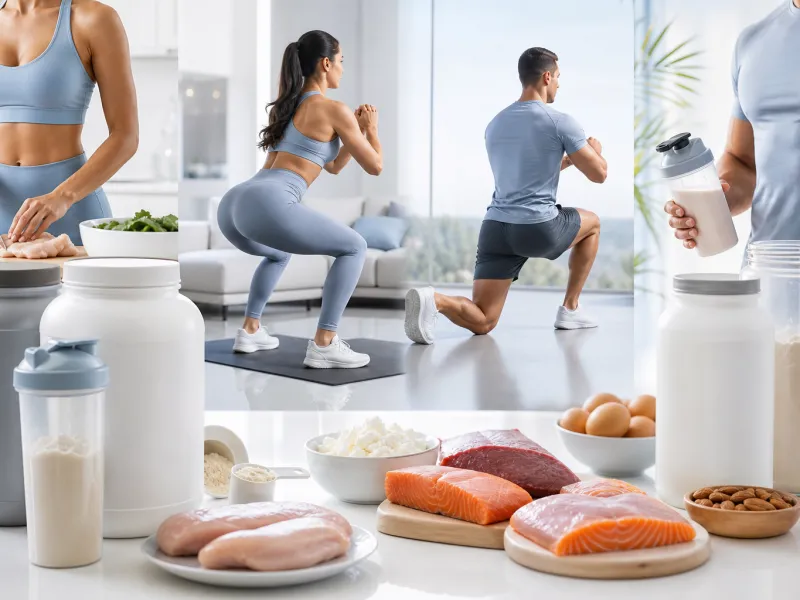
Strong legs and stable glutes can be trained very well at home, with no gym at all. Squats, lunges and hip raises work the largest muscle groups in the body and also affect posture, everyday movement and metabolism.
The leg muscles in particular are among the largest muscle groups in the body, so training them has a noticeable effect on total energy expenditure and general strength in daily life, for example when climbing stairs, carrying shopping or standing up from a crouch. Targeted training at home also saves travel time and can be fitted flexibly into your day.
In this guide you will learn which exercises for legs and glutes are most effective at home, what a sensible training plan looks like and what to pay attention to in technique and nutrition.
01
What you need
For effective leg training at home, your own body weight is enough to begin with. A non-slip training mat protects your knees and elbows during floor exercises. Once the classic exercises feel easy, dumbbells or an adjustable pair of dumbbells are worthwhile for increasing the load. A resistance band, also called a mini band, is particularly valuable for the lateral gluteal muscles and can be placed around the thighs. Non-slip training shoes with a flat sole give more control when standing than softly cushioned running shoes. A water bottle within reach rounds off the setup. Advanced trainees looking for extra load later often reach for a kettlebell or an adjustable dumbbell, which makes squats and lunges considerably more intense without new exercises having to be learned.
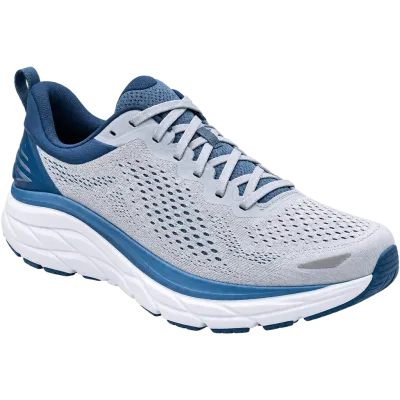 Matching productRunning ShoesAmazon →
02
The most important exercises for legs and glutes
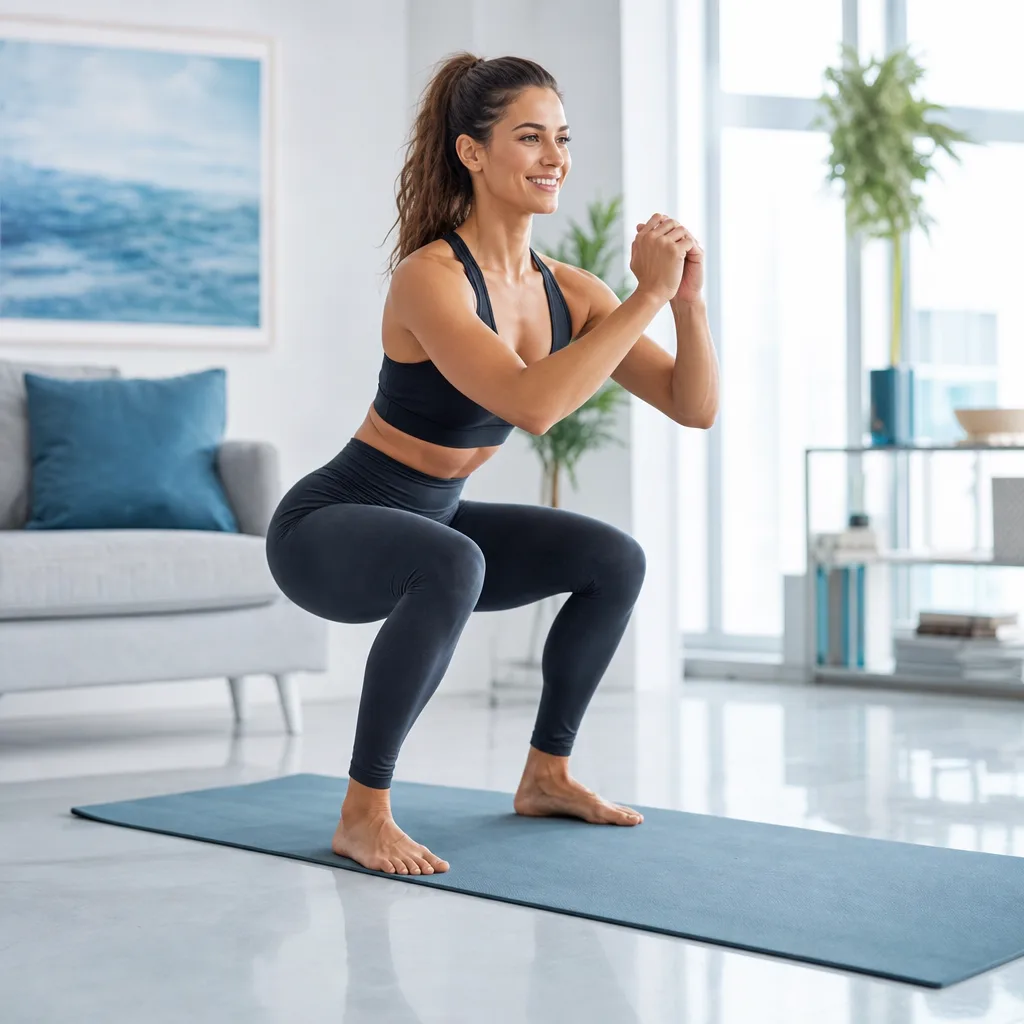
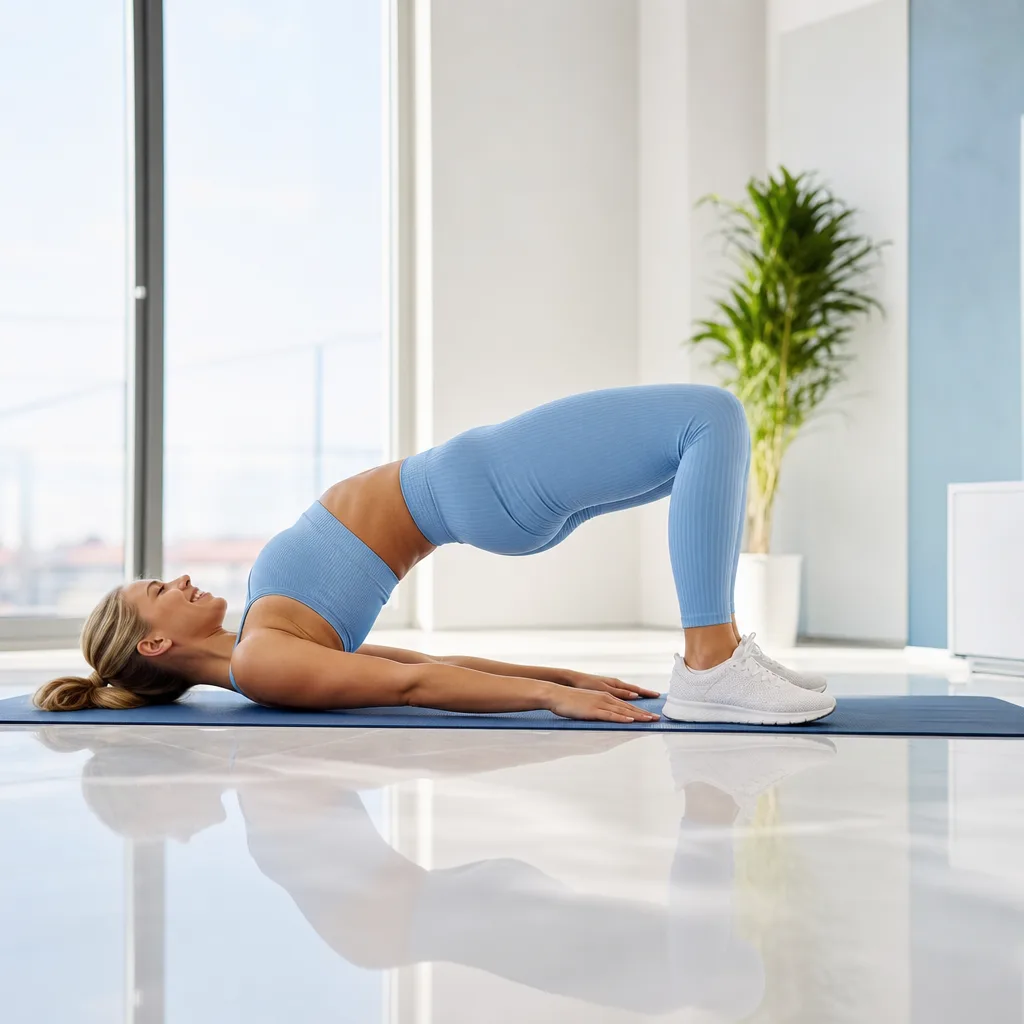
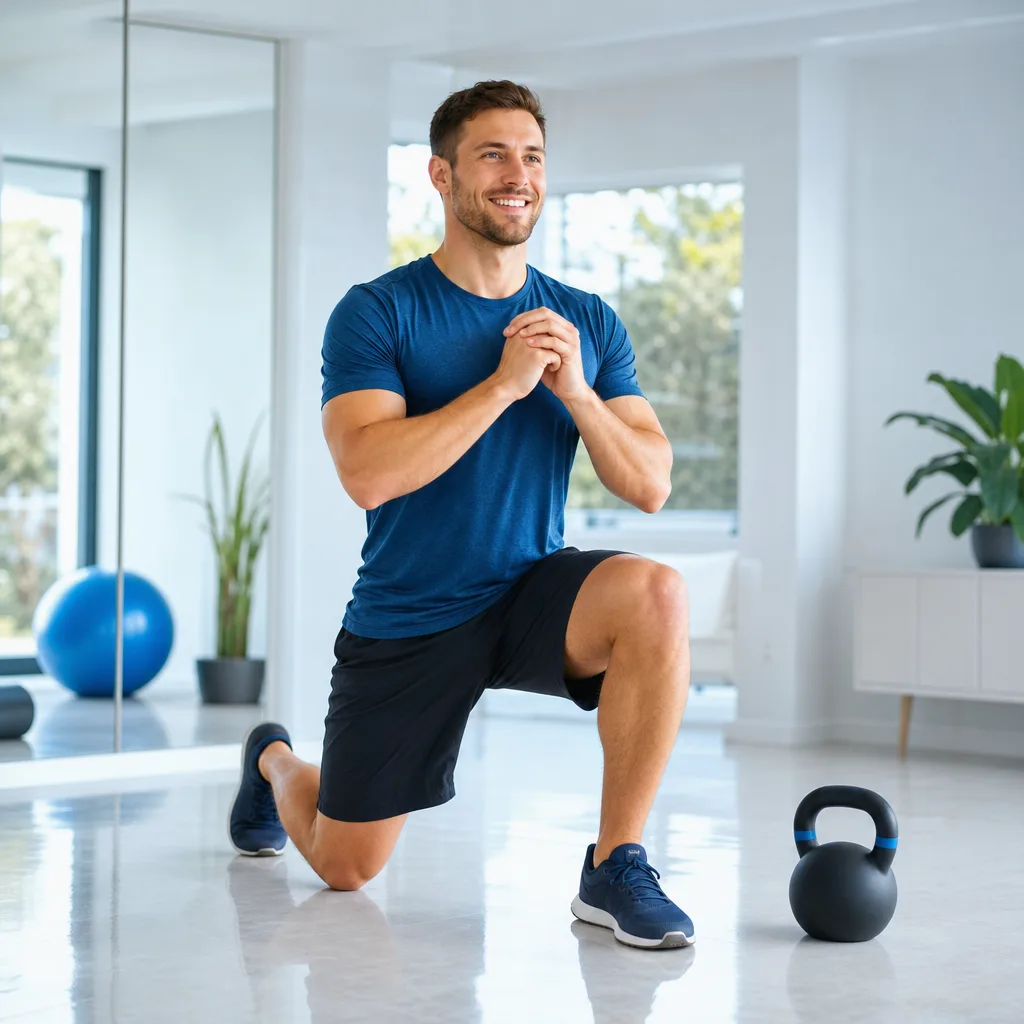
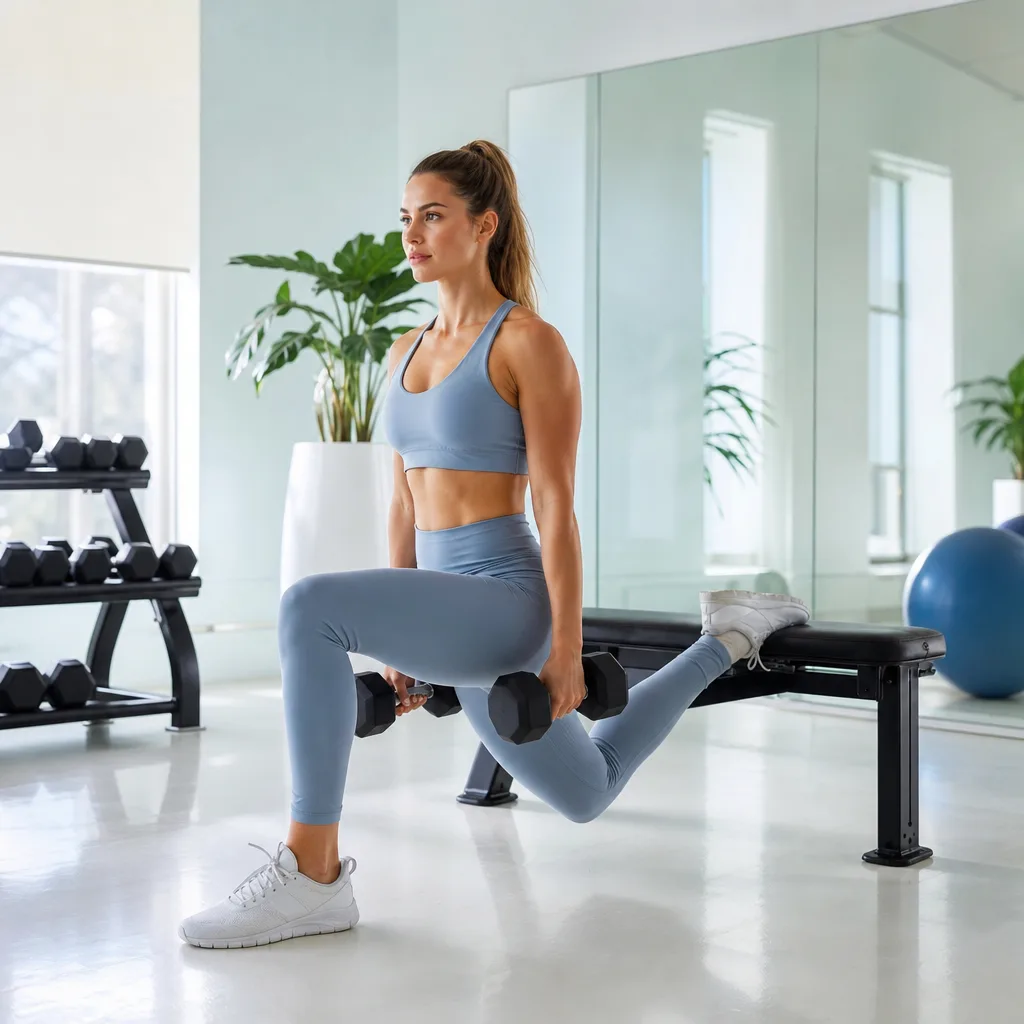
Squats are considered the basic exercise for the whole leg musculature and work the thighs, glutes and core muscles at the same time. Lunges, whether performed standing or walking, additionally challenge balance and work each leg individually. The hip raise, also called the glute bridge, targets the gluteus maximus specifically and is one of the few exercises that strengthens this muscle in isolation. The Bulgarian split squat with the rear foot raised increases the intensity considerably without you needing extra weight. Side leg raises and the so-called clamshell exercise with a resistance band strengthen the lateral hip muscles, which are often neglected in daily life but are important for a stable pelvis. Standing calf raises add the lower leg muscles to the programme. The single-leg squat on a raised surface, with the free leg loosely stretched out in front, additionally strengthens stability in the knee and ankle and prepares you well for more demanding single-leg variations.
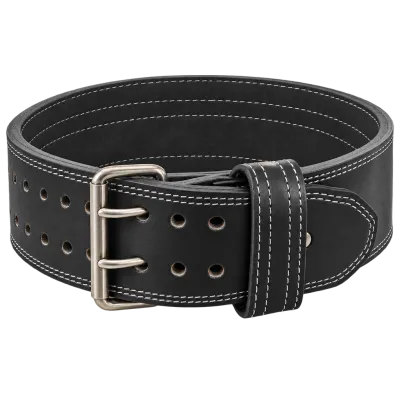 Matching productWeightlifting BeltAmazon →
03
Avoiding common mistakes
A common mistake in the squat is the knee tipping too far forward, extending beyond the toes, while the heel loses contact with the floor. It is better to consciously distribute your weight over the whole foot and push the hips back far enough. In the lunge, many people tend to place the front foot too close, which makes the knee travel too far forward. A slightly larger step gives a clean right angle at the knee. In the hip raise, people often work too fast and with momentum instead of performing the movement slowly and in a controlled way, which loses the actual training stimulus for the glutes. Anyone who keeps these three points in mind gets considerably more effect from the same exercises, without changing tempo or number of repetitions.
04
Technique before tempo
In all exercises for legs and glutes, clean execution counts for more than high tempo or many repetitions. In the squat, the knees should point in the direction of the toes and not cave inwards, the back stays straight and the weight rests more on the heel than on the forefoot. In the hip raise, you consciously tense the glutes at the top instead of pushing the lower back hard into an arch. If you feel pain in the knees or lower back during training, you should reduce the range of motion or temporarily swap the exercise. A mirror or a short video recording on your phone helps you assess your own technique, especially at the beginning.
05
Your training plan for legs and glutes
The following plan suits two to three times per week with at least one day of rest in between, so that the worked muscles can recover.
| Exercise | Sets | Repetitions | Rest |
|---|---|---|---|
| Squat | 3 | 12 to 15 | about 60 seconds |
| Lunges per side | 3 | 10 to 12 | about 60 seconds |
| Hip raise | 3 | 15 to 20 | about 45 seconds |
| Bulgarian split squat per side | 2 | 8 to 10 | about 60 seconds |
| Clamshell with band per side | 2 | 15 to 20 | about 30 seconds |
| Calf raises | 3 | 15 to 20 | about 30 seconds |
Once 15 clean repetitions with body weight feel easy, that is a good time to bring in dumbbells or a resistance band. This form of progressive overload ensures that the muscles keep adapting instead of getting used to a constant stimulus. A short warm-up of a few minutes with easy marching on the spot or light squats prepares muscles and joints well for the session. If you suffer from knee or hip complaints or pre-existing conditions, are training during pregnancy or are returning after a longer break from training, you should have your training checked by a doctor beforehand and generally put technique before weight. No firm promises about visible changes within a few weeks can be made responsibly, as progress varies greatly from person to person. Patience and regularity matter more here than a fast pace at the start.
06
Nutrition to go with it
Building muscle in the legs and glutes needs enough protein as well as training. As a rough guide, sports science often gives a range of about 1.2 to 2.0 g protein per kg of body weight per day for strength training, as explained in more detail in the guide on Protein for muscle building. If you want to lose fat at the same time, you will find suitable advice in the guide Protein for weight loss. You can roughly estimate your personal requirement using the guide Protein requirement. Dietary supplements can be a practical addition but do not replace a balanced diet with plenty of vegetables, wholegrain products and protein sources from the normal kitchen.
07
What the research says
Bodyweight training and training with light added weight are well-supported methods in studies for building strength and muscle mass in the legs, especially in beginners. What matters is less the exact weight than supercompensation: after a training stimulus, the muscle needs time to recover in order to become more capable than before. The evidence on isolation exercises for the lateral gluteal muscle is thinner than for basic exercises such as the squat, but they are considered a sensible addition if this area is to be strengthened specifically. Regular training over several weeks is also important: single sessions hardly change the muscles, whereas a continuous stimulus over months does. There are also clear indications on the role of stretching: dynamic stretching before training prepares the muscles for load better than holding static stretch positions, which make more sense at the end of the session or on separate days.
08
Frequently asked questions
How often should I train legs and glutes at home?
Two to three sessions per week with at least one rest day in between are a good framework for the recovery of the worked muscles. If you notice that muscle soreness is still clearly noticeable after two days, you should rest a little longer before training the same muscle group again.
Is body weight enough or do I need weights?
For beginners, body weight is usually enough for several weeks. As you get stronger, dumbbells or resistance bands are worthwhile to keep setting a sufficient training stimulus.
What should I do about knee pain during the squat?
If you have pain, you should reduce the depth of the movement, check your technique and, if symptoms persist or you have pre-existing conditions, seek medical advice before you continue training.
Can I also lose weight with this training?
Strength training for legs and glutes strengthens large muscle groups and can support energy expenditure, but a calorie deficit through diet remains the decisive factor for weight loss.
How do I combine this training with other sessions?
It combines well with HIIT training on other days or a home workout for the upper body.
How long does it take until visible changes are noticeable?
Strength and endurance often improve after just a few weeks of regular training, whereas visible changes in muscle and body shape usually take several months of consistent training combined with suitable nutrition. Fixed timeframes cannot be given responsibly, as starting point and training frequency vary greatly from person to person.
Explore
Read next
 Protein types at a glance: whey, casein, plant-based and moreAn overview of all common protein types from whey to collagen, with a comparison table and links to detailed guides.
 Amino Acids: The Building Blocks of ProteinStructure, classification and functions of amino acids at a glance, with a table of all 20 proteinogenic amino acids and links to all guide…
 Supplements for Sport and Fitness: A Factual OverviewAll supplement categories at a glance, with the evidence rated from good to thin, plus safety and buying tips.