
7 min read
HIIT at Home: Setting Up Interval Training Without Equipment
What defines high-intensity interval training, which exercises suit home and what a HIIT plan for beginners looks like.

HIIT, short for high-intensity interval training, is one of the most time-efficient forms of training that can be done at home. Short, intensive work phases alternate with short rests, so a complete workout is often finished in 15 to 25 minutes.
On days with little time in particular, this is a big advantage over longer endurance sessions. Because no special equipment is strictly necessary, HIIT can be done almost anywhere, in the living room, in the garden or in the smallest of spaces, which makes it one of the most accessible forms of training for home.
This guide explains how HIIT works, which exercises suit home and what a beginner plan can look like.
01
What you need
HIIT can be done largely without equipment; a non-slip training mat for floor exercises and sturdy training shoes with good cushioning are enough to start. A clock or an interval app on your phone helps you keep work and rest times exact. If you want more variety, you can also use a skipping rope for cardio elements or light dumbbells for strength-focused intervals. A water bottle and a towel should be within reach, as HIIT sessions are usually accompanied by a clearly raised pulse and sweating. A heart rate watch is not a requirement but can help you assess your own load better and compare it across several sessions.
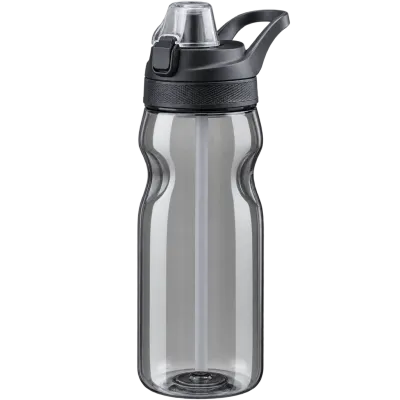 Matching productWater BottleAmazon →
02
How HIIT works
The principle of HIIT is simple: a short, very intensive work phase, usually 20 to 45 seconds, is followed by a shorter recovery phase, after which the next round begins. The constant alternation between work and recovery puts strong demands on both the cardiovascular system and the muscles, often stronger than steady endurance training of the same duration. For beginners, a ratio of work to rest of about 1 to 2 is suitable, for example 20 seconds of work and 40 seconds of rest. As fitness increases, this ratio can be brought closer step by step until work and rest are about equal in length. Unlike steady endurance training, the intensity in HIIT can be controlled specifically through the length of the work phase and the choice of exercises, so the training can be adapted flexibly to how you feel on the day and to your fitness level. On particularly tiring days, it makes more sense to lengthen the rests slightly than to push through the exercises with poor technique.
03
Exercises for your HIIT workout
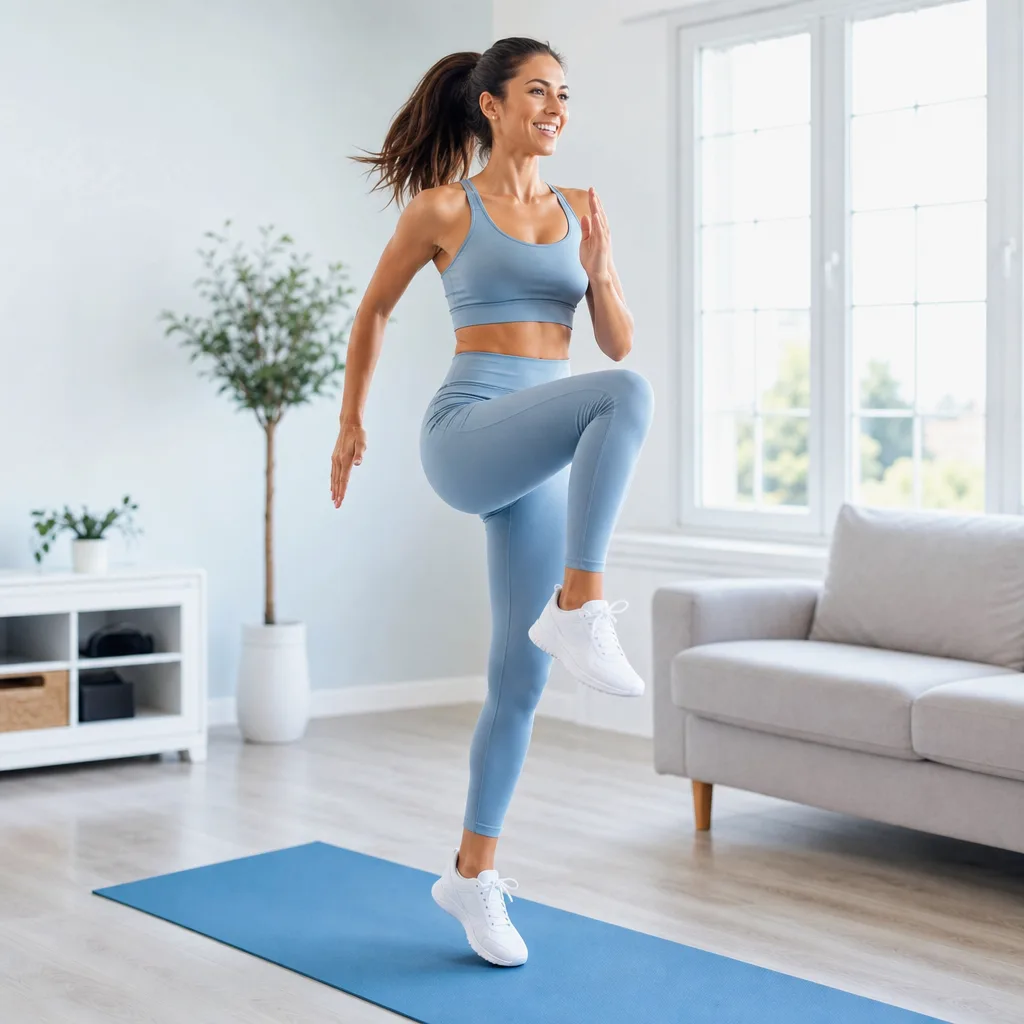
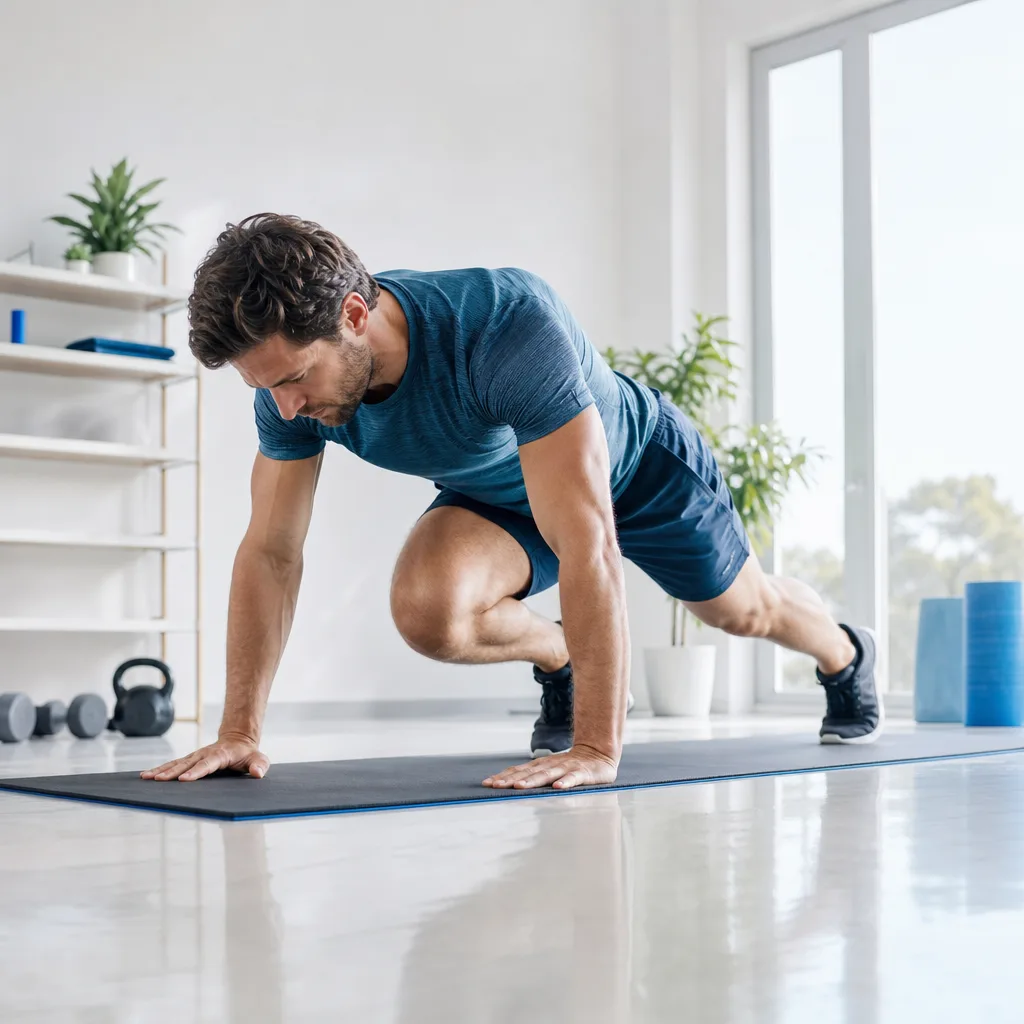
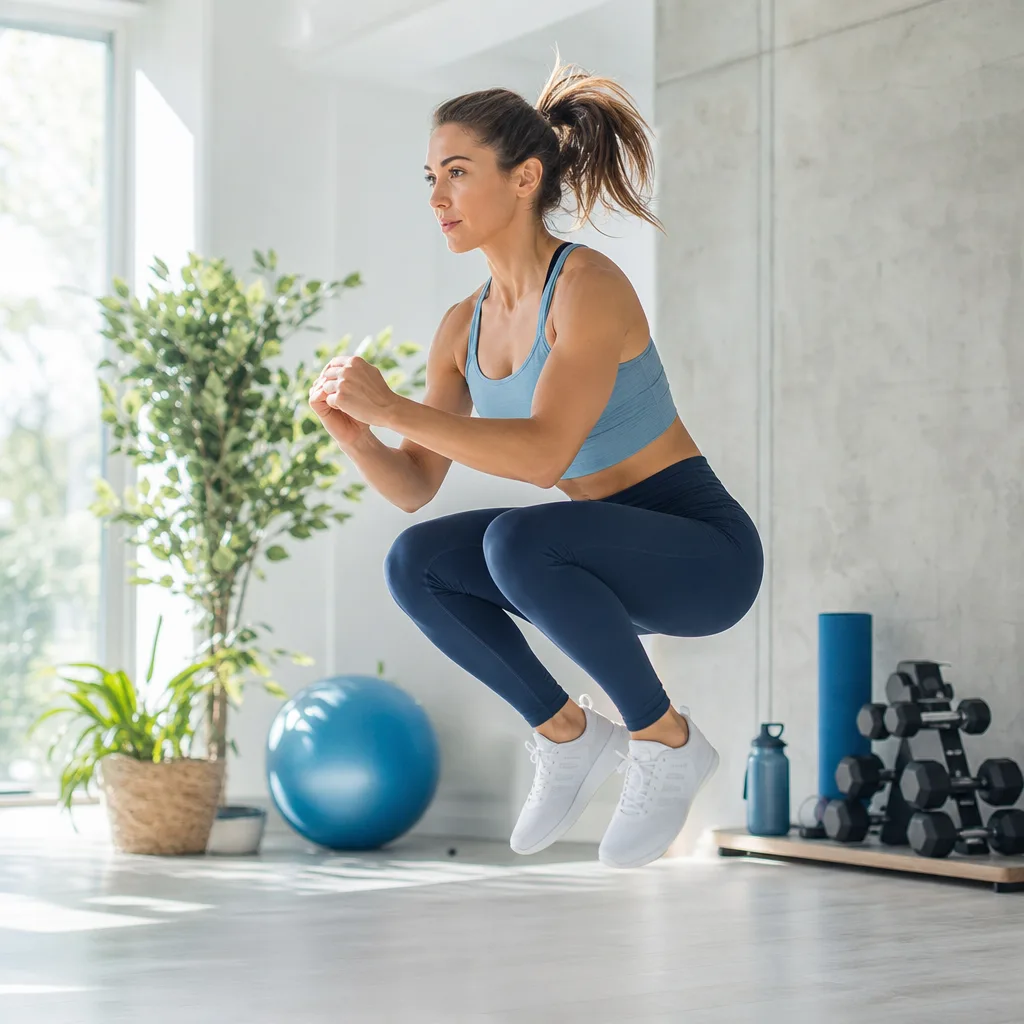
Classic HIIT exercises combine several muscle groups and can be done well without equipment. Burpees combine a squat, a push-up and a jump in one movement and are among the most intensive full-body exercises there are. High knee runs on the spot, also called high knees, raise the heart rate quickly and additionally train the hip flexors. Mountain climbers from the push-up position work the core and shoulders at the same time. Jumping jacks are a good beginner-friendly exercise with less strain on the joints. Squat jumps considerably increase the intensity of classic squats and also train jumping power. For variants that are gentler on the joints, jumps can be replaced by quick, controlled movements without losing contact with the floor. The push-up followed by a jump, a simplified form of the burpee, is a good choice when the full movement is still too demanding. Lunges in quick alternation, in which the right and left leg step forward in turn, can also be built in well as an interval exercise and additionally challenge balance. If you place more value on the arm muscles, you can integrate push-up repetitions in short, intensive sets into the circuit.
 Matching productGlucosamine ChondroitinAmazon →
04
Avoiding common mistakes
A widespread mistake is choosing work phases that are too long or too intense from the start, so that technique suffers after just a few rounds and the risk of injury rises. It is better to start cautiously with shorter work times, which are lengthened step by step over several weeks. Another mistake is a warm-up that is too short or missing altogether; especially with jump-heavy exercises this considerably increases the load on the knees and ankles, more on this in the guide Warming up and mobility. Rests are also often kept too short, out of a wish to get as much done as possible in a short time, which makes technique suffer in the following repetitions. A short but complete rest is more effective in the long run than many sloppy repetitions under exhaustion.

05
Your HIIT plan for home
The following plan suits two to three sessions per week with enough recovery in between, as HIIT places heavy demands on the body.
| Exercise | Sets | Work | Rest |
|---|---|---|---|
| Jumping jacks | 4 | 30 seconds | 30 seconds |
| Squat jumps | 4 | 20 seconds | 40 seconds |
| Mountain climbers | 4 | 30 seconds | 30 seconds |
| High knees | 4 | 30 seconds | 30 seconds |
| Burpees | 3 | 20 seconds | 40 seconds |
One pass through all the exercises already makes a complete session. Advanced trainees repeat the whole circuit twice with a slightly longer rest of two to three minutes between the rounds. A short warm-up before the first round is especially important in HIIT. If you have cardiovascular disease or joint complaints, are pregnant or are returning after a longer break from training, you should have the intensity checked by a doctor beforehand and generally focus on clean technique rather than maximum speed. No responsible promises can be made about visible changes within a few weeks.
06
Nutrition to go with it
HIIT burns a comparatively large amount of energy in a short time and is therefore often used for weight control, covered in more detail in the guide Protein for weight loss. Sufficient protein intake helps preserve muscle despite a calorie deficit; the guide Protein requirement gives a guide. Before an intensive session, a light, carbohydrate-containing meal is usually more sensible than a very fatty one, as it provides energy that is available more quickly. Dietary supplements can usefully complement nutrition but do not replace a balanced diet with plenty of vegetables, fruit and wholegrain products.
07
What the research says
On the effectiveness of HIIT for endurance and metabolism there is now a broad body of studies which overall supports well that short, intensive intervals can achieve similar effects on endurance in a short time as longer, steady training. There are indications of the so-called afterburn effect, that is, a slightly raised energy expenditure after training, but its practical importance for weight loss is assessed differently in research and should not be overestimated. What remains decisive is the calorie balance over the whole day and over several weeks. On endurance development, research also shows that a mix of intensive intervals and calmer training usually gives better results than exclusively high-intensity training, among other reasons because the body can recover better between the intensive sessions.
08
Frequently asked questions
How often per week should I do HIIT?
Two to three sessions per week with sufficient recovery in between are a good starting point for most people, especially at the beginning.
Is HIIT also suitable for beginners?
Yes, if work times are chosen shorter and rests longer. If you have not exercised for a long time, you should increase the intensity slowly and, if you have pre-existing conditions, seek medical advice beforehand.
What do I do if I have joint problems?
Jump-heavy exercises can be replaced by variants without jumps that are gentler on the joints, for example controlled squats instead of squat jumps.
How long does a HIIT session last?
Depending on the number of rounds, a session usually lasts between 15 and 25 minutes including a short warm-up.
Can I combine HIIT with strength training?
Yes, HIIT combines well on separate days with targeted strength training such as in the guide Legs and glutes at home.
Do I need to warm up separately before HIIT?
Yes, a short warm-up of about five to ten minutes with light dynamic movements prepares the muscles and joints for the high intensity and noticeably lowers the risk of injury.
Why do I feel so exhausted after HIIT?
The constant alternation between intensive effort and short rest puts strong demands on both the cardiovascular system and the muscles, which is why HIIT often feels harder than steady endurance training of the same duration. This is normal and a sign that the training stimulus was high; adequate recovery afterwards is correspondingly important.
Can I also do HIIT without jumps?
Yes, almost every jump-heavy exercise can be replaced by a controlled variant that is gentler on the joints, such as squats instead of squat jumps or brisk marching on the spot instead of high knees with a jump, without the intensity of the training having to suffer.
Do I need a skipping rope for HIIT?
No, a skipping rope is a useful but not a necessary addition. All the exercises presented can also be done without additional equipment.
Is HIIT better than classic endurance training?
Neither form is better in general; they complement each other. HIIT saves time and also trains the muscles at the same time, while calmer endurance training is gentler on the joints and can be sustained for longer at a stretch.
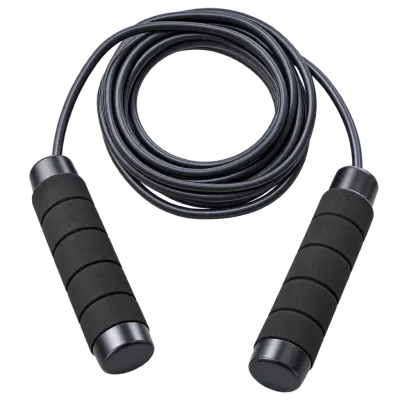 Matching productJump RopeAmazon →
Explore
Read next
 Protein types at a glance: whey, casein, plant-based and moreAn overview of all common protein types from whey to collagen, with a comparison table and links to detailed guides.
 Amino Acids: The Building Blocks of ProteinStructure, classification and functions of amino acids at a glance, with a table of all 20 proteinogenic amino acids and links to all guide…
 Supplements for Sport and Fitness: A Factual OverviewAll supplement categories at a glance, with the evidence rated from good to thin, plus safety and buying tips.