
6 min read
Strength Training for Women: Myths, Benefits and a Starter Plan
Why strength training is worthwhile for women, which myths persist stubbornly and what a starter plan can look like in practice.

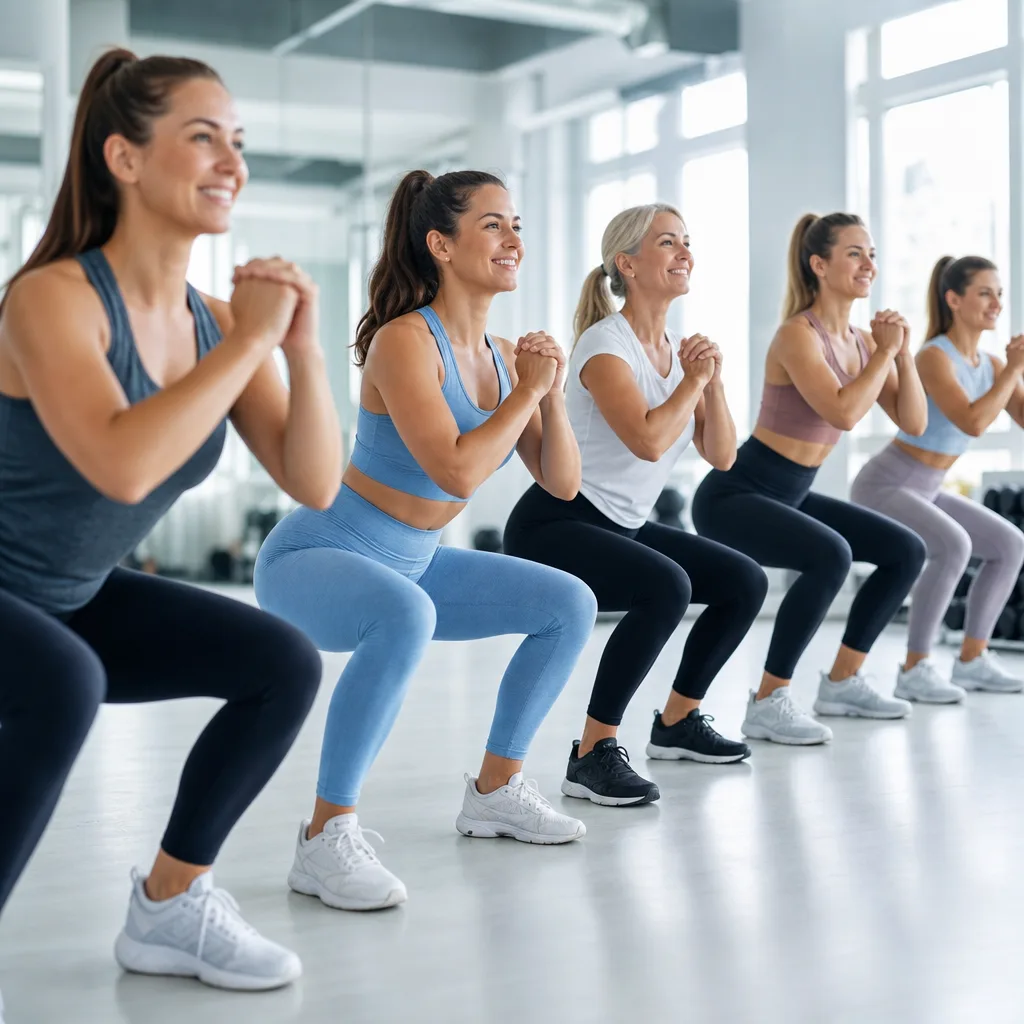
For many women strength training is now a matter of course in their training routine, yet stubborn prejudices persist around weights, muscle building and the supposedly right form of training for women. In fact, women benefit from regular strength training in much the same way as men: stronger muscles, more stable joints, better posture and a metabolism that burns more energy even at rest.
This guide explains why strength training is worthwhile for women at any age and any level, clears up the most common myths and shows a concrete starter plan with which you can get going in a structured way. Whether you have so far relied more on endurance sport, are starting completely from scratch or want to begin again after a longer break, the following basics will help you approach the subject safely and with realistic expectations.
01
Why Strength Training Makes Sense for Women
Muscle is more than looks. It stabilises joints, protects the spine during everyday movements and ensures that strength reserves are there for stairs, shopping bags or playing with children. With increasing age, muscle mass tends to decline without targeted training, and in women this process often speeds up further around the menopause. Anyone who already does strength training regularly beforehand builds a cushion from which the body benefits later.
Bone density plays a role too. Loading stimuli from strength training set growth impulses for the bone, which can contribute to bone health in the long term. Training is not a substitute for medical check-ups or treatment for existing conditions, however; it complements an active lifestyle overall.
Beyond this, many women report a noticeable gain in functional strength in everyday life and more confidence in dealing with their own body when they notice how their performance rises over weeks and months.
Another, often underestimated aspect is the effect on posture. A strong back, a stable core and strong legs counteract many typical posture problems that can arise from sitting for long periods in everyday life or at work. Anyone who gains strength regularly often notices it first in very ordinary movements such as carrying shopping bags, getting up from low seats or climbing stairs, long before outwardly visible changes appear.
02
Myths About Women and Weights
One of the most persistent myths is the fear of "too much muscle". Building visibly large muscle depends heavily on hormone balance, training volume, nutrition and individual predisposition. Women's testosterone levels are on average considerably lower than men's, which makes pronounced muscle growth in a short time the exception rather than the rule. Anyone who trains very intensively in a targeted way over a long time and adapts nutrition accordingly can certainly achieve visible gains, but an "accidental" excess of muscle hardly happens.
Another myth is the idea that cardio alone is enough for the figure and that strength training is only relevant for building muscle. In fact muscle supports the basal metabolic rate and helps the body use more energy even at rest, which is relevant for anyone who is also concerned with weight.
The thought that free weights are more dangerous than machines can also be viewed in a more nuanced way. What matters most for safety is clean technique and a load adapted to your own level, regardless of the training equipment chosen.
One last widespread misconception concerns age: there is no point at which strength training stops being worthwhile. Both young women of training or student age and women going through or past the menopause benefit from structured training adapted to their respective starting level. For women from about 40 with particular questions around hormone balance and recovery, a few additional considerations apply to handling load and rest.
03
A Training Plan for Getting Started
For getting started, a full-body plan is suitable that trains the large muscle groups on two to three days per week with rest days in between. The following table shows an example of such a training day.
| Exercise | Sets | Repetitions | Rest |
|---|---|---|---|
| Squat or goblet squat | 3 | 10 to 12 | about 90 seconds |
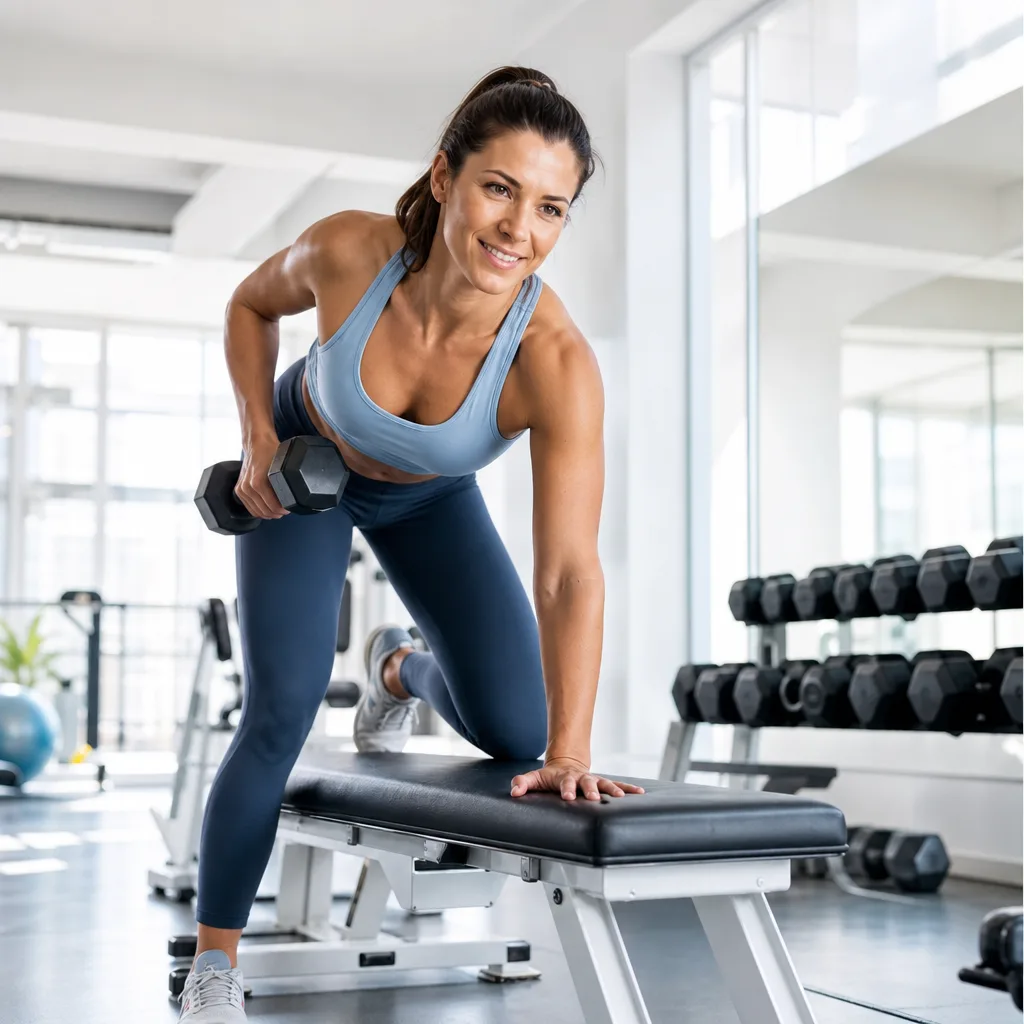
| Dumbbell or band row | 3 | 10 to 12 | about 90 seconds |
| Hip thrust (glute bridge) | 3 | 12 to 15 | about 60 seconds |
| Dumbbell shoulder press | 3 | 10 to 12 | about 90 seconds |
| Plank | 3 | 20 to 40 seconds | about 45 seconds |
It is important to start with a weight at which the last repetitions are demanding but technically clean to perform. There should be at least one day of rest between training days, so that the muscles worked can recover before the next stimulus is set. How to increase the load sensibly week by week afterwards is explained in detail in the guide Progressive Overload. If you would rather have a ready-made plan with more structure, you will find suitable templates under Training Plans.
04
What You Need
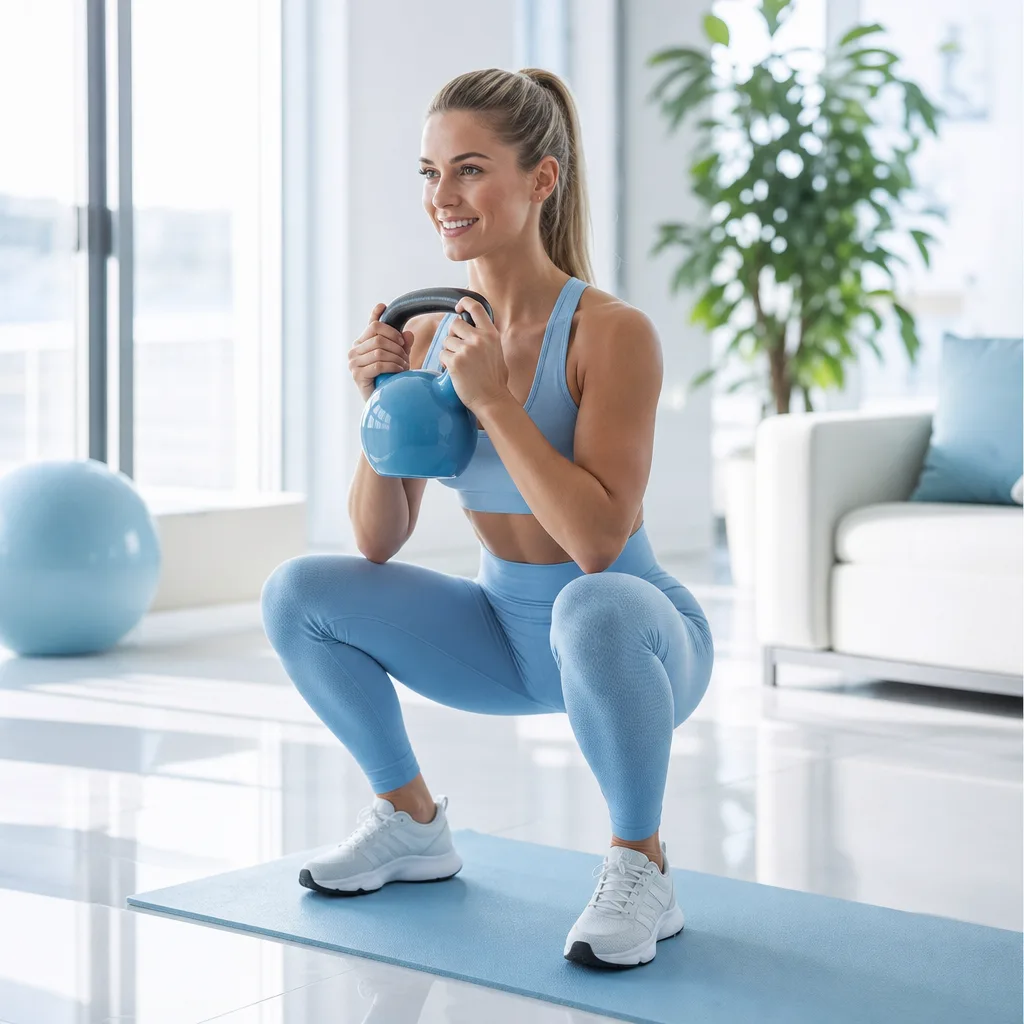
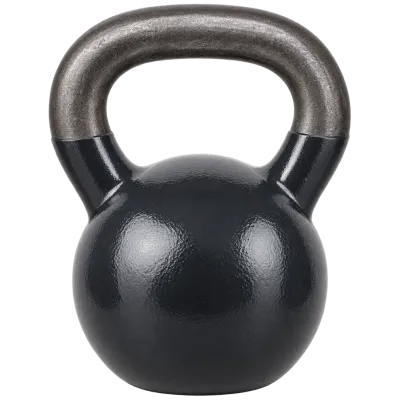
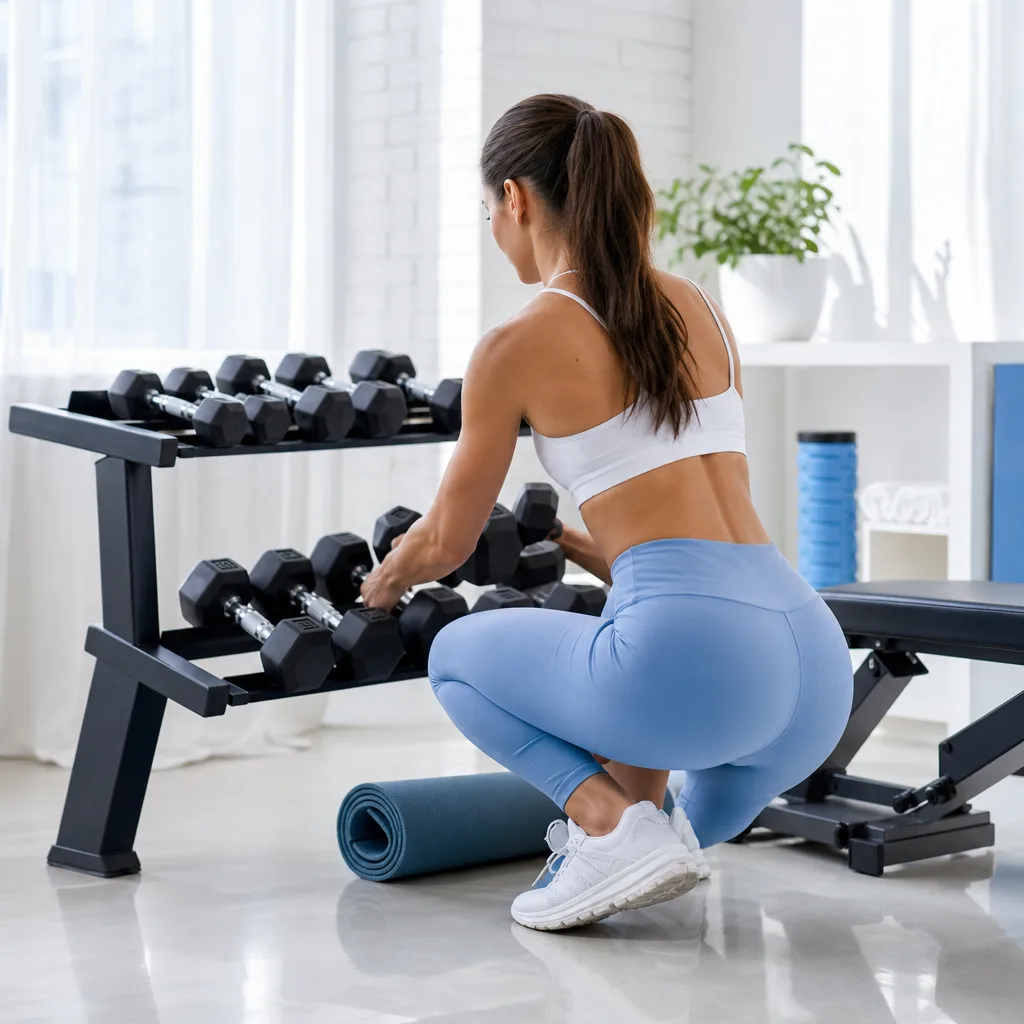
To get started, a few basic items are enough. A pair of adjustable dumbbells or several fixed ones cover most exercises, and a non-slip mat provides comfort for floor exercises such as the plank or hip thrust. Resistance bands are a space-saving and inexpensive addition that lets you vary many exercises further, especially if you train at home. Stable training shoes with good grip make squats and similar exercises easier, and a water bottle should also be within reach during training. If over time you want a wider choice of exercises, you can later think about a pull-up bar or a kettlebell; they are not necessary for getting started.
If you train at home regularly, you also benefit from a fixed training corner with enough space, so that dumbbells and mat do not have to be put away anew every time. This noticeably lowers the barrier to actually training regularly. You will find ideas on how to set up such a corner in the guide Setting Up a Home Gym.
 Matching productKettlebellAmazon →
05
Nutrition to Go with It
Strength training works best together with suitable nutrition. Enough protein supports maintaining and building muscle, and you can read how much makes sense for you personally in the guide Protein Requirement. If you want to build muscle in a targeted way, you will find further notes in the guide Protein for Muscle Building. Dietary supplements can sensibly complement a balanced diet, but they do not replace it. Besides protein, an overall adequate calorie intake also plays a role, especially if you are losing weight at the same time, since an energy balance that is too tight can make strength gains harder.

06
What the Research Says
The sports science literature overall shows a consistent picture: regular strength training improves strength, muscle mass and functional abilities in everyday life in women as in men. Positive effects on bone density are also often described, although the extent differs depending on training age, intensity and individual circumstances. On topics around hormone balance and training success the evidence is partly mixed, especially when it comes to smaller detail questions such as the optimal training time within the cycle. What is clear is that blanket statements about "the one right" method for women are not scientifically tenable; training principles such as progressive load increase and sufficient recovery apply regardless of sex. There are also studies on how the cycle affects strength and performance with inconsistent results, which is why blanket recommendations for all women cannot currently be derived from them. Many trainers instead recommend observing your own well-being over a longer period and adapting training individually where needed, rather than rigidly following a theoretical scheme.
07
Frequently Asked Questions
Will strength training make me too muscular?
Pronounced muscle growth in a short time is rather unlikely in women because of hormone balance and usually requires targeted, intensive training over a long time along with correspondingly adapted nutrition.
How often should I train as a beginner?
Two to three training sessions per week with rest days in between are a good start, setting enough stimulus for progress and leaving enough time for recovery.
Is strength training possible during my period?
For most women training during their period is harmless, but how it feels varies from person to person. If you have severe complaints or are unsure, a conversation with a medical professional helps.
Do I need a gym to get started?
No, with dumbbells, a band and a mat a sensible starter plan can also be done at home; you will find ideas under Home Workout.
When will I see progress?
Strength gains often show up after just a few weeks, while visible changes in the muscles usually take much longer and depend on training, nutrition and individual circumstances. Concrete timeframes cannot be promised responsibly.
Explore
Read next
 Protein types at a glance: whey, casein, plant-based and moreAn overview of all common protein types from whey to collagen, with a comparison table and links to detailed guides.
 Amino Acids: The Building Blocks of ProteinStructure, classification and functions of amino acids at a glance, with a table of all 20 proteinogenic amino acids and links to all guide…
 Supplements for Sport and Fitness: A Factual OverviewAll supplement categories at a glance, with the evidence rated from good to thin, plus safety and buying tips.