
6 min read
Phenylalanine: Function, Requirement and Occurrence
What phenylalanine is, why it is essential and how much of it you take in through a normal diet.
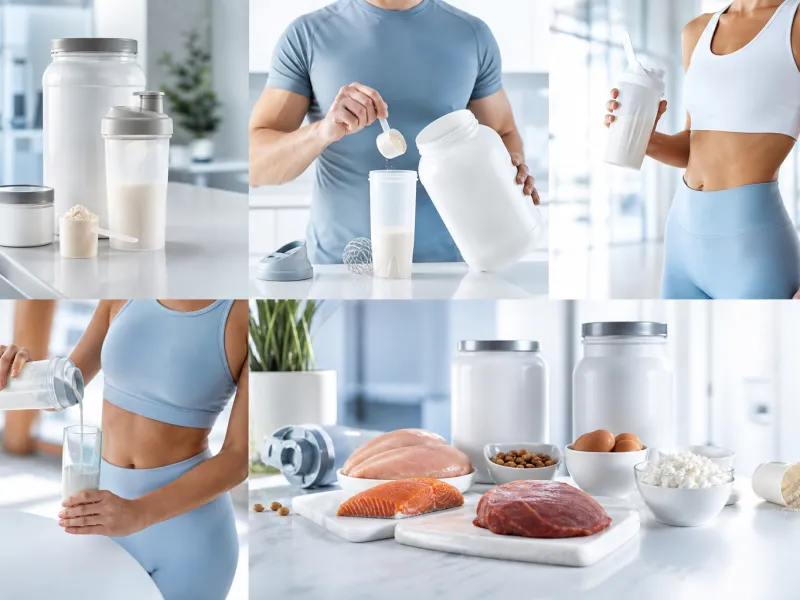
Phenylalanine is one of the building blocks your body uses to make proteins. As an essential amino acid, you cannot make it yourself and depend on getting it through your diet. It occurs in almost every protein-containing food and plays an important role as a starting material for messenger substances in the nervous system.
In this guide you will learn what phenylalanine is exactly, why it counts among the essential amino acids, what roles it plays in the body, how high the requirement is as a rough guide, which foods contain it and what role it plays in dietary supplements.
01
What is phenylalanine?
Phenylalanine is a so-called aromatic amino acid, named after a ring system in its chemical structure. Like all amino acids, it serves as a building block for proteins, that is, for muscles, enzymes, hormones and many other structures in the body. In nature and in dietary supplements, it is mainly the L-phenylalanine form that occurs, the variant the body actually incorporates into proteins.
Besides its function as a protein building block, phenylalanine is also the starting material for another amino acid, tyrosine. The body converts part of the phenylalanine it takes in into tyrosine using an enzyme, provided enough of it is available and the metabolic pathway works normally.
 Matching productGlycineAmazon →
02
Essential: why the body cannot make it itself
Of the roughly twenty amino acids the human body needs to build proteins, some count as essential. This means the body cannot synthesise them in sufficient amounts itself and they therefore have to be supplied through food. Phenylalanine is one of these essential amino acids, along with eight further amino acids that the body likewise cannot make itself.
One special feature is that the requirement for phenylalanine and tyrosine is considered together. If enough tyrosine is present in the diet, the additional requirement for phenylalanine can decrease somewhat, since the body otherwise covers part of its tyrosine requirement by conversion from phenylalanine. With a mixed, high-protein diet, this subtlety is usually of no importance in practice, as both amino acids are present in sufficient amounts.
For people who eat mainly plant-based, phenylalanine is generally not a critical point, since the amino acid is widely represented in legumes, cereals, nuts and seeds. Unlike lysine, for example, which is scarcer in some plant protein sources, a phenylalanine deficiency is rarely an issue on a varied plant-based diet.
03
Roles in the body
Phenylalanine has several functions. On the one hand, like any other amino acid, it is incorporated into the body's own proteins, for example in muscle tissue, connective tissue and enzymes. On the other hand, it is the precursor of tyrosine, which in turn forms the basis for several important messenger substances.
Tyrosine gives rise, among other things, to the catecholamines dopamine, noradrenaline and adrenaline, which play a role in the nervous system and the stress hormone system. The thyroid hormones and the skin pigment melanin are also ultimately formed from this chain of amino acids. Phenylalanine thus stands at the beginning of several metabolic pathways, even though the actual conversion into the messenger substances mentioned runs via tyrosine.
A hereditary disorder called phenylketonuria means that phenylalanine cannot be broken down normally in the body and accumulates. Those affected have to adjust their diet for life and are under medical care. If such a diagnosis is known in you or your family, talk to your doctor before changing anything in your diet or supplements.
Even outside this rare metabolic disorder, phenylalanine metabolism is repeatedly discussed in connection with mood and concentration, as the messenger substances dopamine and noradrenaline formed from it are involved in motivation, alertness and attention. A direct link between the amount of phenylalanine taken in through a normal diet and everyday mood cannot easily be derived from this, however, as metabolism is too complex for that.
04
Requirement and occurrence
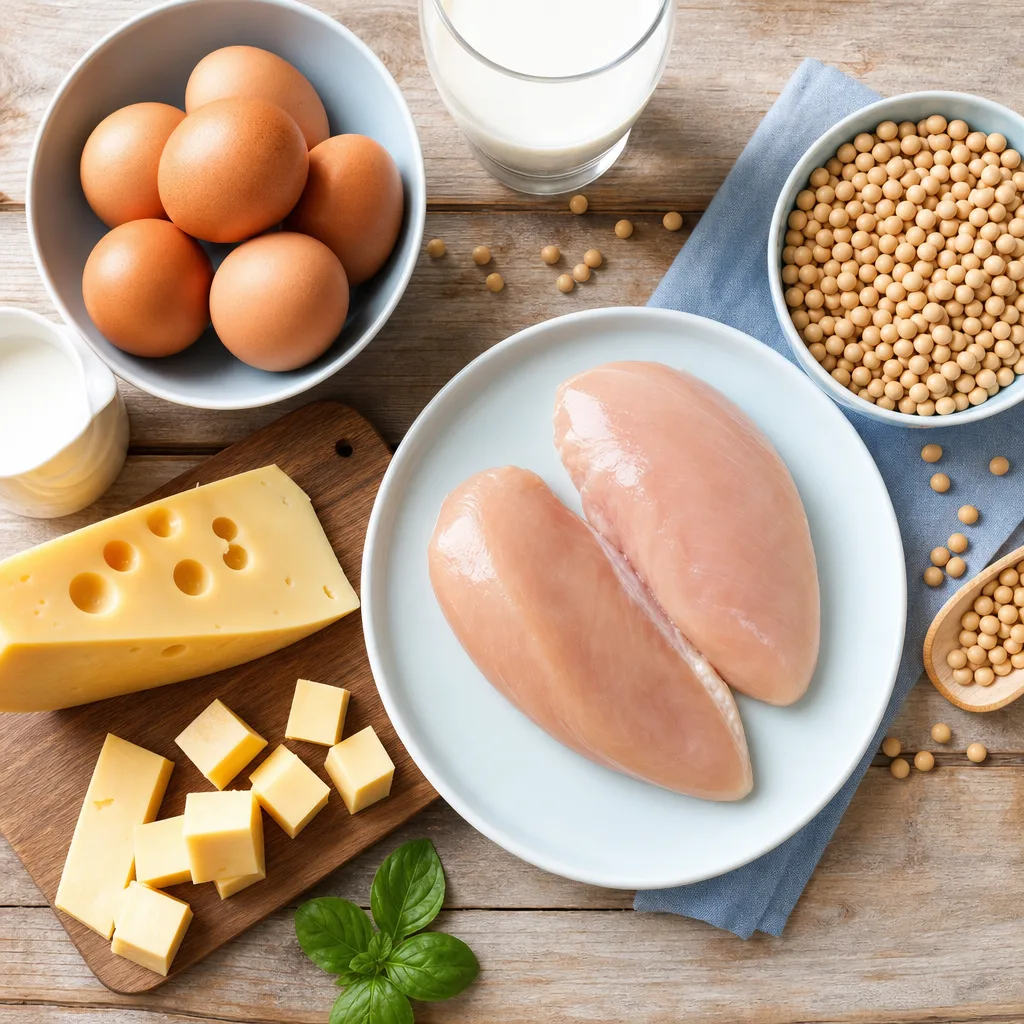
In nutrition science, the requirement for phenylalanine is usually given together with tyrosine, as the two can partly replace each other. As a rough guide, international estimates for adults give about 25 mg per kilogram of body weight per day for phenylalanine and tyrosine together. With a normal, high-protein diet, this amount is generally exceeded by a wide margin, since phenylalanine is present in practically every protein-containing food.
| Food (per 100 g) | Phenylalanine, approximately |
|---|---|
| Chicken breast | about 1.1 to 1.3 g |
| Beef | about 1.0 to 1.2 g |
| Cheese (hard cheese) | about 1.3 to 1.6 g |
| Eggs | about 0.7 g |
| Soybeans, dried | about 1.8 g |
| Peanuts | about 1.3 g |
| Low-fat quark | about 0.6 g |
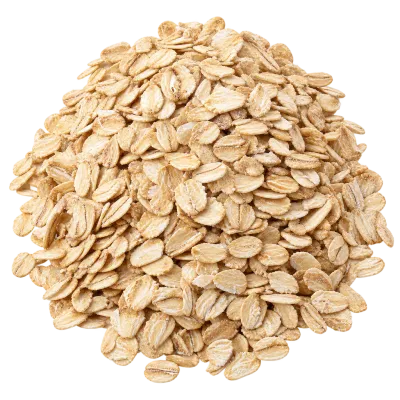
| Rolled oats | about 0.6 g |
These values vary depending on source, preparation and variety and should be understood only as a typical order of magnitude. If you eat a high-protein and varied diet, you will normally take in enough phenylalanine without any problem, with no targeted planning.
 Matching productRolled OatsAmazon →
05
Role in supplements
Pure phenylalanine is occasionally offered as an isolated supplement, often as L-phenylalanine or as a mixture of the natural L form and the synthetic D form, then called DL-phenylalanine. Such products are sometimes linked to mood, concentration or wellbeing, as phenylalanine is involved, via tyrosine, in the formation of dopamine and noradrenaline.
For the vast majority of people, however, targeted phenylalanine supplementation is not necessary, as the requirement is covered anyway by a normal protein intake from meat, fish, dairy products, eggs, legumes or soy products. If you generally eat too little protein, a complete protein powder or an EAA supplement usually makes more sense than an isolated single amino acid, because it supplies several essential amino acids at once in a suitable ratio. Dietary supplements do not replace a balanced diet, but can at most complement it sensibly.
If you are interested in a supplement containing phenylalanine, it is worth looking at the ingredient list to see whether it is L-phenylalanine, DL-phenylalanine or a mixture with other amino acids, as the areas of use differ depending on the form.
 Matching productWhey IsolateAmazon →
06
What the research says
The evidence on isolated phenylalanine as a supplement, for example to influence mood or pain perception, is overall thin and inconsistent. Older, mostly small studies on DL-phenylalanine produced mixed and partly contradictory results, so no reliable recommendations can be derived from them.
The precursor tyrosine is somewhat better studied and has been linked in some studies to slightly better cognitive performance under short-term stress. Here too the data are not consistent, and the effects, if present at all, are rather small. The medical field around phenylketonuria, by contrast, is far more solidly researched: a controlled phenylalanine intake is demonstrably necessary there, but under medical supervision and with a completely different background from supplementation by healthy adults.
For healthy, active people with no particular concern, no clear recommendation for targeted phenylalanine supplementation can be derived from the current research overall. The available data rather suggest covering the requirement through a balanced, high-protein diet and considering isolated supplements at most for special questions under medical supervision.
 Matching productSoy Protein IsolateAmazon →
07
Frequently asked questions
Is phenylalanine dangerous?
For healthy people, the usual intake through a normal diet is harmless. In the rare metabolic disease phenylketonuria, on the other hand, intake has to be medically controlled and is usually severely restricted.
What does phenylalanine have to do with aspartame?
The sweetener aspartame is broken down in the body into, among other things, phenylalanine. Foods containing aspartame therefore carry a warning for people with phenylketonuria; for everyone else, the amount produced is irrelevant within a normal diet.
Do I need a phenylalanine supplement?
If you eat a balanced, high-protein diet, generally not. Isolated supplements are relevant mainly for special questions, not for the normal everyday life of healthy, active people.
How does phenylalanine differ from tyrosine?
Phenylalanine is essential and has to be taken in through food. Tyrosine is regarded as conditionally essential, as the body can partly make it from phenylalanine itself, provided enough of it is present.
Explore
Read next
 Protein types at a glance: whey, casein, plant-based and moreAn overview of all common protein types from whey to collagen, with a comparison table and links to detailed guides.
 Amino Acids: The Building Blocks of ProteinStructure, classification and functions of amino acids at a glance, with a table of all 20 proteinogenic amino acids and links to all guide…
 Supplements for Sport and Fitness: A Factual OverviewAll supplement categories at a glance, with the evidence rated from good to thin, plus safety and buying tips.