
4 min read
Reading a Protein Powder Ingredient List: How to Interpret the Details
How to read the ingredient list of protein powder: calculating protein content, recognising sweeteners and understanding amino acid spiking.
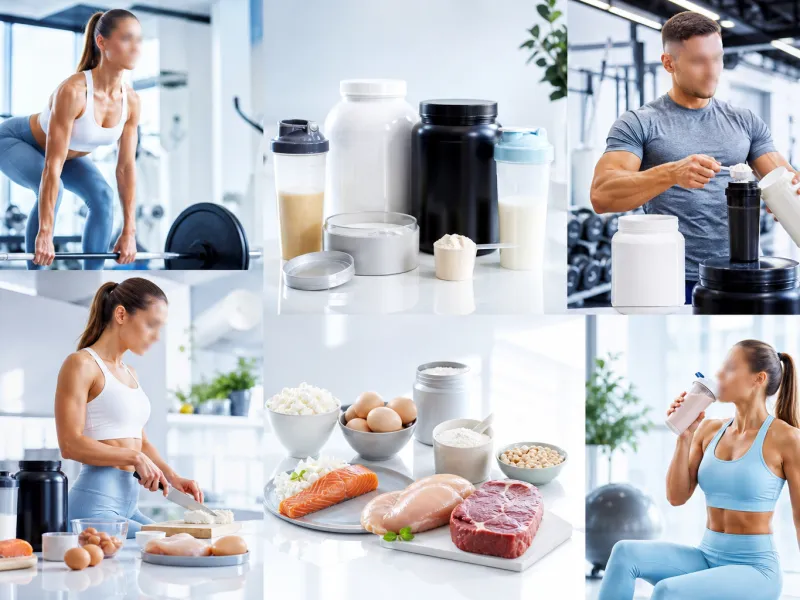
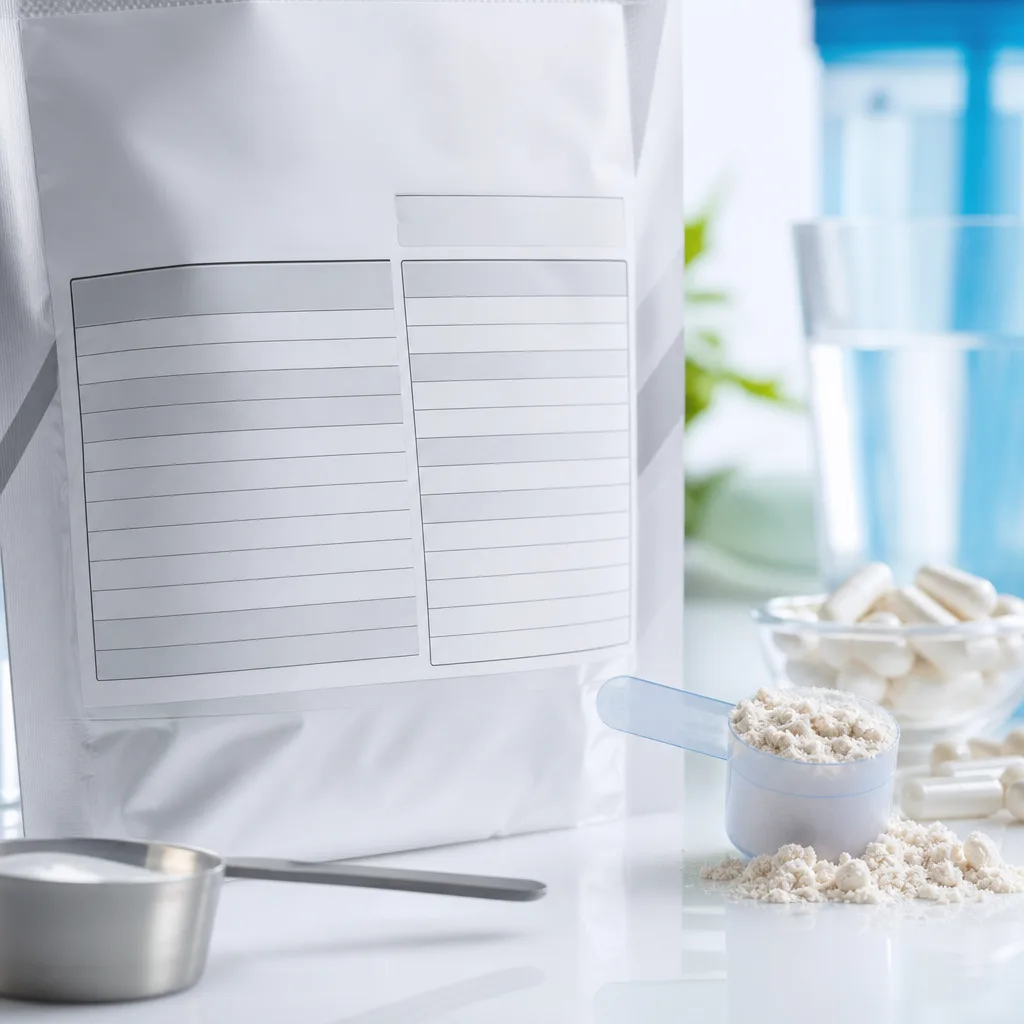
On every protein powder pack you will find an ingredient list and a nutrition table. If you know how to read this information, you can judge products better without relying on marketing claims. This article explains what to look for in the ingredient list, protein content, sweeteners and other details.
Important to note first: this site does not recommend particular brands or products, but shows you how to judge the information yourself so that you can make an informed decision.
01
Ingredient List: Order and Meaning
In the European Union, ingredients must be listed in descending order of their share by weight. This means the ingredient named first makes up the largest share by quantity. In a classic protein powder, the protein source itself is usually listed first, such as whey protein concentrate, whey protein isolate, pea protein or a blend of several protein sources. If sweeteners, flavourings or fats follow early on, it is worth taking a closer look at the nutrition table.
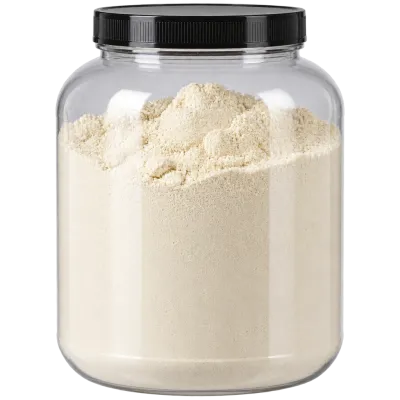 Matching productWhey IsolateAmazon →
02
Calculating Protein Content
Protein content is usually stated on the nutrition table per 100 g of powder. For the actual amount of protein per serving, you convert this value to the stated serving size. With about 80 g of protein per 100 g of powder and a serving of 30 g, the calculation gives a protein amount of about 24 g per serving. Comparing protein content per 100 g between different products is usually more informative than comparing serving size alone, since this is defined differently from manufacturer to manufacturer.
| Information | Meaning | What to watch |
|---|---|---|
| Protein per 100 g | basis for product comparisons | comparable between products |
| Serving size | set by the manufacturer | varies widely, check carefully |
| Protein per serving | actual intake per scoop | depends on serving size |
| Ingredient order | shows shares in descending order | main ingredient comes first |
03
Recognising Sweeteners
Many protein powders contain sweeteners to achieve a sweet taste with little or no sugar. Commonly used are, for example, steviol glycosides, sucralose or acesulfame K, which must be listed in the ingredient list by name or by E number. If a reduced-sugar or sugar-free recipe matters to you, it is worth looking at the sugar content in the nutrition table and at the ingredient list to see which sweetener is used. You can find more background in the glossary entry Sweeteners in Powder.
04
Flavourings and Thickeners
Flavours such as chocolate, vanilla or strawberry usually come from added flavourings, which are listed in the ingredient list as "flavouring" or with a more specific description. Thickeners such as guar gum, xanthan or cellulose provide a creamier texture when mixed and are used in fairly small amounts. Both groups of ingredients are approved for use in food in the European Union and are regarded as generally safe at the maximum levels prescribed in each case.
05
Interpreting the Nutri-Score
The Nutri-Score is a voluntary labelling system that sorts foods into classes from A to E based on nutritional profiles. For protein powders the Nutri-Score can be misleading, because the system was originally developed for comparison within similar product groups and does not always represent food supplements or highly concentrated products optimally. A high protein content has a positive effect, while the share of sugar or fat and, where relevant, sweeteners can influence the score. Use the Nutri-Score therefore as an additional pointer rather than as the sole decision criterion.
06
Amino Acid Spiking Explained in General
Amino acid spiking is the term for a practice in which cheap free amino acids such as glycine or taurine are deliberately added to a product to raise the total nitrogen content measured in certain test methods, and with it the calculated protein content, without the product actually containing correspondingly more high-quality, complete protein. One hint can be when individual free amino acids appear in the ingredient list in conspicuous amounts even though the main protein source already brings a complete amino acid profile. A look at the full ingredient list and a comparison with similar products can give additional guidance here.
 Matching productTaurineAmazon →
07
Checklist for Buying
| Check | Question |
|---|---|
| Ingredient list | Is the protein source listed first |
| Protein content | What is the value per 100 g |
| Sugar | What is the sugar content per serving |
| Sweeteners | Which sweetener is used |
| Free amino acids | Do they appear conspicuously high up in the list |
You can find further guidance on choosing in our buying guide and in the protein powder comparison.
08
Frequently Asked Questions
Why do serving sizes differ between manufacturers?
Each manufacturer sets the serving size itself, and it is not uniformly regulated. A comparison based on protein content per 100 g is therefore often more informative.
Are sweeteners in protein powder a concern?
The sweeteners approved in the European Union are regarded as generally safe at the prescribed maximum levels. If you want to avoid sweeteners, you can look specifically for unsweetened varieties.
What does a low Nutri-Score mean for protein powder?
A low Nutri-Score does not automatically mean a product is unsuitable, since the system is only of limited use for food supplements. Protein content and the ingredient list often give better guidance.
How can I reliably recognise amino acid spiking?
There is no one hundred percent reliable indicator from the ingredient list alone. Conspicuously placed free amino acids in the list can, however, be a hint that makes a closer comparison with other products worthwhile.
Explore
Read next
 Protein types at a glance: whey, casein, plant-based and moreAn overview of all common protein types from whey to collagen, with a comparison table and links to detailed guides.
 Amino Acids: The Building Blocks of ProteinStructure, classification and functions of amino acids at a glance, with a table of all 20 proteinogenic amino acids and links to all guide…
 Supplements for Sport and Fitness: A Factual OverviewAll supplement categories at a glance, with the evidence rated from good to thin, plus safety and buying tips.