
6 min read
Beta-Carotene: Sources, Effects and Dosage as a Guide
How beta-carotene works in the body, which foods contain it and why high-dose supplements call for caution in smokers.
Beta-carotene is the best-known member of the carotenoids, the orange to red pigments that give many fruits and vegetables their colour. In the body, beta-carotene can be converted into vitamin A when needed, which is why it is also called provitamin A.
This guide explains what beta-carotene is, which foods contain it, what role it plays as an antioxidant and a source of vitamin A, which amounts serve as a guide and who should be cautious.
01
What is beta-carotene
Beta-carotene belongs to the large group of carotenoids, some of which the body can convert into vitamin A. Unlike preformed vitamin A, which is found mainly in animal foods, beta-carotene occurs mostly in plant sources, especially in orange, red and dark green vegetables.
The body converts beta-carotene into vitamin A according to its needs. This means that a high intake from food does not usually lead automatically to an excess of vitamin A, because the conversion is regulated. That sets beta-carotene apart from high-dose vitamin A supplements.
Of the several hundred known carotenoids, only a smaller share has this provitamin A property at all. Beta-carotene is regarded as the compound with the highest conversion efficiency and is therefore the most studied and most widely used member of this group, both in food research and in dietary supplements.
02
Occurrence in foods
The following table shows typical food sources of beta-carotene in rough orders of magnitude. Exact values vary with variety, ripeness and preparation.
| Food | Beta-carotene content (rough classification) |
|---|---|
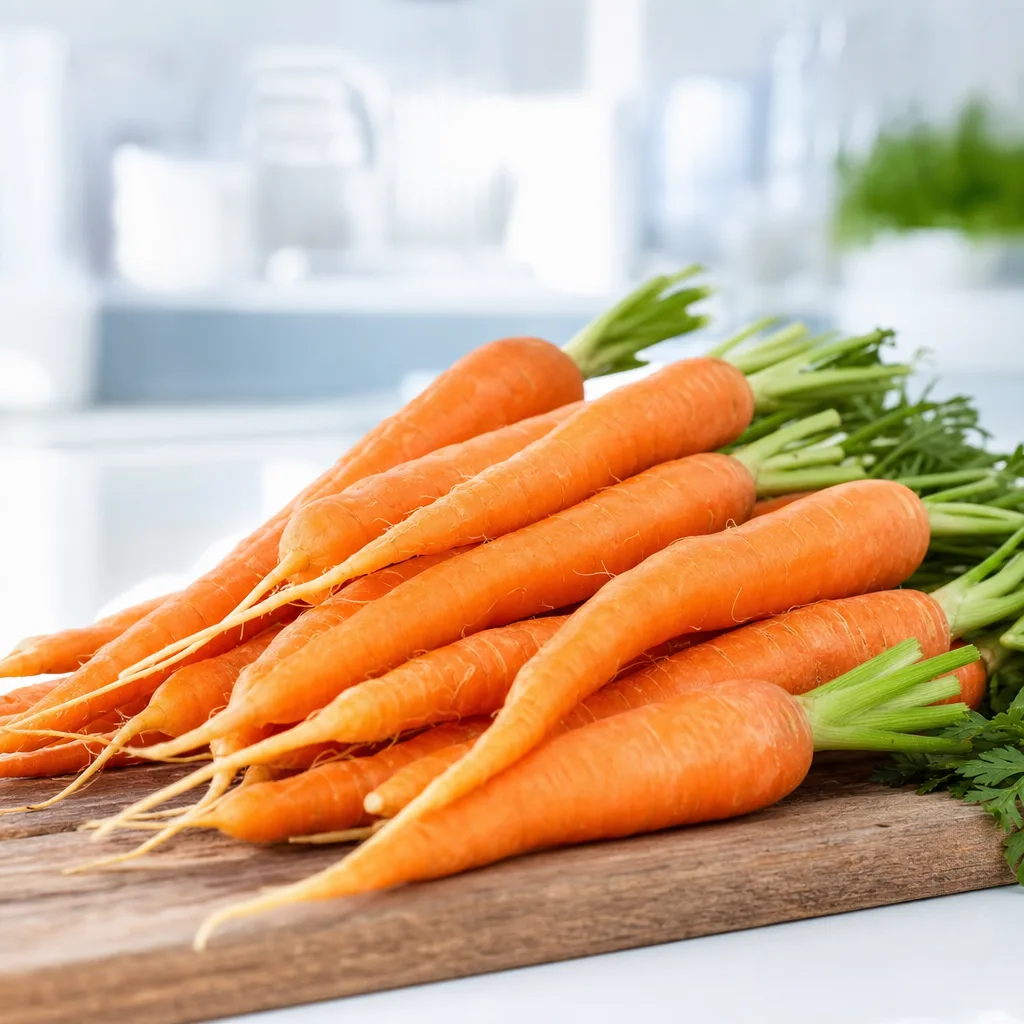
| Carrots | very high |
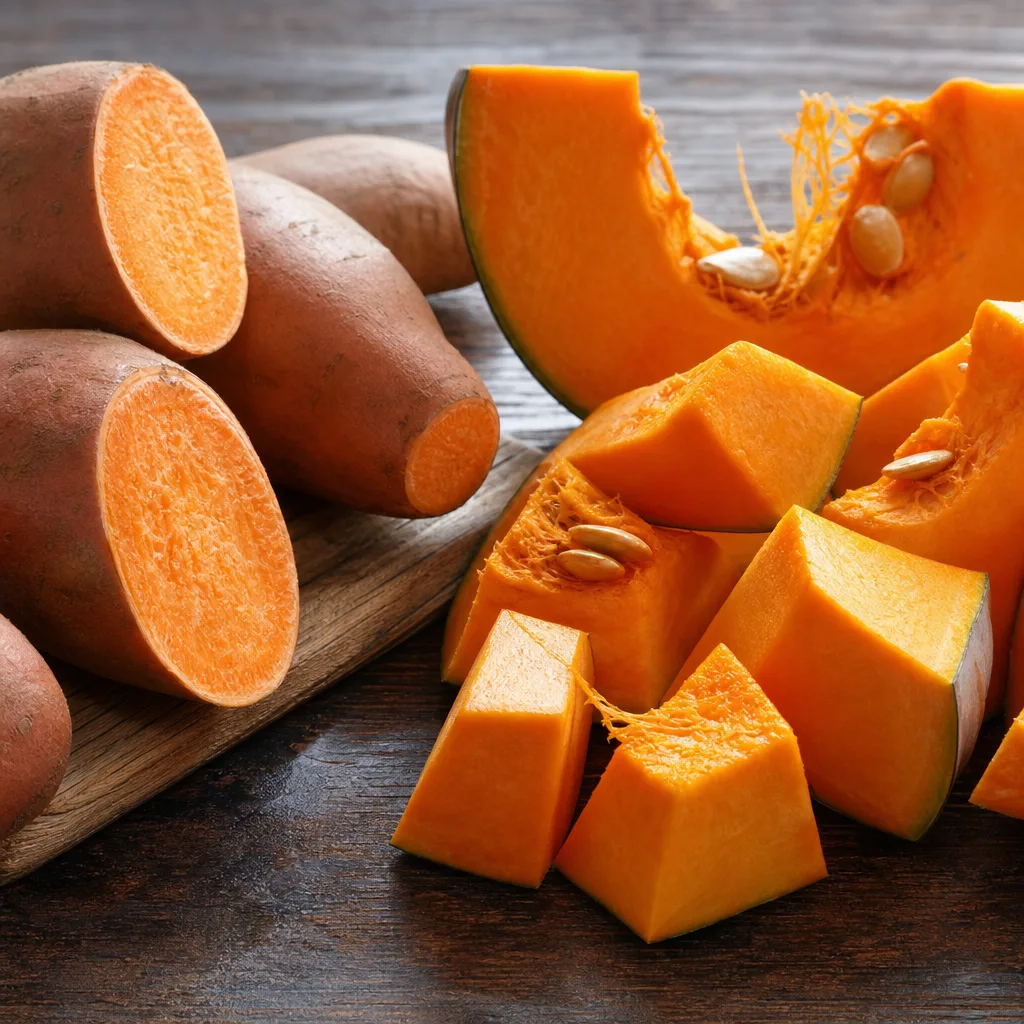
| Sweet potatoes | very high |
| Pumpkin | high |
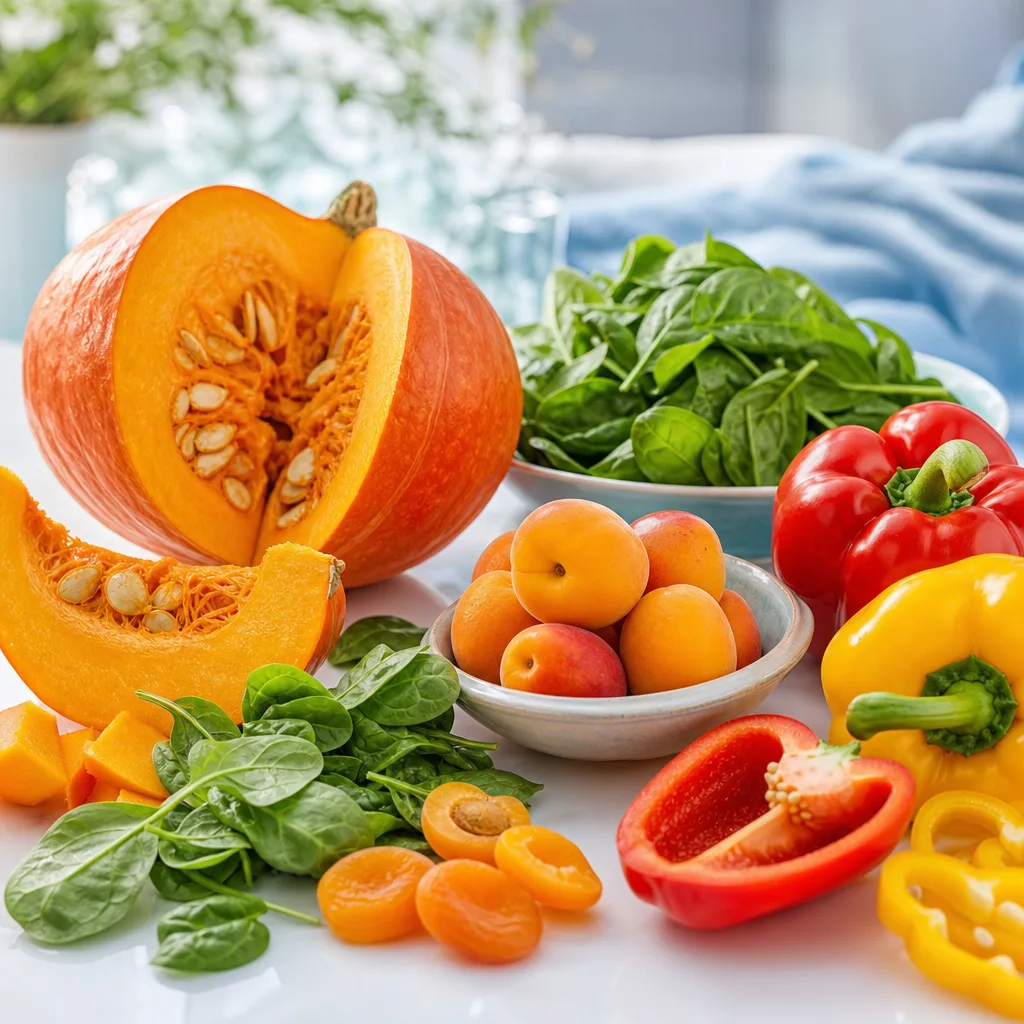
| Kale, spinach | high |
| Apricots, mango | medium |
| Bell pepper, red | medium |
Because beta-carotene is fat-soluble, it is absorbed better in the gut when some fat from the meal is present at the same time, for example a splash of oil on cooked carrots or nuts in a salad.
Preparation also affects absorption: steamed or briefly cooked vegetables often release beta-carotene from the plant cells better than raw vegetables, because heat breaks down the cell walls somewhat. A coarsely grated raw carrot salad with a little oil is still a sensible and practical source.
03
Function in the body
As provitamin A, beta-carotene is an important precursor of vitamin A, which plays a role in vision, skin and mucous membrane function and the immune system, among other things. Beta-carotene is also classed as an antioxidant that can neutralise reactive oxygen compounds in the body. You can find more on how different antioxidant substances work together in the guide Antioxidants.
In sport and under increased physical strain, a higher need for vitamins with an antioxidant function is occasionally discussed, but this does not allow the conclusion that healthy people who eat a balanced diet generally need extra supplementation.
An adequate vitamin A status also contributes to the maintenance of normal mucous membranes, which serve, among other things, as a first barrier against pathogens. Here too: this function relates to vitamin A status as a whole, not to beta-carotene as an isolated substance, and a balanced diet with regular vegetables reliably covers the requirement for most people.
04
Dosage as a guide
With a balanced diet that includes fruit and vegetables regularly, an adequate beta-carotene intake can usually be achieved without difficulty. Supplements containing beta-carotene state a daily amount on the packaging, which you should follow rather than raising the amount on your own. We deliberately do not give a general dosage recommendation beyond the amount on the packaging.
If you wonder whether extra intake makes sense at all, you can start by looking at your own eating pattern: if orange or dark green vegetables are eaten regularly, additional supplementation is not necessary in most cases. Further information on how different vitamins work together is provided by the guide Vitamins and nutrients.
 Matching productMultivitaminAmazon →
05
Beta-carotene alongside other antioxidants
In the diet, beta-carotene rarely occurs alone, but together with other substances that are also credited with an antioxidant function, such as vitamin C, vitamin E or various polyphenols. Research increasingly looks at how these substances interact within a food rather than at the isolated effect of a single compound, because nutrients from whole foods often behave differently in studies than isolated supplements. You can find more on individual members of this group in the guide Vitamin C.
This is one of the reasons why professional societies, where supply is adequate, generally advise a diet that is as varied as possible, with fruit and vegetables of different colours, rather than individual, isolated supplements. Colour is a useful, if rough, indicator: the more colourful the plate, the broader the range of plant compounds it usually contains.
For people who eat in a very one-sided way for personal reasons, for example with a strongly restricted food choice in everyday life or little vegetable consumption, targeted supplementation can make sense. Here too, however, a look at the overall eating pattern usually brings more than a single extra capsule, and a fundamental change in diet is the more robust solution in the long run.
The change of seasons can also influence how easily an adequate beta-carotene intake can be reached through food: in summer, many carotenoid-rich varieties such as apricots or peppers are fresh and plentiful, while in winter carrots, pumpkin and sweet potatoes, which store well, more often take over this role in the menu.
 Matching productVitamin C PowderAmazon →
06
Who should be cautious with high-dose supplements
While beta-carotene from food is considered safe, the specialist literature advises caution with high-dose, isolated beta-carotene supplements for smokers and people with heavy asbestos exposure, because studies with such supplements observed an unfavourable association with lung cancer risk in this group. Pregnant women should also use high-dose supplements only after consulting a doctor. Dietary supplements do not replace a balanced diet.
 Matching productPowder Storage ContainerAmazon →
07
What the research says
The role of beta-carotene as a vitamin A precursor and antioxidant is considered well established, as is the observation that high-dose, isolated supplements fared badly in smokers in studies, while beta-carotene from a normal diet is not linked to this risk. For many of the claims circulating in advertising about sport or performance gains from additional beta-carotene in an already balanced diet, however, there is insufficient evidence, and the overall body of studies remains limited here.
08
Frequently asked questions
Is beta-carotene the same as vitamin A?
No, beta-carotene is a plant-based precursor from which the body can make vitamin A when needed. Preformed vitamin A, by contrast, occurs mainly in animal foods.
Can I take in too much beta-carotene from food?
An excess from food is unlikely, because the body regulates the conversion into vitamin A. With very high consumption, the skin may at most turn slightly yellowish for a while, which is harmless.
Should smokers avoid beta-carotene supplements?
For high-dose, isolated supplements, the specialist literature advises smokers to be cautious. Beta-carotene from fruit and vegetables is not affected.
Which foods contain particularly high amounts of beta-carotene?
Carrots, sweet potatoes, pumpkin and dark green leafy vegetables such as kale and spinach are among the richest sources.
Do athletes need extra beta-carotene?
With a balanced diet rich in fruit and vegetables, additional supplementation is generally not necessary. You can find more on the topic of vitamins in sport in the guide Vitamins.
How do I recognise a vitamin A deficiency?
A deficiency can show up, among other things, as problems seeing in dim light. If a deficiency is suspected, it should be clarified by a doctor rather than treated on your own with high-dose supplements.
Is synthetic beta-carotene as good as natural?
Both forms share the same basic structure, and dietary supplements often use a synthetically produced variant or one obtained from algae. For conversion into vitamin A in the body, the origin plays a minor role; the amount taken in is what matters.
Why is a colourful rather than an isolated intake often recommended?
Whole foods always supply beta-carotene together with other nutrients and plant compounds, whose interplay often fares better in research than individual isolated supplements. A varied diet is therefore regarded as a more sensible foundation than a single high-dose capsule.
Explore
Read next
 Protein types at a glance: whey, casein, plant-based and moreAn overview of all common protein types from whey to collagen, with a comparison table and links to detailed guides.
 Amino Acids: The Building Blocks of ProteinStructure, classification and functions of amino acids at a glance, with a table of all 20 proteinogenic amino acids and links to all guide…
 Supplements for Sport and Fitness: A Factual OverviewAll supplement categories at a glance, with the evidence rated from good to thin, plus safety and buying tips.