
6 min read
Balanced Diet or Dietary Supplements: What Really Counts?
A balanced diet and dietary supplements are often played off against each other. Here you can find out how the two work together and when supplementing really makes sense.

The question comes up again and again in nutrition forums and gyms: is a balanced diet enough, or do you need dietary supplements as well? The honest answer is that it depends on what your diet actually looks like, how high your requirement is and what stage of life you are in.
In this article you get a factual assessment of the role that food and the role that supplements can each play, where the limits lie and what matters in the decision.
01
What a balanced diet can do
The market for dietary supplements has grown strongly in recent years, and with it the number of advertising claims that present a simple capsule as a replacement for a well-thought-out diet. A closer look at the actual evidence puts many of these promises clearly into perspective.
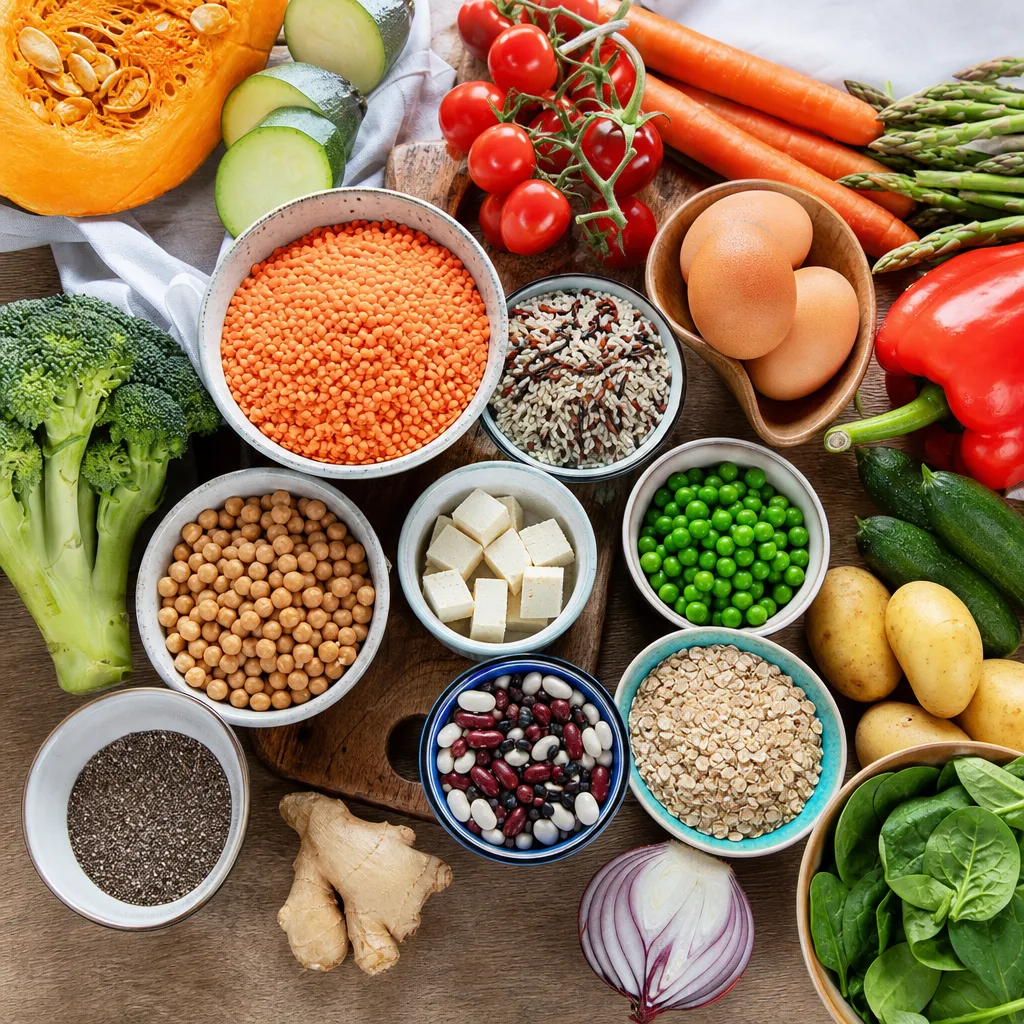
A diet that regularly includes vegetables, fruit, wholegrain products, legumes, dairy products, fish, meat or plant-based alternatives covers the bulk of nutrient requirements for most people. Besides protein, these foods also supply fibre, secondary plant compounds and a variety of vitamins and minerals, which are often absorbed better in their natural combination than isolated single substances from a capsule.
For daily protein intake, the DGE (German Nutrition Society) gives about 0.8 grams of protein per kilogram of body weight per day as a guideline value for healthy adults, and around 1.0 gram from about 65 years. If you reach this amount through high-protein foods, you generally need no additional product for everyday protein supply alone.
Besides protein, a varied diet also supplies enough fibre, which is important for healthy digestion and a lasting feeling of fullness. Wholegrain products, legumes and vegetables are among the best sources of fibre and, in the typical Western diet, are often eaten too rarely, regardless of the question of dietary supplements.
The distribution across the day also plays a role. People who spread their protein over three to four meals, instead of concentrating it in one large portion in the evening, usually make more even use of their food. A colourful, varied selection of foods over the week also reduces the risk that individual micronutrients are permanently in short supply, because different food groups have different strengths.
Preparation also plays a role in the nutrient density of a meal. Gentle cooking, such as steaming instead of boiling for a long time in a lot of water, preserves more heat-sensitive and water-soluble vitamins than aggressive methods of preparation. If you also regularly include raw or only briefly heated vegetables in your menu, you additionally benefit from nutrients that are partly lost when heated.
 Matching productWhey IsolateAmazon →
02
Where food reaches its limits
Nevertheless, there are situations in which a purely food-based supply becomes difficult: little time for shopping and preparation, a heavily restricted range of foods, increased requirements from intense training, certain diet phases or special stages of life such as pregnancy and breastfeeding. A vegan diet can also make targeted supplementation sensible for individual nutrients such as vitamin B12, as this vitamin occurs practically only in animal foods.
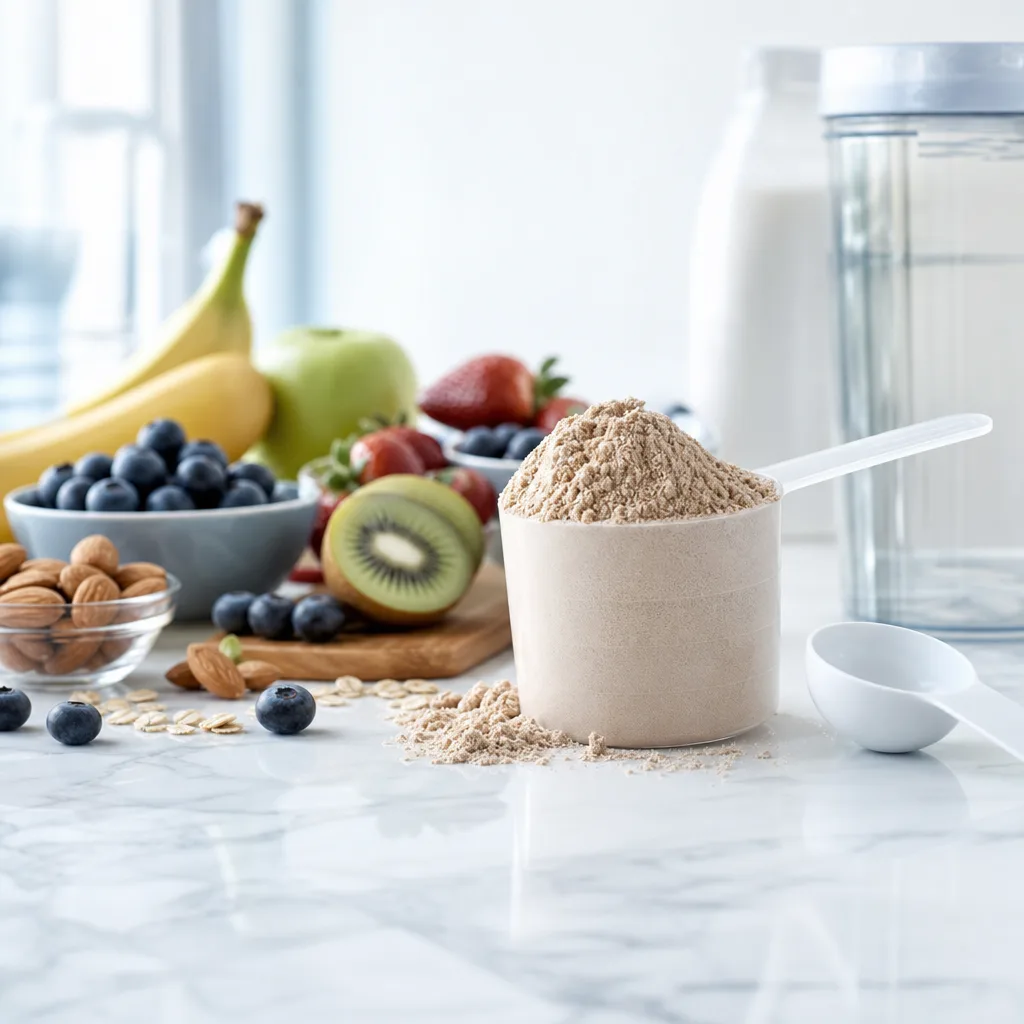
In such cases dietary supplements can be a practical addition, for example as a protein powder for on the go or as a specifically dosed product for a single nutrient that is genuinely in short supply. Dietary supplements do not replace a balanced diet, however, and can at most complement it sensibly.
Another everyday case is a stressful working life with irregular mealtimes. People who often skip meals or fall back on heavily processed convenience foods usually benefit more from better planning, such as meals prepared for the week, than from an additional product. A dietary supplement does not fix structural gaps in the daily routine, it can at most cushion them.
03
Protein from food or from powder
| Criterion | High-protein foods | Protein powder |
|---|---|---|
| Additional nutrients | fibre, vitamins, secondary plant compounds | usually only protein and additives |
| Preparation effort | higher | low, quick to mix |
| Satiety | usually stronger | rather low |
| Practical on the go | limited | well suited |
The two approaches can be combined well. Many people cover the bulk of their protein requirement through meals and use protein powder specifically for situations where there is no time for a full meal, such as directly after training or between two appointments.
 Matching productVitamin C PowderAmazon →
04
Vitamins and minerals: targeted rather than blanket
A common error in thinking is the idea that a multi-product can fundamentally compensate for an unbalanced diet. Many vitamins and nutrients are absorbed better in combination with other substances from food, and some fat-soluble vitamins also need a little fat in the meal to be used well at all. Targeted supplementation of individual nutrients that are genuinely in short supply is usually more sensible than blanket all-round supplementation without a specific reason.
In addition, more is not automatically better. With some fat-soluble vitamins and with minerals such as calcium or iron, a permanently very high intake through supplements can have unwanted effects. Going by the usual intake recommendations on the packaging is therefore more sensible than taking them by feel.
It is also sensible not to combine products indiscriminately. Anyone who already takes a multi-product and additionally supplements individual high-dose single nutrients can, with some vitamins and minerals, unintentionally exceed the recommended daily amount. A quick look at the composition of all the products you take brings clarity here and prevents unnecessary duplication.
05
What the research says
The evidence on dietary supplements as a whole is inconsistent. For individual nutrients such as vitamin D in a proven deficiency, or vitamin B12 on a vegan diet, the evidence clearly supports sensible supplementation. For many blanket multivitamin products on an already balanced diet, by contrast, reviews show no demonstrable added benefit for healthy people without an identified deficiency.
What matters is therefore supplementation based on actual need rather than advertising claims, and, if in doubt, clarifying the need, for example through a conversation with a doctor and, where appropriate, a blood test. This applies especially when symptoms such as persistent tiredness occur, which can have many possible causes.
06
When a closer look is worthwhile
If you are unsure whether your diet covers your needs, it is worth taking a structured look at your menu over one to two weeks. If certain food groups are regularly missing, such as fish, dairy products or vegetables, this often shows where a gap might arise, even before symptoms appear.
If you have an illness, are pregnant or take medication, it is best to discuss any planned supplementation with a doctor beforehand, as interactions can occur. Dietary supplements are not a substitute for a balanced diet, but at best a targeted addition for specific gaps.

07
Shopping and stocking up as a practical lever
An often underestimated factor is keeping a stock of food. If you have long-life, protein-rich foods such as legumes, wholegrain products, nuts or frozen vegetables at home, you can put together a balanced meal quickly even on stressful days, without having to reach for a product. A rough weekly plan also helps to spot gaps in your menu early, before they add up over weeks.
When shopping, it is also worth looking at the Protein requirement overview to get a feel for how many protein-rich meals you should realistically aim for per week. This does not replace individual advice, but it gives a first guide for your own planning.

08
Frequently asked questions
As a healthy adult, do I need a dietary supplement in general?
With a varied diet containing enough vegetables, fruit, protein and wholegrain products, this is not strictly necessary for most people.
Can I make up for an unbalanced diet with protein powder?
Protein powder mainly supplies protein, but hardly any fibre or the broad spectrum of micronutrients from whole foods, so it does not replace a balanced diet.
How do I find out whether I am lacking a particular nutrient?
A conversation with a doctor, with a blood test where appropriate, gives a more reliable assessment than a mere guess.
How do I recognise reputable dietary supplements?
Reputable providers make no healing claims, give usual amounts as a guide and refer to medical advice for health questions instead of promising quick, guaranteed results.
Explore
Read next
 Protein types at a glance: whey, casein, plant-based and moreAn overview of all common protein types from whey to collagen, with a comparison table and links to detailed guides.
 Amino Acids: The Building Blocks of ProteinStructure, classification and functions of amino acids at a glance, with a table of all 20 proteinogenic amino acids and links to all guide…
 Supplements for Sport and Fitness: A Factual OverviewAll supplement categories at a glance, with the evidence rated from good to thin, plus safety and buying tips.