
7 min read
Ab Workout at Home: A Plan for a Strong Core
A core training plan for home with exercises for the straight, oblique and deep abdominal muscles as well as the lower back.

A strong core is about more than looks: trained abdominal and back muscles stabilise the spine, improve posture and support practically every other movement in training and daily life. An ab workout can be done very well at home, with no equipment at all or with simple gear such as a mat.
This guide gives you a complete training plan for the core muscles, explains the most important exercises and puts into context what research actually says about ab training and visible abs.
01
What the abdominal muscles really do
The core muscles consist of several layers: the straight abdominal muscle, the oblique abdominal muscles, the deep transverse abdominal muscle and the lower back muscles. Together they ensure that force is transferred efficiently between the upper and lower body, for example when lifting, throwing or running. Targeted training of these muscles therefore improves not only outward appearance but also stability in almost all other exercises.
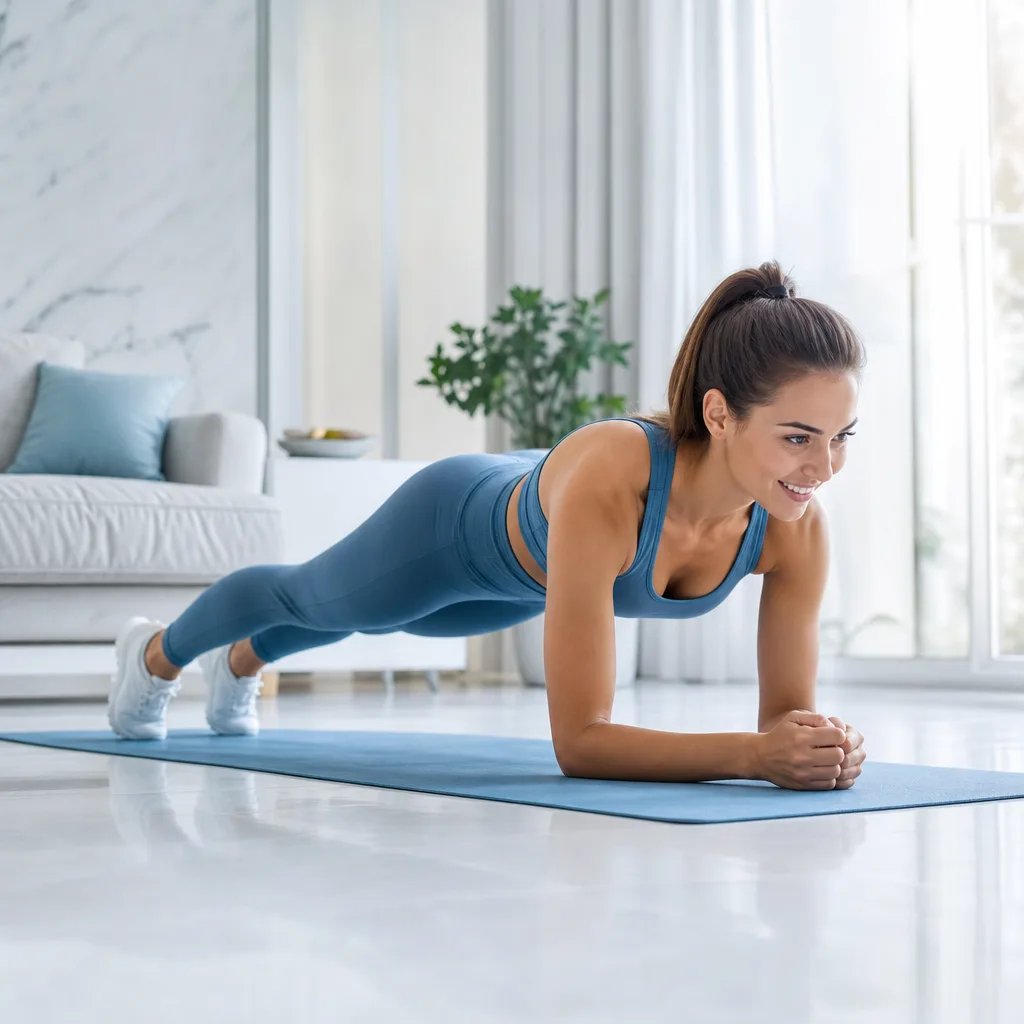
The transverse abdominal muscle in particular, which runs around the midsection like a natural belt, plays a central role in spinal stability but is hardly visible from the outside. Training it specifically, for example through holding exercises such as the plank, is therefore at least as important as training the visible, superficial abdominal muscles. This deep muscle also plays a bigger role in a flat stomach in everyday life than many assume, as it holds the abdominal cavity together like a natural corset and so contributes to an upright, stable posture, which over the long term can also have a positive effect on the load on the spine in daily life and in sport.
Important to know: visible abs arise mainly from a low body fat percentage, not from the size of the muscles alone. Ab training strengthens and shapes the muscles, but a low body fat percentage depends first and foremost on overall diet and calorie balance.
In daily life especially, the benefit of trained core muscles often shows indirectly, for example through a more upright posture when sitting for long periods, better balance or fewer lower back complaints during everyday loads such as carrying or bending.
02
The training plan
The following core circuit can be done two to three times per week, ideally as a complement to full-body training such as the home workout without equipment.
| Exercise | Sets | Repetitions | Rest |
|---|---|---|---|
| Forearm support (plank) | 3 | 30-45 sec. | 30 sec. |
| Side forearm support per side | 3 | 20-30 sec. | 30 sec. |
| Crunches | 3 | 15-20 | 30 sec. |
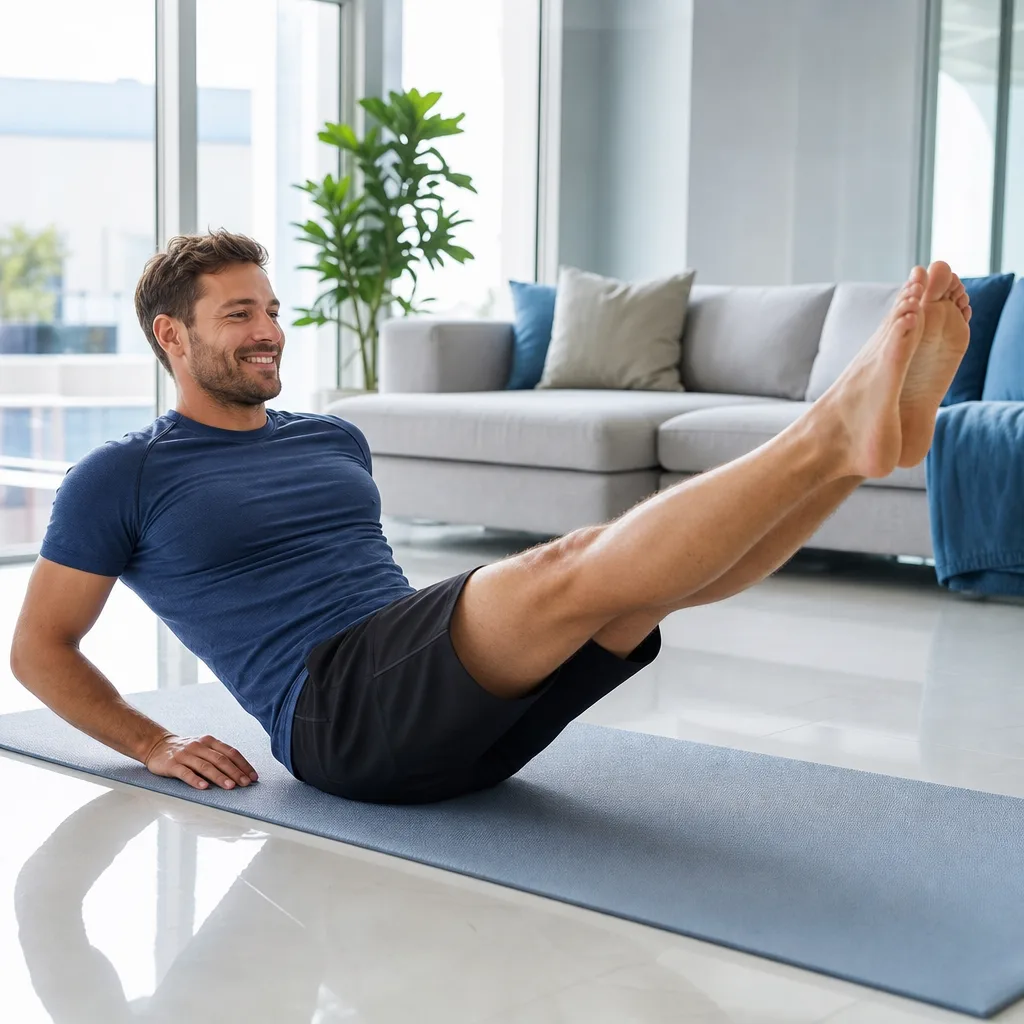
| Lying leg raises | 3 | 12-15 | 30 sec. |
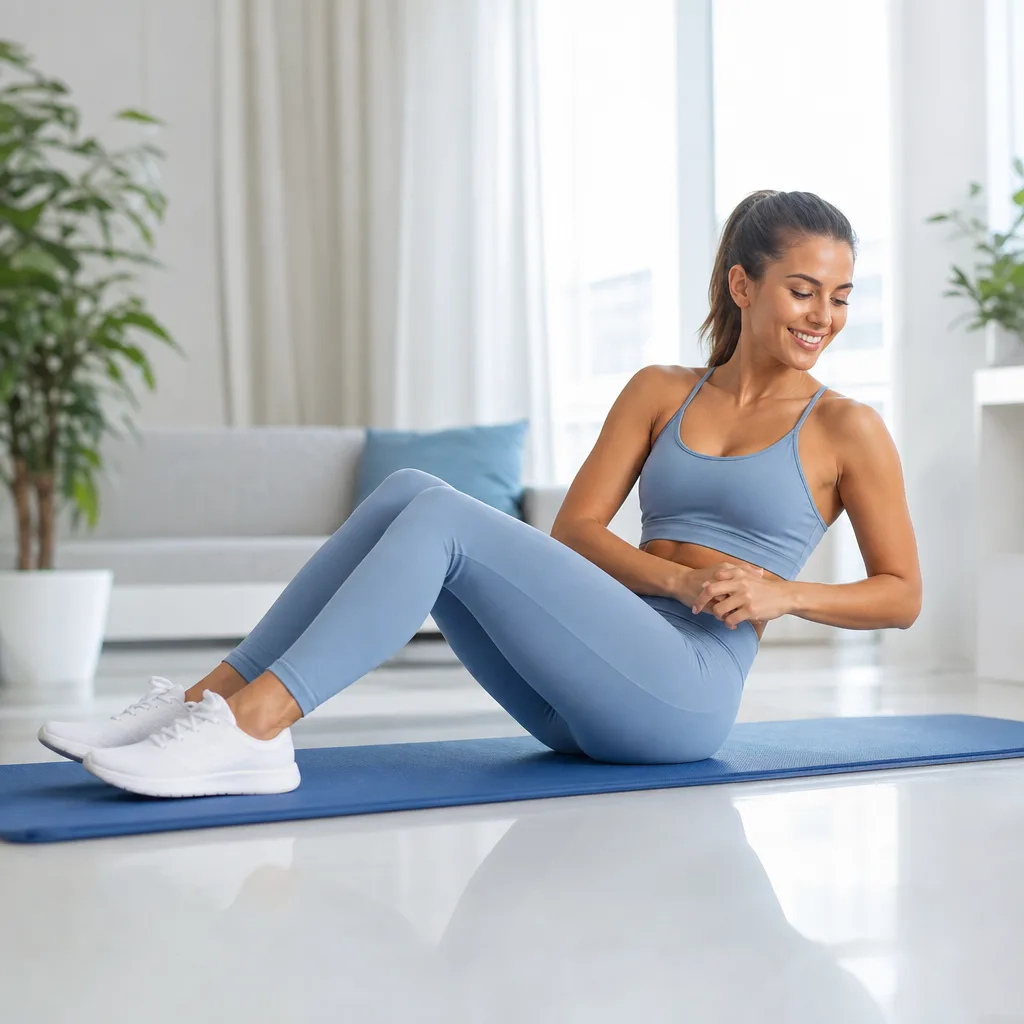
| Russian twist | 3 | 16 (8 per side) | 30 sec. |
| Superman (lower back) | 3 | 12-15 | 30 sec. |
A short warm-up before core training makes sense, especially for the lower back; more on this in the guide Warming up and mobility. Increase the stimulus over time with more repetitions, longer hold times or more demanding variations, following the principle of progressive overload.
For the lateral abdominal muscles, it makes sense to train both sides of the body for the same length of time and with the same intensity, even if one side initially feels more stable than the other. Balanced training of both sides supports symmetrical posture and prevents one-sided strain in daily life.
03
What you need
For an ab workout at home, a padded training mat is generally enough, protecting the spine and elbows during floor exercises. Comfortable, close-fitting sportswear makes movements such as the Russian twist easier without slipping.
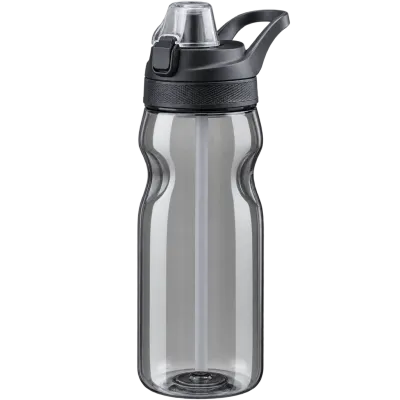
Having a water bottle within reach is part of a good training routine here too. If you want extra resistance, you can optionally add a resistance band or a light dumbbell for variations such as weighted crunches, but this is not necessary for the basic plan. A small towel under the lower back can offer additional comfort for exercises such as leg raises if your spine is sensitive.
 Matching productWater BottleAmazon →
04
Technique and common mistakes
In the plank, the body should form a straight line from head to heel; a raised or sagging pelvis takes tension away from the actual target muscles. In the crunch, a small movement in which the shoulder blades lift slightly off the floor is enough, and pulling hard on the neck should be avoided. In leg raises, the lower back stays on the floor as far as possible; if necessary, lower the legs less far or bend the knees slightly.
Consciously tensing the deep abdominal muscles, for example by gently drawing the navel in towards the spine, supports a stable starting position in almost all core exercises. This tension can also be practised outside targeted training, for example when sitting or standing in daily life, and so gradually improves your general feel for your own core stability.
A common mistake is to train only the straight abdominal muscle and neglect the lateral and lower back muscles, although balanced training is more important for stability. If you have back complaints, pre-existing conditions, are pregnant or have had a longer break, you should have your choice of exercises checked by a doctor beforehand and initially avoid ab-specific exercises that create a lot of pressure.
Performing repetitions too fast and with momentum is also a widespread mistake, which loads the target muscles less than a slow, controlled movement. Deliberately take your time with each repetition, especially in the end position, where the tension is usually greatest. A short, deliberate pause of one to two seconds in this position intensifies the stimulus further without tempo or number of repetitions having to change.
05
Combining core training sensibly
A strong core supports practically every other form of training, so this plan combines well with a short circuit workout or with training with dumbbells. If you also want to train your lower body specifically, you can add suitable leg exercises to the programme accordingly.
Because the core muscles work along in almost every other exercise anyway, for example in squats or push-ups, a short, targeted core circuit as described here is generally enough; daily, very extensive ab training is not necessary for most training goals.

06
Nutrition to go with it
Visible abs arise mainly from overall diet and a low body fat percentage, not from training alone. Sufficient protein supports the preservation of muscle here, especially when fat is to be reduced at the same time; you will find an assessment in the guide Protein requirement. If your focus is on fat reduction, you will find further information in the guide Protein for weight loss. Dietary supplements can usefully complement a balanced diet, but they do not replace it.
A moderate, slow calorie deficit is generally considered gentler on muscle preservation than very radical diets, as the body tends to lose more muscle mass too when weight loss is too fast, which can have an unfavourable effect on metabolism and body composition in the long run.
07
What the research says
Studies on so-called spot reduction show fairly clearly that fat at a specific body area cannot be reduced by targeted exercises for that region, so even intensive ab training does not automatically lead to a visible six-pack. For strengthening and stabilising the core muscles themselves, however, regular, progressively increased training is well supported and is also frequently used in rehabilitation. Visible abs are first and foremost the result of a low body fat percentage, achieved through the overall diet and calorie balance, while targeted ab training shapes and strengthens the muscles underneath.
08
Frequently asked questions
How often should I train my abs?
Two to three sessions per week with enough recovery are a good starting point; more detail in the guide Recovery and sleep.
Will I get a six-pack with this plan?
The training strengthens and shapes the muscles, but they only become visible at a correspondingly low body fat percentage, which is achieved mainly through diet.
Are crunches bad for the back?
With clean technique and moderate volume, crunches are considered harmless for most people. If you have existing back complaints, a medical check beforehand is worthwhile, possibly with alternative exercises such as the plank, which puts less strain on the lower back.
Is ab training alone enough for a stable core?
A balanced core also benefits from exercises for the back and glutes; a pure focus on the straight abdominal muscle covers only part of the musculature.
Should I train my abs every day?
Daily training is not necessary and can make recovery harder; two to three targeted sessions per week are enough for most people, supplemented by the core muscles that are involved in other exercises anyway.
What helps against back pain during leg raises?
It often helps to lower the legs less far or to bend the knees slightly so that the lower back stays more firmly on the floor. If symptoms persist, a medical check is advisable in any case before training is continued.
 Matching productL-GlutamineAmazon →
Explore
Read next
 Protein types at a glance: whey, casein, plant-based and moreAn overview of all common protein types from whey to collagen, with a comparison table and links to detailed guides.
 Amino Acids: The Building Blocks of ProteinStructure, classification and functions of amino acids at a glance, with a table of all 20 proteinogenic amino acids and links to all guide…
 Supplements for Sport and Fitness: A Factual OverviewAll supplement categories at a glance, with the evidence rated from good to thin, plus safety and buying tips.