
6 min read
20-Minute Workout: An Effective Training Plan for When Time Is Short
A compact 20-minute training plan for days with little time, including tips on getting it right.

There is not always much time for training. A well-planned 20-minute workout can still set a noticeable training stimulus if rests are kept short and the exercises are combined sensibly. Instead of working through a long programme with many individual exercises, a short workout concentrates on a few effective basic exercises that work several muscle groups at once.
This guide gives you a complete 20-minute training plan, explains what matters in short sessions and puts into context what research says about time-efficient strength training.
01
Why short sessions can work
For the training stimulus, what matters most is how close the muscles are brought to their current limit, less the pure duration of training. Short, intensive sessions with few exercises and short rests can therefore achieve a similar effect to longer programmes, as long as the intensity is high enough. On stressful days in particular, a short but demanding workout is often the more realistic option than a long programme that ends up not happening at all.
From a cardiovascular point of view too, short circuit-style training has advantages: the quick switching between exercises without long rests keeps the heart rate raised throughout, which creates a noticeable endurance stimulus alongside the strength component, one that is usually smaller in classic strength training with long rests between sets. For people with little training experience, this double load of strength and endurance can be very demanding at first, which is why a slow start with fewer rounds is recommended.
It is important to choose your exercises deliberately: basic exercises that challenge several large muscle groups at once, such as squats, push-ups or rows, deliver more training stimulus in a short time than isolation exercises for individual small muscles.
A short, clearly limited workout also has a mental advantage: the prospect of an end after twenty minutes lowers the threshold to start at all for many people, compared with a longer, open-ended workout with no fixed end point.
Another advantage of short, regular sessions is how well they fit into daily life: a workout that actually happens brings more in the long run than a perfectly planned programme that is often skipped. Anyone who firmly blocks out twenty minutes in the calendar is often more likely to stick with it than with a vague intention to train "for an hour at some point".

02
The training plan
The following circuit takes around 20 minutes including a short warm-up. Do the exercises one after another with as short a rest as possible and repeat the whole circuit two to three times.
| Exercise | Rounds | Repetitions | Rest |
|---|---|---|---|
| Squats | 3 | 15 | 20 sec. |
| Push-ups | 3 | 10-12 | 20 sec. |
| Alternating lunges | 3 | 12 per side | 20 sec. |
| Forearm support (plank) | 3 | 30 sec. | 20 sec. |
| Burpees or squat jumps | 3 | 10 | 45 sec. between rounds |
A short warm-up of two to three minutes with loose movements and mobilisation prepares joints and muscles; more on this in the guide Warming up and mobility. Increase the intensity over the weeks with more rounds or shorter rests, as described in the guide Progressive overload.
 Matching productWeightlifting BeltAmazon →
03
What you need
For this short, intensive programme, a training mat for floor exercises and comfortable, breathable sportswear that leaves freedom of movement for jumps and lunges are usually enough. Sturdy training shoes with good grip help with quick changes of movement such as burpees.
A water bottle within reach is especially important because of the high intensity. If you want to challenge yourself further in the circuit, you can optionally add a light dumbbell or a resistance band, but this is not necessary for this programme. A clearly visible clock or a timer on your smartphone helps you keep rounds and rests exact without constantly having to think about it.
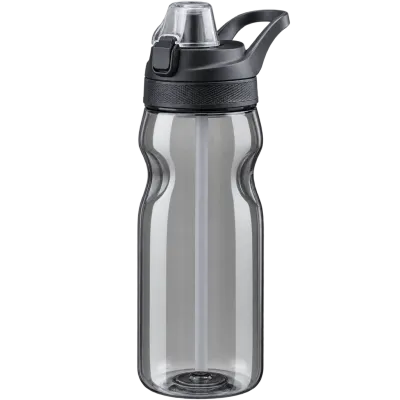 Matching productWater BottleAmazon →

04
How to plan short sessions sensibly
To keep a 20-minute workout effective, rests should really be kept short; if in doubt, it is better to reduce the number of repetitions than to lengthen the rest. Prepare your mat, clothing and any equipment beforehand so that no time is lost searching. A timer or a simple clock helps to keep rests consistent instead of letting them drift.
A fixed slot in the calendar or a set time, such as straight after getting up or during the lunch break, increases the likelihood that the session actually takes place. Because the total training time is short, it is also worth deliberately putting away distractions such as your smartphone during the active rounds, so that the full time really goes to movement. A quick look at the exercise order before you start also saves time that would otherwise go on thinking during the short rests. Once you have internalised the routine, you can run the session more smoothly and without interruptions over time, which further increases the effectively used training time within the twenty minutes.
If you have pre-existing conditions, are pregnant, have had a longer break from training or have complaints, you should have the intensity checked by a doctor beforehand and start the circuit with fewer rounds and longer rests. Technique always comes before speed, even in short, fast sessions.

05
When a longer workout is worthwhile
A 20-minute workout suits days with little time well, but does not permanently replace a more thorough workout if targeted muscle building is the priority. On days with more time, it is worth a look at programmes such as the home workout with dumbbells, which offer more exercises and more targeted stimuli per muscle group and allow more balanced training of all muscle groups in the long run.
A sensible approach is often a mix of both formats: on one to two days per week a more thorough plan with more exercises, supplemented by short sessions on days when time is tight. This keeps training more consistent overall, even when daily life leaves less room.

06
Nutrition to go with it
Even with short, intensive sessions, the body benefits from enough protein and an overall balanced diet to support recovery and muscle maintenance. You will find a guide to how much protein suits you in the guide Protein requirement. If your main aim with short sessions is to lose weight, you will find further tips in the guide Protein for weight loss. Dietary supplements can usefully complement a balanced diet, but they do not replace it.
Because of the high intensity, it is also worth not eating too heavily before short sessions; a light, carbohydrate-focused meal one to two hours beforehand usually provides enough energy without weighing on you during training.
07
What the research says
Studies on time-efficient training, often summarised under terms such as high-intensity interval training, show that short sessions of high intensity can in many cases achieve similar effects on strength, endurance and metabolism to much longer forms of training. What matters is that the effort during the active phases is actually high enough; too low a pace with long rests achieves correspondingly smaller effects. For pure muscle building in already advanced athletes, however, research shows that a higher total training volume over the week usually remains superior; short sessions are here more of a sensible addition than a complete replacement.
08
Frequently asked questions
Are 20 minutes really enough for effective training?
With sufficiently high intensity and short rests, a 20-minute workout can set a noticeable training stimulus, especially compared with no training at all. Done consistently over several weeks, these short sessions add up to a considerable total training volume, which in the long run can certainly compare with less frequent but longer sessions.
How often per week do short sessions make sense?
Three to four short sessions per week with enough recovery are a good starting point, although two sessions done consistently are also much better than an ambitious plan that is rarely kept. More on this in the guide Recovery and sleep.
What do I do if I cannot keep to the rests?
First reduce the number of repetitions per round instead of lengthening the rests, and increase the number step by step as it gets easier.
Can I combine the 20-minute workout with a longer plan?
Yes, it works well as an additional session on days with little time, alongside a more thorough plan with more exercises.
Is short, intensive training suitable for beginners?
To a degree. Beginners should start with fewer rounds and longer rests to learn the technique safely before the intensity is raised step by step.
What if I do not have twenty minutes in one go?
Two shorter blocks of around ten minutes each spread over the day can also provide a similar training stimulus, as long as the intensity stays high enough in both blocks.
 Matching productL-GlutamineAmazon →
Explore
Read next
 Protein types at a glance: whey, casein, plant-based and moreAn overview of all common protein types from whey to collagen, with a comparison table and links to detailed guides.
 Amino Acids: The Building Blocks of ProteinStructure, classification and functions of amino acids at a glance, with a table of all 20 proteinogenic amino acids and links to all guide…
 Supplements for Sport and Fitness: A Factual OverviewAll supplement categories at a glance, with the evidence rated from good to thin, plus safety and buying tips.