
7 min read
Upper Lower Split: A Four-Day Workout Plan
How an upper lower split is structured, which exercises belong in it and how to distribute the four sessions across the week.

The upper lower split divides training into two sessions: one for the upper body with chest, back, shoulders and arms, and one for the lower body with legs and glutes. This split sits between a full-body plan and a more heavily divided split and is often done with four sessions per week.
In this guide you will learn how an upper lower plan is structured, what equipment makes sense for it, how to distribute the four sessions across the week and what research says about this split.
01
The Principle of Upper and Lower
In a classic set-up, two upper-body and two lower-body sessions follow each week, so that each body region is trained twice. Compared with a full-body plan, more volume for the respective region can be fitted into each session; compared with a 3-day split, training frequency per muscle group stays higher, since the division is not by individual muscle groups but by larger body regions.
The two upper-body sessions can also easily be designed slightly differently, for example with an emphasis on pushing movements such as the bench press and shoulder press on one day and an emphasis on pulling movements such as rows and pull-ups on the other day. A similar distinction suggests itself for the lower body, for example one day focused on the squat and the front thigh muscles, the other focused on the deadlift and the back thigh muscles along with the glutes.
This balance makes the upper lower split a popular choice for people who train with some experience and can realistically plan for four sessions per week, without each individual session becoming excessively long.
Many people who train switch to exactly this split after a few months on a full-body plan, because training times slowly lengthen and the wish for more exercises per muscle group grows. The switch is usually easy, since the basic exercises already learned, such as the squat, bench press and row, can simply be carried over into the new structure.
Compared with a 3-day split with only one run-through per week, recovery time per region stays shorter with the upper lower split, usually about three to four days between two sessions for the same body region. This allows a more regular repetition of the most important exercises, which helps many people who train to build technique and strength more continuously than with rarer but more extensive sessions.
 Matching productWeightlifting BeltAmazon →

02
The Training Plan at a Glance
| Day | Exercise | Sets | Repetitions | Rest |
|---|---|---|---|---|
| Upper body | Bench press | 4 | 6 to 10 | about 2 minutes |
| Upper body | Bent-over row | 4 | 6 to 10 | about 2 minutes |
| Upper body | Shoulder press | 3 | 8 to 12 | about 90 seconds |
| Lower body | Squat | 4 | 6 to 10 | about 2 minutes |
| Lower body | Romanian deadlift | 4 | 6 to 10 | about 2 minutes |
| Lower body | Calf raise | 3 | 12 to 15 | about 60 seconds |
The four sessions can be spread, for example, across Monday, Tuesday, Thursday and Friday, with rest days in between and at the weekend. You can read more about handling rising training load sensibly over the weeks in the guide Progressive Overload, and about the importance of sleep and recovery in the guide Recovery and Sleep.
For the second upper-body and lower-body session of the week, it makes sense to vary the repetition range slightly, for example with somewhat heavier weights and fewer repetitions in the first session and somewhat lighter weights with more repetitions in the second. This variation can help address both strength and muscle building across the week, without two nearly identical sessions feeling monotonous.
 Matching productL-GlutamineAmazon →
03
What You Need
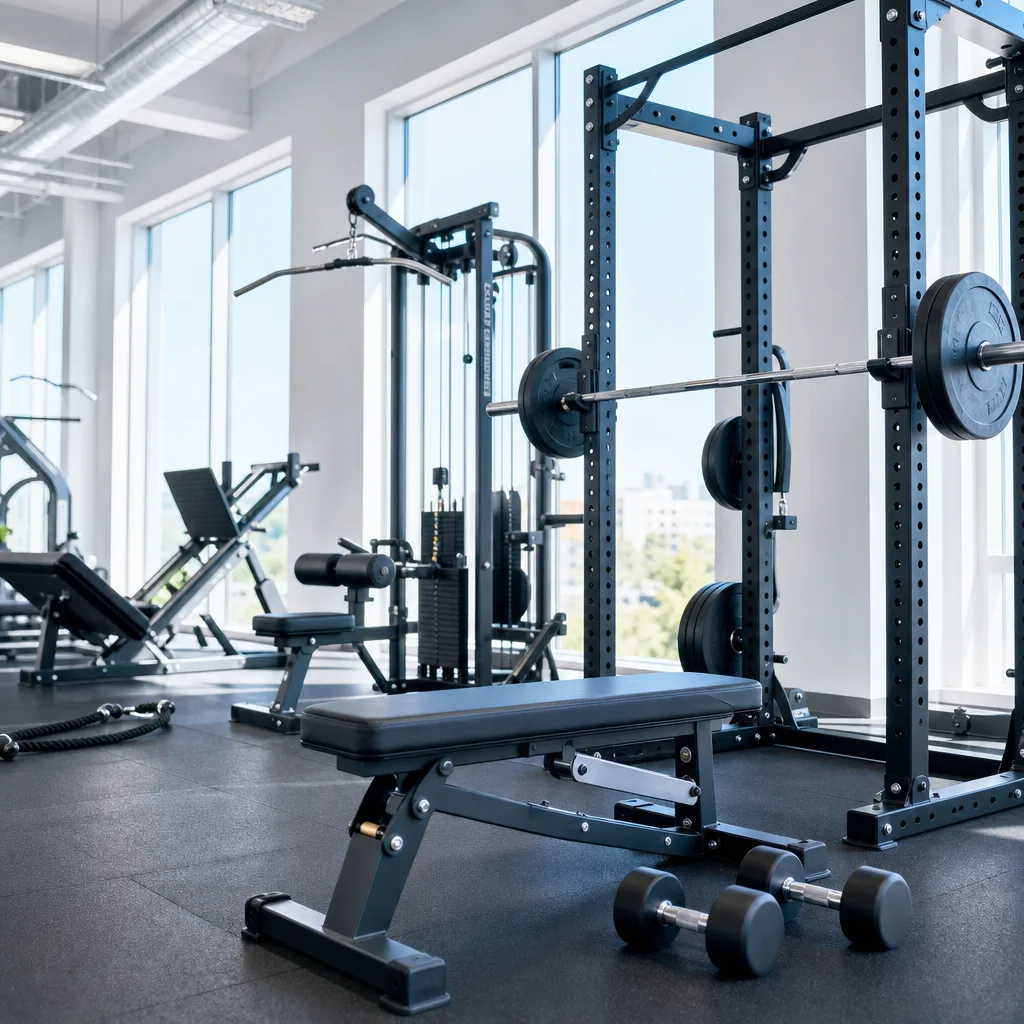
For an upper lower split, a barbell, dumbbells and a weight bench are the central equipment, supplemented by a cable machine or resistance bands for rows and pulling exercises. In a gym, a leg press and other machines also help build targeted volume for the lower body. Firm training shoes are important for squats and deadlifts, and with four sessions per week a water bottle is also part of the basic kit, to ensure enough fluid across the training days. If you train at home, you can design the lower-body sessions well with dumbbells, a kettlebell or resistance bands, while the upper-body sessions benefit from an adjustable weight bench and a pull-up bar.
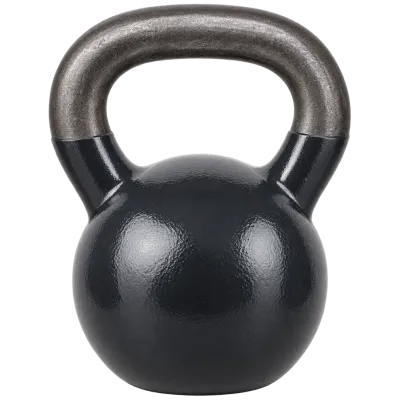 Matching productKettlebellAmazon →
04
Nutrition to Go with It
With four training sessions per week and correspondingly higher training volume, it is worth taking a conscious look at daily protein intake. The guide Calculating Your Protein Requirement shows how to calculate your approximate needs. If you want to build muscle mass in a targeted way, you will find further information in the guide Protein for Muscle Building. Dietary supplements can complement a balanced diet, but they do not replace it. On intense leg days, adequate fluid and electrolyte intake can also help maintain performance throughout the whole session.
05
Advantages Over Other Splits
Compared with a full-body plan, the upper lower split allows longer sessions with more exercises per region, without the total duration of a single session rising too much. Compared with splits with even finer muscle groups, training frequency stays higher, which is often considered advantageous for muscle building. For many people who train with intermediate experience, this split therefore represents a good compromise between training volume, frequency and time investment.
The upper lower split also works well for people who are primarily interested in increasing strength rather than visible muscle building, since the basic exercises such as the squat, deadlift and bench press can be repeated often enough to track progress in the maximum load moved reliably. If you also want to work on endurance, you can add easy movement sessions such as walking or cycling on non-training days, without this getting in the way of recovery from the strength sessions.
 Matching productAll-in-One Muscle BuilderAmazon →

06
Common Mistakes and Practical Tips
A common mistake with this split is to design the two upper-body sessions very similarly, instead of orienting them slightly differently, for example with a stronger focus on pushing movements on one day and pulling movements on the other. This provides more variety and distributes the load more evenly across the muscle groups involved. It is also often underestimated how important enough time between the two lower-body sessions is, since squats and deadlifts stress the leg muscles heavily and too short a recovery time can noticeably reduce performance in the second session.
The order of exercises within a session also plays a role: basic exercises involving several muscle groups ideally come at the beginning, while isolation exercises for individual muscles follow towards the end of the session, when general strength reserves have already dropped somewhat. If you notice that a particular muscle group shows hardly any progress despite regular training, you can add an extra isolation exercise for that area in a targeted way, rather than changing the whole programme. It is equally sensible to check after a few weeks whether all four sessions are actually taking place regularly, since irregular training is the most common reason for a lack of progress, not a fundamentally wrong plan. Small but consistently implemented adjustments usually bring more in the long run than frequent, large changes to the whole training plan, which force the body to get used to an unfamiliar load again and again.
 Matching productWhey IsolateAmazon →

07
What the Research Says
Comparative studies between different split variants often show similar results in muscle building at the same weekly training volume, regardless of whether training is done with full-body, upper lower or finer splits. A recurring pointer, however, is that a training frequency of at least two sessions per muscle group per week is favourable for many people who train, which the upper lower split with four sessions per week meets well. What usually remains more decisive in research than the exact split is the total, cleanly performed training volume achieved over longer periods. Individual recovery capacity also plays a role, which is why two people who train with an identical plan can certainly progress at different speeds, without either of them doing anything fundamentally wrong.
08
Frequently Asked Questions
How many sessions per week are usual with this split?
Usually four sessions, two for the upper body and two for the lower body. With three sessions the split can also be modified, but then with an unequal distribution.
Is the split suitable for beginners?
It is more suited to people who train with some experience, since four sessions per week and more exercises per session presuppose a certain basic fitness. Beginners often do better with a full-body plan.
How long does a session take?
Depending on the number of exercises and rest length, a session usually takes about 60 to 75 minutes.
Can I train only three instead of four sessions?
Yes, you then simply alternate from week to week which region is trained twice and which once, rather than rigidly holding to four sessions.
What if I have health limitations?
If you have pre-existing conditions, are pregnant or have had a long break from training, you should seek medical advice before starting and have the load adapted. This applies especially to squats and deadlifts.
 Matching productHMB CapsulesAmazon →
Explore
Read next
 Protein types at a glance: whey, casein, plant-based and moreAn overview of all common protein types from whey to collagen, with a comparison table and links to detailed guides.
 Amino Acids: The Building Blocks of ProteinStructure, classification and functions of amino acids at a glance, with a table of all 20 proteinogenic amino acids and links to all guide…
 Supplements for Sport and Fitness: A Factual OverviewAll supplement categories at a glance, with the evidence rated from good to thin, plus safety and buying tips.