
6 min read
Bitter Melon: Constituents, Use and Evidence
What bitter melon contains, how it is traditionally used and why the evidence on its effect on blood sugar remains thin.

Bitter melon, also called bitter gourd and known botanically as Momordica charantia, is a tropical climbing plant from the gourd family. In parts of Asia, Africa and the Caribbean it is an everyday vegetable with a very sharp, bitter taste. In dietary supplements it usually appears as an extract or powder, which marketing often credits with an effect on blood sugar.
This guide explains what is in bitter melon, how it is used traditionally and as a supplement, which amounts serve as a guide and what the scientific evidence actually offers, without any healing claims.
01
What bitter melon is
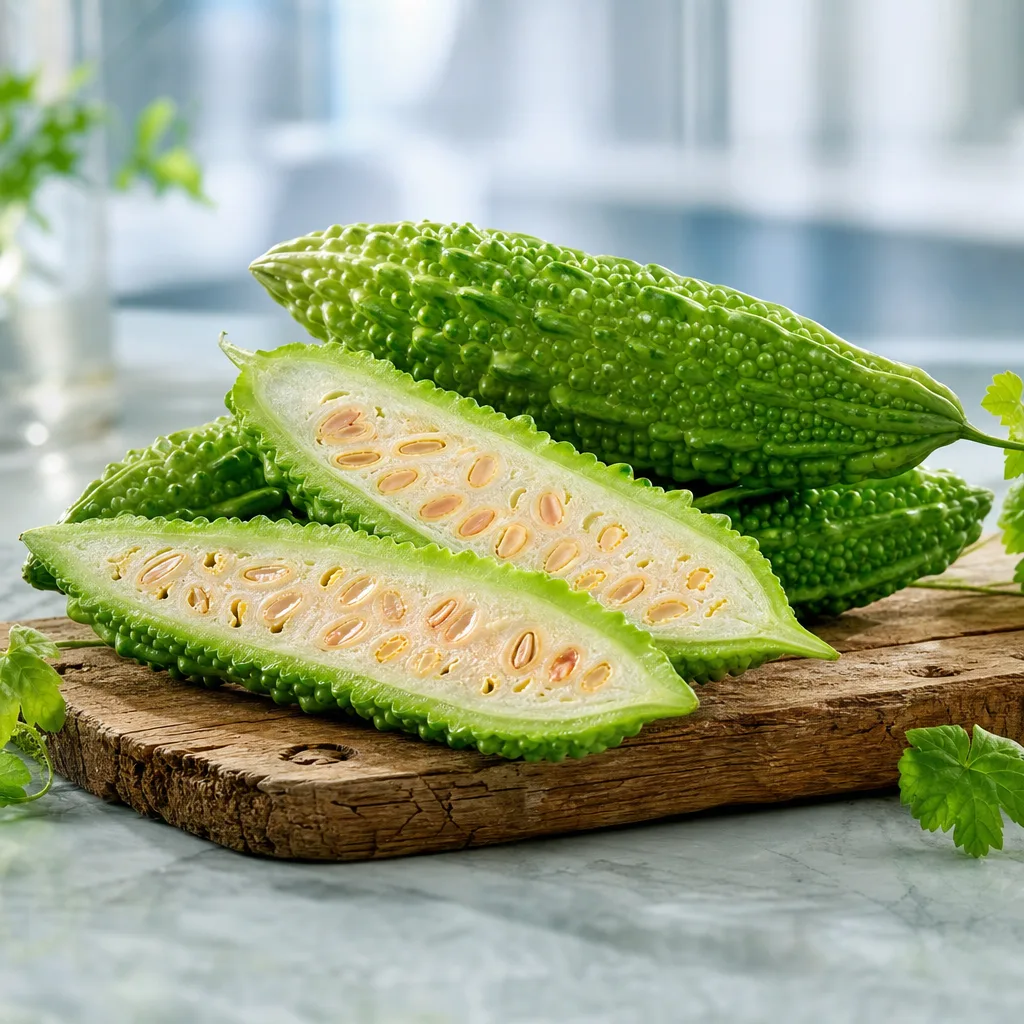
The fruit grows on an annual climbing plant and is easy to recognise by its warty, elongated shape. Unripe it is green and firm, and as it ripens it turns yellowish to orange and becomes softer. It owes its name to its pronounced bitter taste, which comes mainly from so-called cucurbitacins and other bitter compounds found in the skin and flesh.
In the cuisines of Southeast Asia, China, India and East Africa, bitter melon is traditionally prepared as a vegetable, for example in curries, stir-fries or stuffed and steamed. Outside these regions it is known mainly as a dried powder or capsule extract in dietary supplements aimed at people concerned with their blood sugar.
Botanically, bitter melon belongs to the same gourd family as cucumber, pumpkin and courgette, but differs clearly in taste and traditional use. While the plant has been known for centuries in its regions of origin both as a food and as part of folk medicine, it has only gained recognition in Europe in recent decades as an extract in dietary supplements.
02
Constituents at a glance
As a fresh vegetable, bitter melon provides mainly water, little energy and a range of vitamins and minerals. The following table shows typical orders of magnitude for the fresh fruit, which can vary depending on variety, ripeness and cultivation.
| Constituent | Typical order of magnitude per 100 g of fresh fruit |
|---|---|
| Energy | about 15 to 20 kcal |
| Carbohydrates | about 3 to 4 g |
| Fibre | about 2 g |
| Vitamin C | varies considerably by variety, often in the mid double-digit mg range |
| Potassium | a few hundred mg |
| Folate | small but measurable amount |
Contrary to what some older marketing texts claim, bitter melon is neither a notable source of protein nor a supplier of fat. Its value lies rather in its vitamins, fibre and the bitter compounds that give it its name, which receive most of the attention in research.
Besides the nutrients listed in the table, bitter melon contains a range of plant compounds, including the cucurbitacins that give it its name and other secondary plant compounds to which various biological properties are attributed in laboratory studies. Whether and to what extent such laboratory observations can be transferred to people in everyday life has so far not been sufficiently clarified.
03
Traditional use and supplements
In traditional Indian and Chinese medicine, bitter melon has long been used in connection with blood sugar, mostly as tea, juice or cooked vegetable. This long history of use is not evidence of an effect in the scientific sense, but it shows why interest in the plant continues to this day.
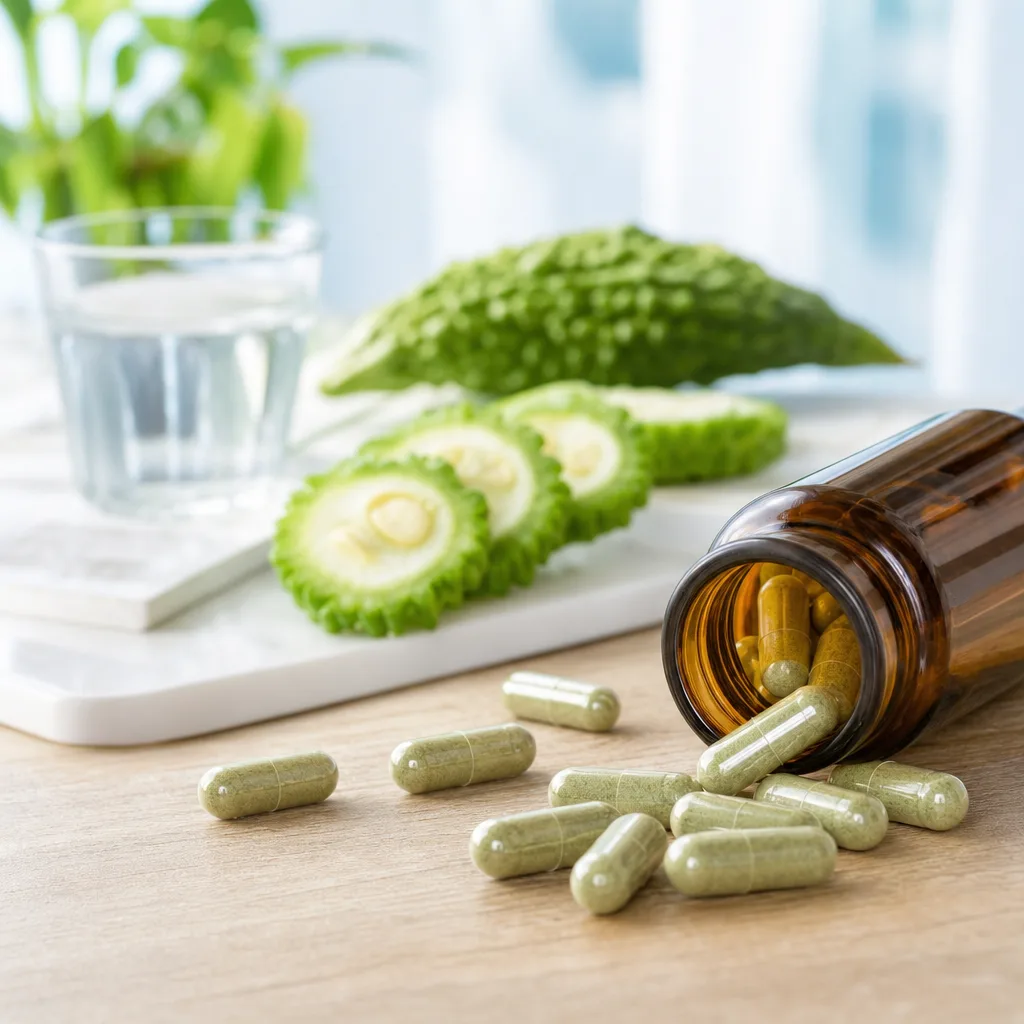
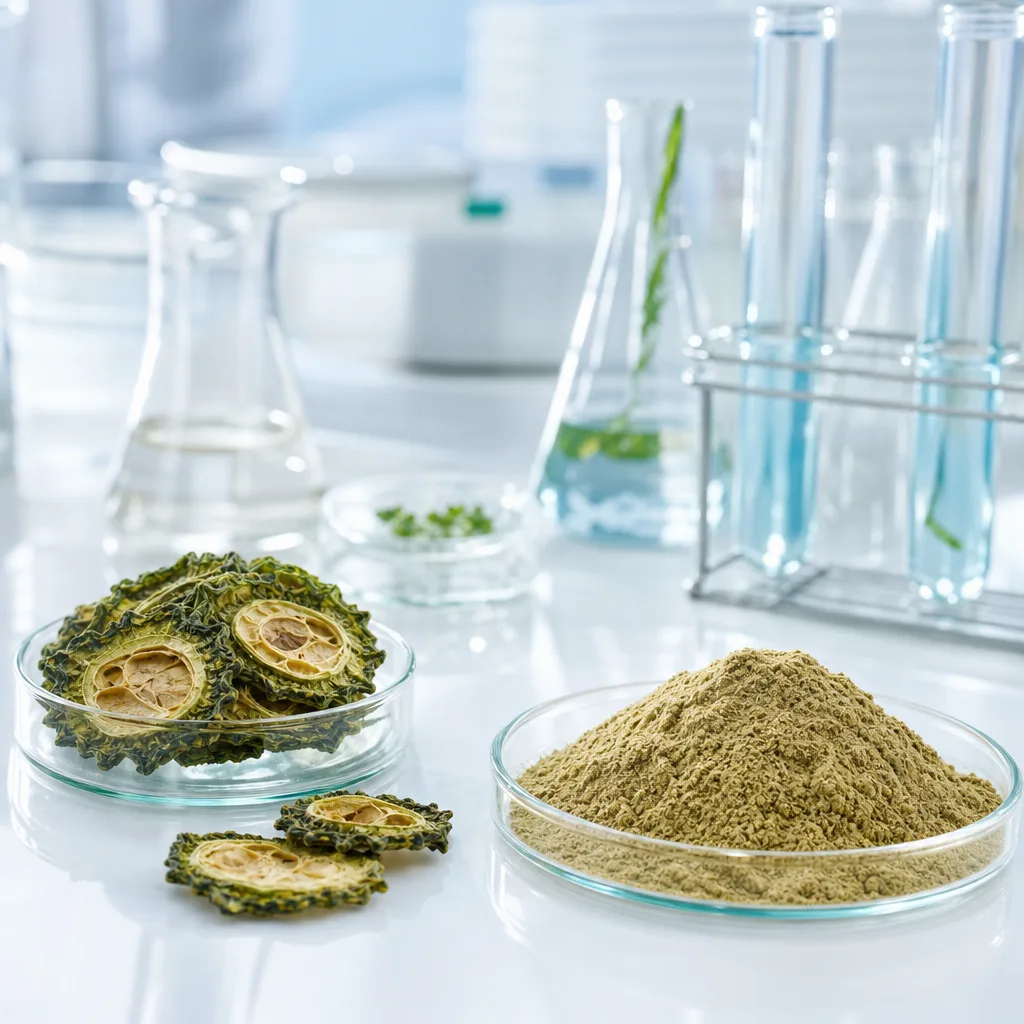
As a dietary supplement, bitter melon is sold in Europe exclusively as a food, not as a medicine. This means it may not be advertised with healing claims and does not replace therapy prescribed by a doctor. Products are available as capsules with dry extract, as powder to stir into drinks or as dried slices for tea.
Some suppliers combine bitter melon extract with other plant ingredients that are also discussed in connection with carbohydrate metabolism. Such a combination does not automatically make the individual effects better established. On the contrary, it often makes it harder to tell which component might be responsible for an observed effect.
04
Bitter melon in the kitchen
If you want to prepare the fresh fruit yourself, you will mostly find it in Asian supermarkets. Before cooking, it is halved lengthways, the seeds and the soft inside are removed, and the flesh is then cut into thin slices or strips. Soaking briefly in salted water or a light blanching softens the intense bitter taste before the slices are cooked further in a pan with other vegetables, egg or a little meat.
In many Asian cuisines the bitterness is deliberately not removed completely but is seen as a flavour element that rounds off dishes. If you try the taste for the first time, you should not be put off by its intensity, but rather see bitter melon as an ingredient in its own right that you get used to, similar to chicory or radicchio.
05
Dosage as a guide
There is no official, uniform intake recommendation for bitter melon extract. Manufacturers usually state a daily amount on the pack that depends on the concentration of the respective extract. Stick to this pack information and do not exceed it on your own, even if you hope for a faster effect.
As a fresh vegetable, on the other hand, bitter melon can be eaten quite normally in household portions, like other gourds. To soften the intense bitter taste, deseed the fruit, salt the slices briefly and blanch them before further preparation.
06
Possible side effects and who should be careful
In larger amounts, bitter melon can cause gastrointestinal complaints such as nausea, abdominal pain or diarrhoea. Since the plant is said to have a blood-sugar-lowering effect, particular caution is called for when taking diabetes medication at the same time, because in theory an amplified lowering of blood sugar can occur.
Pregnant and breastfeeding women should avoid bitter melon extracts, as certain constituents are traditionally associated with a stimulating effect on the uterus. People with diabetes, other metabolic disorders or who take medication should have use checked by a doctor before trying bitter melon supplements. Dietary supplements are also no substitute for a balanced diet.
Use without medical supervision is also discouraged for children, as there are hardly any robust data on tolerability and suitable amounts for this age group. If you take medication regularly, you should generally talk to medical or pharmaceutical professionals before starting a new dietary supplement in order to rule out possible interactions.
07
What the research says
The evidence on bitter melon is thin and inconsistent overall. Part of the available research on blood sugar and metabolism comes from small studies with few participants, short duration or inconsistent dosing of the extracts used, which makes it hard to draw reliable conclusions for the general population. Some reviews report a slight effect on blood sugar levels, while others find no clear difference compared with a placebo.
For the claims about muscle building or improved athletic performance that circulate in older marketing texts, there is no robust scientific basis; this is a mix-up with other dietary supplements. If you are considering a bitter melon supplement because of raised blood sugar values or diabetes, you should regard it as a complementary option and in any case speak to medical professionals beforehand, rather than changing existing therapy on your own.
08
Frequently asked questions
Does bitter melon lower blood sugar?
Some studies point to a slight effect, while others find no clear difference from a placebo. Overall, the evidence is considered thin and not sufficient to derive a reliable effect from it.
Can I take bitter melon if I have diabetes?
Only after consulting medical professionals, especially if you already take blood-sugar-lowering medication, as effects can in theory add up.
Is bitter melon suitable for building muscle?
No, there is no scientific basis for this. In research, bitter melon is studied mainly in connection with blood sugar, not muscle growth.
How do you soften the bitterness when cooking?
Deseeding the fruit, cutting it into slices, salting briefly and blanching before further preparation noticeably softens the intense bitter taste.
Are there side effects with bitter melon extract?
Gastrointestinal complaints are possible at higher amounts. Pregnant women should avoid extracts, and people with diabetes should have taking them checked by a doctor first.
Where can I get bitter melon as a food?
Fresh, it is available mainly in Asian supermarkets, and dried or as capsules it can be found in the dietary supplements area alongside other plant extracts.
Explore
Read next
 Protein types at a glance: whey, casein, plant-based and moreAn overview of all common protein types from whey to collagen, with a comparison table and links to detailed guides.
 Amino Acids: The Building Blocks of ProteinStructure, classification and functions of amino acids at a glance, with a table of all 20 proteinogenic amino acids and links to all guide…
 Supplements for Sport and Fitness: A Factual OverviewAll supplement categories at a glance, with the evidence rated from good to thin, plus safety and buying tips.