
6 min read
Fenugreek: Effects and Evidence
What fenugreek, known in German as Bockshornklee, contains, what it is traditionally used for and what research actually shows on blood sugar and testosterone.

Fenugreek, known in German as Bockshornklee, is a plant from the Mediterranean region and Asia whose seeds have been used for centuries both as a spice and as a traditional home remedy. In supplements today, fenugreek is discussed mainly in connection with blood sugar, digestion and occasionally testosterone levels.
In this guide you will learn which ingredients fenugreek contains, what Bockshornklee is used for traditionally and today, what research actually shows on blood sugar and testosterone and what you should keep in mind when using it.
01
What fenugreek is and where it comes from
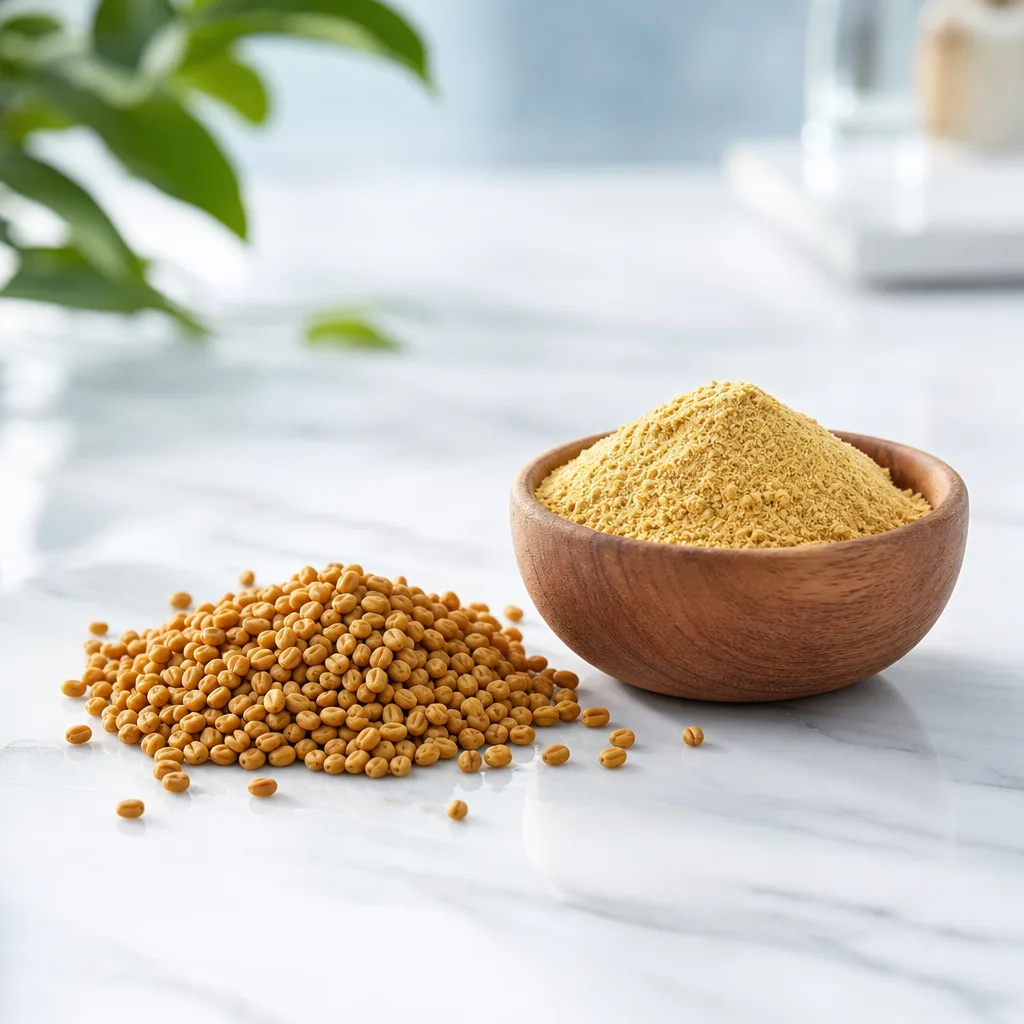
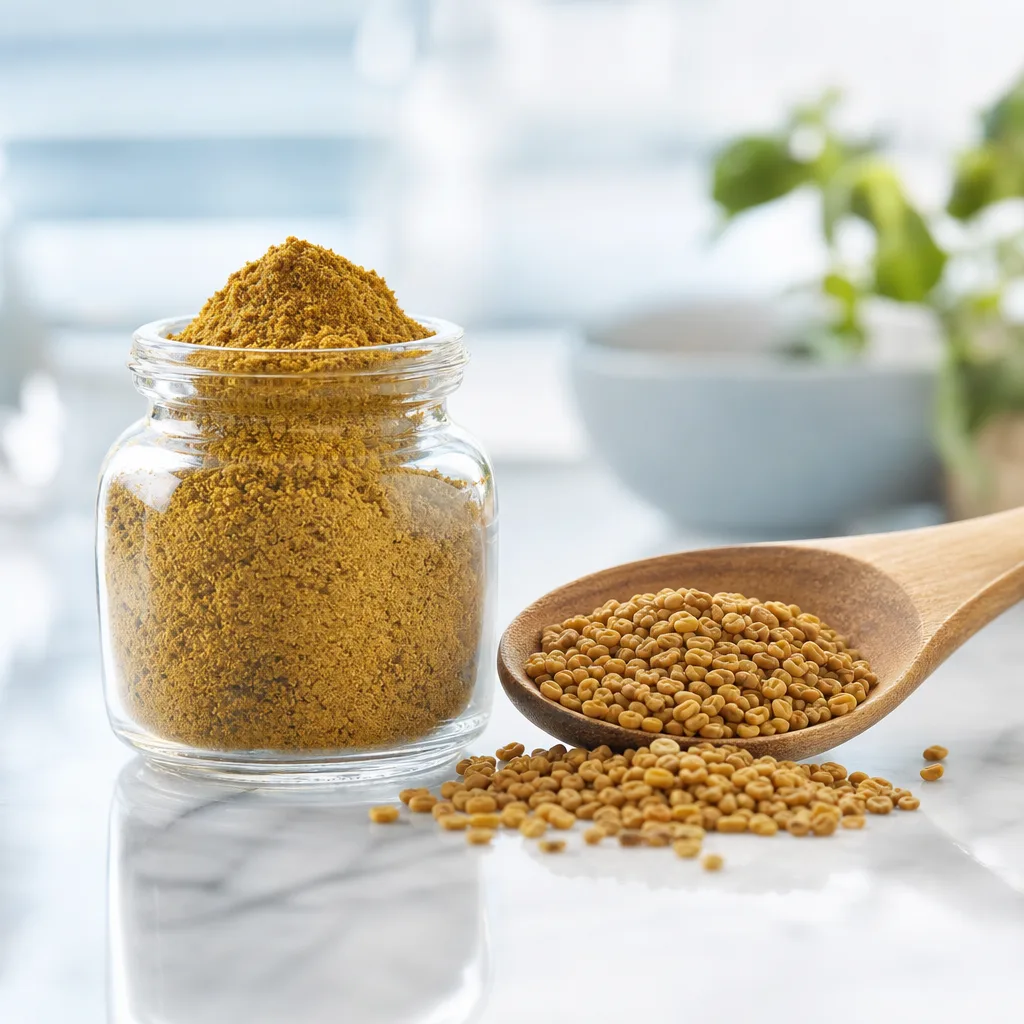
Botanically, fenugreek belongs to the legume family, and its small, yellowish-brown seeds give the German term Bockshornklee its name. In the kitchen, fenugreek is used as a spice, for example in curry blends, whereas in supplements concentrated extracts from the seeds are mostly used, in capsule or powder form.
The seeds contain, among other things, mucilage, fibre, bitter compounds and an unusual amino acid called 4-hydroxyisoleucine, which individual studies ascribe a role in blood sugar metabolism. Fenugreek also contains small amounts of minerals and vitamins, which however play no significant role compared with a wholesome diet.
 Matching productMultivitaminAmazon →
02
Fenugreek and blood sugar
The best-studied area of use for fenugreek concerns blood sugar metabolism. Several smaller studies suggest that fenugreek extracts can moderately dampen the rise in blood sugar after a meal, presumably through the mucilage they contain and the amino acid mentioned. The significance of these studies is limited, however, as many are small in scale and results vary between individual studies.
People with diabetes or a diagnosed blood sugar disorder should on no account use fenugreek on their own for treatment, but should always discuss its use beforehand with medical professionals, especially because interactions with blood-sugar-lowering medication are possible.
For people without a diagnosed blood sugar disorder who want to try fenugreek out of interest in a generally balanced diet, the same applies: a supplement replaces neither medical monitoring of blood sugar nor an overall carbohydrate-aware, fibre-rich diet, which can likewise contribute to steadier blood sugar values after eating.
03
Fenugreek and testosterone: thin evidence
In sports nutrition, fenugreek is occasionally linked with raising testosterone levels. The basis for this is the steroidal saponins it contains, which are said to have a hormone-like effect. The studies available on this topic are inconsistent, however: some smaller studies report slight changes in certain measured values, while other studies find no relevant difference from a placebo.
Overall, the evidence on fenugreek and testosterone must be judged as thin and by no means clear. A reliable, clinically meaningful effect on muscle building or athletic performance cannot currently be derived from it. Advertising promises of a marked rise in testosterone cannot be supported by current knowledge.
The question of whether, and to what extent, a changed testosterone level leads to more muscle mass or strength at all is also scientifically more complex than often presented. Muscle building depends on numerous factors, including training stimulus, recovery and protein intake, so a single plant extract, even with a measured effect on hormone values, does not automatically make a noticeable difference in training.
| Area of use | Classification of the evidence |
|---|---|
| Blood sugar after a meal | several indications of a moderate effect, but mostly small studies |
| Appetite and satiety | isolated indications, overall little robust data |
| Testosterone level | inconsistent results, thin and contradictory evidence |
 Matching productAll-in-One Muscle BuilderAmazon →
04
Use and tolerability
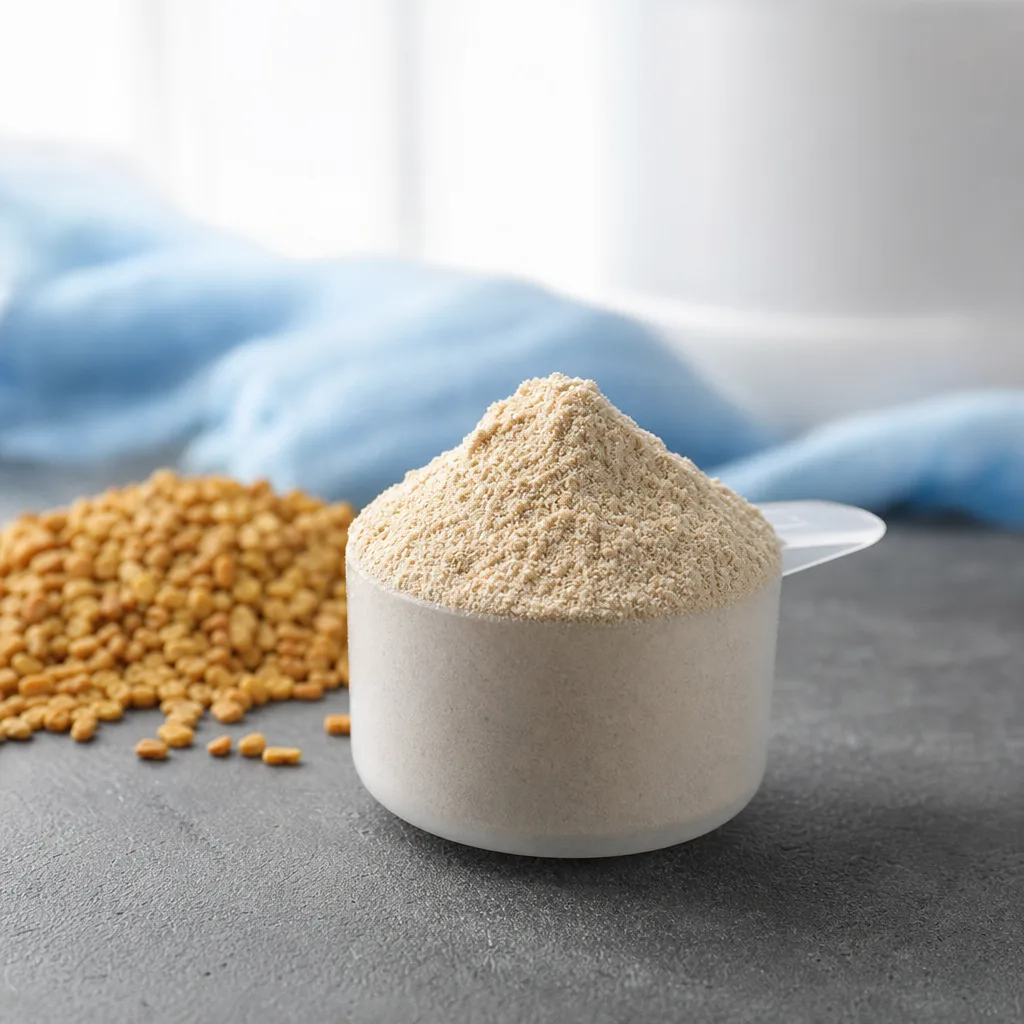
In supplements, fenugreek is mostly offered as a capsule or powder that can be mixed with water. Usual amounts, as often cited in studies and on packaging, range from about 500 mg to a few grams daily, though the range that is actually appropriate should always follow the pack information of the respective product.
Possible side effects occasionally described are a characteristic maple-syrup smell of sweat and urine and mild digestive complaints. Caution is needed with a known allergy to legumes, as fenugreek belongs to that family botanically. In pregnancy, taking amounts higher than usual kitchen use is discouraged; medical advice should be sought beforehand.
05
Fenugreek in the kitchen and as a spice
Beyond supplements, fenugreek is a fixed component of spice blends in many South and West Asian cuisines, for example in certain curry powders. The seeds are usually roasted to soften the intense bitter taste and are then ground or cooked whole. In this form fenugreek mainly provides variety of flavour, and the amount taken in stays well below the extract amounts examined in studies.
The seeds are also traditionally used as a tea, by soaking them in hot water. Anyone who wants to get to know fenugreek first can begin with this milder use in daily life before considering a targeted supplement with concentrated extracts.
 Matching productChia SeedsAmazon →
06
Fenugreek compared with other plant extracts
Fenugreek is by no means the only plant extract advertised in sports nutrition and supplements in connection with testosterone, endurance or metabolism. Maca or Tribulus terrestris are discussed in a similar way, and the evidence for them is likewise thin and inconsistent. Anyone interested in plant extracts should in general view them by the same critical standards: individual positive studies are no proof of a reliable effect, and the absence of side effects in studies does not automatically mean complete harmlessness for every person.
One advantage of fenugreek over some other extracts is its long traditional use as a food, which means that at least tolerability in moderate amounts is regarded as comparatively well documented. This does not replace targeted clinical research on higher-dose extracts of the kind found in dietary supplements, however.
For a balanced view it is also worth asking what targeted supplementation is meant to achieve at all. Anyone who mainly wants to improve their general diet is usually better advised with a varied selection of vegetables, wholegrain products and legumes than with a single concentrated extract promising a fast, isolated effect.
07
What the research says
In summary, fenugreek shows a mixed picture: for the effect on blood sugar after meals there is a comparatively broader, if mostly small-scale, evidence base, whereas the marketed effect on testosterone levels is documented much more thinly and contradictorily. As with many herbal supplements: individual positive study results do not automatically mean a reliable effect in every person.
Anyone who wants to try fenugreek should understand it as a possible complement to an overall balanced diet, not as a substitute for medical treatment or a targeted training programme.
08
Frequently asked questions
Is fenugreek the same as Bockshornklee?
Yes, fenugreek is the English name for Bockshornklee; both terms mean the same plant and are often used synonymously.
Does fenugreek help with weight loss?
There is hardly any direct evidence of targeted weight loss from fenugreek. A possible effect on satiety and blood sugar might help indirectly, but does not replace a calorie deficit.
Can I simply use fenugreek as a spice?
Yes, as a kitchen spice in the usual small amounts fenugreek is generally regarded as harmless. Higher-dose extracts for targeted supplementation are to be distinguished from this.
Who is fenugreek not suitable for?
With a legume allergy, in pregnancy, and with existing conditions or medication use, especially in diabetes, use should be checked by a doctor beforehand.
Does fenugreek demonstrably raise testosterone levels?
No, the evidence is currently too thin and inconsistent for that. Individual studies show slight effects, others find no relevant difference from a placebo.
Where can I find an overview of other herbal supplements?
You can find a broader overview of various dietary supplements and how they are classified on our main page, supplements, where individual topic areas are linked together.
How do I store fenugreek products correctly?
Stored dry, cool and protected from light, capsules and powder generally stay stable for the shelf life stated on the pack. Moisture should generally be avoided, as it can impair quality in both powder and capsules.
 Matching productL-ArginineAmazon →
Explore
Read next
 Protein types at a glance: whey, casein, plant-based and moreAn overview of all common protein types from whey to collagen, with a comparison table and links to detailed guides.
 Amino Acids: The Building Blocks of ProteinStructure, classification and functions of amino acids at a glance, with a table of all 20 proteinogenic amino acids and links to all guide…
 Supplements for Sport and Fitness: A Factual OverviewAll supplement categories at a glance, with the evidence rated from good to thin, plus safety and buying tips.