
6 min read
Guarana: Effects, Caffeine Content and Use in Sport
Where guarana comes from, how it differs from coffee and what to consider for dosage and intake as a supplement.

Guarana is a climbing plant from the Amazon region whose seeds have a high caffeine content. As a dietary supplement, guarana is used mainly for its stimulating effect, similar to coffee, though with a somewhat different release of the caffeine it contains.
This guide explains where guarana comes from, which ingredients are responsible for the effect, how guarana differs from classic coffee, in which forms it is available and what to keep in mind when taking it.
01
What is guarana?
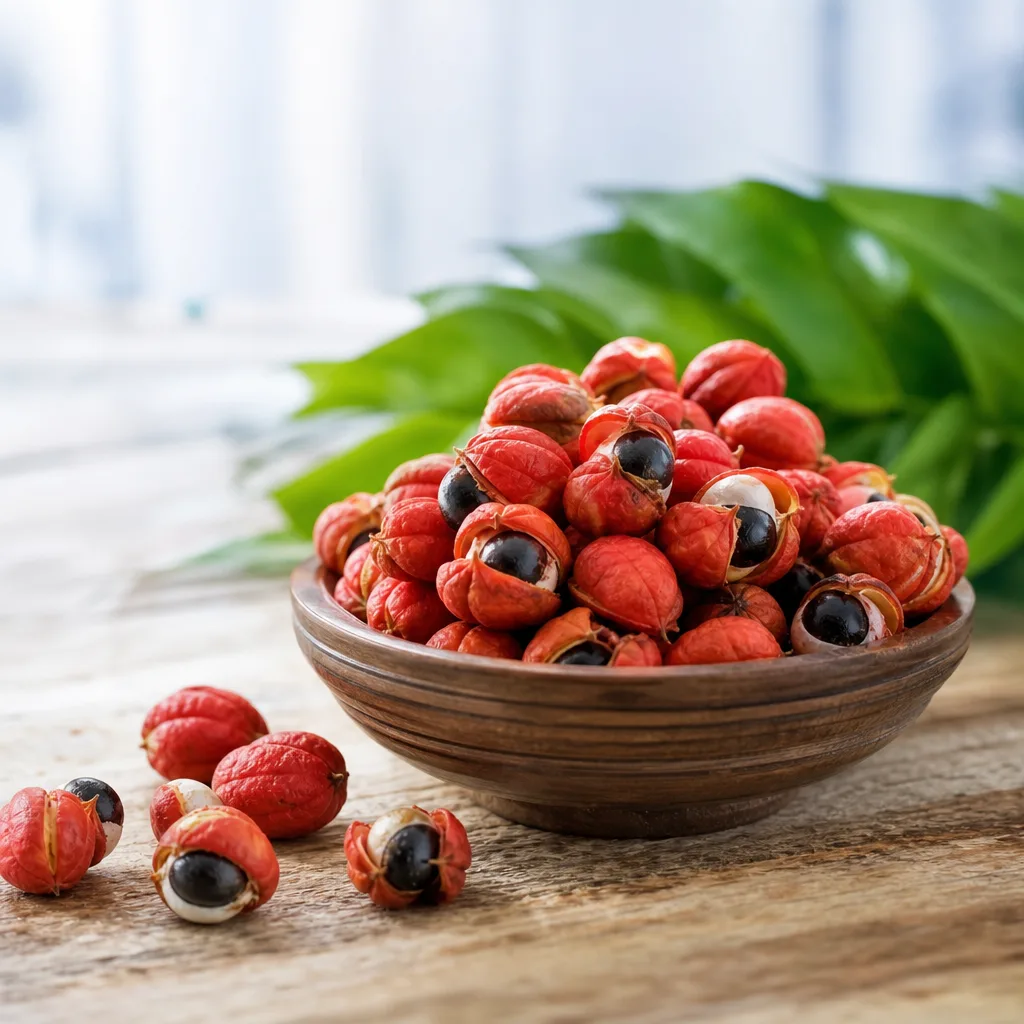
Guarana is a climbing plant that originally comes from the Amazon region in Brazil, where it has long been used by the indigenous population. Mainly the seeds of the red fruits are used, processed into powder or further processed into an extract. The most important ingredient from a supplement perspective is caffeine, which occurs in the seed in a comparatively high concentration.
Besides caffeine, guarana contains small amounts of other plant compounds, including tannins and saponins. The exact composition varies with cultivation, harvest and processing, which is why blanket statements on nutrient content can only be understood as a rough order of magnitude.
02
Guarana compared with coffee
Since both plants supply caffeine, guarana is often compared with coffee. By weight of the pure seeds, guarana contains a higher share of caffeine than raw coffee beans, but in dietary supplements guarana is usually dosed in much smaller amounts, so the caffeine actually taken in cannot automatically be derived from a simple comparison of the raw materials.
A frequently mentioned difference concerns the speed of the effect: while coffee releases its caffeine fairly quickly, guarana is partly credited with a more even release over a longer period. Scientifically, this effect has not been clearly demonstrated in every case, which is why it should be understood as a general classification rather than an established fact.
03
Forms and areas of use
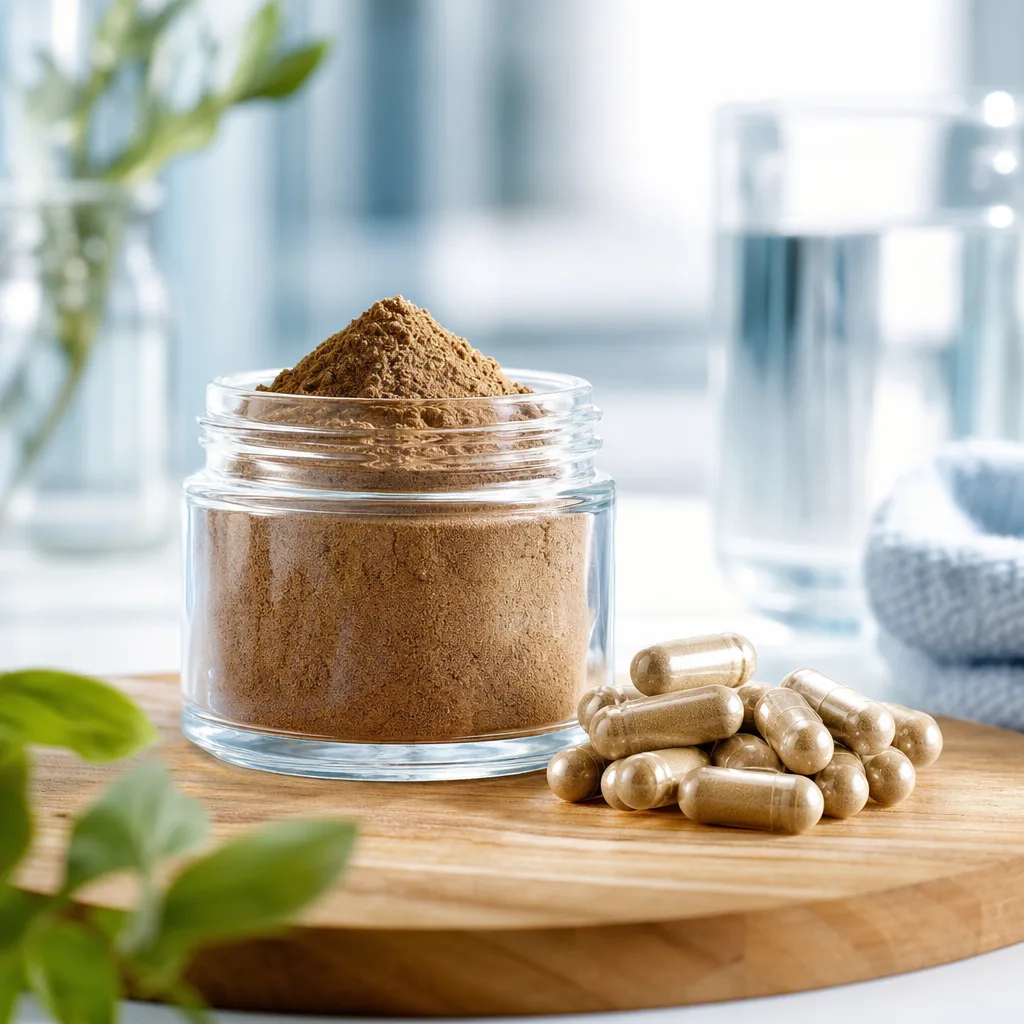
Guarana is offered in different forms, including powder, capsules, tea and as an ingredient in drinks. The following table gives an overview of common forms and their characteristics.
| Form | Characteristic |
|---|---|
| Powder | can be dosed flexibly, caffeine content differs by product |
| Capsules | practical to dose, fixed amount per capsule |
| Tea | milder intake, caffeine content varies with steeping time |
| Guarana in drinks | caffeine content varies with recipe, further ingredients possible |
Anyone who wants to use guarana specifically before a training session will find additional information in the guide on pre-workout boosters, as caffeine-containing ingredients often play a role there. Guarana also occasionally appears as an ingredient in sports drinks.
Preparation also matters for the amount of caffeine actually taken in: if guarana is brewed as a tea, the amount released depends, among other things, on steeping time and water temperature, whereas capsules deliver a more constant, more easily estimated dose. Anyone who values a consistent amount is generally better served by standardised capsules or powder portions than by home-brewed tea.
 Matching productL-ArginineAmazon →
04
Use in endurance and strength sport
In sports science, caffeine from sources such as guarana is associated with a lower subjectively perceived effort and possible support for concentration. This can play a role both in endurance sport and in short, intense efforts in strength sport. It is important that this is a supporting effect and not an increase in basic physical performance independent of training.
Some people also use guarana outside sport, for example for mentally demanding tasks where heightened alertness and concentration are wanted. Here too: the effect is essentially down to the caffeine content and comparable with the effect of coffee or other caffeine-containing sources.
Another point is individual caffeine sensitivity, which differs genetically. Some people break down caffeine much more slowly than others, which affects how long the effect lasts and how likely side effects such as sleep problems are. Anyone unsure how sensitively their body reacts to caffeine is best off starting with a small amount and watching their personal reaction, rather than going by an amount intended for the average person.
05
Guarana in combination products
In many dietary supplements guarana does not appear as a single ingredient but as part of a blend with further stimulating or herbal substances. Such combination products also make it difficult to tell the actual amount of caffeine and the effect of individual components apart. Anyone who wants to keep track of the total caffeine from different sources, for example coffee, tea, energy drinks and supplements taken together, should check the respective ingredient lists and quantity information rather than relying on the name guarana alone.
Some products also advertise a supposedly fat-burning effect of guarana. Such a claim is scientifically tenable only to a very limited extent, since any effect essentially comes from the metabolism-stimulating action of caffeine and not from an independent, specific mechanism of the guarana plant. Anyone who wants to look further into this topic will find a more detailed overview in the guide on fat burning.
06
Dosage and tolerability
A universally valid dosage recommendation for guarana cannot responsibly be given, since the caffeine content varies greatly between products. As a rough guide, the pack information of the respective manufacturer applies, with the caffeine amount contained being in line with the amounts generally usual for caffeine. Anyone who reacts sensitively to caffeine should start with a lower amount and watch their individual tolerance.
As with other caffeine-containing products, too high an amount can lead to restlessness, palpitations, sleep problems or stomach complaints. Pregnant and breastfeeding women, as well as people with cardiovascular disease, high blood pressure or an overactive thyroid, should avoid guarana or have intake checked by a doctor beforehand.
07
What the research says
There is a broad scientific basis for the stimulating effect of caffeine, the main active ingredient in guarana, both for subjectively perceived alertness and for possible performance-related effects in sport. These findings can largely be transferred to guarana as a caffeine-containing source, although much of the research carried out specifically on guarana is smaller and less extensive than the broad body of coffee research.
Additional effects beyond the pure caffeine action, for example on concentration or a supposedly particularly even release, are less clearly documented scientifically and should be classified with restraint. Guarana is no substitute for enough sleep and a balanced diet, but at most an occasional supplement.
08
Frequently asked questions
Is guarana healthier than coffee?
Neither, both primarily supply caffeine and accordingly work in a similar way. Which source suits better is a matter of taste, tolerability and personal preference.
How much caffeine does guarana contain compared with coffee?
The pure seeds contain proportionally more caffeine than raw coffee beans, but in finished dietary supplements the amount actually used decides the caffeine content, not the simple raw material comparison.
Can guarana help with weight loss?
A direct effect on weight loss is not clearly documented scientifically. Caffeine can stimulate metabolism slightly, but guarana is no substitute for a calorie deficit and exercise.
When is the best time to take guarana?
Because of its stimulating effect, guarana is usually taken in the morning or before training; taking it too late in the day can disturb sleep in sensitive people.
May I combine guarana with coffee?
In principle yes, but the total caffeine taken in from both sources adds up. Anyone combining the two should keep an eye on the total amount to avoid side effects.
Is guarana allowed in pregnancy?
Because of the caffeine content, taking it in pregnancy and while breastfeeding is generally discouraged. An individual assessment should in any case be discussed with medical professionals.
Does guarana burn fat specifically?
A specific effect on fat burning beyond the action of caffeine is not clearly documented scientifically. What remains decisive for body composition is diet and exercise as a whole.
Is guarana addictive?
As with other caffeine-containing sources, a certain habituation can develop with regular, high intake. Gradual reduction instead of stopping abruptly can ease typical withdrawal symptoms such as headaches.
Explore
Read next
 Protein types at a glance: whey, casein, plant-based and moreAn overview of all common protein types from whey to collagen, with a comparison table and links to detailed guides.
 Amino Acids: The Building Blocks of ProteinStructure, classification and functions of amino acids at a glance, with a table of all 20 proteinogenic amino acids and links to all guide…
 Supplements for Sport and Fitness: A Factual OverviewAll supplement categories at a glance, with the evidence rated from good to thin, plus safety and buying tips.