
6 min read
Maca: Origin, Effects and What the Research Really Shows
What the Andean root maca provides, how thin the evidence on libido and energy really is and how to put it into perspective.

Maca is a root plant from the high plateaus of the Peruvian Andes, where it has been grown as a food for centuries. In recent years it has made a name for itself as a powder in health food shops and in the dietary supplement field, often with claims about energy, endurance and libido.
This guide explains what maca is botanically, which ingredients the root provides, what research says about the claims in circulation and what to look out for when using it.
01
What is maca?
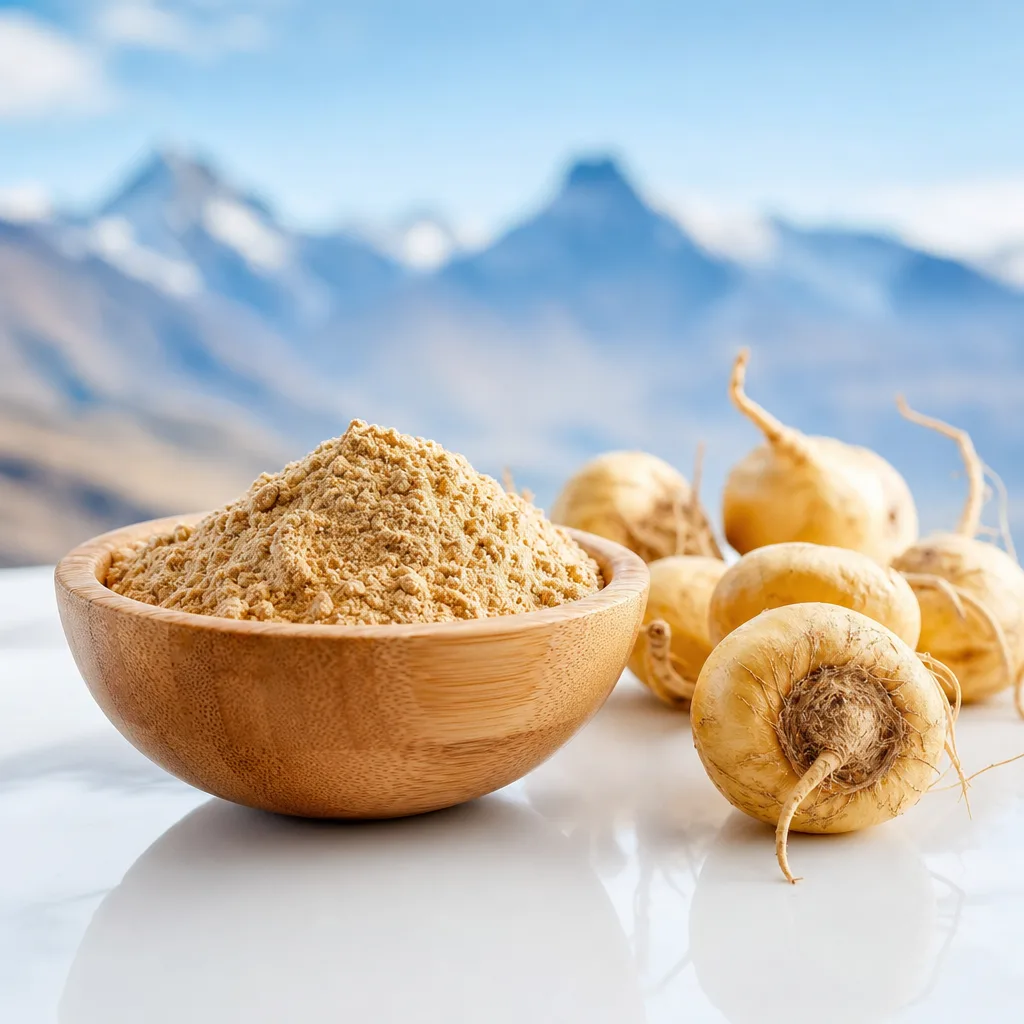
Botanically, maca (Lepidium meyenii) belongs to the cruciferous family and is thus more closely related to radishes than to classic root vegetables. The plant is grown mainly at high altitudes in the Peruvian Andes, where the climate is harsh and the soils are poor. The underground root is used, dried and usually ground into powder.
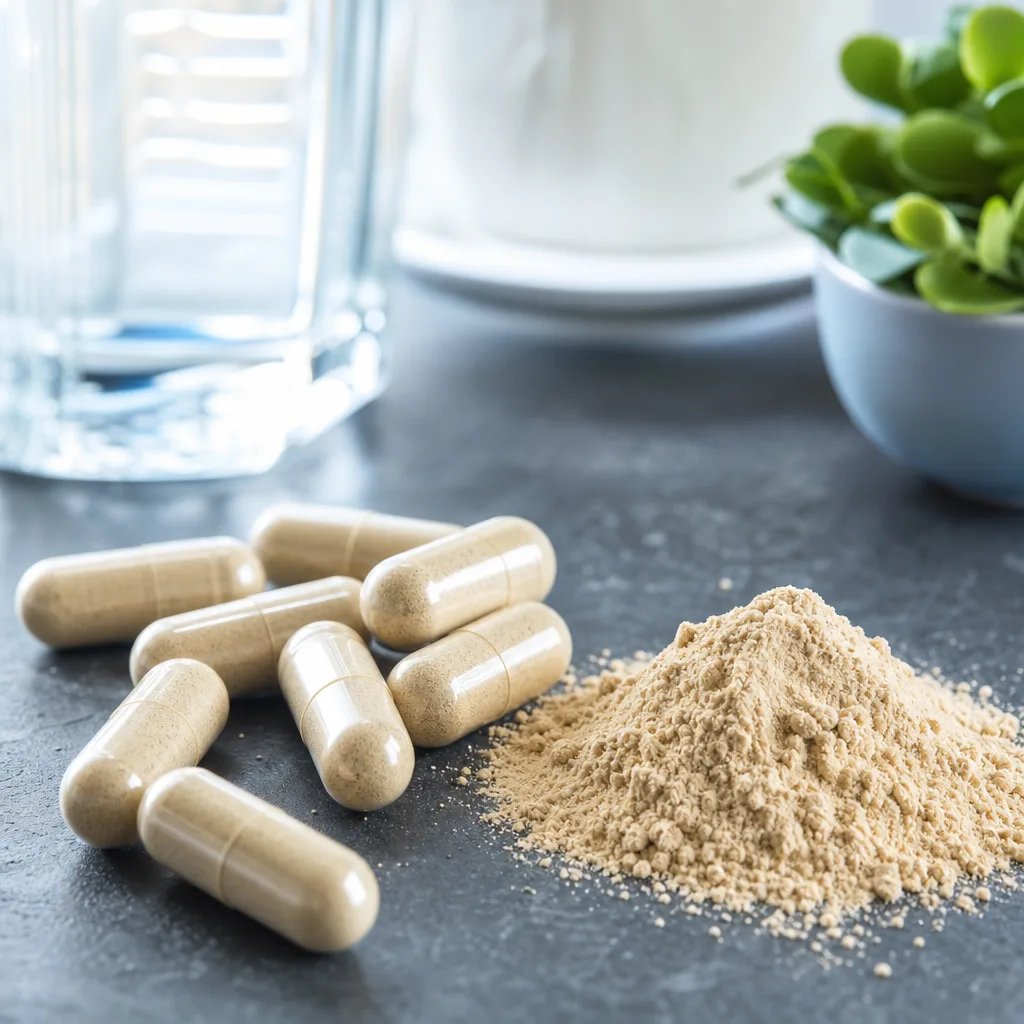
In Peru, maca is traditionally part of the diet and is prepared like other starchy roots, boiled, baked or made into drinks. In European shops, maca is found mainly as a powder or in capsule form, often marketed under the label superfood.
The term superfood is more of a marketing term than a scientific category. It does not describe tested efficacy but usually only indicates that a food contains particularly many nutrients or plant compounds. To put maca into perspective, it therefore makes more sense to look at concrete ingredients and studies than to rely solely on such a label.
02
Ingredients of the maca root
Maca mainly provides carbohydrates, some protein and a range of vitamins and minerals, including potassium, calcium, iron and vitamin C, as also found in other root vegetables. The root also contains secondary plant compounds, including so-called macamides and glucosinolates, which are typical of cruciferous plants and to which some of the attributed effects are assigned.
It is important to note that at the usual intakes of a few grams of powder per day, maca is primarily a food with an interesting nutrient profile, not a highly concentrated source of active substances like an isolated extract.
The following table shows typical orders of magnitude of the main nutrients in dried maca powder per 100 grams, as found in analyses.
| Component | Amount per 100 g (approx.) |
|---|---|
| Carbohydrates | 60 to 75 g |
| Protein | 10 to 14 g |
| Fibre | 7 to 9 g |
| Potassium | 1600 to 2000 mg |
| Calcium | 150 to 250 mg |
| Iron | 2 to 5 mg |
 Matching productMultivitaminAmazon →
03
Maca and libido: what does the research really say?
Maca is often promoted as a natural remedy for libido problems or to increase sexual desire, partly also alongside testosterone boosters and similar products. Particular caution is called for in assessing this.
There is a manageable number of smaller clinical studies suggesting a possible positive effect of maca on sexual desire in men and women. The studies are mostly small, short and not always methodologically robust, however, so no established efficacy can be derived from them. An influence on testosterone levels themselves has not been demonstrated in studies so far, so the observed effects on libido, if present, appear to work through other mechanisms. Anyone hoping for a reliable, noticeable effect of maca on potency should know about this thin and inconsistent evidence and assess advertising claims with corresponding restraint. The comparison sometimes made with prescription potency drugs is also scientifically untenable, as these work through entirely different and far better researched mechanisms.
With persistent problems with libido or sexual function, reaching for maca is no substitute for medical clarification, because such complaints can have many causes, from hormonal changes and stress to side effects of certain medications. At most, maca can be an additional, supplementary building block, not a stand-alone solution.
04
Maca in sport: energy and endurance
Besides libido, maca is often promoted for more energy, better mood and support for endurance. Here too there are a few small studies, some on endurance athletes at high altitude, suggesting slight positive effects on well-being or recovery. Reliable, larger studies are largely lacking, however, so no dependable performance-enhancing effect for endurance sport can be derived from them.
If you want to try maca, you should therefore see it as a supplementary part of an overall balanced diet and not attach great expectations to a measurable leap in performance. A dietary supplement like maca does not replace a balanced diet.
05
Use and dosage
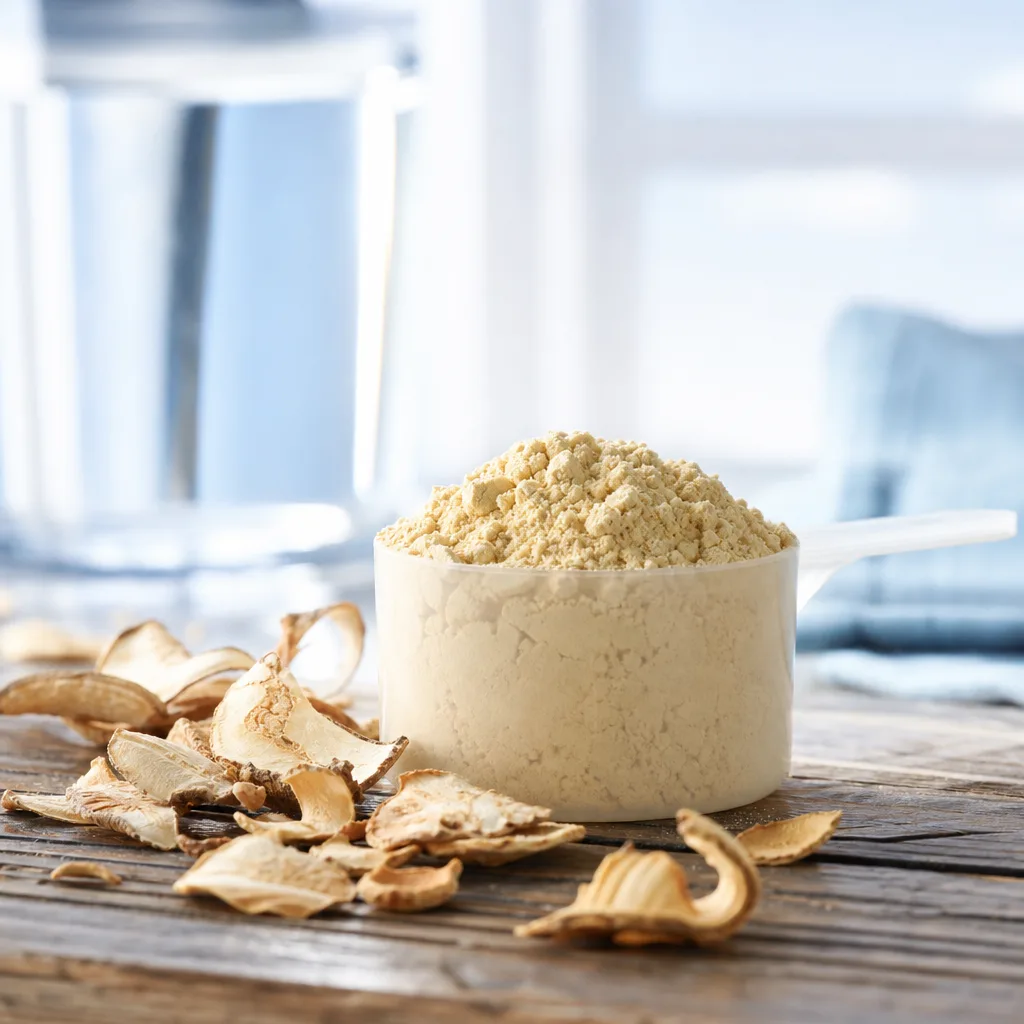
In studies, amounts in the range of about 1.5 to 3 g of maca powder daily were mostly used, sometimes somewhat more. As a rough guide, not a fixed instruction, maca powder is often stirred by the spoonful into smoothies, muesli or porridge. What counts for the actual serving is always the packaging information of the respective product, as content can differ depending on processing.
Maca comes in different varieties that differ in colour (yellow, red, black) and partly in their ingredient profile. In research, no variety has so far been clearly identified as superior, so statements about a particular colour variety should be treated with caution.
In taste, maca is considered earthy, slightly nutty and somewhat malty, which is why it combines well with sweet or savoury ingredients. In larger amounts, however, its own flavour can become dominant, so it is advisable to approach your personally tolerable amount slowly.
06
Tolerability and side effects
Maca is generally considered well tolerated at usual intakes. Occasionally gastrointestinal complaints such as bloating are reported, especially with higher amounts or a sensitive stomach. Since maca belongs to the cruciferous family, it can make sense with existing thyroid conditions to have use medically clarified beforehand, as some plant compounds of this family can influence iodine uptake.
With pregnancy, breastfeeding, existing illnesses or when taking medication, the same applies as for any dietary supplement: seek medical advice beforehand, as the evidence on safety in these situations is limited. Long-term studies spanning several years are so far lacking, so no conclusive statements can be made about the safety of permanent, very long-term use.
In shops, a distinction is also made between raw maca powder, gelatinised powder and concentrated extracts. In gelatinisation, the starch content of the root is partly broken down by heating, which is meant to improve tolerability for some people, although this is not clearly proven for all the effects advertised. Extracts are more concentrated and contain more plant compounds per gram than native powder, which also changes the recommended serving. For getting started, natural or gelatinised powder is usually suitable, as it is easy to build into the daily diet, with concentration and recommended daily amount depending on the packaging information for each product form.
07
What the research says
In summary, maca can be described as a traditional food with an interesting nutrient and plant compound profile, whose widely advertised effects on libido, energy and athletic performance are so far supported only by a small number of mostly short and methodologically limited studies. A clear, well-reproduced proof of efficacy is so far lacking for most of the claims in circulation, and larger, independently repeated studies with consistent results are rare. This does not necessarily mean that maca is ineffective, but it does mean that the actual effect in most people is likely to be considerably more modest than many marketing claims suggest. If you try maca, you should see it as a possible but scientifically unproven building block and not replace a balanced diet with it.
08
Frequently asked questions
Does maca work like a herbal potency remedy?
There are a few small studies with indications of a possible effect on sexual desire, but there is no reliable proof of efficacy comparable to classic potency drugs. With persistent complaints, medical clarification makes more sense than reaching for maca alone.
Can maca raise testosterone levels?
According to the current state of research, no influence of maca on testosterone levels has been demonstrated. Any effects on libido appear to work through other mechanisms.
How long does it take for maca to work?
In the available studies, maca was mostly taken for several weeks before possible effects were observed. An immediate, short-term effect is not to be expected.
Is maca suitable for everyone?
With existing thyroid conditions, during pregnancy and breastfeeding, and when taking medication, use should be discussed with a doctor beforehand.
Explore
Read next
 Protein types at a glance: whey, casein, plant-based and moreAn overview of all common protein types from whey to collagen, with a comparison table and links to detailed guides.
 Amino Acids: The Building Blocks of ProteinStructure, classification and functions of amino acids at a glance, with a table of all 20 proteinogenic amino acids and links to all guide…
 Supplements for Sport and Fitness: A Factual OverviewAll supplement categories at a glance, with the evidence rated from good to thin, plus safety and buying tips.