
6 min read
Strength Training After 40: Why It Becomes Important and How to Start
Why strength training after 40 becomes important for muscles, bones and joints, and what a starter or restart plan can look like.

From about the age of 40 the body changes noticeably: muscle mass and bone density tend to decline without targeted training, metabolism often becomes somewhat more sluggish and recovery takes on average longer than at 20. Strength training is one of the most effective levers for actively counteracting these developments, regardless of whether you have been training for a long time or are just starting out.
This guide shows why strength training becomes particularly important after 40, what you should pay more attention to at this stage of life and what a training plan for starting or restarting can look like. Whether you were active before and have paused for a long time or are starting strength training completely from scratch, the following basics will help you begin in a structured way and with realistic expectations.
01
Why Strength Training Becomes Particularly Important After 40
The loss of muscle mass with increasing age is a natural process that, without countermeasures, slowly begins from around the mid-thirties and continues over the decades. Anyone who does not counteract it loses not only strength but also metabolic activity, since muscle uses energy even at rest. Regular strength training sets an effective stimulus against this and can noticeably slow age-related muscle loss.
Bone density also benefits from loading training. From about 40, many people begin a gradual decline in bone density, and in women this process often speeds up further during and after the menopause. Strength training sets mechanical stimuli to which the bone can respond with adaptation, which can contribute to bone health in the long term; it does not replace medical check-ups and treatment for existing conditions.
Last but not least, strength training also affects joint health. Strong muscles around the knee, hip and shoulder stabilise the joints and can help cushion everyday loads better, which gains importance with increasing age.
This pays off in everyday life away from training, too. Anyone who builds strength regularly after 40 finds carrying, lifting and bending easier, is more resilient in everyday life overall and also lays a foundation for the decades that follow, in which physical independence becomes increasingly important for most people. An early start or restart at this stage of life therefore often only pays off fully after a considerable interval of time.

02
What to Pay More Attention to After 40
Compared with younger people who train, after 40 it is worth paying somewhat more attention to a few points. A thorough warm-up before the actual training becomes more important, since tendons and joints on average take somewhat longer to adjust to load. What a sensible warm-up programme can look like is explained in the guide Warming Up and Mobility.
Recovery time between training sessions also deserves more attention. While younger people often recover faster, after 40 muscle on average takes somewhat longer to recover fully. You can read more about this in the guide Recovery and Sleep. Anyone who has not trained at all for a long time or has pre-existing health conditions should seek medical advice before starting or restarting, especially in the case of cardiovascular disease, joint problems or other complaints.
Technique before weight applies at any age, but after 40 it is especially worthwhile to learn new exercises cleanly with little weight first, before increasing the load. How to raise the load sensibly and step by step afterwards is explained in the guide Progressive Overload. Another point is mobility: anyone who has done little sport over the years often has more limited mobility in the hip and shoulders, which can usually be improved step by step with regular mobility work and makes exercises more comfortable and safer over time.
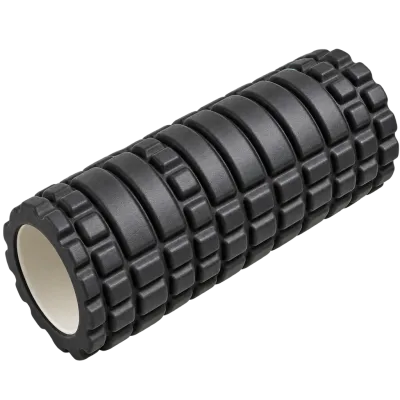 Matching productFoam RollerAmazon →

03
A Training Plan for Starting or Restarting
A full-body plan with two to three training days per week is well suited to starting or restarting after 40. The following table shows an example.
| Exercise | Sets | Repetitions | Rest |
|---|---|---|---|
| Dumbbell squat | 3 | 10 to 12 | about 90 seconds |
| Band or dumbbell row | 3 | 10 to 12 | about 90 seconds |
| Lunges | 2 | 10 to 12 per side | about 60 seconds |
| Dumbbell shoulder press | 3 | 10 to 12 | about 90 seconds |
| Core stabilisation (plank) | 3 | 20 to 40 seconds | about 45 seconds |
There should be at least one day of rest between training days; on non-training days an easy walk or light stretching is a good option, without it becoming an additional load. If you prefer a ready-made plan with clear structure, you will find suitable templates under Training Plans, including specialised plans for building muscle at this stage of life. After a few weeks on this basic plan, training can be differentiated further where needed, for example towards a split with more training days, once the basic exercises are securely mastered.

04
What You Need
To get started, a pair of dumbbells in different weights or an adjustable model is enough, plus a non-slip mat for floor and stretching exercises. Resistance bands are well suited to warming up and to joint-friendly exercise variants. Stable training shoes with good grip are especially important for squats and lunges, and a water bottle is also part of the basic kit. If you train at home and want to stick with it permanently, you also benefit from a fixed, tidy training corner where the equipment is within reach, rather than having to be gathered together before every training session. This noticeably lowers the barrier to actually carrying out a planned session, especially on days with little time or motivation.
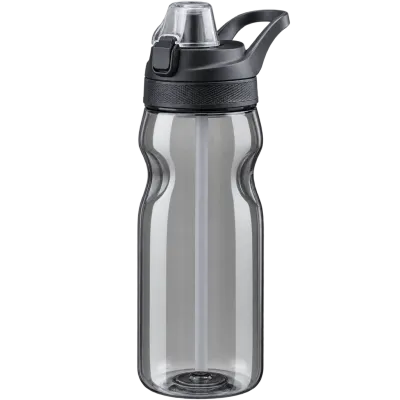 Matching productWater BottleAmazon →
05
Nutrition to Go with It
With increasing age, the protein requirement discussed in sports science tends to rise slightly, in order to counteract age-related muscle loss better. How much protein can make sense for you personally is explained in the guide Protein Requirement. If you want to build muscle in a targeted way, you will find further notes in the guide Protein for Muscle Building. A balanced diet with enough protein, vegetables and wholegrain products remains the basis; dietary supplements can sensibly complement it, but not replace it.

06
What the Research Says
Numerous sports science studies show that strength training can lead to measurable gains in strength and muscle mass in people over 40 and well beyond. The age-related decline cannot be stopped completely this way, but can often be slowed considerably. There are also numerous studies on positive effects on bone density and general everyday function, although the extent varies depending on training age, starting level and intensity. On more specific questions, such as the optimal training volume at certain stages of life, the evidence is in part less clear, which is why blanket figures cannot responsibly be given. There is agreement, however, that it is never too late to start strength training and that regular exercise can make a relevant contribution to health at any age. For individual dietary supplements advertised in connection with age and muscle maintenance, the evidence is partly thin or inconsistent; here a sober look is worthwhile rather than hasty expectations of individual products.
07
Frequently Asked Questions
Is it too late to start strength training after 40?
No, studies regularly show that even people who only begin strength training late can achieve clear gains in strength and muscle mass. What matters is a start adapted to your own level.
How often should I train after 40?
Two to three sessions per week with enough recovery in between are a good framework for most people. How much fits in detail depends on prior experience, time and individual recovery.
Do I have to see a doctor first?
If you have existing conditions, a longer break from training or are unsure about your own resilience, a medical check before starting makes sense, especially in the case of cardiovascular disease or joint problems.
Does strength automatically decline after 40?
Without targeted training, yes, although the process runs at different speeds from person to person. Regular strength training can slow the decline considerably and in many cases even allow strength gains.
Is strength training alone enough or do I also need endurance sport?
The two complement each other well. Strength training strengthens muscle and bone, while endurance sport supports the cardiovascular system and general fitness. A combination of both forms of training is considered sensible in sports science.
How long does it take for first successes to show?
Many people notice first strength gains after just a few weeks, while visible changes in the muscles and body composition usually take much longer. Concrete timeframes cannot responsibly be promised, since they depend heavily on individual circumstances.
What should I do about joint complaints?
If you have existing joint complaints, it is worth getting a medical or physiotherapeutic assessment beforehand of which exercises are suitable. Exercises can often be adapted in range of motion or with alternative variations so that training remains possible.
Explore
Read next
 Protein types at a glance: whey, casein, plant-based and moreAn overview of all common protein types from whey to collagen, with a comparison table and links to detailed guides.
 Amino Acids: The Building Blocks of ProteinStructure, classification and functions of amino acids at a glance, with a table of all 20 proteinogenic amino acids and links to all guide…
 Supplements for Sport and Fitness: A Factual OverviewAll supplement categories at a glance, with the evidence rated from good to thin, plus safety and buying tips.