
6 min read
Glycine: Function, Requirement and Occurrence
What glycine is, why it matters for connective tissue and which foods contain particularly high amounts.

Glycine is the smallest and simplest of the proteinogenic amino acids and is nevertheless needed for a whole range of tasks in the body, from connective tissue to the nervous system. Unlike many other amino acids, the body can make glycine itself to a certain extent, which is why it does not count among the essential amino acids.
Despite this special status as a non-essential amino acid, glycine has come increasingly into focus in recent years, mainly in connection with connective tissue, skin and sleep. That is a reason to look more closely at its roles and occurrence.
In this guide you will learn what glycine is, why it is non-essential but still important, what roles it plays in the body, roughly what the requirement and the occurrence in foods look like and what role it plays in dietary supplements. We also put into context what current research actually shows on this topic and where it still reaches its limits.
01
What is glycine?
Glycine is structurally the simplest of the twenty amino acids from which the body builds proteins. Because of its small size, it fits into protein structures where other, larger amino acids would not have enough room, for example in the tight helix structure of collagen.
While many amino acids are characterised by bulky side chains, the side chain of glycine consists of just a single hydrogen atom. This very simplicity makes it so flexible to use and explains why it occurs in so many different places in the body, from rigid structural proteins to mobile enzymes.
The body can make glycine itself from other substances, including the amino acid serine. Glycine is therefore classed as a non-essential, or more precisely a conditionally essential, amino acid: under normal conditions, the body's own production together with intake through food is sufficient, but in special situations with an increased requirement, such as strong growth or heavy strain, its own production can reach its limits.
This classification as conditionally essential distinguishes glycine from truly essential amino acids such as leucine or lysine, where an inadequate intake through food fundamentally cannot be compensated by the body's own production. With glycine the situation is more flexible, which makes it a rather underrated amino acid in everyday life.
 Matching productEAA PowderAmazon →
02
Occurrence in the body and roles
By quantity, glycine is one of the most common amino acids in the human body. This is mainly due to its central role in collagen, the most important structural protein of skin, tendons, ligaments, bones and connective tissue. About every third amino acid in the collagen molecule is glycine, which makes this amino acid particularly important for the stability of connective tissue.
Besides its structural function, glycine acts in the central nervous system as an inhibitory neurotransmitter, mainly in the spinal cord, where it is involved in controlling reflexes and muscle tone. Glycine also plays a role in the formation of glutathione, an important antioxidant made by the body, as well as in the synthesis of creatine and in detoxification in the liver.
In the kitchen, glycine is also partly responsible for the slightly sweet taste of some protein-rich foods such as gelatine, and its name derives from the Greek word for sweet.
Glycine also plays a role in interaction with other amino acids: together with cysteine and glutamic acid it forms the glutathione already mentioned, a central molecule in the body's protection against oxidative stress. The importance of glycine thus reaches far beyond connective tissue into general cell metabolism.
 Matching productCollagen PowderAmazon →
03
Requirement and occurrence
Because glycine is non-essential, there is no official intake recommendation as there is for essential amino acids. Estimates from research assume that the body needs several grams of glycine per day to cover all its tasks, and that the body's own production does not fully cover this amount under normal conditions, so that part of it is worth getting from the diet as well.
| Food (per 100 g) | Glycine, approximately |
|---|---|
| Gelatine | about 19 to 22 g |
| Pork rind | about 10 g |
| Chicken skin and connective tissue | about 3 to 4 g |
| Beef (with connective tissue) | about 1.5 g |
| Soybeans, dried | about 1.8 g |
| Peanuts | about 1.4 g |
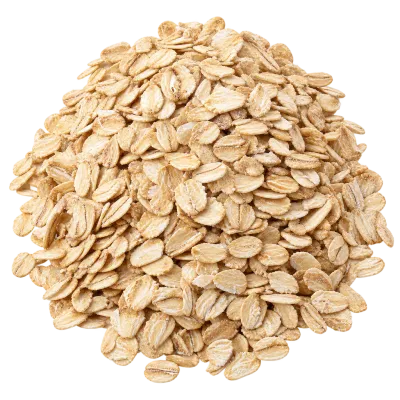
| Rolled oats | about 0.7 g |
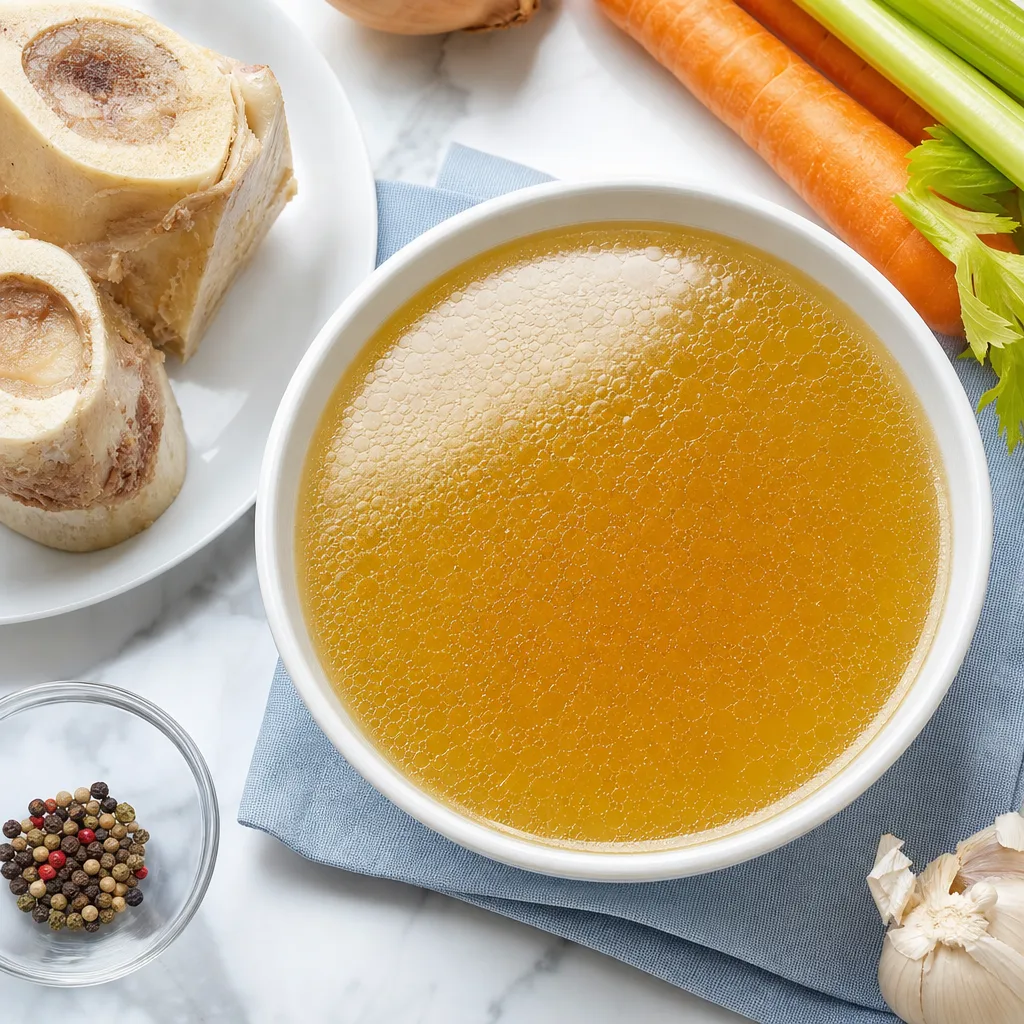
It is striking that classic muscle meat without skin and connective tissue provides comparatively little glycine, while parts rich in connective tissue such as skin, bone broth or gelatine are particularly rich in it. If you rarely eat such foods, you accordingly take in less glycine through food than would be expected from the amount of muscle meat alone. Plant protein sources such as legumes and wholegrain cereals also provide a certain amount of glycine, though usually less concentrated than animal sources rich in connective tissue.
 Matching productRolled OatsAmazon →
04
Role in supplements
Because glycine has a mild, slightly sweet taste, it can be dissolved in water or stirred into drinks without difficulty, without changing the taste much. This distinguishes it from many other isolated amino acids, which often have a distinctly bitter taste of their own.
Glycine is often offered in powder form as a stand-alone dietary supplement, among other things in connection with sleep, relaxation and general wellbeing. It is also used in some amino acid complexes and in collagen supplements, where it complements the natural amino acid composition of collagen.
For most people with a balanced diet, additional glycine intake is not strictly necessary, but depending on eating pattern, for example with a low consumption of foods rich in connective tissue, it can be a sensible complement. A dietary supplement does not replace a balanced diet, but can at most complement it in a targeted way.
Some collagen supplements advertise a particularly high glycine content, as this follows directly from the amino acid composition of collagen. For you as a consumer, what matters most here is the total amount of protein or amino acids per serving, not a single, isolated amino acid content that is advertised.
 Matching productWhey IsolateAmazon →
05
What the research says
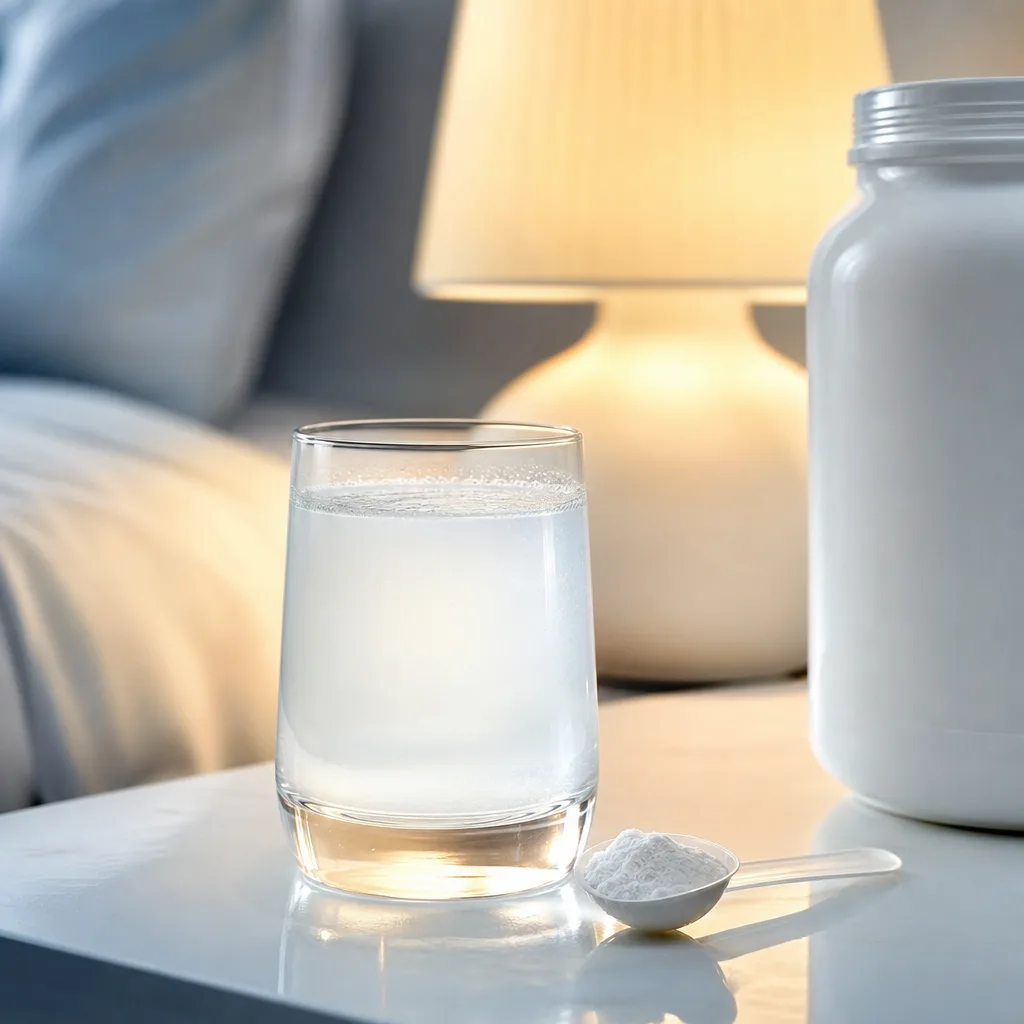
There are a few smaller studies on glycine and sleep that point to a possible improvement in subjectively perceived sleep quality when taken in the evening. The number and size of these studies is limited, however, so a reliable assessment remains difficult and the effects, if present, are rather moderate.
There is also research on the link between glycine and connective tissue, for example in combination with vitamin C in collagen formation, which overall speaks for a supporting role, without concrete healing claims for joints or skin being derivable from it. Overall, glycine is regarded as a well-studied amino acid with rather moderate effects, whose main areas of use are connective tissue, metabolism and, to a lesser degree, sleep quality.
There are also first studies on the link between glycine and metabolic health, but the results are still too preliminary to derive clear recommendations. As with many amino acids: a balanced diet with occasional foods rich in connective tissue is the soundest basis, and a supplement can at most complement it in a targeted way.
 Matching productL-TryptophanAmazon →
06
Frequently asked questions
Is glycine essential?
No, the body can make glycine itself. It is therefore regarded as a non-essential or conditionally essential amino acid, as its own production can reach its limits in some situations.
Which foods contain particularly high amounts of glycine?
Mainly foods rich in connective tissue such as gelatine, bone broth and skin, while classic muscle meat provides comparatively little.
Does glycine help with falling asleep?
Some smaller studies point to possible support for sleep quality, but the evidence is limited and does not allow reliable conclusions.
What else is glycine needed for?
Among other things for building collagen, for forming the antioxidant glutathione, for creatine synthesis and as an inhibitory messenger substance in the nervous system.
Is an overdose of glycine possible?
With normal use through foods or a usual dietary supplement, this is not a relevant issue for healthy adults. With a supplement, follow the information on the packaging, and if you have an existing condition, talk to your doctor beforehand.
Is glycine particularly interesting for athletes?
Glycine is discussed mainly in connection with connective tissue, for example tendons and ligaments. For classic muscle protein synthesis, on the other hand, other amino acids such as leucine play the bigger role.
Explore
Read next
 Protein types at a glance: whey, casein, plant-based and moreAn overview of all common protein types from whey to collagen, with a comparison table and links to detailed guides.
 Amino Acids: The Building Blocks of ProteinStructure, classification and functions of amino acids at a glance, with a table of all 20 proteinogenic amino acids and links to all guide…
 Supplements for Sport and Fitness: A Factual OverviewAll supplement categories at a glance, with the evidence rated from good to thin, plus safety and buying tips.