
6 min read
Coleus (Coleus forskohlii): Effects and Evidence
What is behind coleus and its active compound forskolin, and why the evidence on fat loss and testosterone is so far thin and inconsistent.

Coleus, botanically Coleus forskohlii, is a plant from traditional Indian medicine that in recent years has been promoted in dietary supplements, mainly because of its constituent forskolin, to support fat loss and muscle building.
In this guide you will learn what forskolin is supposed to be, which effects are often attributed to coleus, what the scientific evidence actually shows and what to look out for with possible side effects.
01
What coleus is
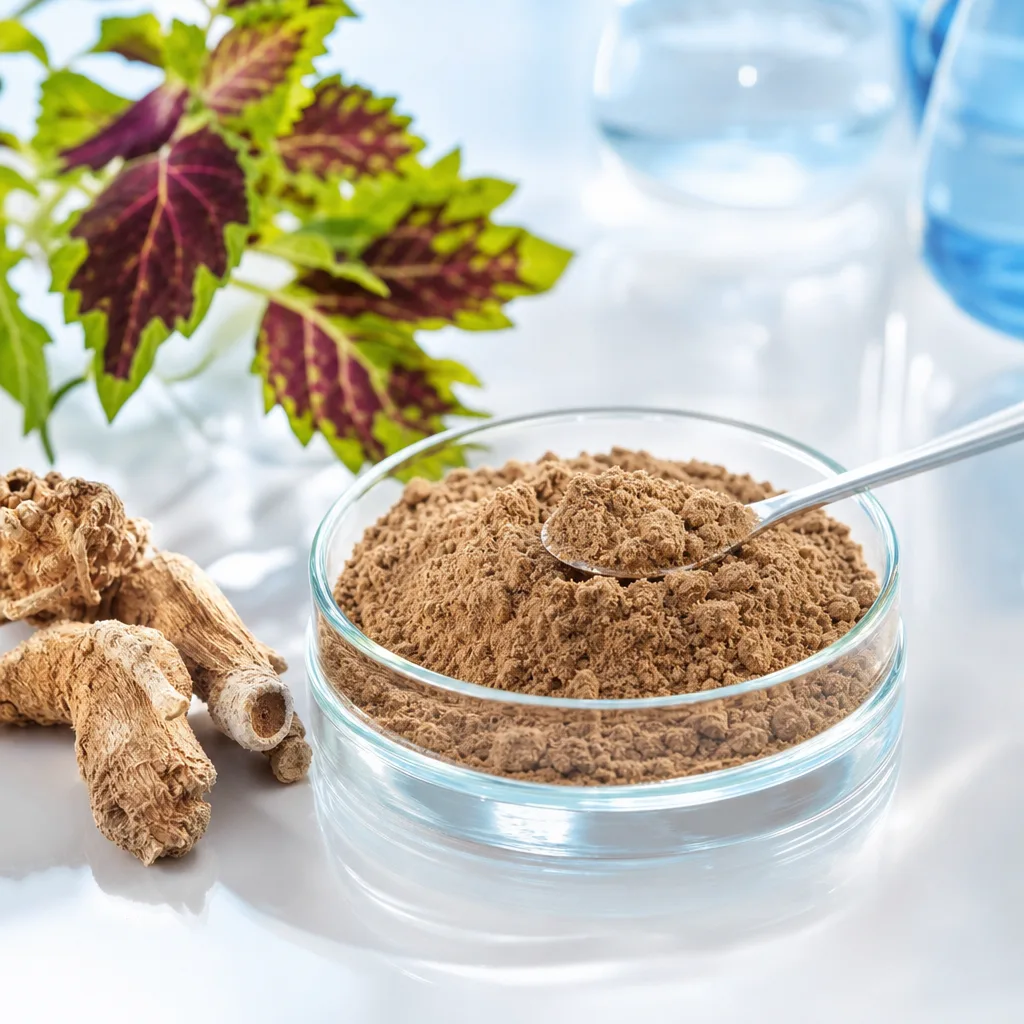
Coleus forskohlii is a plant from the mint family whose root contains the active compound forskolin. In traditional Indian medicine the plant has long been used for various complaints, and in the Western supplement industry it has been known for some years mainly as a supposed fat burner ingredient.
Forskolin became known in the supplement field mainly through media coverage that drew far-reaching headlines about weight loss from individual small studies. This media attention stands in striking disproportion to the actual number and quality of the underlying studies, a pattern that can be observed with many plant extracts promoted as miracle remedies.
In the laboratory, forskolin is credited with, among other things, an effect on an enzyme called adenylyl cyclase, which is involved in signal transmission in body cells. Manufacturers often derive claims about fat loss and metabolism from this cell mechanism, although such effects in laboratory experiments cannot be transferred directly to the whole human body.
This leap from test tube to whole organism is a fundamental problem of many dietary supplements with plant extracts: an effect observed in isolated cells or in animal studies with high doses does not have to appear in the same form in humans at usual supplement doses. This is exactly why many of the mechanisms of action named in marketing have so far not been confirmed in convincing studies in humans.
 Matching productPowder Storage ContainerAmazon →
02
What coleus is often credited with
| Advertised effect | Assumed mechanism |
|---|---|
| Support for fat loss | activation of enzymes in fat metabolism |
| Raising testosterone levels | cell signalling pathways that are meant to influence hormonal processes |
| Stimulating metabolism | assumed effect on thyroid function |
These effects often appear in marketing, but in this blanket form they are not well established in humans. If you want to look more closely at testosterone in connection with supplements, you will find a broader overview in the guide Testosterone boosters.
In many products, coleus is also offered not on its own but together with other plant compounds or caffeine. This makes it harder still to attribute a possible effect clearly to coleus, as the effects of several ingredients can overlap. If you are considering such a product, you should be aware that a perceived effect is not necessarily due to the advertised main ingredient.
On the pack, the forskolin content is usually stated as a percentage of the extract, which at first glance looks like a precise, scientifically grounded figure. For the actual effect in the body, however, this concentration figure alone says little as long as there are no adequate studies on the appropriate dose and on actual absorption in the human body.
03
What the research says
The data on forskolin and coleus in humans are thin overall. A few small studies exist with few participants and short duration, and their results are also inconsistent. Some studies report slight changes in body composition, while others find no measurable difference from a placebo. The frequently cited effects on testosterone levels are likewise isolated observations from small studies that cannot simply be generalised.
Large, independent studies with enough participants and a long observation period are still largely lacking. Marketing claims promising a clear and reliable effect on fat loss or muscle building therefore go beyond what the current evidence actually supports.
04
How coleus extract is offered
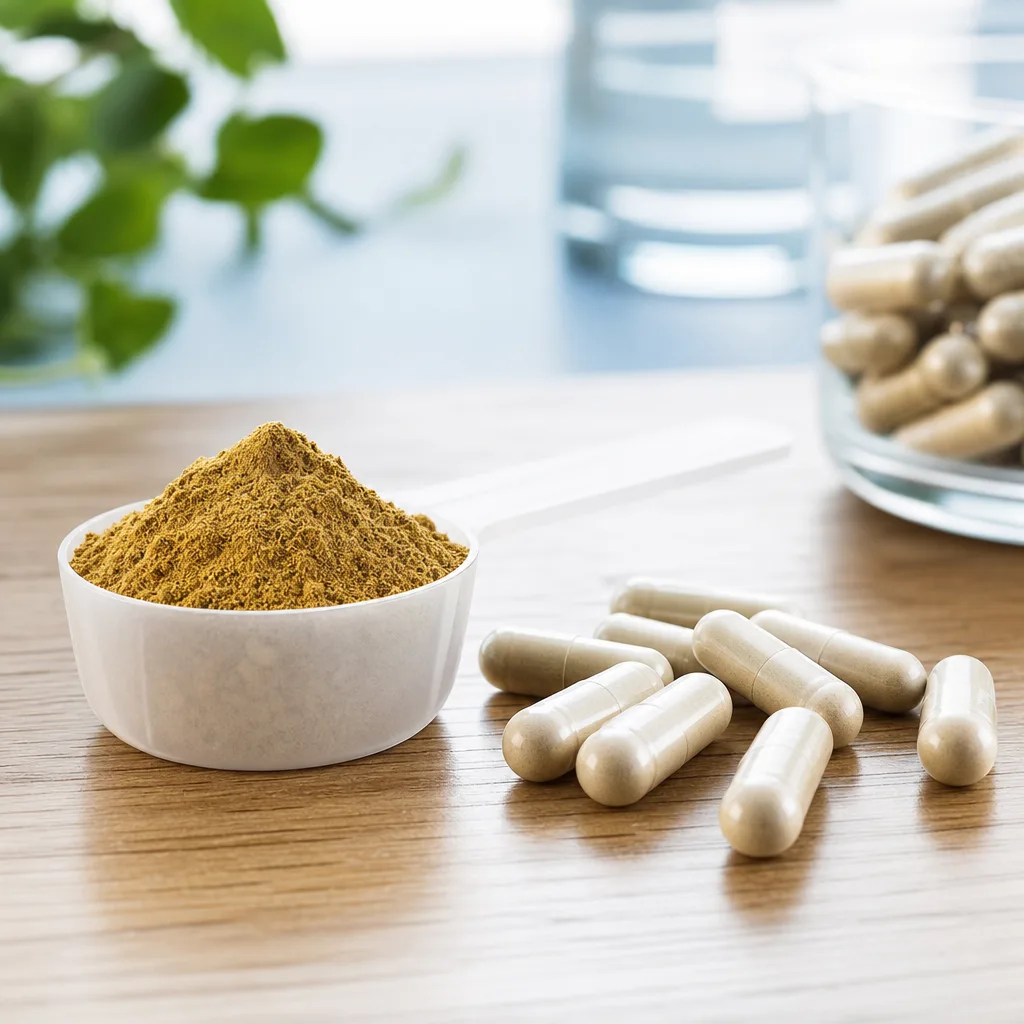
On the market, coleus extract is found mainly in capsule form, partly as a stand-alone product and partly as a component of larger fat burner blends with several plant ingredients and caffeine. The exact forskolin concentration differs, in some cases considerably, between products, which makes a direct comparison harder still, especially as there are no adequate studies on the actual effect for most of the concentrations common on the market.
05
Possible side effects and interactions
Forskolin can influence blood pressure and heart rate, which is why people with cardiovascular disease or low blood pressure, or who take blood-pressure-lowering or blood-thinning medication, should absolutely seek medical advice before taking it. Caution is also called for with kidney disease, during pregnancy and breastfeeding and before planned surgery, and talking to a doctor beforehand is sensible.
Reported side effects include lowered blood pressure, a faster heartbeat or gastrointestinal complaints. As with most herbal dietary supplements, the data on long-term safety are limited, which is why permanent, uncontrolled intake is not advisable.
06
Coleus compared with other fat burner ingredients
Coleus forskohlii is only one of many plant ingredients used in products meant to support fat loss and metabolism. As with bitter orange, guarana or green tea extract, a plausible-sounding mechanism of action is usually in the foreground here, while robust studies in humans showing a clear and reproducible effect on body weight are largely lacking. If you want a more comprehensive overview of such ingredients, you will find further information in the guides Fat burners and Guarana.
07
Who might consider coleus
Because of the thin evidence and the possible effect on blood pressure and heart rate, coleus is at most suitable for healthy adults without relevant pre-existing conditions who are aware of the limited evidence and strictly follow the amounts stated on the pack. A noticeable, reliable effect on fat loss or muscle building cannot be derived from this, however. Dietary supplements are in any case no substitute for a balanced diet and enough exercise, which remain the decisive factors for body composition and metabolism.
If you are interested in herbal supplements with thin evidence, you will meet similar patterns often: a plausible-sounding cell mechanism, a few small studies and marketing language that draws more certainty from them than the data allow. A critical look at the studies that are actually available is therefore worthwhile for any plant extract promoted with striking claims.
If you are wondering in general when supplementation makes sense, you will find a fundamental overview in the guide Balanced diet or supplementation, and if you want to look more broadly at fat burning, the guide Fat burning will help.
 Matching productL-CarnitineAmazon →
08
Frequently asked questions
Does coleus help with weight loss?
Robust evidence for a clear effect in humans is still lacking. Individual small studies show inconsistent, mostly slight results that offer no reliable basis for a promise of weight loss.
Does coleus raise testosterone levels?
There are isolated indications from small studies, but these cannot be generalised. Large, independent studies are so far lacking.
Is coleus safe?
Because of possible effects on blood pressure and heart rate, medical advice is necessary beforehand if you have pre-existing conditions, take medication, are pregnant or are breastfeeding. For healthy adults it is considered fairly unproblematic in the amounts stated on the pack.
How do I recognise unreliable marketing claims about coleus?
Claims promising quick, guaranteed or particularly strong weight loss go beyond what the current evidence supports. Cautiously worded, honest information is a better sign of a reputable product.
Is coleus the same as Coleus forskohlii?
Yes, coleus is the common name for the plant that is botanically called Coleus forskohlii and from whose root the active compound forskolin is obtained.
Can I take coleus long term?
Because of the limited data on long-term safety, permanent, uncontrolled intake is rather discouraged. Stick to the information on the pack.
Does coleus work better together with exercise?
A possible supporting effect cannot be ruled out, but it is not sufficiently established scientifically. Regular training and a balanced diet remain the decisive factors.
How do I recognise reliable information about forskolin on the pack?
A statement of extract concentration is no substitute for proof of effect. Look instead for realistic, cautiously worded statements rather than promises of quick or marked weight loss.
Explore
Read next
 Protein types at a glance: whey, casein, plant-based and moreAn overview of all common protein types from whey to collagen, with a comparison table and links to detailed guides.
 Amino Acids: The Building Blocks of ProteinStructure, classification and functions of amino acids at a glance, with a table of all 20 proteinogenic amino acids and links to all guide…
 Supplements for Sport and Fitness: A Factual OverviewAll supplement categories at a glance, with the evidence rated from good to thin, plus safety and buying tips.