
6 min read
Tryptophan: Effects, Requirement and Sources of the Essential Amino Acid
What the essential amino acid tryptophan does in the body, roughly how much you need and which foods contain it.

Tryptophan is an essential amino acid that your body cannot make itself and that therefore has to be taken in through food. Tryptophan is best known as the starting material for the messenger substance serotonin and the hormone melatonin, which is why it is often mentioned in connection with mood and sleep.
This guide shows you what roles tryptophan plays in the body, roughly how high the requirement is, which foods contain it and what the research actually says about the effects of tryptophan.
01
What tryptophan is and why it is essential
Tryptophan is a proteinogenic amino acid and at the same time the starting substance for the formation of several important compounds made by the body, including the neurotransmitter serotonin and, derived from it, the hormone melatonin. Part of the tryptophan taken in is also used to form niacin, that is, vitamin B3.
Since the body cannot make tryptophan itself, it counts among the essential amino acids and has to be supplied through protein-rich foods or, where appropriate, through dietary supplements. Compared with other amino acids, tryptophan occurs in most foods only in relatively small amounts.
This comparatively low concentration in foods explains why tryptophan often plays a bigger role in public perception than its amount in the body would suggest. The amino acid is known mainly for its special functions as a starting material for messenger substances, less for its amount in food.
 Matching productEAA PowderAmazon →
02
Roles of tryptophan in the body
As a proteinogenic amino acid, tryptophan is a building block of numerous body proteins and contributes to general protein synthesis. Its best-known function, however, lies in its role as a precursor of serotonin, a messenger substance involved, among other things, in regulating mood, sleep and appetite.
From serotonin, the body in turn forms melatonin in the pineal gland, which helps regulate the sleep-wake rhythm. For this reason tryptophan is often discussed in connection with sleep quality. Whether and how strongly additional tryptophan intake actually influences mood or sleep depends on many factors, including the rest of the diet, as tryptophan competes with other amino acids for transport into the brain.
This special double role as a starting material for an activating messenger substance by day and a sleep-promoting hormone at night makes tryptophan one of the most discussed amino acids outside the sports field. At the same time, this very complexity is one reason why simple, blanket recommendations on tryptophan intake are hard to make.
A smaller part of the tryptophan taken in is also used for the body's own formation of niacin, a B vitamin involved in energy metabolism. This conversion is limited, however, and does not replace an adequate niacin intake through the diet.
Besides serotonin and melatonin, tryptophan is also involved in the formation of kynurenine, a compound discussed in research in connection with the immune system and the nervous system. This metabolic pathway is complex and not yet fully understood, so no practical recommendations can currently be derived from it.
03
Requirement and reference values
The tryptophan requirement is usually covered along with total protein intake, similar to other essential amino acids. The DGE (German Nutrition Society) recommends about 0.8 grams of protein per kilogram of body weight per day for adults, and from about 65 years of age an intake of around 1.0 gram per kilogram is often cited.
In strength training and during diets, sports science often discusses values of about 1.2 to 2.0 grams of protein per kilogram of body weight as a range. Since tryptophan is present in rather small amounts in foods relative to other amino acids, an overall high-protein and varied diet can help ensure an adequate intake.
Because tryptophan competes in the brain with other, more abundant amino acids for the same transport mechanism, the actual effect of a certain amount of tryptophan from a meal is hard to predict. There is therefore no fixed figure as a recommendation for everyday life; a balanced diet with enough protein overall is more important.
In research, carbohydrate-rich meals are occasionally discussed in connection with improved uptake of tryptophan into the brain, since insulin can reduce competition from other amino acids. No reliable, generally valid recommendations for everyday life can be derived from this so far, however.
 Matching productSports BraAmazon →
04
Tryptophan in foods
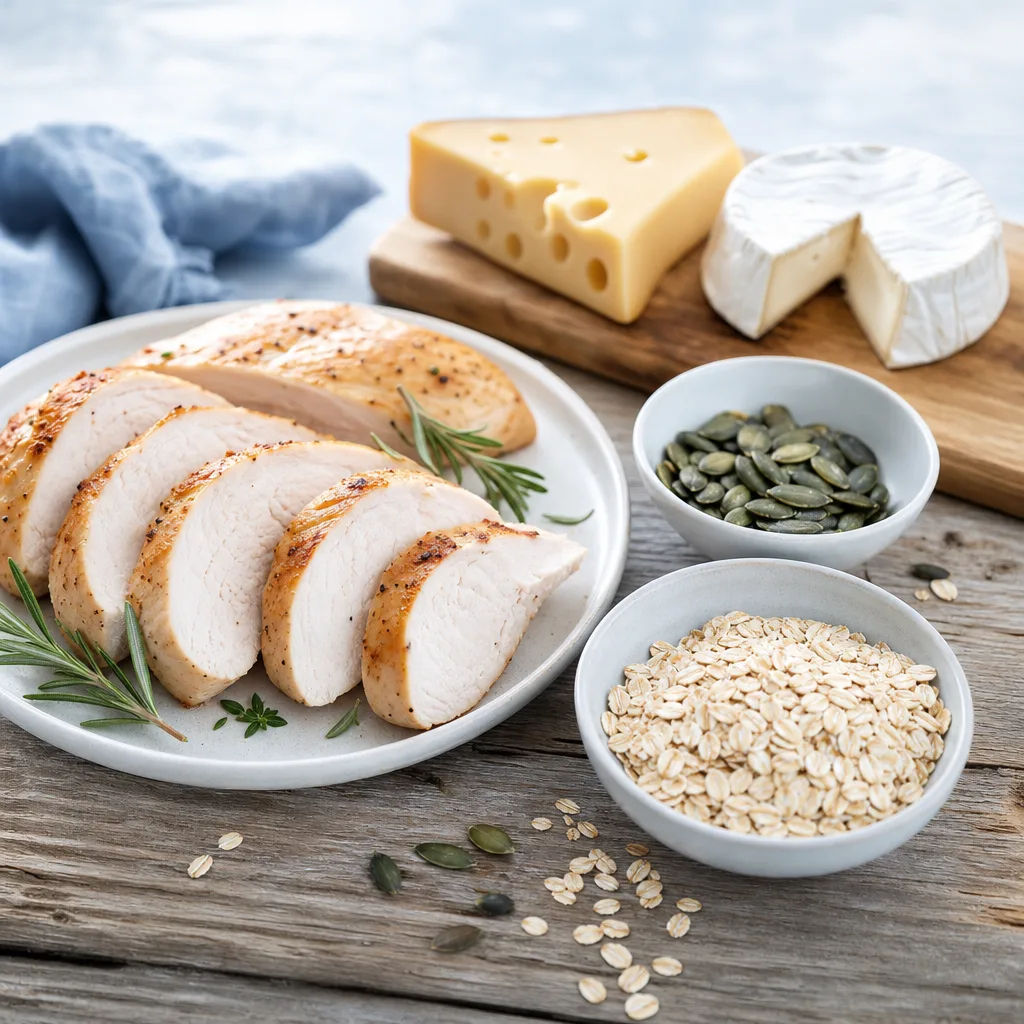
Tryptophan occurs in many high-protein foods, although usually in smaller absolute amounts than other essential amino acids. Poultry, cheese, fish and certain nuts and seeds are often mentioned in particular.
| Food | Typical tryptophan content per 100 g (rough order of magnitude) |
|---|---|
| Turkey breast | about 0.25 to 0.3 g |
| Chicken breast | about 0.2 to 0.25 g |
| Hard cheese (e.g. Parmesan) | about 0.4 to 0.5 g |
| Eggs | about 0.15 to 0.2 g |
| Pumpkin seeds | about 0.4 to 0.45 g |
| Rolled oats | about 0.15 to 0.18 g |
| Soybeans, cooked | about 0.2 to 0.25 g |
These values are typical orders of magnitude and can vary depending on variety and preparation. The myth that turkey makes you particularly tired because of its tryptophan content is not clearly supported scientifically, as many other factors of a meal influence tiredness afterwards.
Dairy products, soy products and some nuts also provide notable amounts of tryptophan. Since the absolute amount in foods is comparatively low, the overall composition of the diet plays a particularly large role for an adequate tryptophan supply.
 Matching productPeanut PasteAmazon →
05
Role in sports nutrition and supplements
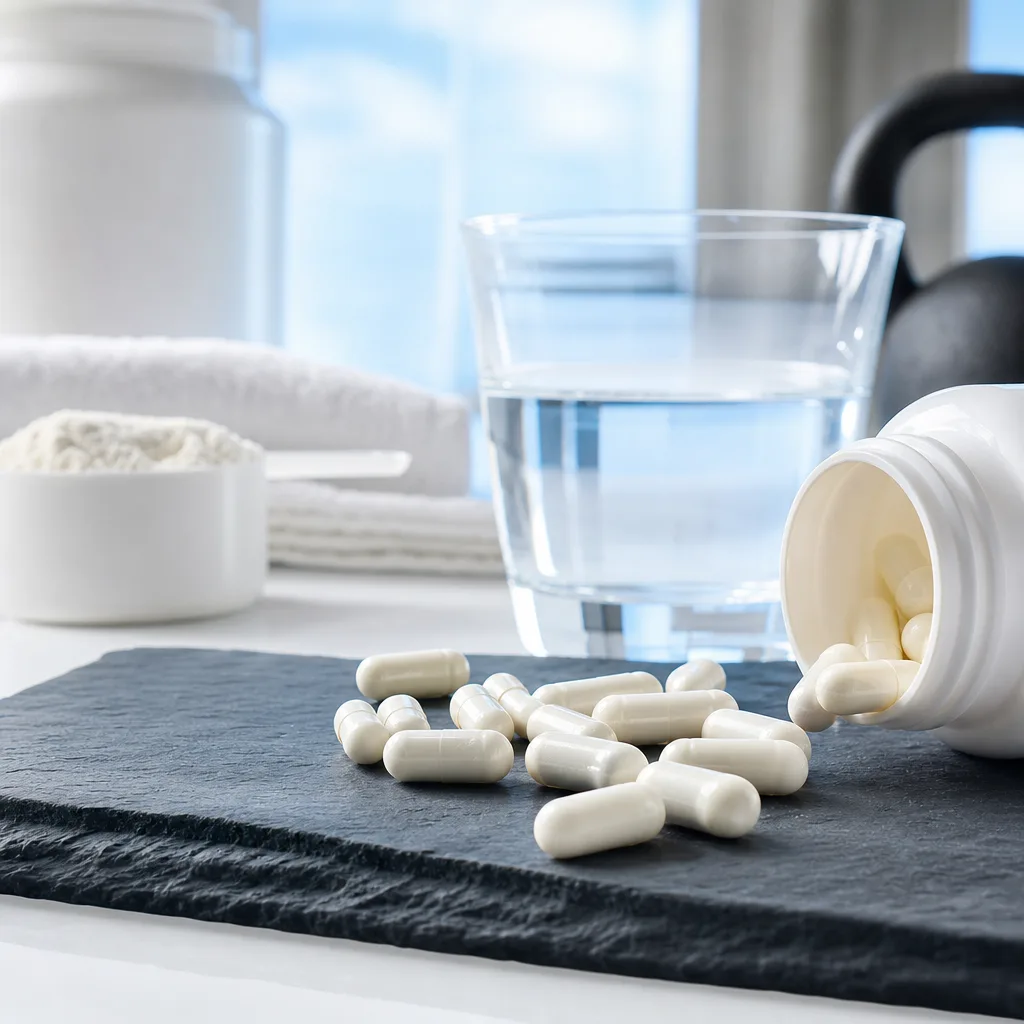
Tryptophan is occasionally offered as a single supplement, often with reference to sleep or relaxation, and as a component of comprehensive EAA products. In strength and endurance sport, tryptophan plays a minor role compared with other amino acids, as it is less directly linked to muscle building.
If you eat a balanced diet, you generally take in enough tryptophan through normal food. Whether a targeted supplement makes sense, for example for recovery or sleep support, differs from person to person and, if in doubt, should be discussed with a professional.
06
What the research says
The role of tryptophan as a precursor of serotonin and melatonin is well described biochemically. The evidence on whether additional tryptophan intake through dietary supplements reliably improves sleep or mood in healthy people, however, is mixed, and the effects in studies are often small and inconsistent.
One reason for this is that the transport of tryptophan into the brain is influenced by the simultaneous intake of other amino acids, which makes the effect of individual meals or supplements hard to predict. With existing mental health conditions or when taking medication that affects serotonin levels, tryptophan is moreover not a subject for self-experimentation, and medical advice is important. Dietary supplements are not a substitute for a balanced diet.
The evidence on the link between tryptophan intake and general everyday wellbeing is also inconsistent. Some studies report small, short-term effects on mood, others find no relevant differences, which overall argues for a cautious and restrained assessment of corresponding advertising claims.
07
Frequently asked questions
Does tryptophan from turkey really make you tired
The tryptophan content of turkey does not differ significantly from that of other kinds of meat. Tiredness after a large meal is more likely related to the total amount of calories and carbohydrates than to the tryptophan content alone.
Does tryptophan help with sleep problems
There is research on the link between tryptophan and sleep, but the results are mixed and cannot be transferred across the board to every person. For persistent sleep problems, a medical assessment makes more sense than self-medication with supplements.
Can you take tryptophan together with antidepressants
Since tryptophan is involved in the formation of serotonin, additional intake in combination with medication that affects serotonin levels can be risky. In any case, discuss this with a doctor beforehand.
Is a normal diet enough to get enough tryptophan
With a balanced, high-protein diet, tryptophan intake is adequately covered for most people. Targeted supplementation is usually only a topic in particular individual situations.
Explore
Read next
 Protein types at a glance: whey, casein, plant-based and moreAn overview of all common protein types from whey to collagen, with a comparison table and links to detailed guides.
 Amino Acids: The Building Blocks of ProteinStructure, classification and functions of amino acids at a glance, with a table of all 20 proteinogenic amino acids and links to all guide…
 Supplements for Sport and Fitness: A Factual OverviewAll supplement categories at a glance, with the evidence rated from good to thin, plus safety and buying tips.