
6 min read
Nettle Root: Use, Effects and Evidence
What nettle root is traditionally used for, what supplements promise with it and how thin the evidence in sport is.

Nettle root comes, as the name says, from the stinging nettle, but here it is not the familiar herb but the root of the plant that is used. In dietary supplements it appears both in connection with traditional herbal use and, less often, with sport-related claims.
This guide explains which constituents nettle root contains, what it is traditionally used for, what is advertised for it in sport and what research actually shows.
01
What nettle root is
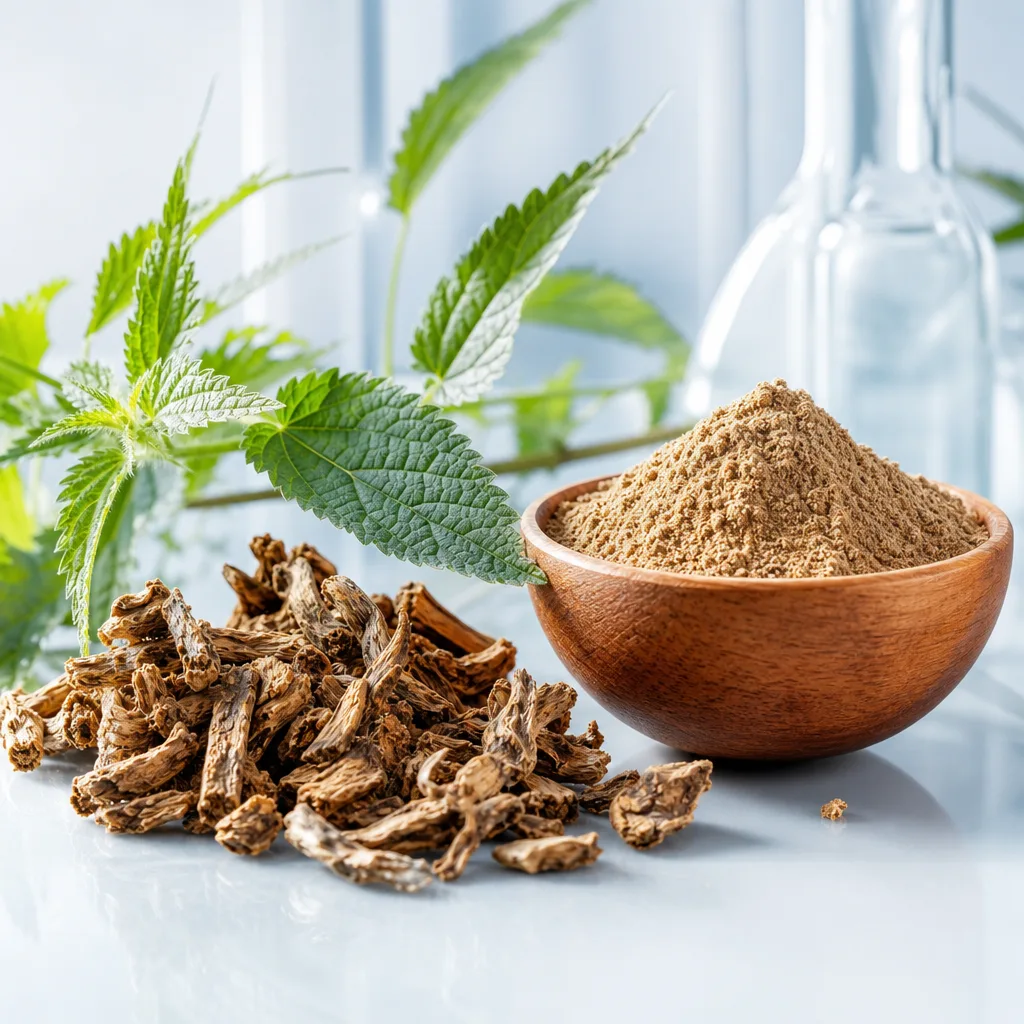
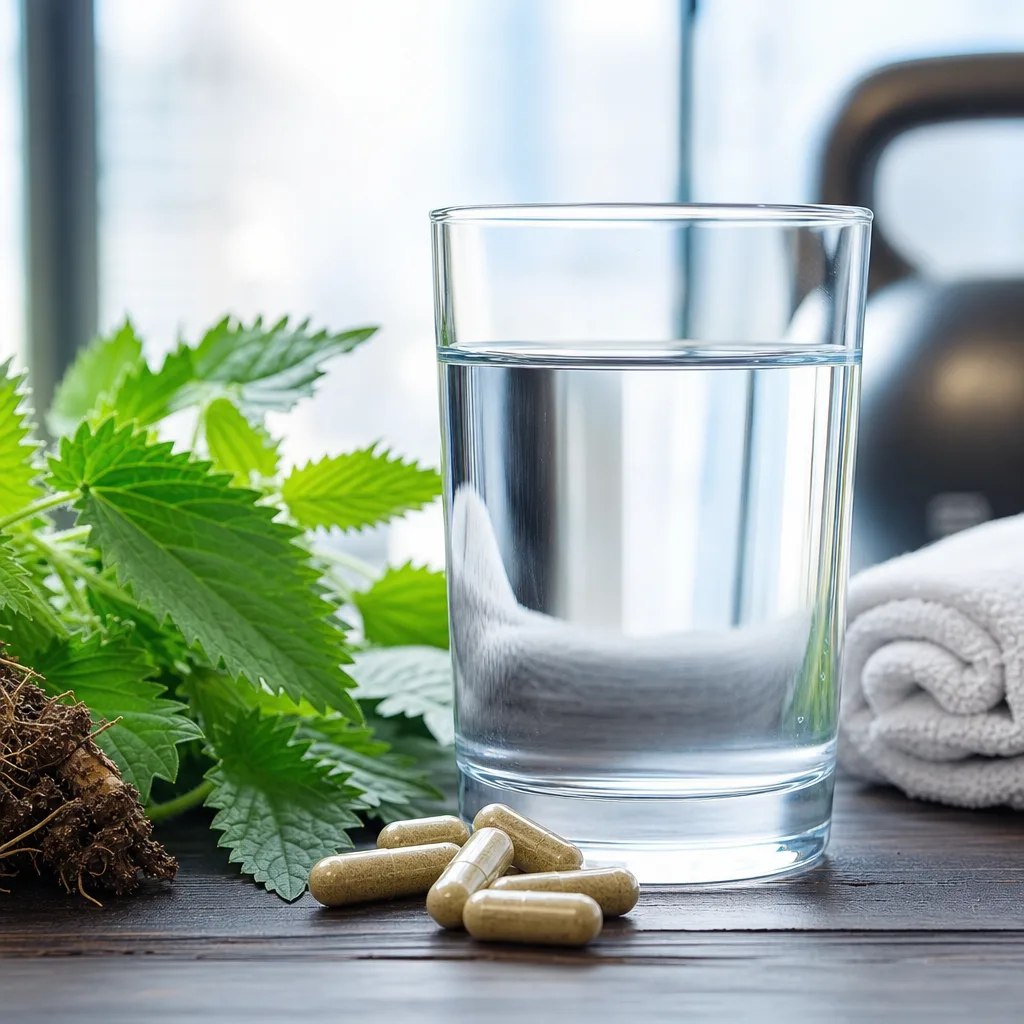
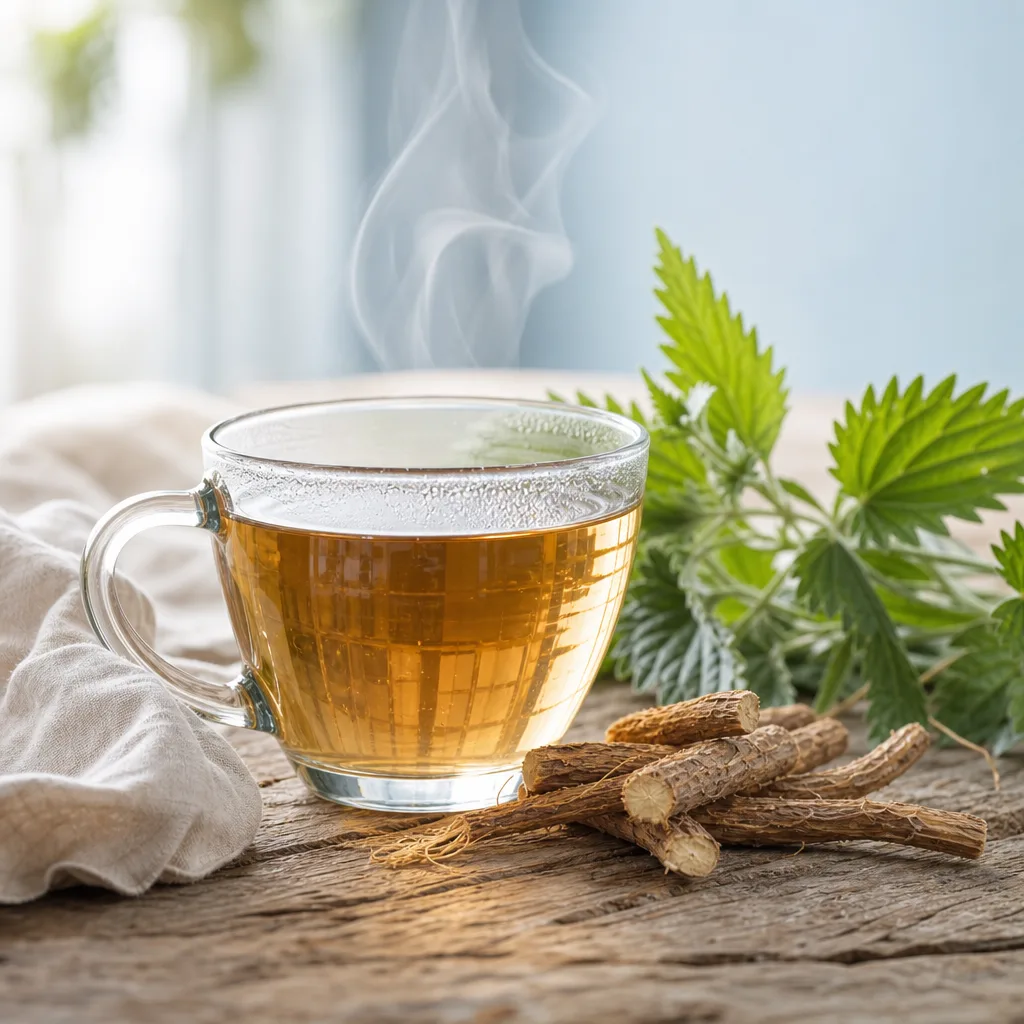
The root of the stinging nettle contains, among other things, plant sterols, lectins, polysaccharides and various secondary plant compounds. It is mostly offered as an extract in capsules and less often as loose tea, since the fresh root, like the herb itself, can be irritating and is therefore not eaten raw.
The root should be clearly distinguished from nettle leaves, which are also used in the kitchen and as tea, but which bring a different nutrient and active compound profile, for example a higher content of certain vitamins and minerals. When products speak of nettle root, they specifically mean the underground part of the plant, not the herb.
The stinging nettle grows wild across large parts of Europe and was used in folk medicine long before its use in dietary supplements. The root used for harvesting is usually dried and processed further into extract, and the exact manufacturing process varies by manufacturer and can influence the content of the plant compounds it contains.
02
Constituents at a glance
| Constituent | Occurrence |
|---|---|
| Plant sterols (phytosterols) | present in the root, traditionally linked with use for BPH |
| Lectins | the plant's own protein compounds |
| Polysaccharides | complex sugar compounds |
| Tannins | secondary plant compounds with an astringent effect |
03
Traditional use for prostate complaints
The best-known and best-studied use of nettle root extract concerns men with a benign enlargement of the prostate, technically called benign prostatic hyperplasia or BPH, which can be accompanied by problems passing urine. Here, nettle root extract is used traditionally and in some herbal medicines to relieve the accompanying symptoms, often in combination with other plant substances.
This use concerns a specific health complaint and belongs in medical hands. Self-diagnosis or self-treatment of prostate complaints with dietary supplements is not appropriate. Instead, medical advice should always be sought when such symptoms occur.
In pharmacies and shops, both approved herbal medicines with a defined active ingredient content and freely available dietary supplements containing nettle root extract can be found for this purpose. The important difference: a medicine goes through an approval procedure with proof of effect and quality, whereas a dietary supplement does not. If you are specifically looking for relief of BPH symptoms, you are better advised to use an approved product recommended by a doctor than a dietary supplement chosen freely.
04
Nettle root in sport
In sport and fitness, nettle root extract is occasionally linked with a possible influence on testosterone levels. The assumption behind this is that certain constituents of the root could influence the binding of testosterone to a transport protein in the blood. This assumption comes mainly from laboratory experiments with isolated cell structures and cannot simply be transferred to a noticeable effect in people who train.
The diuretic effect sometimes attributed to nettle is also occasionally mentioned in a sport context, for example in connection with supposed dehydration before competitions. Such use is expressly discouraged, as deliberate dehydration can seriously disturb electrolyte balance and impair performance and health, regardless of the agent used.
A direct link between taking nettle root extract and a measurable gain in muscle mass or strength has so far not been sufficiently established in humans. If you are generally interested in testosterone in connection with training and nutrition, you will find a more detailed overview in the guide Testosterone.
In many sports nutrition products, nettle root extract is also not used as the sole active ingredient but as part of a larger blend of various plant extracts and minerals. This makes it harder still to trace a possible effect clearly to nettle root rather than to other components of the blend or simply to the accompanying training and diet.
 Matching productMulti-Component ProteinAmazon →
05
What the research says
There are more studies on use for BPH symptoms than on sport-related use, although here too many studies are small, were often combined with other plant substances, and their results overall must be rated as moderate and not consistently uniform. For a performance-enhancing or testosterone-raising effect in a sport context, a sufficient number of robust, independent studies in humans that go beyond laboratory observations is so far lacking. Marketing claims that promote nettle root across the board as a natural testosterone booster for athletes therefore go beyond the current evidence.
06
Other traditional areas of use
Besides use for BPH symptoms, nettle root is occasionally also named in traditional herbal use for rheumatic complaints or to support excretory function. For these areas of use, the scientific backing is overall even weaker than for prostate complaints, which is why a medical assessment makes more sense here too than self-treatment on your own.
07
Intake and possible side effects
Nettle root extract is considered well tolerated by most people in the amounts stated on the pack. Occasionally, mild gastrointestinal complaints such as nausea or bloating are reported. If you have a known allergy to nettle, existing conditions, especially of the prostate, or take medication, seek medical advice before taking it, as you should during pregnancy and breastfeeding.
08
Nettle root compared with other plant extracts
As with many plant extracts in the sport and supplement field, the same applies to nettle root: traditional use or a plausible laboratory finding is no substitute for well-controlled studies in humans that actually show the advertised effect under everyday conditions. Similar patterns can be found, for example, with coleus, which is also promoted with claims about testosterone and metabolism but whose evidence is comparably thin. If you are interested in herbal support for training, you will find a broader overview in the guide Testosterone boosters.
09
Combination products with nettle root
On the market, nettle root extract is often found not as a stand-alone product but combined with other plant compounds such as pumpkin seed extract or saw palmetto, especially in products for older men. Such combinations are often promoted as a tuned formula, without adequate evidence of effect for each individual ingredient, let alone for the combination as a whole. A look at the ingredient list and advice from medical or pharmaceutical professionals help with the assessment more than the marketing claims on the pack.
10
Who it is suitable for
For men with mild BPH-related complaints that have been checked by a doctor, nettle root extract can be a complementary option after consultation with a doctor, always as part of medical treatment, not as a replacement for it. For sporting purposes, on the other hand, sufficient evidence is lacking, so taking it solely to improve performance cannot rest on scientifically established effects. Dietary supplements are in any case no substitute for a balanced diet and appropriate training.
11
Frequently asked questions
What is nettle root traditionally used for?
The best-known use is for the accompanying symptoms of a benign enlargement of the prostate, in consultation with medical professionals.
Does nettle root raise testosterone levels?
Evidence for this so far comes mostly from laboratory experiments, and a reliable effect in people who train has not been sufficiently shown.
Does nettle root make sense for athletes?
A performance-enhancing effect is not well established scientifically. For general nutrient supply in sport, a balanced diet and enough protein matter more.
What side effects can nettle root have?
Mild gastrointestinal complaints are occasionally reported. If you have pre-existing conditions, especially of the prostate, or take medication, taking it should be checked with a doctor first.
Is nettle root suitable as an alternative to testosterone boosters?
Sufficient evidence in humans is lacking for such use. If you are interested in this topic, you will find a broader overview in the guide Testosterone boosters.
How quickly does nettle root show an effect?
For traditional use in connection with prostate complaints, use over several weeks is usually assumed before an assessment is possible. An immediately noticeable effect is not to be expected.
Can I take nettle root long term?
At the amounts stated on the pack it is often taken over longer periods, but for health complaints, taking it belongs in medically supervised treatment.
Does nettle root differ from nettle herb?
Yes, the two plant parts contain different constituents and are used for different purposes. Root extract is mostly associated with prostate complaints, the herb rather with general nutrient supply.
 Matching productPre-Workout BoosterAmazon →
Explore
Read next
 Protein types at a glance: whey, casein, plant-based and moreAn overview of all common protein types from whey to collagen, with a comparison table and links to detailed guides.
 Amino Acids: The Building Blocks of ProteinStructure, classification and functions of amino acids at a glance, with a table of all 20 proteinogenic amino acids and links to all guide…
 Supplements for Sport and Fitness: A Factual OverviewAll supplement categories at a glance, with the evidence rated from good to thin, plus safety and buying tips.