
6 min read
Methionine: Effects, Requirement and Sources of the Sulphur-Containing Amino Acid
What the essential, sulphur-containing amino acid methionine does in the body and which foods contain it.

Methionine is an essential, sulphur-containing amino acid. Essential means that your body cannot make methionine itself and the amino acid therefore has to be taken in through food. As the only sulphur-containing essential amino acid, methionine has a special position in metabolism.
In this guide you will learn what roles methionine plays in the body, roughly how high the requirement is, which foods contain it and what role it plays in sports nutrition and dietary supplements.
01
What methionine is and why it is essential
Methionine is a proteinogenic amino acid that contains a sulphur group. This chemical feature makes methionine an important starting material for sulphur-containing compounds in the body, including the amino acid cysteine, which the body can partly form from methionine.
Since the human metabolism cannot make methionine itself, it has to be supplied regularly through protein-rich foods or, where appropriate, through dietary supplements. Methionine is also the starting amino acid with which the formation of almost all proteins in the body begins.
This role as a starting building block makes methionine biochemically particularly important, even though the daily amount needed is rather small compared with some other essential amino acids. A balanced diet with different protein sources generally supplies enough methionine for these fundamental metabolic tasks.
02
Roles of methionine in the body
Methionine is involved in numerous metabolic processes. It serves as the starting material for S-adenosylmethionine, a compound that plays a central role in the body in so-called methylation reactions. Such reactions are involved, among other things, in regulating gene activity and in the metabolism of various messenger substances.
In addition, methionine is involved in the formation of cysteine, which in turn is needed for the synthesis of glutathione, an important antioxidant compound made by the body. Methionine is therefore often mentioned in connection with protecting cells from oxidative stress, although these effects come about indirectly through the formation of other compounds.
This chain from methionine via cysteine to glutathione shows how closely amino acid metabolism is linked to other protective mechanisms of the body. A methionine deficiency would interrupt this chain at its starting point, which is why an adequate intake is regarded as the basis for several downstream metabolic processes.
As a proteinogenic amino acid, methionine is also a structural building block of muscle and other body proteins and thus contributes to protein synthesis. Methionine is also considered relevant for the metabolism of hair and nails, which contain a high proportion of sulphur-containing proteins.
It is also interesting that the body forms the amino acid homocysteine from methionine, an intermediate product of metabolism that is broken down again with the help of further vitamins such as B6, B12 and folic acid. A balanced intake of these vitamins is therefore regarded as a sensible complement to a diet rich in methionine, without any independent recommendation for healthy people being derived from this.
 Matching productMultivitaminAmazon →
03
Requirement and reference values
As with other essential amino acids, the methionine requirement is usually covered by total protein intake. The DGE (German Nutrition Society) recommends about 0.8 grams of protein per kilogram of body weight per day for adults, and from about 65 years of age an intake of around 1.0 gram per kilogram is often cited.
In strength training and during diets, sports science often discusses values of about 1.2 to 2.0 grams of protein per kilogram of body weight. With a balanced diet containing enough high-protein foods, methionine intake is usually covered automatically, and a targeted extra portion is generally not necessary.
Since methionine is needed in rather smaller amounts than some other amino acids, a deliberate overdose from normal foods is practically ruled out. More important than the exact amount of methionine is, here too, the overall quality of the diet, that is, an adequate intake of calories and protein from different sources.
Certain life situations, such as a very one-sided diet or heavily restricted eating patterns, can increase the risk of an inadequate methionine intake. In such cases, individual nutrition counselling can help to ensure a supply of all essential amino acids, including methionine.
04
Methionine in foods
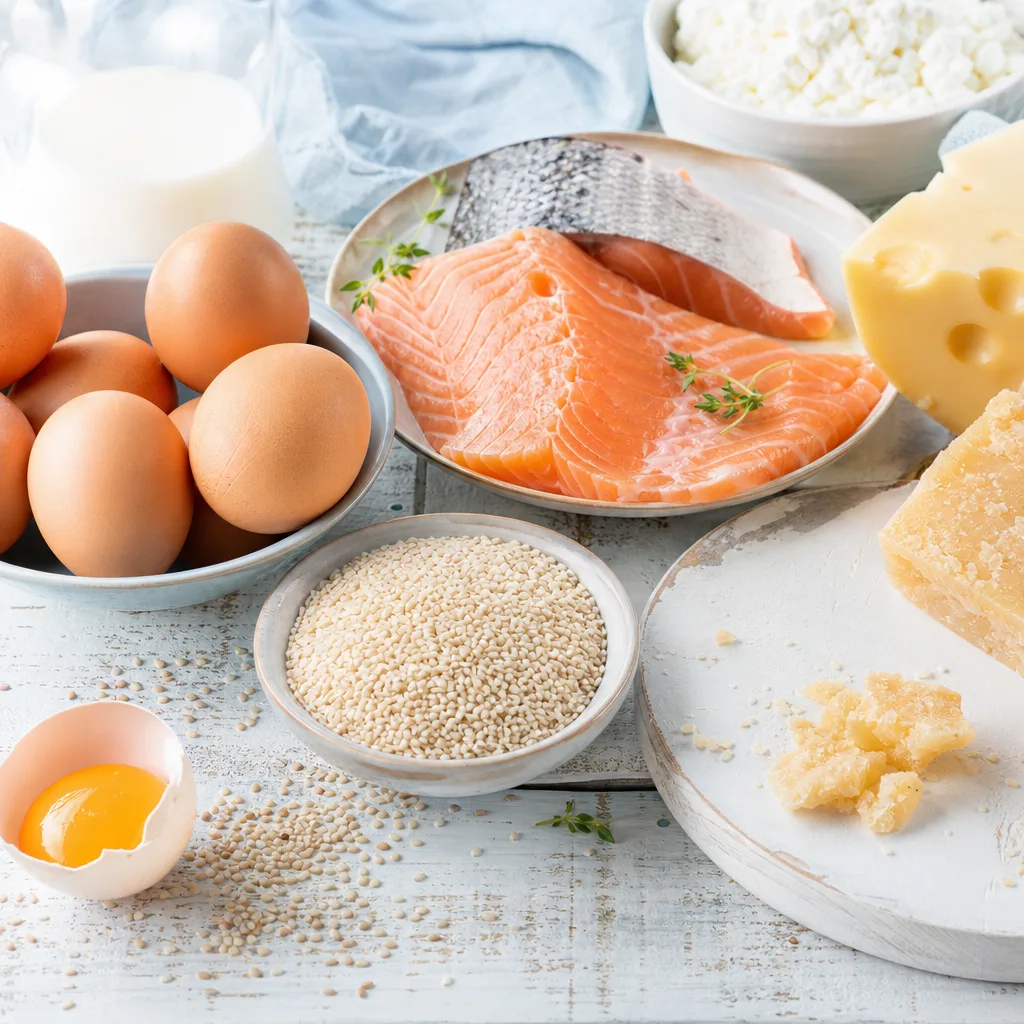
Particularly high methionine contents are found in animal foods such as eggs, fish, meat and dairy products. Plant foods usually contain somewhat smaller amounts, with sesame and Brazil nuts among the exceptions.
| Food | Typical methionine content per 100 g (rough order of magnitude) |
|---|---|
| Eggs | about 0.4 to 0.45 g |
| Tuna | about 0.8 to 0.9 g |
| Chicken breast | about 0.6 to 0.7 g |
| Low-fat quark | about 0.25 to 0.3 g |
| Brazil nuts | about 1.0 to 1.1 g |
| Sesame | about 0.5 to 0.6 g |
| Lentils, cooked | about 0.08 to 0.1 g |
These figures are typical orders of magnitude that can vary depending on variety and preparation. If you eat a purely plant-based diet, you can usefully complement your methionine intake by combining different plant protein sources such as cereals and legumes, as legumes usually provide little methionine but a lot of lysine, and cereals the other way round.
Nuts and seeds can also have a surprisingly high methionine content, as in the case of Brazil nuts and sesame. If you regularly include a small portion of such foods in your meals, you can further support methionine intake on a mainly plant-based diet.
 Matching productSports BraAmazon →
05
Role in sports nutrition and supplements
Methionine is a component of comprehensive EAA supplements, which contain all the essential amino acids in a certain ratio. As a stand-alone single supplement, methionine plays a smaller role in sport than, for example, the branched-chain amino acids.
In some dietary supplements, methionine is also advertised in connection with supporting hair, skin and nails, as it is involved in forming sulphur-containing structural proteins. If you eat a balanced diet and take in enough protein, you generally already meet your methionine requirement through normal food.
Occasionally, methionine is also mentioned in connection with supporting liver function, as it is involved in detoxification processes in which sulphur-containing compounds play a role. Such statements should not be confused with a therapeutic effect, however: for liver disease, medical advice is always needed rather than self-medication with dietary supplements.
06
What the research says
The fundamental importance of methionine as an essential amino acid and as a starting material for methylation reactions and for the formation of cysteine and glutathione is well established. The evidence is less clear when it comes to specific effects of additional methionine intake beyond the normal requirement, for example on hair or skin quality.
There are different approaches in research on the link between methionine intake and ageing processes, including a possible moderate reduction of methionine intake in certain contexts. This research is mostly at an early stage and does not allow recommendations for healthy, active people. Dietary supplements are not a substitute for a balanced diet.
The often assumed link between methionine and improved liver detoxification is also assessed inconsistently in research. While the basic biochemical role of methionine in such processes is undisputed, there is a lack of solid evidence that additional intake beyond the normal requirement brings a measurable added benefit in healthy people.
07
Frequently asked questions
Why is methionine called a sulphur-containing amino acid
Methionine contains a sulphur atom in its chemical structure. It shares this feature with cysteine, which the body can partly form from methionine. Both amino acids are important starting materials for sulphur-containing compounds in metabolism.
Is methionine a concern for vegans
Plant foods usually contain somewhat less methionine than animal sources, but a combination of cereals, nuts and seeds with legumes can cover the intake well. For questions about your individual supply, nutrition counselling can help.
Does methionine help against hair loss
Methionine is involved in forming sulphur-containing structural proteins, which are also found in hair. A direct, well-documented effect of additional methionine intake on hair loss cannot be derived from the current evidence, however, and for persistent hair loss a medical assessment makes sense.
Can a high methionine intake have disadvantages
An excessive intake from normal foods is unlikely. For high-dose supplements, as always: follow the amounts on the packaging, and talk to a doctor beforehand if you have a pre-existing condition, are pregnant or are taking medication.
 Matching productPea ProteinAmazon →
Explore
Read next
 Protein types at a glance: whey, casein, plant-based and moreAn overview of all common protein types from whey to collagen, with a comparison table and links to detailed guides.
 Amino Acids: The Building Blocks of ProteinStructure, classification and functions of amino acids at a glance, with a table of all 20 proteinogenic amino acids and links to all guide…
 Supplements for Sport and Fitness: A Factual OverviewAll supplement categories at a glance, with the evidence rated from good to thin, plus safety and buying tips.