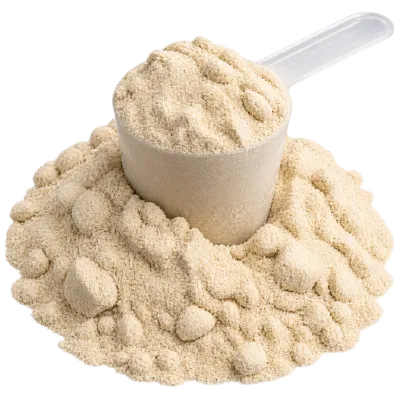
Seitan is made from wheat flour by washing out the starch and other components until mainly the gluten protein it contains is left. This protein framework is then seasoned and cooked, producing a fibrous, firm structure that can look like meat. Because of its firm, fibrous structure, seitan is particularly suited to dishes in which pieces of meat would otherwise be used, such as strips in sauce or skewers.
Because it is made from gluten, seitan is very high in protein but not suitable for a gluten-free diet. The amino acid profile of wheat protein is less complete than that of many other protein sources, so combining it with other plant or animal proteins makes sense. In the kitchen, seitan is usually fried, braised or cut into strips. Before cooking it is often marinated so that the rather neutral base takes on extra flavour.
How plant protein sources can be sensibly combined is explained in the guide Combining plant protein sources. Other plant-based alternatives with a firm consistency are described in the entries Tofu and Tempeh.