
6 min read
L-Arginine: Effect on Blood Flow and What Studies Show
How L-arginine works in the body, why oral intake has its limits and what studies actually show about the pump effect in training.

L-arginine is an amino acid known in sport mainly for its role in blood flow. As a precursor of nitric oxide, it is said to widen the blood vessels and thereby improve blood flow to the muscles during training, the so-called pump feeling. Besides the fitness field, arginine has also been studied in medicine for some time, including in connection with vascular function.
This guide explains what L-arginine does in the body, what research shows on its effect in sport, which foods it occurs in and what to keep in mind when using it.
01
What is L-arginine?
L-arginine is a semi-essential amino acid. This means the body can produce enough of it itself under normal conditions, but in certain situations such as rapid growth, injuries or intense physical exertion the requirement can rise, so that intake through food becomes more important.
In the body, arginine serves as the starting material for the formation of nitric oxide, a messenger substance that relaxes the smooth muscle of the blood vessels and thereby widens the vessels and eases blood flow. Arginine also plays a role in the urea cycle, in which nitrogen breakdown products from protein metabolism are disposed of, as well as in wound healing and immune function.
Because the body can form arginine itself under normal conditions, it is regarded as semi-essential and not as essential like, for example, the branched-chain amino acid leucine. In phases of increased requirement, such as heavy physical stress, the body's own production may no longer be sufficient, so intake through food becomes more important.
 Matching productL-LeucineAmazon →
02
Arginine-rich foods
Arginine occurs in many protein-rich foods. The following table shows typical orders of magnitude per 100 grams.
| Food | Arginine per 100 g (approx.) |
|---|---|
| Pumpkin seeds | 5300 mg |
| Peanuts | 3000 mg |
| Soybeans | 2800 mg |
| Chicken breast | 1500 mg |
| Beef | 1300 mg |
| Lentils, dried | 1900 mg |
| Eggs | 750 mg |
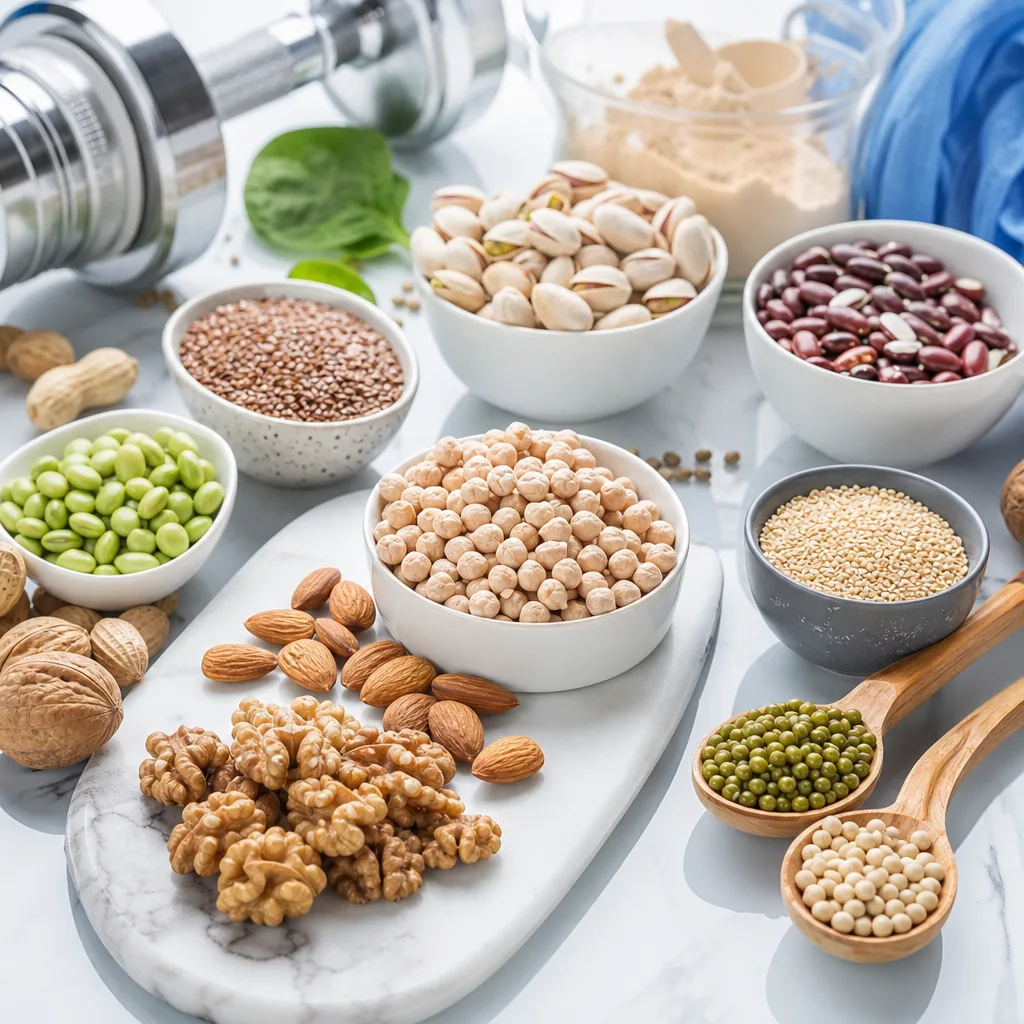
If you regularly eat protein-rich foods such as nuts, legumes, meat, fish or eggs, you will generally take in enough arginine through your diet. Wholegrain cereals and soy products also supply meaningful amounts, so the requirement can be covered well through a varied food selection even on a vegetarian or vegan diet.
 Matching productSoy Protein IsolateAmazon →
03
L-arginine in strength training: the pump effect
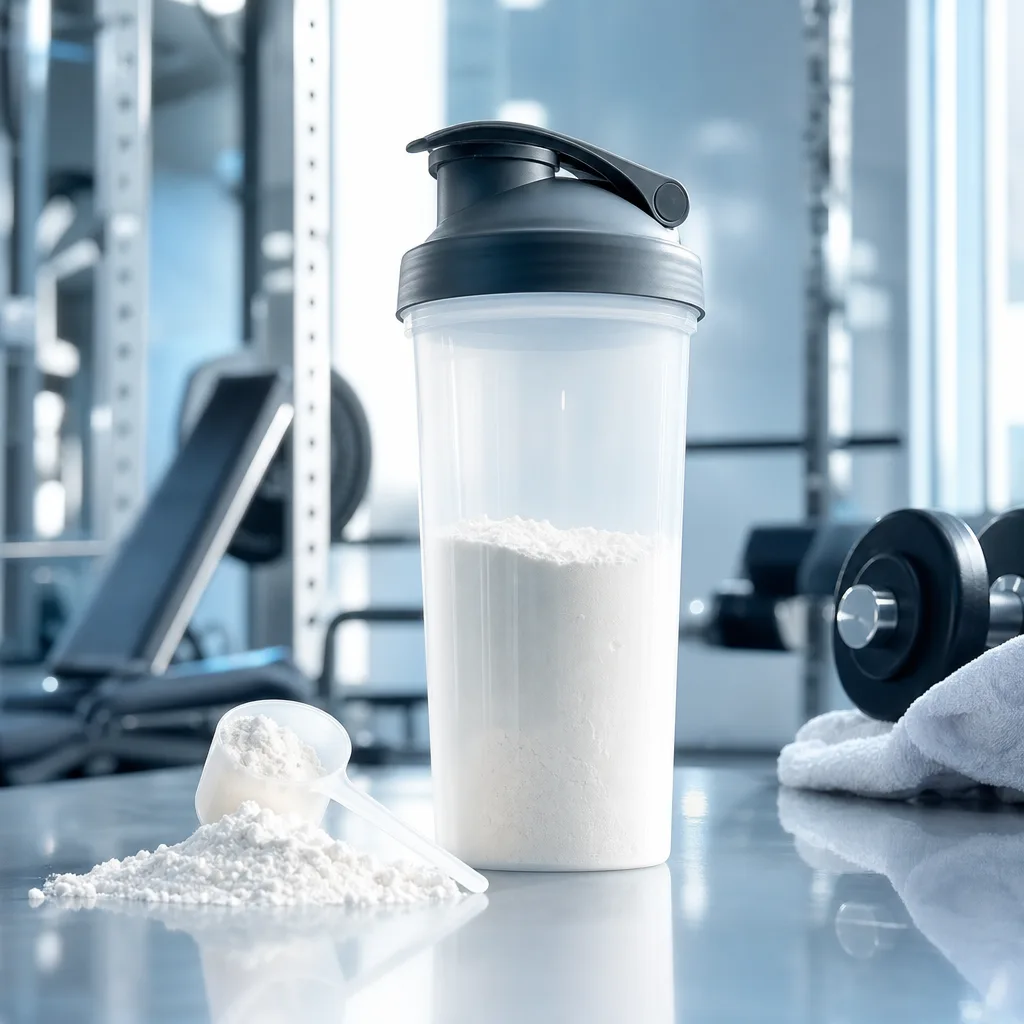
In strength sport, arginine is often used as an ingredient of pre-workout boosters, with the promise of better blood flow and a stronger pump feeling during training. The underlying mechanism via nitric oxide is real in principle and well researched.
A problem for the effectiveness of orally taken arginine, however, is that a large part of it is broken down in the gut and liver before it reaches the bloodstream. As a result, the actual rise in nitric oxide in the body after oral intake is smaller in many studies than the theoretical effect would suggest. For this reason, research now more often examines the amino acid L-citrulline, which partly bypasses this first breakdown step.
The pump feeling itself, meaning the swelling of the muscles during a set, arises mainly from increased blood flow to the working muscles during exertion itself and is primarily a training effect. An additional supplement can at most slightly enhance this feeling, but it does not replace the actual mechanical cause of the pump, which lies in the training itself.
 Matching productPre-Workout BoosterAmazon →
04
What research says about L-arginine in sport
Studies on the effect of additional L-arginine on athletic performance show a mixed picture. Some studies report slightly improved blood flow or a subjectively improved pump feeling, while in many controlled studies no clear, consistent effect on strength, endurance performance or muscle building could be shown. One reason is seen in its limited oral bioavailability.
In medicine, by contrast, arginine is studied more intensively in other contexts, such as questions of vascular health. These studies cannot be transferred directly to the intake amounts and goals usual in sport, however, as study design, the group of people studied and the period of intake often differ considerably.
05
Use and dosage
In studies on sport, amounts in the range of about 3 to 6 g of L-arginine before training were often used. This figure serves only as a rough guide, and what counts is always the serving recommendation on the respective packaging, as concentration differs between products.
Arginine is often offered together with other amino acids such as L-citrulline or in combination with L-ornithine, on the assumption that the effects complement each other. A clear scientific superiority of such combinations over individual use has so far not been consistently demonstrated.
A fixed time of intake is not strictly established scientifically, and most users take arginine about 30 to 60 minutes before training, on the assumption that the effect then overlaps with the training load. Permanently high intake spread across the day, regardless of dose, is rather unusual in studies on sport.
Besides sport, arginine is also studied in connection with vascular health, since nitric oxide plays a central role in the function of the inner vessel wall. Some clinical studies in people with reduced vascular function point to possible positive effects of arginine intake, but these studies were mostly carried out in specific patient groups and not in healthy, physically active people. These medical findings cannot simply be transferred to use in the gym, as starting situation, dosage and goals differ considerably. If you are interested in arginine intake because of existing cardiovascular disease, you should always discuss it with a doctor and not rely solely on statements from the sports field.
06
Tolerability and side effects
L-arginine is generally considered well tolerated in moderate amounts. At higher doses, gastrointestinal complaints such as abdominal pain or diarrhoea can occur. Since arginine can lower blood pressure, medical advice beforehand makes sense with low blood pressure, when taking blood pressure-lowering medication, and with herpes infections, asthma or during pregnancy. If surgery is planned, intake should also be discussed beforehand with the treating team, as arginine can affect blood clotting and blood pressure.
As with any dietary supplement, it does not replace a balanced diet but can complement it in a targeted way where needed.
07
What the research says
The mechanism by which arginine can widen blood vessels is scientifically well documented, but its practical translation into a noticeable performance advantage in training has been demonstrated only to a limited extent. One key reason is the heavy breakdown of the orally taken amino acid before it can act. Anyone hoping for a clear strength or pump effect from L-arginine should know about the mixed and overall rather restrained evidence. In practice, training variables such as number of repetitions, rest between sets and exercise selection have a far more reliable and larger influence on the pump feeling than a supplement with arginine.
08
Frequently asked questions
Does L-arginine reliably improve the pump in training?
The underlying mechanism is real, but the evidence for an actually noticeable effect with oral intake is mixed and overall rather restrained.
Why is L-citrulline often recommended instead of L-arginine?
L-citrulline is broken down less in the gut and can be converted into arginine in the body, so that nitric oxide levels rise more reliably in some studies than after direct arginine intake.
Is L-arginine suitable for everyone?
With low blood pressure, blood pressure-lowering medication, herpes infections or during pregnancy, intake should be medically clarified beforehand.
Is arginine intake through normal diet enough?
For most people with a balanced diet, yes. An increased requirement can exist with intense physical exertion or in certain medical situations.
Can you take L-arginine permanently?
For long-term, permanent intake over many months or years, less data is available compared with short-term studies, so regular breaks and a check-in with a doctor for continued use can make sense. Used over shorter periods of a few weeks, L-arginine is considered safe according to current knowledge, and regardless of this, with existing pre-existing conditions there is generally more in favour of consulting a doctor beforehand than against it.
Explore
Read next
 Protein types at a glance: whey, casein, plant-based and moreAn overview of all common protein types from whey to collagen, with a comparison table and links to detailed guides.
 Amino Acids: The Building Blocks of ProteinStructure, classification and functions of amino acids at a glance, with a table of all 20 proteinogenic amino acids and links to all guide…
 Supplements for Sport and Fitness: A Factual OverviewAll supplement categories at a glance, with the evidence rated from good to thin, plus safety and buying tips.