
6 min read
Glutamine: Function in the Body, Sources and Effects in Sport
Why glutamine counts as non-essential, what tasks it takes on in the body and what the evidence shows for supplementation in sport.

Glutamine is the most abundant free amino acid in the body and takes on a whole range of tasks, far beyond muscle building. As a supplement it is common mainly in strength and endurance sport, although the actual need for extra intake is often overestimated.
This guide explains what glutamine does in the body, why it counts as non-essential, which foods contain it, when supplementation is discussed and what research shows about its effect in sport.
01
What is glutamine?
Glutamine, also called L-glutamine, is an amino acid that under normal conditions the body can produce itself in sufficient amounts, among other things from branched-chain amino acids. It is therefore classed as non-essential, meaning it does not necessarily have to be taken in through food. Even so, by quantity glutamine is the most abundant free amino acid in blood plasma and in muscle.
In certain situations, such as heavy physical exertion, illness or after operations, the body's need for glutamine rises considerably. In such phases the body's own production can reach its limits, which is why glutamine is occasionally described as conditionally essential in these contexts.
It is also important to note that glutamine levels in the body cannot be viewed in isolation but are closely linked to general nutritional and training status. Anyone who chronically recovers too little or trains long term on too little energy risks, besides a possible glutamine shortfall, other signs of overtraining, for which a single supplement offers hardly any remedy.
 Matching productGlycineAmazon →
02
Functions of glutamine in the body
Glutamine takes on several tasks in the organism at once. It serves as a building block for forming new proteins, supports the transport of nitrogen between different tissues and plays a role in acid-base balance, among other things by carrying away ammonia, which is produced in greater amounts during athletic exertion. Glutamine also serves as an important energy source for rapidly dividing cells, such as in the intestinal lining and the immune system.
This versatility explains why glutamine is so often discussed in sports and nutrition science. It does not, however, automatically mean that extra intake through a supplement makes a noticeable difference for every person and in every training phase.
03
Glutamine in foods
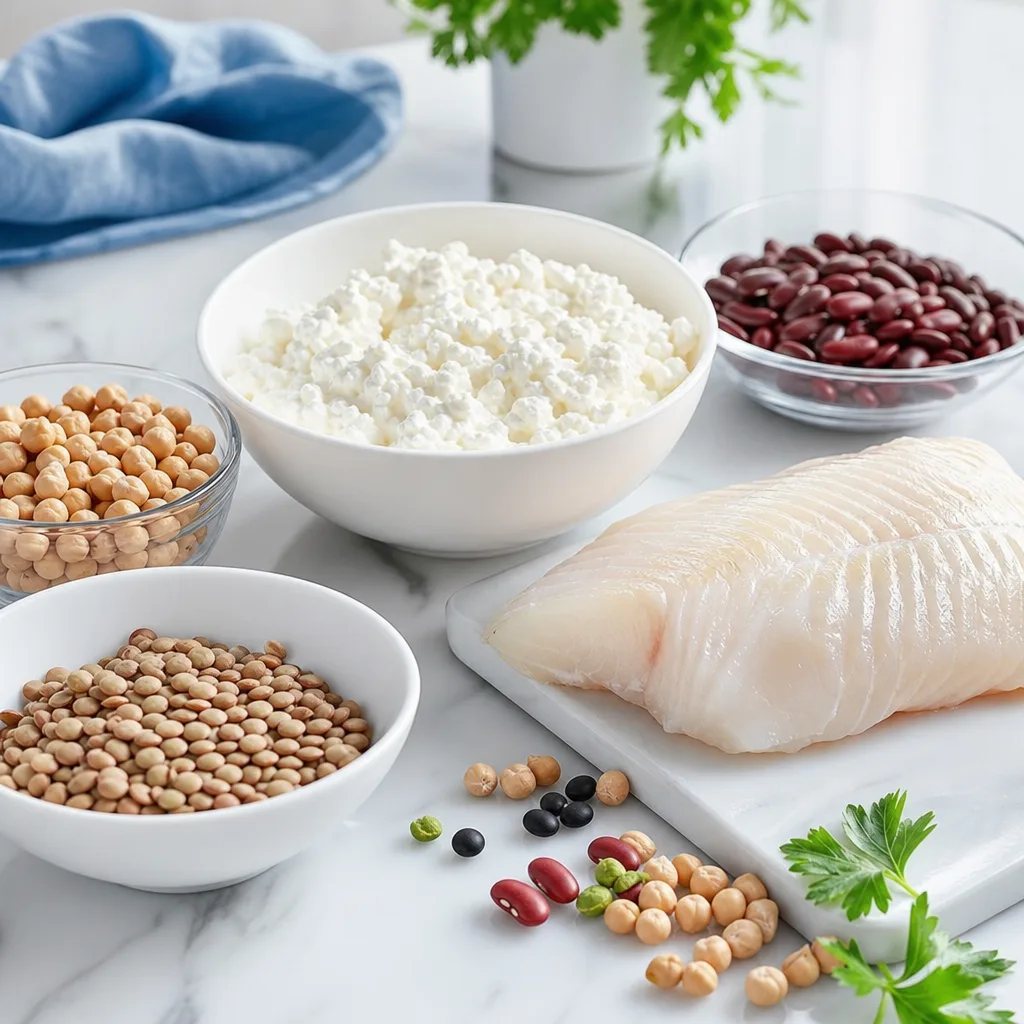
Glutamine occurs in many protein-rich foods, both of animal and plant origin. The following table shows some examples with typical orders of magnitude for the content.
| Food | Glutamine content |
|---|---|
| Low-fat quark | comparatively high |
| Fish | medium to high, depending on type |
| Milk, yoghurt | medium |
| Wheat, soy products | medium, plant source |
| Legumes, vegetables | rather low |
Anyone who eats a balanced, protein-rich diet, for example with enough protein from different sources, generally already covers a relevant part of their glutamine needs through normal food. How to estimate your overall protein needs is explained in the guide on calculating protein requirements.
04
Glutamine in sport
In strength sport, glutamine is often discussed in connection with recovery after training, in endurance sport more in connection with supporting the immune system after very demanding sessions. Both connections rest on the observation that glutamine levels in the body can temporarily fall after intense exertion.
Whether extra intake through a supplement brings an additional, noticeable benefit when protein supply is already sufficient has not been consistently settled scientifically. Anyone generally interested in the role of amino acids in recovery will find a broader overview in the guide on amino acids and recovery.
Another point that makes glutamine easier to classify is the difference between free glutamine, as found in dietary supplements, and the glutamine released during the digestion of proteins from food. Both forms ultimately supply the same amino acid, but differ in the speed of absorption and in the amount contained in a single portion.
 Matching productEAA PowderAmazon →
05
Glutamine and the gastrointestinal tract
Besides muscle and the immune system, glutamine also plays an important role for the intestinal lining, since the cells of this lining use glutamine as their preferred energy source. In this context, glutamine is occasionally mentioned in connection with general digestive health, though no blanket recommendation for healthy people without corresponding complaints can be derived from this.
Anyone suffering from digestive complaints should have the cause checked by a doctor rather than experimenting on their own with high-dose amino acids. A balanced, fibre-rich diet with enough protein-rich foods is the more sensible basis for most people.
The immune system is also closely linked to glutamine, since immune cells, like the intestinal lining, depend on a sufficient supply of this amino acid. After particularly long or intense training sessions, some athletes report increased susceptibility to infection, which in research is discussed, among other things, alongside a temporarily lowered glutamine level, without any established causality being derivable from this.
 Matching productZinc TabletsAmazon →
06
Dosage as a guide
In studies on glutamine as a supplement, daily amounts in the range of about 5 to 10 g were often used, partly split into several portions. This is not binding; the exact amount follows the pack information of the respective product. Glutamine powder is usually dissolved in water or juice and often taken after training or with a meal.
People with kidney or liver disease should have taking glutamine as a supplement checked by a doctor beforehand, since these organs are involved in breaking down amino acids. In pregnancy and while breastfeeding, too, the rule is: when in doubt, seek medical advice first.
07
What the research says
In clinical situations, such as after major operations or in severe illness, the benefit of targeted glutamine intake is comparatively well studied, as the body's own glutamine level often falls markedly there. In healthy people active in recreational or competitive sport, by contrast, the evidence is mixed: some studies report slight benefits for recovery or immune function after intense exertion, others find hardly any measurable differences compared with a control group without glutamine.
A clear effect on muscle building or strength gain that is reproducible for broad groups of the population in training cannot be derived from current research. Anyone who already takes in enough protein through the diet should not expect fundamentally different training results from extra glutamine. Dietary supplements are no substitute for a balanced diet.
08
Frequently asked questions
Is glutamine necessary for muscle building?
For most people it is not necessary, as the body largely produces glutamine itself when protein intake is sufficient. For muscle building, a total protein intake matched to needs matters more than targeted glutamine intake.
Who is most likely to benefit from glutamine supplementation?
In research, effects show up most in clinical situations with greatly increased need, such as after operations. In healthy, adequately nourished athletes the additional benefit is less clearly documented.
Can I combine glutamine with other amino acids?
Yes, glutamine is often taken together with BCAAs or as part of a protein shake. You can find details on branched-chain amino acids in the BCAA guide.
Does glutamine have side effects?
At the usual amounts, glutamine is regarded as well tolerated in healthy adults. In the case of existing kidney or liver disease, as well as in pregnancy and while breastfeeding, taking it should be discussed with a doctor beforehand.
Is glutamine the same as glutamic acid?
No, the two amino acids are closely related, but chemically different in structure and each takes on its own tasks in metabolism. Mixing up the terms is nonetheless not unusual in everyday use.
How long should I take glutamine?
There is no blanket duration; many users go by training phases with increased load. With longer-term intake it is advisable to critically observe the benefit for yourself.
Does glutamine help with digestive complaints?
Glutamine is an important energy source for the intestinal lining, but no blanket benefit for digestive complaints in healthy people can be derived from that. With persistent complaints, a medical check is the more sensible route.
Should I take glutamine before or after training?
Studies have used different times, and no clearly superior time can be derived from them. Many users pragmatically go by the time after training, when a shake is taken anyway.
 Matching productMeal Replacement ShakeAmazon →
Explore
Read next
 Protein types at a glance: whey, casein, plant-based and moreAn overview of all common protein types from whey to collagen, with a comparison table and links to detailed guides.
 Amino Acids: The Building Blocks of ProteinStructure, classification and functions of amino acids at a glance, with a table of all 20 proteinogenic amino acids and links to all guide…
 Supplements for Sport and Fitness: A Factual OverviewAll supplement categories at a glance, with the evidence rated from good to thin, plus safety and buying tips.