
6 min read
Aspartic Acid: Effect on Testosterone and the Evidence
Why aspartic acid is advertised as a testosterone booster and what the rather contradictory evidence actually shows.

Aspartic acid, often also called D-aspartic acid or D-aspartate, is an amino acid best known as a component of testosterone boosters. Advertising often credits it with a marked increase in testosterone levels, a claim that deserves a closer look.
This guide explains what aspartic acid does in the body, how it differs from other amino acids, which amounts were used in studies and what the actual, rather mixed evidence shows.
01
What is aspartic acid
Aspartic acid is a non-essential amino acid, meaning the body can make it itself and does not necessarily depend on intake from food. In nature it occurs in two mirror-image forms: the L-form, which serves as a building block of proteins, and the D-form, which plays a role in the hormone system, among other things, in smaller amounts.
In dietary supplements, usually advertised under the abbreviation DAA for D-aspartic acid, the D-form is used specifically. It occurs in small amounts in the hypothalamus, the pituitary gland and the testes, regions involved in controlling hormone production. This observation is the starting point for marketing it as a testosterone booster.
It is important to keep in mind that the vast majority of aspartic acid in the body is in the L-form and serves as an entirely ordinary protein building block, for example in building the body's own enzymes. Only a small share exists as the D-form, and only this is linked to the discussed role in the hormone system. Products that simply contain aspartic acid without specifying the form therefore do not necessarily supply the D-variant relevant to testosterone boosters.
If you want to buy a product aimed specifically at this effect, you should therefore look on the packaging for the exact designation D-aspartic acid or D-aspartate, rather than relying on the general term aspartic acid alone.
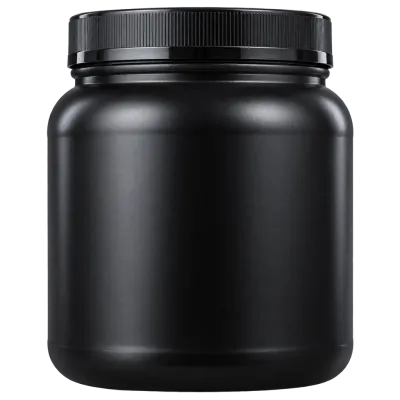 Matching productPre-Workout BoosterAmazon →
02
Natural sources
Aspartic acid occurs in notable amounts in protein-rich foods, especially fish, meat and pulses, but also in green asparagus, from which it takes its name. With a balanced, protein-rich diet you therefore already take in aspartic acid regularly, without necessarily being aware of it.
| Food group | Aspartic acid content (rough classification) |
|---|---|
| Fish and seafood | high |
| Meat and poultry | high |
| Pulses | medium to high |
| Asparagus | medium |
| Grain products | low to medium |
Because aspartic acid is a non-essential amino acid that the body can make itself, there is no risk of under-supply with a balanced diet. Targeted supplementation with capsules or powder therefore does not aim to correct a nutrient deficiency, but solely at the effect on the hormone system claimed in advertising.
03
Aspartic acid as a testosterone booster
The link between D-aspartic acid and testosterone rests on its role in signal transmission within the hormone system, in which the hypothalamus, pituitary gland and testes are jointly involved. Some early studies with small numbers of participants reported a temporary rise in certain hormone levels, which was the basis for marketing it as a natural testosterone booster.
These first results spread quickly through the sports nutrition industry and led to a wave of products that offer D-aspartic acid, often in combination with other supposed testosterone boosters such as zinc, vitamin B6 or plant extracts. A combination product does not, however, automatically make the underlying evidence for the individual substance more reliable.
Later and methodologically more careful studies, however, could not consistently confirm this effect in men who were already trained and physically active. In some studies testosterone levels remained unchanged, and in isolated cases a decline was even observed with longer use. These inconsistent results show how important a sober assessment of such advertising claims is, rather than uncritically adopting individual early studies.
One possible reason for these differences lies in the participants' existing hormone status: in people with lower baseline values, some studies showed an effect more readily than in well-trained athletes with normal testosterone levels, in whom the body may counter-regulate. A generally valid recommendation for the wider population cannot be derived from this.
04
Dosage as a guide
In scientific studies, amounts of about 3 g of aspartic acid per day were used over several weeks. This is a typical order of magnitude in research, not an individual intake instruction; also follow the packaging instructions of the respective product. We expressly advise against raising the amount on your own in the hope of a stronger effect.
Some suppliers recommend cyclical use, that is, several weeks of intake followed by a break. Such an approach has not been clearly shown to be necessary in research, but is often used in practice as a precaution, to avoid a permanent, unmonitored influence on the hormone system.
05
Possible side effects and who should be cautious
At the amounts used in studies, aspartic acid is mostly described as well tolerated; occasionally mild headaches or irritability are reported. Since aspartic acid is supposed to act directly on the hormone system, people with hormone-dependent conditions, for example certain tumour diseases, as well as adolescents going through puberty, should avoid taking it or have it checked by a doctor beforehand. Prior medical advice is also recommended if you have existing kidney or liver disease. Dietary supplements such as aspartic acid do not replace a balanced diet or medical treatment for an actually diagnosed hormone deficiency.
If you are concerned about a possible testosterone deficiency, you should generally have it checked by a doctor rather than relying solely on an over-the-counter dietary supplement. A blood test gives far more reliable information than the subjective feeling of benefiting from a supplement.
06
What the research says
Overall, the evidence on D-aspartic acid and testosterone remains thin and contradictory. While individual early studies showed a short-term rise in certain hormone levels in untrained people, more recent studies in trained athletes largely could not confirm this effect, and in some cases no effect or even the opposite effect was observed. A reliable, reproducible testosterone-raising effect in the sense of the advertising claims cannot be derived from current research. If you hope for a noticeable change in strength or muscle mass from aspartic acid, you should temper that expectation considerably and rely instead on well-established fundamentals such as training, sleep and adequate protein intake.
07
Frequently asked questions
Does aspartic acid reliably raise testosterone levels?
No, the evidence is mixed and thin overall. Early studies sometimes showed an effect in untrained people, whereas more recent studies in athletes mostly could not confirm it.
Is aspartic acid the same as aspartame?
No, these are two different substances. Aspartame is a sweetener, aspartic acid a naturally occurring amino acid.
How long should you take aspartic acid?
Studies mostly looked at periods of a few weeks. There are hardly any reliable data on permanent, very long-term use.
Who should avoid aspartic acid?
People with hormone-dependent conditions, adolescents, and pregnant or breastfeeding women should avoid taking it or have it checked by a doctor beforehand.
Is a normal diet enough for aspartic acid supply?
Yes, with a balanced, protein-rich diet including fish, meat or pulses you already take in aspartic acid regularly, without any separate supplement being necessary.
Can I combine aspartic acid with other testosterone boosters?
We advise against an ill-considered combination of several products with a similar aim, because possible side effects are more likely to add up than the benefit. A conversation with medical professionals is more sensible here than trying things out on your own.
Does aspartic acid work differently in women?
The available studies were mostly carried out in men, so hardly any reliable statements can be made about the effect in women. Women should therefore approach taking it with particular reserve and seek medical advice if in doubt.
Does aspartic acid directly improve strength in training?
A direct effect on strength or muscle mass is not sufficiently established by current research. For training success, a well-designed training plan, enough sleep and a balanced, protein-rich diet remain the better-supported foundations.
Is there an age limit for taking it?
Because it acts directly on the hormone system, adolescents should generally not take it before puberty has finished. Adults with pre-existing conditions should likewise seek medical advice beforehand.
Explore
Read next
 Protein types at a glance: whey, casein, plant-based and moreAn overview of all common protein types from whey to collagen, with a comparison table and links to detailed guides.
 Amino Acids: The Building Blocks of ProteinStructure, classification and functions of amino acids at a glance, with a table of all 20 proteinogenic amino acids and links to all guide…
 Supplements for Sport and Fitness: A Factual OverviewAll supplement categories at a glance, with the evidence rated from good to thin, plus safety and buying tips.