
6 min read
Amino Acids for Weight Loss: Realistic Expectations
Amino acids are often advertised as fat burners. Here you can find out what role they can realistically play in weight loss and what actually counts.

In advertising, amino acids are often linked to rapid fat loss. That is a heavy oversimplification: amino acids are building blocks of proteins and fulfil many tasks in the body, but they are not a miracle remedy that makes fat disappear regardless of calorie balance.
This article shows which indirect effects amino acids can have during weight loss, what role they play compared with a balanced diet, and where the evidence is thin.
01
Why weight loss is above all a question of energy balance
Especially at the start of the year or before summer, the market for supposed weight-loss aids regularly gets a boost, with promises of fast, effortless results. Weight loss is one of the most heavily advertised topics in the supplement field, and the number of products working with supposedly scientific terms such as fat burner or metabolism booster is correspondingly large.
Weight loss is fundamentally based on a calorie deficit: over a longer period, the body takes in less energy than it uses. No dietary supplement, including no amino acid, cancels out this principle. What amino acids and protein as a whole can offer is indirect support for this process, for example through satiety and muscle preservation.
It is also important not to make the deficit too extreme. A calorie deficit that is too large over a longer period can promote muscle loss and undermine motivation, regardless of how much protein or which amino acids are taken in addition.
The psychological side of weight loss also deserves attention. An approach that is too strict and marked by deprivation leads many people to setbacks more often than a moderate, sustainable approach in which occasional exceptions are planned for instead of being counted as failure.
Individual daily energy needs are made up of basal metabolic rate and activity and can be roughly estimated with various formulas. Such estimates are reference values, not exact measurements, which is why it makes sense to observe your own weight over a few weeks and adjust calorie intake if necessary.
A moderate deficit of about 300 to 500 kilocalories below daily needs is often considered manageable in practice, because it keeps hunger and loss of performance within limits and can be sustained over a longer period. How quickly this shows on the scales also depends on factors such as water retention and individual metabolism.

02
Protein, satiety and muscle preservation in a calorie deficit
Compared with carbohydrates and fat, protein has a relatively high satiating effect, which can make it easier to stick to a calorie deficit. In addition, sufficient protein intake in a calorie deficit helps to preserve muscle mass rather than lose pure body fat, especially in combination with strength training.
In sports science, amounts of about 1.2 to 2.0 grams of protein per kilogram of body weight per day are often cited for this, more on this in the guide Protein for weight loss. This range takes into account that needs vary with training volume and the size of the calorie deficit.
03
What about individual amino acids such as BCAAs?
Branched-chain amino acids, BCAAs for short, are often advertised specifically as fat burners. They do supply building blocks for the muscles, but a direct, independent fat-loss effect beyond the pure protein effect is not clearly proven. Anyone who already gets enough protein from food generally gains little extra from additional isolated amino acids.
The term fat burner in relation to individual amino acids should also be read critically. It usually describes a theoretical involvement in fat metabolism, not a clinically confirmed effect on fat mass that you would notice in everyday life.
It also holds that isolated amino acids can fill an existing protein gap, but have no additional effect beyond that if total protein intake is already sufficient. This distinction gets lost in many advertising texts, which give the impression that more is better in every case.
The same applies to many combination products advertised as fat burners, which contain not only amino acids but also caffeine, green tea extract or similar substances. An alert, slightly stimulated state caused by caffeine is wrongly interpreted by some people as a sign of increased fat burning, although it is primarily a stimulating effect.
 Matching productWhey IsolateAmazon →

04
Comparison: protein sources in a calorie deficit
| Source | Advantage in a deficit | Limitation |
|---|---|---|
| Whole foods | Satiety, many micronutrients | more preparation effort |
| Protein powder | quick, dosable with calorie control | less satiating than solid food |
| Isolated amino acids (e.g. BCAAs) | can be used in a targeted way | no proven added benefit when protein intake is sufficient |
In practice, most people do best with a combination: cover the bulk of protein through whole foods and use protein powder specifically where time or calorie budget is tight. That keeps the diet varied without protein intake falling short in daily life.
 Matching productVitamin C PowderAmazon →
05
Amino acids and cravings
A regular eating rhythm with set meals can additionally help prevent cravings, because the body adjusts to recurring mealtimes. Irregular, spontaneous eating, by contrast, more often leads to situations in which strong hunger results in spontaneous, poorly planned decisions.
Some people also find liquid calories, for example from a protein shake, less filling than a solid meal with a comparable calorie content. Anyone who uses shakes frequently in a calorie deficit should therefore keep an eye on their own hunger and, if needed, plan a larger share of solid meals.
A noticeable feeling of fullness can help prevent cravings, and this is above all an effect of total protein intake over the day, not of a single amino acid at a particular time. A regular protein intake spread across meals is often found more pleasant in practice than isolated doses of individual amino acids.
Enough sleep and a stable daily rhythm also affect hunger and satiety hormones. People who sleep little often feel hungrier regardless of their diet, and this should be kept in mind when assessing cravings.
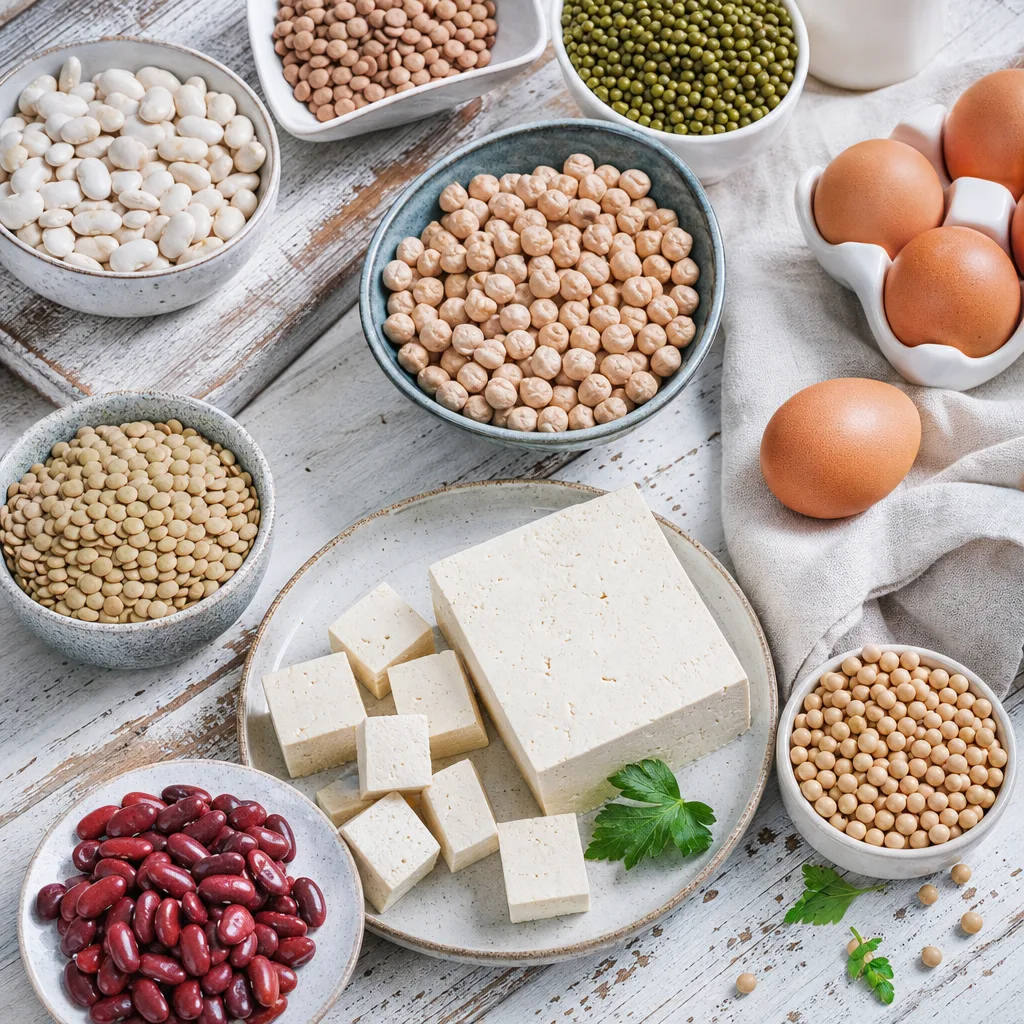
High-fibre side dishes such as vegetables or legumes also contribute to satiety and complement the effect of protein in a sensible way. A meal that combines protein and fibre generally keeps you full more reliably than a meal that relies on only one of these two building blocks.
 Matching productMeal Replacement ShakeAmazon →
06
What the research says
On the general role of protein in a calorie deficit, the evidence is comparatively good: a higher protein share supports satiety and muscle preservation. On an independent fat-burning effect of individual amino acids outside this protein effect, however, the evidence is thin and in part contradictory. Corresponding advertising claims should be viewed critically.
Dietary supplements are no substitute for a balanced diet and no substitute for an actual calorie deficit.
07
Practical perspective for everyday life
If you want to lose weight, it is worth focusing first on an overall high-protein, balanced diet and a moderate calorie deficit. Protein powder or amino acid products can be a practical addition, for example when there is little time for meals, but they replace neither exercise nor a sensible diet overall. Regular strength training is also worthwhile, more on this in the article Mass gain, as it helps to preserve muscle better in a deficit.
If you have existing health conditions or plan to take supplements over a longer period, consulting a doctor makes sense, especially if you are taking medication at the same time.
It also makes sense not to measure progress only by the scales. Measurements, photos or how clothes fit often give a more complete picture than a single number, precisely because body weight also fluctuates with water and muscle mass. A realistic timeframe of several months is generally more appropriate for lasting results than a very fast, short-term approach.
08
Frequently asked questions
Do amino acids burn fat directly?
No, an independent, clearly proven fat-burning effect of individual amino acids has not been sufficiently demonstrated.
When should I take amino acids when losing weight?
There is no fixed instruction; it is common to spread them across the day in line with meals, keeping an eye on the packaging information.
Is normal protein powder enough instead of isolated amino acids?
For most people in a calorie deficit, a complete protein powder or high-protein foods already provide what isolated amino acids additionally promise.
How fast can I realistically lose weight?
A moderate pace of about 0.3 to 0.8 kilograms per week is generally considered well tolerated and tends to favour the preservation of muscle mass more than very rapid weight loss.
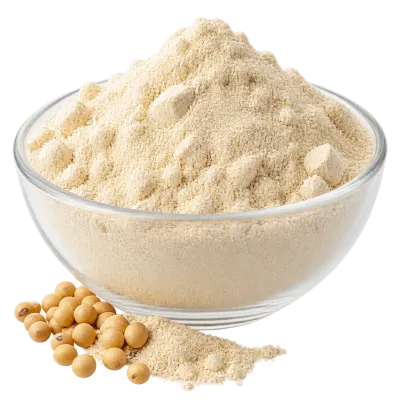 Matching productSoy Protein IsolateAmazon →
Explore
Read next
 Protein types at a glance: whey, casein, plant-based and moreAn overview of all common protein types from whey to collagen, with a comparison table and links to detailed guides.
 Amino Acids: The Building Blocks of ProteinStructure, classification and functions of amino acids at a glance, with a table of all 20 proteinogenic amino acids and links to all guide…
 Supplements for Sport and Fitness: A Factual OverviewAll supplement categories at a glance, with the evidence rated from good to thin, plus safety and buying tips.