
6 min read
Amino Acids for People with Diabetes: What You Should Know
Amino acids are sometimes advertised in connection with diabetes. Here you can find out, factually, what is known and why medical supervision remains essential.

Diabetes is a serious metabolic disease, and its treatment is always in medical hands. Even so, many people with diabetes have questions about nutrition, including the role of protein and amino acids. This article puts into context what is known on the subject, explicitly without making a treatment recommendation.
An important note beforehand: this text does not replace medical advice. With diabetes, you should discuss any change to your diet or supplements with your doctor or a diabetes counsellor.
01
Protein and blood sugar: the basic relationship
Diabetes affects millions of people in Germany, and alongside medication and exercise, nutrition is one of the central building blocks of daily life with the condition. Precisely for this reason, particularly many simplified or exaggerated claims circulate around this subject, which makes a factual assessment all the more important. Many of those affected take a keen interest in their diet because it has directly noticeable effects on their own wellbeing.
This attention is sensible in principle, but it also makes the subject vulnerable to products that advertise with supposedly scientific-sounding terms without an adequate body of evidence for people with diabetes behind them. Precisely because diabetes is a chronic condition that has to be managed every day, many of those affected understandably look for additional levers, and an informed attitude helps to direct energy to the areas that can actually make a difference.
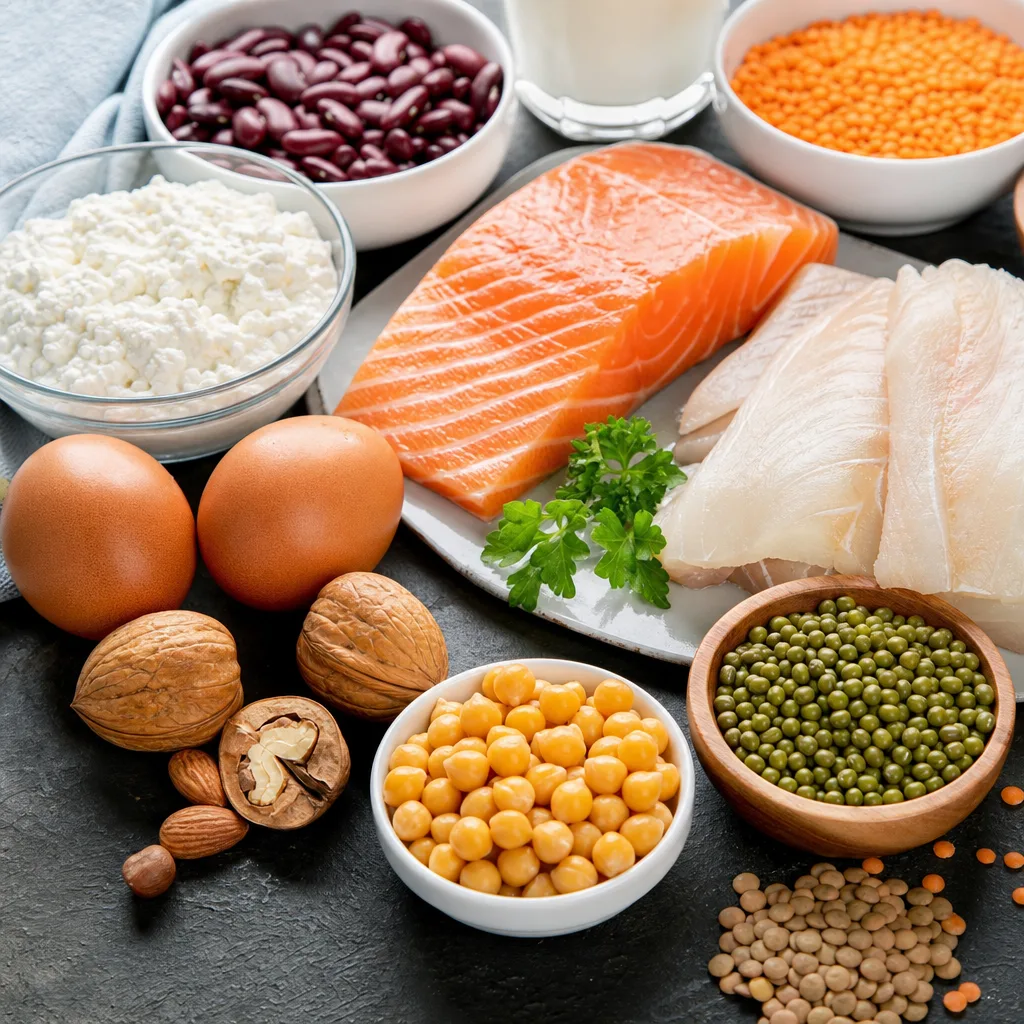
Compared with carbohydrates, protein has only a small direct effect on blood sugar levels. A meal that contains protein and fibre as well as carbohydrates can moderate the rise in blood sugar after eating compared with a purely carbohydrate meal. This is a general nutritional-physiological relationship, not a statement about a particular product.
The timing of the last meal before going to bed is also occasionally discussed. A fixed interval is not scientifically essential, but many people find it more comfortable not to eat their last larger meal immediately before bedtime, for practical rather than metabolic reasons.
Regular activity after eating, such as a short walk, is linked in some studies with a more moderate rise in blood sugar. This is a general, easily understood relationship and independent of the question of additional amino acid products.
It is also important that blood sugar levels can respond differently from person to person to the same meal, depending among other things on time of day, prior load and individual metabolism. Blanket statements about individual foods or nutrients can therefore only be transferred to your own daily life to a limited extent.
The order in which food is eaten within a meal is also discussed in some studies, for example whether vegetables and protein are eaten before carbohydrates. Such effects are individual observations and no substitute for an individually tailored nutrition plan.
It is also important to look at meals not in isolation but across the course of the day. A balanced distribution of carbohydrates across several meals can be easier to manage for some people with diabetes than a few large, carbohydrate-rich meals, but this should be agreed individually with the treatment team.
Carbohydrate quality also plays a role: because of their fibre content, wholegrain products, legumes and vegetables generally lead to a slower, more moderate rise in blood sugar than heavily processed, low-fibre carbohydrate sources. This relationship is relevant regardless of any additional amino acid intake and is well studied.
 Matching productRice CakesAmazon →
02
Amino acids and insulin sensitivity
There are scientific studies that deal with the relationship between certain amino acids, such as branched-chain amino acids, and insulin sensitivity. The results are inconsistent: some studies point to possible positive effects of individual amino acids in metabolism, while other work shows neutral or even unfavourable associations with insulin sensitivity at high intakes of certain amino acids.
No uniform picture can currently be drawn from this. In part, observational studies and controlled intervention studies contradict each other, which shows how cautiously individual headlines on this subject should be read.
Observational studies can also only show associations, not cause and effect. If people with certain dietary patterns also show other lifestyle factors such as more exercise or less excess weight, an observed effect cannot automatically be attributed to a single nutrient.
03
Why this body of evidence should be read with caution
Diabetes is not a uniform disease. Type 1 and type 2 diabetes differ fundamentally in their cause, and even within type 2 diabetes there are very different courses. A blanket statement such as amino acids help with diabetes does not do justice to this complexity and is not scientifically tenable.
In addition, many studies on amino acids and metabolism were carried out in healthy people or in animal models. The transferability of such results to people with existing diabetes is limited and has to be assessed case by case.

04
Overview: nutrients in the context of diabetes
| Nutrient | Known relationship | Context |
|---|---|---|
| Protein | small direct effect on blood sugar | fixed part of a balanced diet |
| Fibre | slows the rise in blood sugar | well studied, see the glossary entry on fibre |
| Individual amino acids as a supplement | possible influence on insulin metabolism | mixed evidence, no treatment recommendation can be derived |

05
What is well supported on the nutrition side instead
Better supported than the effect of individual amino acid products is the benefit of an overall balanced diet in diabetes: regular meals, enough fibre, a conscious choice of carbohydrate sources and a calorie intake adapted to individual needs.
High-protein foods can be a sensible building block here, see also Protein requirement, but they are part of a larger nutrition plan and not an isolated solution. Regular exercise complements this plan and demonstrably has a positive effect on insulin sensitivity.
Alongside diet and medication, regular medical monitoring is also a central building block for assessing the individual metabolic situation and adjusting treatment where necessary. No dietary supplement replaces this ongoing professional support.
Body weight also often plays a role in type 2 diabetes. A moderate weight reduction in the presence of excess weight can in many cases have a favourable effect on the metabolic situation, but this should always be planned together with the treatment team, since weight loss that is too fast or uncontrolled carries its own risks in diabetes.
 Matching productSports BraAmazon →
06
What the research says
There is a solid evidence base on the general role of protein in a diet suited to diabetes. On the targeted intake of isolated amino acids as a supplement specifically in diabetes, however, the evidence is thin, inconsistent and in part contradictory, and further well-controlled studies would be needed to make reliable statements.
For this reason, no treatment recommendation can be derived from the available data. Dietary supplements are no substitute for a balanced diet, and certainly no substitute for diabetes therapy under medical supervision.
07
Why medical advice is especially important here
In diabetes, dietary supplements can interact with medication, for example with blood-sugar-lowering products. Existing accompanying conditions such as kidney or cardiovascular problems also play a role in the question of which products come into consideration at all.
Even seemingly harmless herbal products can be relevant in diabetes, because some plant compounds can themselves influence blood sugar. An uncoordinated combination of several products and medications increases the risk of interactions that are hard to assess, which is why transparency towards the treatment team is important.
Discuss any planned supplement with your treatment team beforehand instead of starting it on your own, and if appropriate record your blood sugar values so that changes can be assessed early.
A food diary kept over a few weeks can also be helpful, in which you note down meals and, if appropriate, blood sugar values. This makes it easier, together with the treatment team, to understand which foods or meal combinations have a favourable individual effect on your blood sugar curve, instead of relying on general claims from advertising. A look at the basics of Protein requirement can also help to put your own diet in context.

08
Frequently asked questions
Can amino acids replace diabetes medication?
No, dietary supplements are no substitute for diabetes therapy prescribed by a doctor.
Is protein powder generally suitable for people with diabetes?
That depends on the individual case, in particular on accompanying conditions such as kidney disease, which is why a medical check makes sense.
Where can I get reliable nutrition advice for diabetes?
The most reliable sources are medical care and structured diabetes counselling that takes your individual situation into account.
Am I generally allowed to use protein powder as a person with diabetes?
This has to be clarified in the individual case, since kidney function and any accompanying conditions above all decide which additional amount of protein is sensible and safe.
 Matching productVitamin C PowderAmazon →
Explore
Read next
 Protein types at a glance: whey, casein, plant-based and moreAn overview of all common protein types from whey to collagen, with a comparison table and links to detailed guides.
 Amino Acids: The Building Blocks of ProteinStructure, classification and functions of amino acids at a glance, with a table of all 20 proteinogenic amino acids and links to all guide…
 Supplements for Sport and Fitness: A Factual OverviewAll supplement categories at a glance, with the evidence rated from good to thin, plus safety and buying tips.