
6 min read
L-Citrulline: Effects in Training and How It Differs from L-Arginine
Why L-citrulline is converted to arginine in the body more reliably than arginine taken directly, and what studies show about its training effect.

L-citrulline is a non-essential amino acid that has gained a lot of importance in sports nutrition in recent years, mainly as an alternative or addition to L-arginine. The reason lies in its particular metabolic pathway, which promises a more reliable effect on blood flow.
This guide explains what sets L-citrulline apart from L-arginine, what research shows about its effect in training, how it is dosed and what to keep in mind when using it. Especially for the pump effect and blood flow during training, L-citrulline has become one of the most frequently recommended single ingredients in sports nutrition, often also as a component of ready-made training formulas.
01
What is L-citrulline?
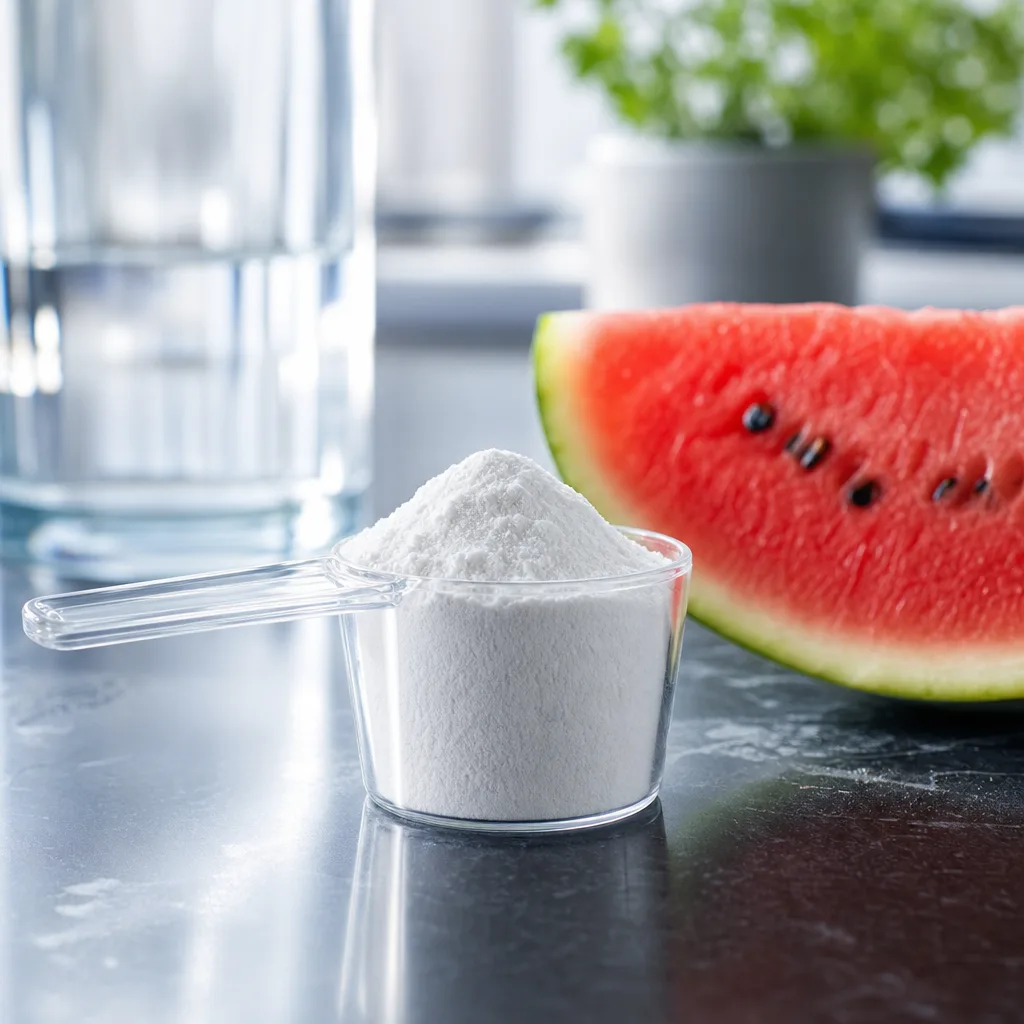
L-citrulline is an amino acid that occurs in the body in the urea cycle, among other places, where it helps break down nitrogen compounds. The name comes from the watermelon, from which the amino acid was first isolated in the laboratory, which is why watermelon is still the best-known natural source of citrulline. Unlike L-arginine, citrulline is not one of the standard protein-building amino acids that are incorporated into body proteins, but occurs in the body mainly as an intermediate product of metabolism.
What makes it particularly interesting for sport is that the body can partly convert citrulline into arginine in the kidneys, a conversion pathway that runs independently of oral arginine intake. This detour via the kidneys bypasses the heavy breakdown that orally taken arginine undergoes directly in the gut and liver, which is why blood arginine levels in studies often rise more reliably after citrulline than after taking arginine directly. This indirect route via conversion in the kidneys is regarded as the central reason why citrulline has increasingly taken the place of plain arginine in sports nutrition.
 Matching productGlycineAmazon →
02
L-citrulline compared with L-arginine
The following table sets out the most important differences between the two amino acids.
| Feature | L-citrulline | L-arginine |
|---|---|---|
| Breakdown in the gut and liver | low | high |
| Rise of arginine in the blood | usually reliable | often weaker |
| Typical single dose in studies | about 6 to 8 g | about 3 to 6 g |
| Tolerability at higher amounts | usually good | sometimes digestive complaints |
03
What research says about L-citrulline in sport
Compared with arginine, the evidence for L-citrulline in athletic use is somewhat more consistent. Several studies show a measurable rise in nitric oxide markers after intake and, in some studies, a slight improvement in training performance in multi-repetition strength exercises, such as lower perceived fatigue or a marginally higher repetition count.
For pure maximal strength performance or short, very intense efforts, on the other hand, the demonstrated effect is smaller or absent, which fits the view that better blood flow mainly makes a difference in longer-lasting muscular work. In endurance sport, too, there are isolated indications of a possible reduction in muscle soreness after intense exertion, but the data is limited and not consistent across all studies, and the observed differences from the placebo group are mostly small. Overall, L-citrulline is regarded as one of the better-studied supplements in this area, without the effects being classed as large. It is also interesting that in studies the effects showed up more often in exercises with many repetitions in the medium to higher rep range than in very heavy, low-repetition sets, which points to a connection with local blood flow during longer periods of exertion.
04
Citrulline from food
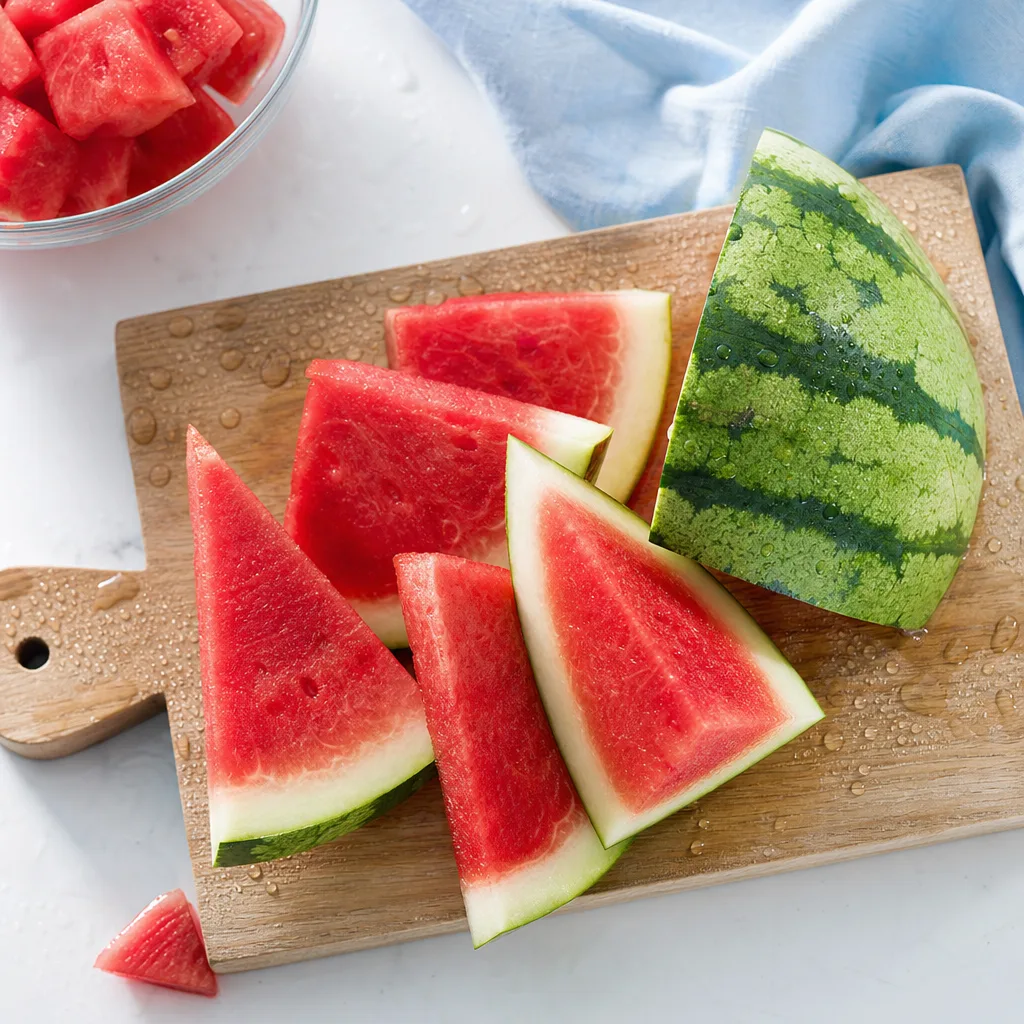
Watermelon is the best-known natural source of citrulline, with the white rind close to the red flesh containing a particularly high share. Smaller amounts of citrulline also occur in other members of the gourd family such as cucumbers and courgettes, as well as in garlic. The citrulline content can vary considerably depending on the variety, ripeness and growing conditions of the watermelon, which is why blanket amounts per fruit are hard to give.
However, the amount of citrulline taken in through normal servings of watermelon is usually well below the doses used in studies, so a noticeable training effect from eating watermelon alone is rather unlikely. For an intake in line with the research, concentrated powder or capsules are usually used.
As a refreshing, water-rich food, watermelon nevertheless remains a sensible addition to the menu, especially on warm days or after training, even though it is no substitute for a concentrated citrulline supplement if the amounts examined in studies are to be reached.
 Matching productWhey Protein ConcentrateAmazon →
05
Use and dosage
In strength training studies, amounts in the range of about 6 to 8 g of L-citrulline, mostly as citrulline malate, were often used around 30 to 60 minutes before training. This figure serves only as rough guidance; the serving recommendation on the respective pack is always what counts, as products differ in concentration.
Citrulline malate is a compound of citrulline and malic acid that is common in sports nutrition. Whether the combination with malic acid brings an additional benefit of its own has not been conclusively settled scientifically.
A fixed intake time on rest days is not necessary, since the possible benefit is discussed mainly in relation to the timing of the training load itself. Permanent daily intake regardless of training has not been studied in this form in most studies.
Besides strength training, L-citrulline is also being studied in endurance sport, particularly in connection with muscle soreness and recovery after intense exertion. The underlying idea is that better blood flow, not only during but also after training, could help clear metabolic products out of the muscles. First studies show occasional positive effects on subjectively perceived recovery in this area, but larger, well-controlled studies with clear, reproducible results are still to come. Anyone active in endurance sport should therefore see L-citrulline as a possible rather than a proven building block of recovery, and continue to rely on the basics such as enough sleep, protein intake and training management.
 Matching productL-GlutamineAmazon →
06
Tolerability and side effects
At the amounts used in studies, L-citrulline is generally regarded as well tolerated, often even better tolerated than comparable amounts of arginine. Mild digestive complaints are reported occasionally. Because citrulline can lower blood pressure, medical advice beforehand makes sense in cases of low blood pressure, when taking blood-pressure-lowering medication, and during pregnancy and breastfeeding. For planned operations, too, intake should be discussed beforehand with the treating team. A dietary supplement with citrulline does not replace a balanced diet.
07
What the research says
L-citrulline is one of the better-studied substances among pre-workout supplements, with evidence that is more consistent than for arginine in strength training with higher repetition numbers. The demonstrated effects are moderate, however, and mainly concern perceived fatigue, not necessarily maximal strength or muscle growth itself. Anyone trying L-citrulline can therefore expect a small, realistic added benefit, but should not expect a dramatic performance boost. A possible benefit is most likely to show in high-volume sessions with many repetitions, less so in individual very heavy sets.
08
Frequently asked questions
Is L-citrulline better than L-arginine?
For raising blood arginine levels, citrulline usually performs more reliably in studies, as it bypasses the heavy breakdown of directly ingested arginine.
Is watermelon enough as a citrulline source?
The training doses used in studies would require large amounts of watermelon, which are hardly practical in everyday life. As a food, watermelon is still a sensible, natural source.
What is citrulline malate?
Citrulline malate is a compound of citrulline and malic acid that is often used in sports nutrition. An additional benefit of the malic acid in its own right has not been conclusively settled scientifically.
Can you take L-citrulline long term?
Most studies ran for a few weeks. Less data is available on very long-term, continuous intake over years, so a regular break and medical advice for ongoing use can make sense. Used over several weeks, citrulline is regarded as harmless according to current knowledge; regardless of that, where there are existing medical conditions there is generally more in favour of consulting a doctor beforehand than against.
Explore
Read next
 Protein types at a glance: whey, casein, plant-based and moreAn overview of all common protein types from whey to collagen, with a comparison table and links to detailed guides.
 Amino Acids: The Building Blocks of ProteinStructure, classification and functions of amino acids at a glance, with a table of all 20 proteinogenic amino acids and links to all guide…
 Supplements for Sport and Fitness: A Factual OverviewAll supplement categories at a glance, with the evidence rated from good to thin, plus safety and buying tips.