
6 min read
Nutrition for Endurance Sport: Carbohydrates, Fluids and Recovery
How nutrition in endurance sport differs from strength sport, and what role carbohydrates, fluids and protein play.

Whether running, cycling, swimming or triathlon: endurance sport places different demands on nutrition than classic strength training. The focus is mainly on an adequate energy supply from carbohydrates, a suitable fluid balance and recovery that also takes the immune system and the muscles into account.
This guide gives an overview of how carbohydrates, fluids, electrolytes and protein work together in endurance sport and what you can look out for with sports drinks, bars and gels.
01
Carbohydrates as the main energy source
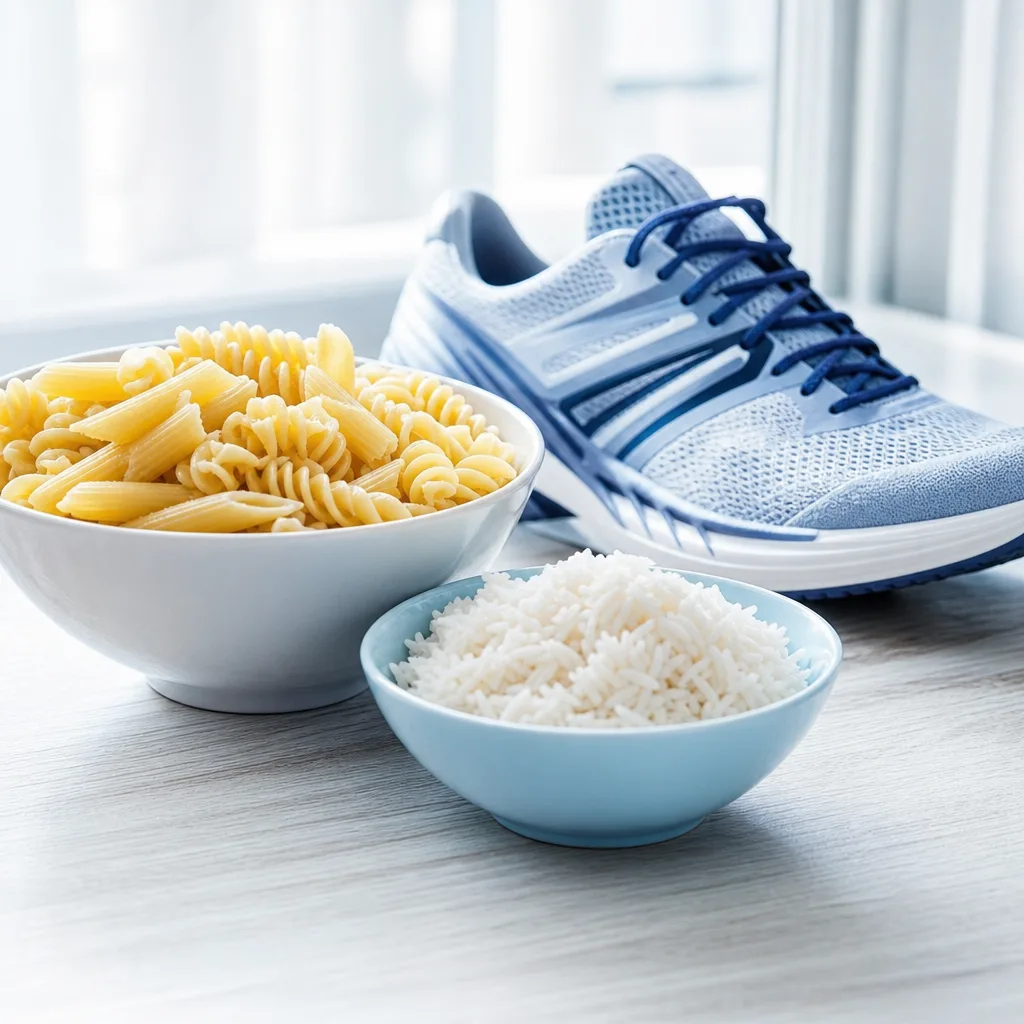
During endurance exercise, the body gets a large part of its energy from carbohydrates stored as glycogen in muscles and liver. These stores are limited and can be substantially depleted during longer, intense exertion, which shows up as a drop in performance.
How many carbohydrates make sense depends strongly on the duration and intensity of exertion and on the training goal. For short, easy sessions your usual diet is generally enough, while for long or intense sessions more carbohydrates are often planned around training, for example from wholegrain products, rice, potatoes or fruit. You can find more general basics on carbohydrates in the guide Carbohydrates.
Besides the pure amount, timing also plays a role. Before exertion, easily digestible, low-fat carbohydrate sources are usually preferred to avoid gastrointestinal complaints during training. After training, the body is particularly receptive to refilling the glycogen stores, which is why somewhat higher-fibre and more nutrient-dense foods also fit well here.
02
Fluids and electrolytes
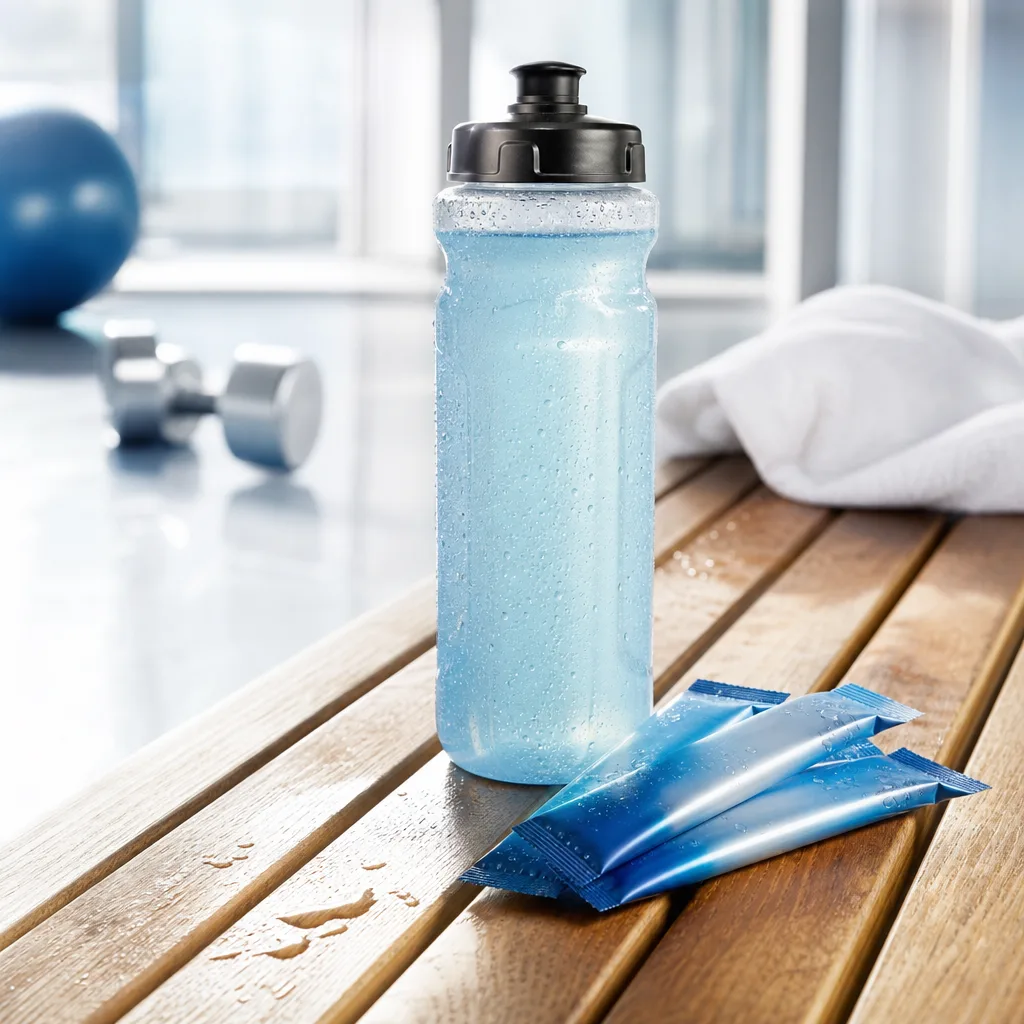
When you sweat, the body loses not only water but also electrolytes such as sodium, potassium and magnesium. How much is lost differs greatly between people, exertion duration, temperature and fitness level, so no blanket drinking amount can be given for everyone.
As a rough guide: for longer or very sweaty sessions, a drink with some sodium and carbohydrates can make more sense than plain water, because it supports both fluid and electrolyte balance. You can find more on the individual minerals in the glossary entry Electrolytes and in the guide Magnesium.
 Matching productElectrolyte PowderAmazon →
03
Sports drinks, bars and gels compared
| Product type | Typical use | Characteristic |
|---|---|---|
| Sports drink | during longer exertion | provides fluid, carbohydrates and electrolytes at the same time |
| Carbohydrate bar | before or during training | solid form, longer satiety, less quickly available than a gel |
| Energy gel | during intense, short phases of exertion | quickly available energy, usually without a marked feeling of fullness |
| Protein bar or shake | after training | supports muscle recovery |
You can find details on individual types of bar in the guide Carbohydrate bars. Which combination suits best depends on the sport, the duration of exertion and personal tolerance, which is best tested in training rather than tried for the first time in competition.
 Matching productProtein BarsAmazon →
04
Fuelling in long races
For exertion lasting more than about 60 to 90 minutes, the body's own glycogen store often no longer suffices to keep performance at a high level throughout. In this case it is often recommended to take in small amounts of carbohydrates continuously during the exertion itself, for example through sports drinks, gels or bars, to maintain energy supply. How much of this makes sense depends strongly on intensity, duration and individual tolerance and is best tested in training, not for the first time on race day.
Some endurance athletes additionally rely on a deliberately more carbohydrate-rich diet in the days before particularly long exertion to fill the glycogen stores. Whether and to what extent this makes sense depends strongly on the individual race distance and fitness level and should not be adopted without testing it in training first, as an unusually high amount of carbohydrates can also lead to gastrointestinal complaints. Especially for very long exertion such as a marathon, a long-distance cycling event or a triathlon, continuous energy intake over several hours is important, while shorter races usually manage with the body's own stores and little additional intake.
05
Protein in endurance sport is often underestimated
In endurance sport the focus is usually on carbohydrates, yet protein also plays an important role, especially for the recovery of the muscles under load and for maintaining muscle mass with high training volumes. In sports science, values of about 1.2 to 1.6 g of protein per kg of body weight per day are often cited for endurance-oriented athletes, while the general recommendation of the DGE (German Nutrition Society) for adults is about 0.8 g per kg of body weight.
The guide Calculating your protein requirement explains how to roughly estimate your individual needs. You can read about when protein intake around training is particularly useful in the guide Protein timing.

06
Judging sports drinks yourself
Ready-made sports drinks differ, in some cases considerably, in carbohydrate and electrolyte content. For shorter exertion of up to about an hour, water is generally enough, while for longer, sweaty sessions a drink with a moderate carbohydrate share and some sodium can help to provide both energy and fluid. Above all, your own tolerance matters here: a drink that is too concentrated can put a strain on the stomach, while one that is too diluted may not provide enough energy during very long exertion. It is best to test different mixing ratios in training before using them in competition.
 Matching productProtein DrinkAmazon →
07
Recovery after training
After longer or intense endurance sessions, both the glycogen stores and the muscles are under strain. A meal with carbohydrates and protein within a few hours after training supports the refilling of the stores and the recovery of the muscles, although research sees the exact time window less narrowly than guides long presented it. More important than an exact time span is the total intake across the day.
Besides nutrition, enough sleep also plays an important role in recovery, as does sensible training planning that alternates demanding and lighter sessions. If you often feel excessively exhausted or catch colds unusually often, you should take this as a sign of too little recovery and, if in doubt, seek medical or training-science advice instead of trying to counteract it through diet alone.
08
What the research says
The central role of carbohydrates for endurance performance is considered well established, as is the benefit of adapted fluid and electrolyte intake during longer, sweaty exertion. For protein intake in endurance sport, the evidence overall consistently favours an amount above the baseline recommendation, although individual effects such as an exact time window after training are seen less strictly in recent studies than was previously assumed. Individual differences in tolerance, fitness level and goals always remain decisive.
09
Frequently asked questions
How much should I eat before endurance training?
This depends strongly on duration, intensity and personal tolerance. An easily digestible, carbohydrate-focused meal a few hours beforehand is often mentioned, although every body reacts differently.
Do I need a sports drink for every workout?
No, for short or easy sessions water is usually enough. For longer or very sweaty exertion, a drink with carbohydrates and electrolytes can make sense.
How much protein do endurance athletes need?
In sports science, about 1.2 to 1.6 g per kg of body weight per day is often cited, depending on training volume and goal. You can roughly estimate the exact amount with our guide Calculating your protein requirement.
Are energy gels necessary?
Not necessary, but practical during intense, longer exertion when quickly available energy is needed. For shorter sessions your usual diet is generally enough.
How do I tell whether I am drinking too little?
Thirst, dark urine and declining performance can be indications, but they do not replace an individual assessment. If symptoms persist, medical advice is sensible.
Should I eat straight after training?
A meal within a few hours after training supports recovery, and an exact, narrow time window is now considered less decisive in research than was previously assumed.
What do I do about stomach problems during long exertion?
It often helps to reduce the concentration of sports drinks and to take in carbohydrates in smaller, regular amounts. What is tolerated best individually can be tested most reliably in training.
Explore
Read next
 Protein types at a glance: whey, casein, plant-based and moreAn overview of all common protein types from whey to collagen, with a comparison table and links to detailed guides.
 Amino Acids: The Building Blocks of ProteinStructure, classification and functions of amino acids at a glance, with a table of all 20 proteinogenic amino acids and links to all guide…
 Supplements for Sport and Fitness: A Factual OverviewAll supplement categories at a glance, with the evidence rated from good to thin, plus safety and buying tips.