
6 min read
Amino Acids and the Immune System: The Connections Explained
How protein and individual amino acids relate to the immune system, and what an adequate supply really means for it.

The immune system consists of the interplay of many cell types and protein substances, from antibodies and messenger substances to the cell walls of the defence cells themselves. Since all of these structures ultimately consist of protein, an adequate supply of amino acids is a basic requirement for a functioning immune system. That does not automatically mean, however, that additional amino acid products raise your defences beyond the normal level.
In this guide you will learn how protein and the immune system are connected, which individual amino acids are mentioned more often in research and when targeted supplementation can actually make sense.
The immune system can be roughly divided into an innate and an acquired defence system. The innate system reacts quickly but non-specifically to invaders, whereas the acquired system produces targeted antibodies against pathogens it already knows and has a memory of earlier infections. Both systems depend on an adequate supply of amino acids in order to produce the cells and protein substances they need in sufficient amounts.
01
Why the immune system depends on protein
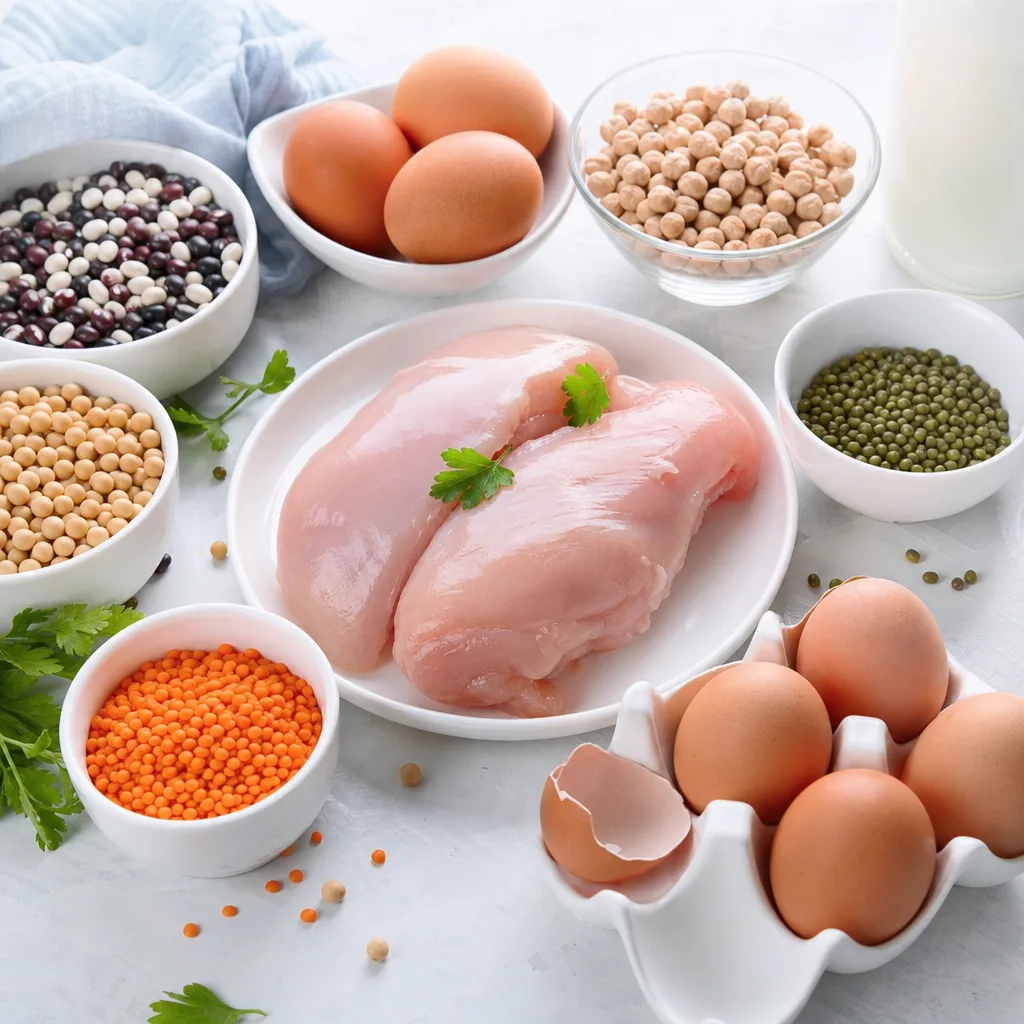
Antibodies, many messenger substances of the immune system and the cell walls of lymphocytes and other defence cells consist of protein. During an infection, the body has to form large amounts of these proteins anew in a short time in order to recognise pathogens and neutralise them. A lasting protein deficiency can therefore slow the formation of new immune cells and antibodies and increase susceptibility to infection, which is well established, particularly in marked malnutrition.
With the diet usual in Western industrialised countries, however, a marked protein deficiency is rare. More relevant is an adequate supply in situations of increased need, such as intense training, in older age or during illness, when the body has to produce more defence proteins.
Even with a chronically one-sided diet, for example very strict diets with clearly reduced calorie and protein intake over a longer period, protein supply can fall so far that the formation of new immune cells is impaired. In such cases it makes more sense to rethink your overall diet than to take individual amino acid products in a targeted way, since several nutrients usually run short at the same time.
02
Individual amino acids linked to the immune system
Some amino acids are studied particularly often in sports and nutrition science in connection with the immune system. The following table gives an overview of their basic role.
| Amino acid | Role in connection with the immune system |
|---|---|
| Glutamine | important energy source for rapidly dividing cells, including many immune cells and the gut lining |
| Arginine | starting material for nitric oxide, which is involved in blood flow and cell communication |
| Cysteine | building block of glutathione, one of the body's own antioxidants |
| Threonine | important building block of mucous membranes, including in the gut |
With an adequate, protein-rich diet, these amino acids are generally supplied in sufficient amounts anyway or made by the body itself from other building blocks. An exception is extreme situations such as very intense endurance training, serious injuries or illnesses, in which the need for individual amino acids such as glutamine can briefly exceed the supply from a normal diet.
The role of glutamine for the gut lining is also interesting, as the gut lining itself houses a large part of the body's immune system. Glutamine serves as the preferred energy source for the cells of the gut wall, which is why an intact gut barrier is also indirectly linked to an adequate supply of amino acids. This connection is studied mainly in clinical nutrition, for example in seriously ill patients, and cannot be transferred directly to healthy recreational athletes.
 Matching productL-GlutamineAmazon →

03
Intense training and a temporarily weakened defence
After very intense, long training sessions, such as marathons or several hours of endurance training, a temporary drop in certain amino acids such as glutamine is often measured in the blood, and some studies report a short-term increase in susceptibility to infection in the hours to days after such efforts. Advertising often draws the conclusion from this that targeted glutamine intake around training could protect the immune system.
The actual evidence on this is mixed. Some studies show slight positive effects on individual immune markers with additional glutamine around very intense efforts, but a clear benefit for actual susceptibility to infection, reproduced in all studies, cannot be derived from them. For recreational athletes with a moderate training volume, a relevant effect of additional amino acid products on the immune system has so far not been convincingly shown.

04
Other nutrients that matter for immune function
A look at individual amino acids alone falls short when assessing the immune system anyway, since defence cells and antibodies are formed from a very broad spectrum of nutrients, not only from protein building blocks.
The immune system depends on many nutrients at once, not only on amino acids. Vitamin D, zinc, iron and vitamin C are regularly mentioned in research in connection with immune function, and a deficiency of these nutrients can measurably weaken defences. Targeted supplementation makes sense mainly when there is an actual deficiency, ideally after consulting a doctor and, where appropriate, a blood test.
Enough sleep, a moderate rather than excessive training load and a balanced diet overall with enough fruit, vegetables and protein carry more weight, and are better supported, for immune function overall than individual dietary supplements.
Chronic stress and permanently too little sleep are also considered relevant influences on immune function in research, sometimes with a larger effect than smaller dietary adjustments. If you regularly get by on five to six hours of sleep a night or are under permanent heavy strain, you should therefore start with these foundations as well as with your diet before reaching for dietary supplements in a targeted way.
 Matching productExercise MatAmazon →
05
What you can do in practice
- An adequate protein intake spread across the day from different sources covers the need for immune-relevant amino acids in most people.
- With a very high training volume, for example in endurance sport, you can make sure you get enough carbohydrate and protein around long sessions so as not to put additional strain on the body.
- A deficiency of vitamin D, zinc or iron is most reliably identified through a blood test, not by simply trying out products.
- In the cold season or with frequent infections, talking to a doctor makes more sense than an unspecific course of amino acids.
- Dietary supplements are not a substitute for a balanced diet, but at most a targeted addition when a need has been shown.
06
What the research says
The basic link between an adequate protein supply and a functioning immune system is scientifically well established, especially in connection with marked deficiency. For targeted supplementation of individual amino acids such as glutamine on an otherwise normal diet, the evidence is far less consistent. Positive effects appear most likely in extreme situations such as elite sport, serious injuries or intensive care units, and less so in everyday recreational training.
It is also important not to look at the immune system in isolation. Sleep, stress level, exercise, vaccination status and the overall quality of your diet work together and cannot be replaced by a single dietary supplement. If you want to support your own defences, you should therefore start with the well-supported basics before specific amino acid products come into question.
 Matching productSports BraAmazon →
07
Frequently asked questions
Do amino acid products strengthen the immune system directly?
A direct, widely supported effect on susceptibility to infection has not been shown on a normal diet. A benefit is most likely with very intense physical effort or with a proven deficiency.
Is glutamine useful for a cold?
Reliable evidence that additional glutamine speeds recovery from an ordinary cold is lacking. Enough fluid, sleep and a balanced diet come first.
Which amino acids are most important for the immune system?
In principle, all essential and several non-essential amino acids are needed to form immune cells and antibodies, and glutamine, arginine and cysteine are named particularly often in research.
Can too much protein harm the immune system?
In healthy people, a protein intake within the usual sports science range is harmless. With kidney disease the amount of protein should be agreed with a doctor, and you can find more under Protein and kidneys.
Is a normal diet enough for a good immune system?
For most people, yes. A balanced, protein-rich diet with enough fruit, vegetables and wholegrain products generally covers the need for immune-relevant nutrients completely.
 Matching productL-ArginineAmazon →
Explore
Read next
 Protein types at a glance: whey, casein, plant-based and moreAn overview of all common protein types from whey to collagen, with a comparison table and links to detailed guides.
 Amino Acids: The Building Blocks of ProteinStructure, classification and functions of amino acids at a glance, with a table of all 20 proteinogenic amino acids and links to all guide…
 Supplements for Sport and Fitness: A Factual OverviewAll supplement categories at a glance, with the evidence rated from good to thin, plus safety and buying tips.